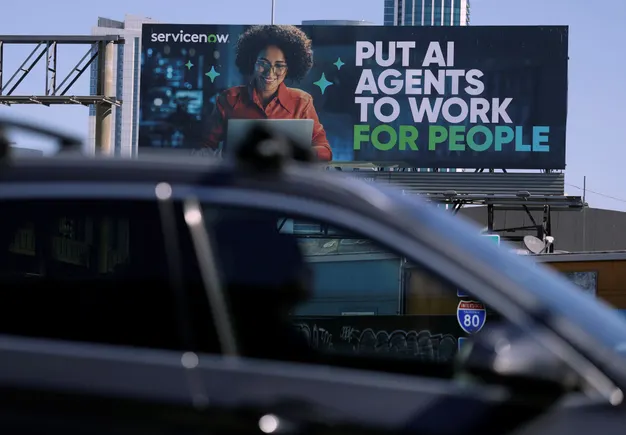
As companies increasingly integrate artificial intelligence tools, pushing their application far beyond rudimentary tasks, human resources departments are meticulously evaluating the implementation of AI agents—and critically, their potential impact on existing roles and headcount. A significant report from The Josh Bersin Co. in June projected a substantial shift, forecasting that by 2030, HR departments could experience a headcount reduction of 30% to 50% due to the capabilities AI agents are poised to undertake. However, this alarming projection is tempered by the inherent complexity of the HR function, which encompasses over 250 specialized roles and 400 distinct skills, suggesting a transformation rather than outright obliteration. While this complexity opens the door for over 100 types of AI agents, the goal is not "agent sprawl" but a complete reimagining of HR architecture, an architecture that will unequivocally require human involvement.
The rapid advancements in AI, particularly generative AI, have ushered in a new era of corporate discourse, with CEOs often championing AI as a panacea for productivity woes and a potential avenue for cost reduction through headcount cuts. Yet, according to Eser Rizaoglu, VP analyst in the Gartner HR Practice, these anticipated AI-driven layoffs have largely failed to materialize in the manner some predicted. Instead, recent workforce reductions across industries are more accurately attributed to the inflated hiring sprees that characterized the pandemic era, representing a market correction rather than a direct consequence of AI deployment. This distinction is crucial for understanding the true trajectory of AI’s impact on human capital management.
The Shifting Paradigm: Automation vs. Augmentation
The core of the debate lies in distinguishing between tasks that can be automated and roles that can be augmented. While AI agents are becoming increasingly sophisticated, capable of handling a vast array of transactional and administrative duties, the strategic and deeply human aspects of HR remain beyond the current scope of artificial intelligence. Josh Bersin, a prominent voice in HR thought leadership, emphasizes that even with the proliferation of AI agents, HR will continue to lead strategic initiatives. The fundamental truth, Bersin suggests, is even simpler: effective AI implementation necessitates human instruction and management. Most organizations are still in the nascent stages of figuring out the practical application of this "human-in-the-loop" model.
Far from the sensational headlines proclaiming the demise of HR departments, aggregate job postings for HR roles have remained relatively flat. Bersin interprets this as a "rebalancing" of the profession rather than a recession. This rebalancing involves AI agents absorbing tasks that are highly automatable and often less enjoyable for HR professionals. These include routine inquiries about pay stubs, adjustments for tax changes, benefits administration, and other operational work that consumes significant time and resources. By offloading these administratively heavy responsibilities, HR professionals are freed to engage in "more valuable things," such as proactively identifying systemic problems within processes or enhancing the overall employee experience. This shift elevates HR from a purely administrative function to a strategic partner within the organization.
The implications of this shift are particularly pronounced for junior or entry-level HR positions. Rizaoglu notes that these roles, often characterized by repetitive administrative tasks, are most susceptible to transformation. However, even here, the prevailing model for AI agent deployment in HR is expected to adhere to a "human-in-the-loop" approach. This ensures that a human remains available to review AI outputs, intervene when the system encounters an anomaly or error, and maintain the integrity of the process. Furthermore, employers recognize the need to retain a degree of "purposeful friction" in certain sensitive interactions. For instance, navigating the complexities of bereavement leave or other highly personal employee concerns demands the empathy, discretion, and nuanced understanding that only a human HR professional can provide.
The Indispensable Value of Institutional Knowledge
A critical factor often overlooked in the rush to automate is the profound value of institutional knowledge. Bersin argues that replacing HR professionals wholesale with AI would not yield significant cost savings, primarily because it would eradicate the invaluable institutional knowledge held by human employees. This knowledge encompasses not only an understanding of specific company policies and cultural nuances but also a keen insight into which tasks are genuinely amenable to AI streamlining and where the necessary data resides to enable effective AI utilization. While AI tools possess learning capabilities, this learning process does not inherently lead to job elimination. On the contrary, when AI systems inevitably encounter errors or produce suboptimal results, individuals with deep product and workflow knowledge become indispensable for diagnosis and correction. Rizaoglu underscores this point, questioning, "When people with that knowledge leave, who can sort that out?"
The notion of a "slash-and-burn" approach to HR, where departments are entirely dismantled, is fundamentally flawed. Even if a company were to eliminate its HR department, the underlying HR functions and responsibilities would not vanish; they would simply devolve to managers, adding to their already extensive workloads. This impracticality extends even to functions seemingly primed for automation, such as call centers. Bersin emphasizes that larger, more diverse companies, in particular, have no viable alternative but to maintain human support for certain issues. An aggressive, purely automated approach risks severe damage to the employer brand, alienating employees and undermining trust.
Challenges and the Imperative for a Strategic Approach
While the array of AI tools available to companies is expanding, their effectiveness hinges on the quality of the systems they access. Rizaoglu highlights a significant hurdle: many HR leaders, as revealed by a Gartner survey in April, continue to struggle with internal data quality, poor system interoperability, insufficient training, and general staff resistance to AI adoption. Unlike older software solutions that could often be deployed "out of the box," contemporary AI agents demand substantial training and ongoing refinement to function effectively within the intricate operational fabric of individual companies. As Bersin explains, "You’re training it for a while. You’re constantly taking care of it to make it better as it learns new things."
This continuous learning requirement underscores a critical deficit: many HR leaders currently lack a coherent AI strategy to accommodate these demands. Instead, many have "dived into the deep end," hoping for the best without a clear roadmap. This haphazard approach carries significant risks, as numerous studies demonstrate that poorly managed AI can exacerbate existing problems, including ingrained biases in hiring processes. The potential for AI to perpetuate or even amplify human biases, if not meticulously designed and monitored, is a serious ethical concern that necessitates human oversight and accountability. It is precisely for these complex challenges—strategic planning, ethical governance, and continuous improvement—that HR departments still fundamentally require human expertise. Bersin succinctly frames it: "These are not implementation projects. These are training projects." And training, by its very nature, is an ongoing process that demands the nuanced judgment and adaptability of the human touch.
Timeline and Evolution of AI in HR
The integration of AI into HR has followed a discernible trajectory. Early applications, dating back to the mid-2010s, primarily focused on rudimentary automation, such as applicant tracking system (ATS) enhancements, basic chatbot functions for FAQs, and data analytics for workforce planning. These initial forays were largely task-specific and often siloed. The late 2010s saw a gradual expansion into more sophisticated areas like predictive analytics for turnover risk and personalized learning recommendations. The advent of generative AI in the early 2020s marked a significant inflection point, promising capabilities far beyond simple automation, including content generation for job descriptions, personalized employee communications, and sophisticated sentiment analysis. The Josh Bersin Co.’s 2030 projection reflects the anticipated maturity of these technologies and their deeper integration into core HR processes, moving from mere support tools to transformative agents.
Broader Impact and Implications
The transformation of HR by AI extends beyond headcount numbers. It necessitates a fundamental shift in the skill sets required of HR professionals. The emphasis will move away from transactional proficiency towards competencies in data literacy, AI ethics, change management, human-AI collaboration, and strategic consulting. HR professionals will need to understand how to leverage AI tools, interpret their outputs, and ensure their ethical deployment. Universities and professional development programs are already beginning to adapt their curricula to meet these evolving demands.
Furthermore, the widespread adoption of AI in HR will profoundly impact employee experience. While AI can personalize communications and streamline administrative processes, there’s a delicate balance to strike. Over-reliance on AI for sensitive interactions could dehumanize the workplace, leading to employee disengagement and a perception of a cold, impersonal environment. Therefore, HR leaders must carefully curate the moments where human interaction is paramount, preserving the "purposeful friction" that builds trust and fosters a supportive culture.
Data governance and privacy also become paramount. AI systems require vast amounts of employee data to function effectively, raising critical questions about data security, transparency in data usage, and compliance with increasingly stringent privacy regulations like GDPR and CCPA. HR departments will play a crucial role in establishing robust data ethics frameworks and ensuring responsible AI use.
In conclusion, the narrative surrounding AI’s impact on HR is far more nuanced than a simple story of job displacement. It is an intricate tale of transformation, rebalancing, and strategic evolution. While AI agents will undoubtedly absorb a significant portion of administrative and operational tasks, the complex, human-centric, and strategic essence of HR will not only endure but will likely be amplified. The future of HR is not one where machines replace humans, but rather one where intelligent systems augment human capabilities, enabling HR professionals to focus on higher-value activities that truly shape organizational culture, foster talent, and drive business success in an increasingly dynamic world. This hybrid model, where humans and AI collaborate, learn, and evolve together, represents the most realistic and beneficial path forward for the human resources profession.