The healthcare industry stands at a critical juncture, grappling with unprecedented levels of burnout, persistent staff shortages, and alarming turnover rates. In this high-stress environment, employee recognition is not merely a courtesy but an essential strategic imperative for organizational survival and flourishing. Data from the Achievers Workforce Institute (AWI) starkly reveals that only 18% of healthcare employees feel meaningfully recognized, a statistic that underscores a profound disconnect in an sector where dedication and compassion are paramount. For professionals enduring 12-hour shifts, navigating complex patient needs, managing extensive paperwork, and responding to emergencies, feeling invisible is profoundly demotivating and ultimately unsustainable. Effective recognition, implemented thoughtfully and consistently, represents the fundamental difference between a workforce running on fumes and one energized by purpose, fortified by connection, and sustained by authentic appreciation.
The Unfolding Crisis in Healthcare Workforce and the Recognition Gap
The challenges facing healthcare workers have intensified dramatically over the past decade, culminating in a pervasive crisis exacerbated by recent global events. Pre-pandemic conditions already saw healthcare professionals experiencing higher rates of stress and emotional exhaustion compared to many other sectors. The COVID-19 pandemic acted as an accelerant, pushing an already strained system to its breaking point. Frontline workers faced unprecedented physical and psychological demands, often without adequate resources, leading to a surge in burnout, compassion fatigue, and mental health issues.
This environment has created a significant "recognition gap." While the public often expresses general gratitude for healthcare heroes, this sentiment frequently fails to translate into meaningful, consistent, and specific appreciation within their workplaces. The AWI’s finding that only 18% feel recognized is particularly concerning when considering the immense sacrifices and critical contributions these individuals make daily. Lack of recognition correlates directly with reduced job satisfaction, increased intent to leave, and a decline in overall morale, creating a vicious cycle where remaining staff become even more burdened. The financial implications of this are staggering; replacing a single registered nurse, for instance, can cost upwards of $40,000, factoring in recruitment, onboarding, and productivity loss. For hospitals with high turnover, these costs escalate rapidly into millions of dollars annually, diverting resources that could otherwise be invested in patient care or staff development.
Historical Context and the Pandemic’s Amplification
The foundation of the current healthcare workforce crisis can be traced back to long-standing issues within the industry. For decades, healthcare has been characterized by demanding work, emotional intensity, and often hierarchical structures. While a sense of mission and purpose traditionally drew individuals to these roles, the systemic pressures of understaffing, administrative burdens, and the emotional toll of critical care have eroded this intrinsic motivation for many.
The period spanning 2020-2022 marked a critical inflection point. The pandemic not only highlighted the indispensable nature of healthcare workers but also exposed the fragility of the systems supporting them. Many experienced moral injury, witnessing suffering they could not alleviate due to resource constraints or systemic failures. This period saw a significant exodus of experienced professionals, often termed the "Great Resignation" or "Great Reshuffle" within healthcare. According to a 2022 survey by the American Medical Association (AMA), nearly 63% of physicians reported symptoms of burnout, a substantial increase from pre-pandemic levels. Similarly, the American Nurses Association (ANA) has consistently reported high rates of burnout and intentions to leave the profession among nurses. This exodus has created critical staffing shortages across various specialties and geographies, forcing remaining staff to work even longer hours and take on heavier workloads, further fueling the cycle of burnout. In this context, employee recognition has shifted from a mere HR initiative to a core strategic imperative for talent retention and organizational resilience.

Strategic Pillars of Effective Healthcare Recognition
To counteract these pervasive challenges and cultivate a thriving workforce, healthcare organizations must adopt a multifaceted approach to employee recognition. This involves embedding appreciation into every layer of the organizational culture, making it a visible and consistent practice.
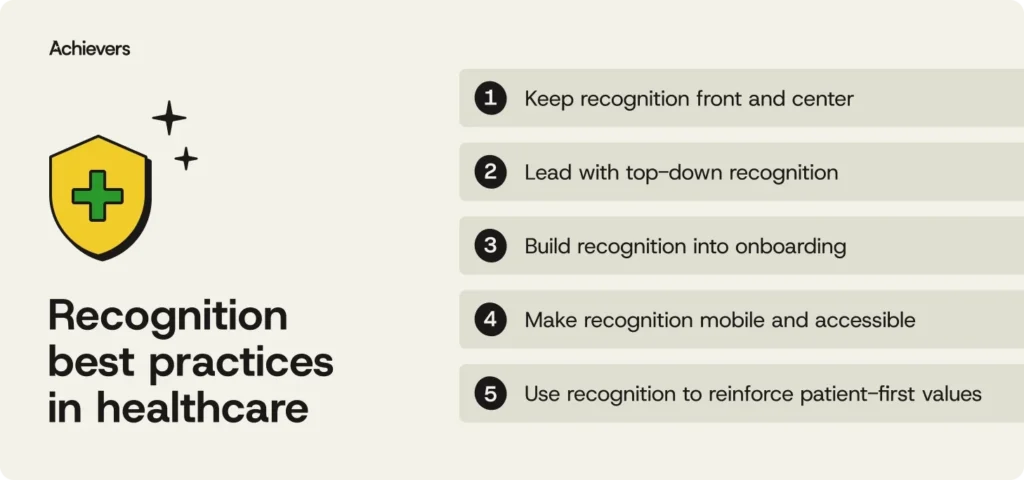
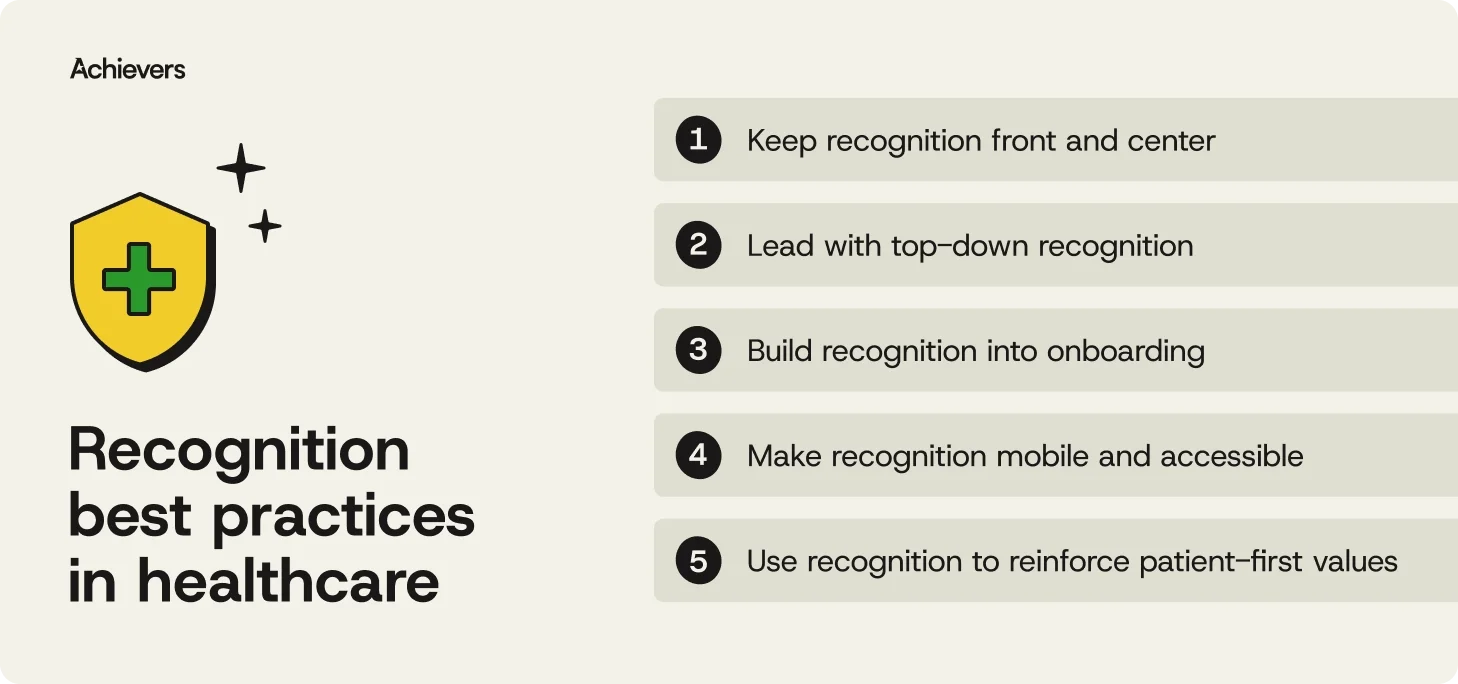
1. Embedding Appreciation into the Daily Fabric: Keeping Recognition Front and Center
For recognition to be truly impactful, it must be woven into the everyday rhythm of healthcare operations, rather than relegated to infrequent, formal events. This means making recognition a top-of-mind priority through ongoing campaigns that align with the team’s operational cadence. Examples include dedicated Nurses Week celebrations, but also spontaneous mid-shift spotlights, quick video shout-outs, or even timely external recognition campaigns that amplify positive patient feedback. Leveraging every available communication channel—newsletters, manager huddles, intranet banners, and even digital displays in common areas—helps to spark and sustain the habit of appreciation. In an environment where shifts often blur into one another, a timely and specific "thank you" can cut through the noise and resonate more deeply than anticipated, reinforcing that contributions are noticed and valued in the moment they occur.
2. Leadership’s Role in Cultivating a Culture of Gratitude: Leading with Top-Down Recognition
The tone of an organization’s culture is largely set at the top, and in healthcare, leadership’s commitment to recognition can significantly influence staff retention and overall morale. When managers and senior leaders actively prioritize and model recognition, it signals that appreciation is a fundamental aspect of the organizational ethos, not just a performative gesture. Integrating recognition into managerial responsibilities fosters accountability and ensures that leaders are actively engaged in identifying and celebrating exemplary performance. A compelling case study from CHRISTUS St. Michael Health System illustrates this impact: by building manager accountability for recognition, the organization observed stronger communication, a notable 2.9% drop in nurse turnover, and an impressive sixfold increase in near-miss reporting. This demonstrates a clear correlation: when leadership champions recognition, it creates a cascading effect that positively influences culture, safety, and ultimately, patient outcomes. This commitment transforms recognition from a discretionary activity into a core leadership function.
3. Forging Connection from Day One: Onboarding and Peer-to-Peer Dynamics
The journey of an employee begins on day one, and integrating recognition into the onboarding process establishes a culture of appreciation from the outset. New hires should be introduced to the recognition program immediately, taught how to utilize it effectively, and encouraged to incorporate it into their routine through onboarding checklists. This early exposure helps normalize and embed recognition as an integral part of the employee experience. When frontline employees are empowered to become advocates for recognition, the culture feels organic and authentic, rather than a top-down corporate mandate. In healthcare, peer-to-peer appreciation holds particular weight. It’s one clinician acknowledging another, conveying a deep understanding of the unique challenges and triumphs of their shared profession. This form of recognition—"I see what you did, and it mattered"—fosters strong team cohesion, mutual respect, and a sense of shared purpose that is invaluable in high-stress clinical environments.
4. Aligning Recognition with Core Values and Patient Care Excellence: Reinforcing Patient-First Values
Recognition serves as a powerful tool to continuously reinforce an organization’s core values, particularly those centered around patient care. By explicitly calling out actions that exemplify exceptional patient care—whether it’s a quick-thinking response in the emergency room that prevents complications, or a small act of kindness that significantly eases a patient’s or family’s anxiety—organizations provide tangible examples of what "great care" truly looks like. This approach moves beyond simply celebrating an individual; it elevates and broadcasts a blueprint for the kind of compassionate, competent, and patient-centered care the organization aspires to deliver consistently. When recognition is personal and specific, highlighting the direct impact of an individual’s actions, it resonates deeply. Generic praise like "great job, team" pales in comparison to "your quick diagnosis prevented serious complications for that patient" or "the empathetic way you calmed that anxious family made all the difference." Tailoring the recognition style and reward to the individual, their role, and what genuinely motivates them ensures that the appreciation is meaningful and impactful.
5. Investing in the Future: Recognition for Career Growth and Well-being
Burnout often thrives in environments where employees perceive limited opportunities for growth or feel stuck in a professional dead-end. Connecting recognition to skill development, professional certifications, or demonstrated leadership potential signals to staff that the organization sees and values their long-term potential, not just their immediate contributions. This "future-focused" recognition communicates, "We value what you do now, and we’re invested in where you’re headed." In an industry where skilled talent is highly mobile, such an investment can be a decisive factor in retaining valuable employees.
Furthermore, recognizing efforts to support well-being is paramount. The World Health Organization (WHO) reported that only 42% of surveyed countries have any form of mental health support in place for nurses, highlighting a critical global deficit. In this context, protecting employee well-being is not a luxury but a survival strategy. Recognition can be used to highlight individuals who model healthy boundaries, champion wellness initiatives, or step in to ensure a colleague can take a much-needed break. Even seemingly small acknowledgments, such as commending a manager for ensuring their team takes lunch breaks away from the ward, reinforce that work-life balance and self-care are valued. Over time, this shifts the organizational culture from one that tacitly accepts "burnout as part of the job" to one that actively declares, "we take care of our people so they can optimally care for our patients."
6. The Power of Dialogue: Integrating Recognition with Feedback and Listening
Effective recognition is a dynamic, two-way process that integrates celebration with genuine conversation. The most successful recognition programs pair praise with robust channels for feedback, allowing staff to easily share what is working well and identify areas for improvement. Platforms that offer "Voice of Employee" capabilities enable healthcare organizations to gather crucial insights directly from their workforce. When leaders not only listen to this feedback but also visibly act upon it, they demonstrate that recognition is part of a broader commitment to employee engagement and continuous improvement. This approach validates employees’ perspectives, fosters trust, and ensures that recognition efforts are aligned with the actual needs and experiences of the staff, proving that appreciation is indeed a two-way street.
Technological Solutions: Scaling Recognition in Complex Healthcare Ecosystems
The complexities of the healthcare industry, characterized by a predominantly deskless workforce, demanding shifts, and geographically dispersed teams, necessitate sophisticated technological solutions for effective recognition. Platforms like Achievers are specifically designed to address these unique challenges, transforming how healthcare organizations improve retention, reduce burnout, and strengthen communication across clinical and administrative teams.
Tailored for the Frontline and Deskless Workers:
Achievers is built with the frontline healthcare worker in mind. Its mobile-first approach ensures that staff can send and receive appreciation from anywhere—whether they are between patient rounds, grabbing a quick coffee break, or commuting after a night shift. Features such as offline tools, dedicated kiosks, QR codes, and integration with digital displays ensure that recognition is accessible throughout the workday, irrespective of traditional desk-bound work setups. Native app access allows employees to recognize peers, access internal communications, celebrate milestones, and redeem rewards seamlessly, integrating recognition into the very fabric of their mobile and often chaotic work environment.
Broadening the Scope: Patient and Family Recognition:
A crucial aspect often overlooked in employee recognition is the voice of the patient. Achievers supports patient recognition through dedicated tools that allow patients and their families to directly acknowledge healthcare employees. Patient-submitted recognition, captured via QR codes, seamless integrations, and external recognition channels, ensures that the appreciation reaches nurses, clinicians, and support staff whose vital contributions might otherwise remain unseen by internal systems. This external validation not only boosts morale but also reinforces the direct link between staff performance and patient satisfaction.
Unified Platform for Engagement:
Beyond mere recognition, Achievers integrates recognition, communication, and feedback into a single, cohesive platform. This unified approach empowers healthcare organizations to keep employees informed, recognized, and heard without relying on disparate systems. Leaders can combine recognition messages with critical announcements, deploy pulse surveys to gauge real-time sentiment, utilize advanced employee feedback tools, and disseminate important company resources. This consolidation streamlines internal communication, making it more efficient and ensuring that vital information reaches the frontline workforce effectively.
Enterprise-Grade Scalability:
Healthcare organizations are often vast and complex, comprising multiple hospitals, specialized departments, and numerous locations. Achievers is designed to scale across such intricate structures, offering centralized recognition management, highly configurable programs, and robust workforce insights. Its integration capabilities ensure consistency across the enterprise while providing a personalized and shared recognition experience for all employees, regardless of their specific role or location within the larger organization. This scalability is critical for maintaining a unified culture of appreciation across diverse operational units.
Evidence-Based Impact and Real-World Wins:
The efficacy of such platforms is not theoretical. Achievers’ healthcare recognition playbook showcases real-world strategies and tangible results. Organizations implementing these strategies have reported significant improvements, including reductions in clinical turnover by up to 33%, substantial improvements in employee engagement, and impressive returns on investment, with some programs delivering a 250% ROI. Case studies featuring prominent healthcare providers like CHRISTUS Health and Bayhealth offer practical tools, checklists, and leadership tips, demonstrating how strategic recognition translates into measurable operational success and a more resilient workforce. Similarly, organizations like Bon Secours Mercy Health and Seattle Children’s Hospital have leveraged these platforms to foster stronger teams and enhance patient care.
The Broader Implications: Reshaping Healthcare’s Future Workforce
The sustained investment in strategic employee recognition carries profound implications for the future of healthcare. It moves beyond merely addressing immediate crises to fundamentally reshaping the industry’s workforce dynamics. By prioritizing recognition, healthcare organizations can cultivate a distinctive competitive advantage in the fierce battle for talent. In an era where employees increasingly seek purpose, respect, and a supportive work environment, a robust culture of appreciation becomes a powerful differentiator.
This shift fosters greater employee loyalty and commitment, translating into improved patient outcomes. A recognized, engaged, and less-stressed workforce is more likely to deliver higher quality care, exhibit greater empathy, and make fewer errors. The economic benefits extend beyond reduced turnover costs; engaged employees are more productive, innovative, and contribute positively to the organization’s financial health. Investing in human capital through meaningful recognition is an investment in the overall sustainability and resilience of the healthcare system. It cultivates a virtuous cycle where a valued workforce delivers exceptional care, which in turn enhances the organization’s reputation and attracts further talent.
Conclusion: Beyond a "Thank You" – Building a Resilient Healthcare System
The realities of burnout, persistent staffing shortages, and the long hours inherent in healthcare are not self-correcting problems. They demand proactive, strategic interventions. Employee recognition, when implemented effectively and authentically, offers a powerful antidote. As demonstrated by the successes of healthcare companies like Bon Secours Mercy Health and pediatric medical centers such as Seattle Children’s Hospital, recognition is more than a fleeting "thank you"; it is a foundational element for fostering engagement, motivation, and resilience within the caregiving community.
With purpose-built solutions like Achievers, recognition transcends sporadic gestures to become an integral part of the daily rhythm of healthcare. From celebrating a nurse’s quick intervention that saves a life to acknowledging a scheduler’s flawless coordination that optimizes patient flow, every moment of genuine appreciation acts as fuel. This continuous reinforcement builds stronger, more cohesive teams, elevates the quality of patient care, and ultimately cultivates a workplace culture where professionals feel seen, valued, and genuinely want to contribute their best. In an industry defined by its human touch, investing in the well-being and recognition of its people is the most crucial prescription for a healthy, sustainable future.