The landscape of employee recognition is undergoing a significant transformation, with platforms evolving to become central to fostering engagement, driving productivity, and retaining top talent. As organizations look towards 2026, the most effective employee recognition platforms are those that seamlessly blend peer-to-peer and manager-led appreciation, offer meaningful and customizable rewards, ensure robust security through integrations, provide accessible offline and mobile functionality, and deliver comprehensive reporting on recognition’s impact across the workforce. These advanced solutions are not just about acknowledging good work; they are strategic tools designed to shape organizational culture and deliver measurable business outcomes.
The Pillars of Effective Employee Recognition Platforms
At their core, the leading employee recognition platforms are characterized by their simplicity, impact, and seamless integration into a company’s existing culture. When evaluating these solutions, several key features emerge as critical for success:

- Ease of Gifting and Receiving Recognition: The platform should enable recognition to be given and received effortlessly, removing any friction from the process.
- Frequency for Behavioral Change: Recognition needs to be frequent enough to reinforce desired behaviors and create a continuous cycle of positive reinforcement.
- Measurable Impact: The ability to track and measure the impact of recognition on key metrics such as employee engagement, retention rates, and overall productivity is paramount.
- Integration of Peer-to-Peer and Manager Recognition: A balanced approach where both colleagues and managers can offer praise fosters a more inclusive and holistic recognition culture.
- Meaningful and Customizable Rewards: Offering a diverse and flexible range of rewards that employees can choose based on their personal preferences significantly amplifies the impact of recognition.
- Secure Software Integrations: Seamless integration with existing HRIS, communication, and collaboration tools is crucial for data flow and user experience.
- Offline and Mobile Access: Ensuring that recognition can be given and received anytime, anywhere, is vital for supporting a distributed and mobile workforce.
- Actionable Reporting and Analytics: Comprehensive reporting that details how recognition is being utilized across the organization provides valuable insights for strategic decision-making.
These features collectively ensure that recognition programs are not only effortless and consistent but also strategically aligned with overarching business objectives.
The Crucial Role of Customizable Employee Rewards
The effectiveness of any recognition program is significantly amplified by the ability to offer customizable rewards. This customization empowers employees by giving them meaningful choices in how they are recognized. Instead of a one-size-fits-all approach, these platforms allow organizations to tailor reward catalogs, assign point values, set budgets, define eligibility rules, and offer flexible redemption options to cater to a diverse workforce.
For large and global organizations, customization is particularly vital. Employee preferences can vary widely based on their role, geographical location, career stage, and personal interests. The best employee rewards platforms facilitate the offering of flexible reward options, ranging from gift cards and merchandise to unique experiences, charitable donations, and company-specific perks, all while maintaining consistent program governance.
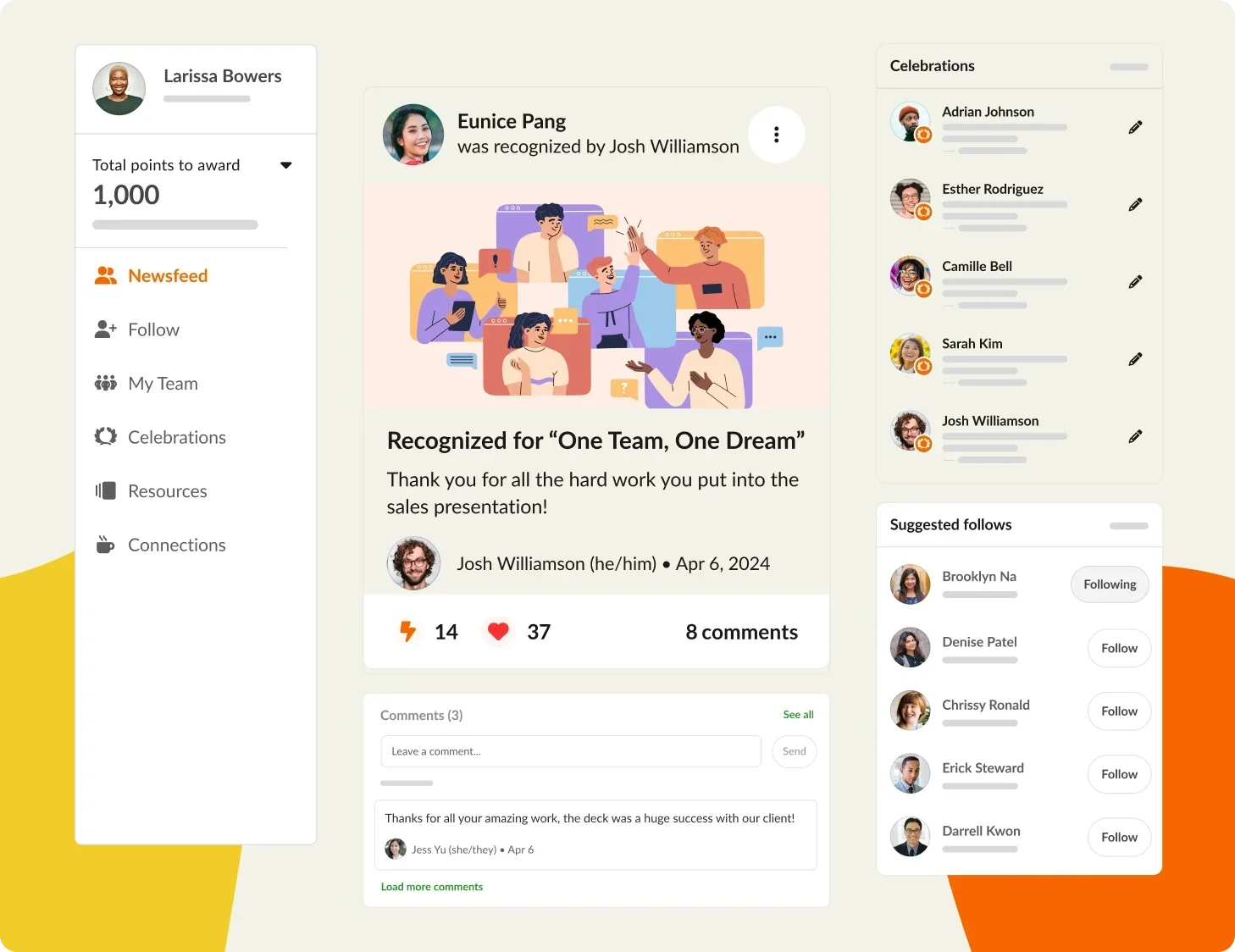
When employees can select rewards that resonate with them personally, the impact of recognition is significantly greater. A customizable rewards experience not only increases participation but also reinforces company values and enables the creation of a scalable reward platform that feels relevant and motivating to all teams and regions, rather than being perceived as a generic offering.
Key features to look for in a customizable employee rewards platform include:
- Global Rewards Marketplace: Access to a wide variety of locally relevant rewards across different countries.
- Flexible Redemption Options: Allowing employees to choose how they redeem their points or rewards.
- Personalization Capabilities: Enabling personalization of rewards based on employee preferences and company values.
- Budget Management and Governance: Tools to control spending and ensure program fairness.
- Integration with Existing Systems: Seamless connection with HRIS and payroll for efficient reward distribution.
By combining meaningful choice with scalable program management, organizations can cultivate recognition experiences that feel personal, relevant, and motivating, thereby strengthening engagement, reinforcing desired behaviors, and building a culture where recognition has a lasting, positive impact.
A Comparative Look at Leading Recognition Systems for 2026
The market for employee recognition platforms is robust, with several providers offering sophisticated solutions. For 2026, the following platforms stand out for their comprehensive features, user experience, and proven impact on organizational goals:
1. Achievers
Achievers has established itself as a leader in the employee recognition and rewards space, particularly for mid-market and large enterprise organizations. Its platform is built on a foundation of behavioral science, informed by the research of the Achievers Workforce Institute. The platform’s key strengths lie in its ability to directly link appreciation to measurable outcomes like engagement, retention, and performance.
One of Achievers’ most significant advantages is its commitment to fostering high recognition frequency, which customers report leads to up to a five-fold improvement in critical areas such as productivity and company culture. The platform boasts a configurable global rewards marketplace, offering over 3 million locally relevant options across 190 countries with no markups or hidden fees. This extensive catalog ensures that employees worldwide can find rewards that are meaningful to them.
Recognition is seamlessly integrated into the daily workflow through robust integrations with essential tools like Microsoft Outlook, Slack, and Workday. A dedicated mobile app further enhances accessibility for remote, hybrid, and frontline teams. Backed by 24/7 global support in over 200 languages and a proven customer success model, Achievers combines innovation, insight, and partnership to help organizations build stronger cultures.
- G2 Rating: 4.7/5
- Strengths: Science-backed approach, high recognition frequency, extensive global rewards marketplace, seamless integrations, strong customer success.
- Best for: Mid-market and enterprise organizations seeking a scalable, science-backed platform that connects culture and performance.
- Key Features: Social recognition feed, rewards marketplace, analytics and reporting, integrations with HRIS and collaboration tools, mobile app, automated milestones.
- Weakness: Its depth, flexibility, and scalability might be more than what smaller teams require.
2. Mo
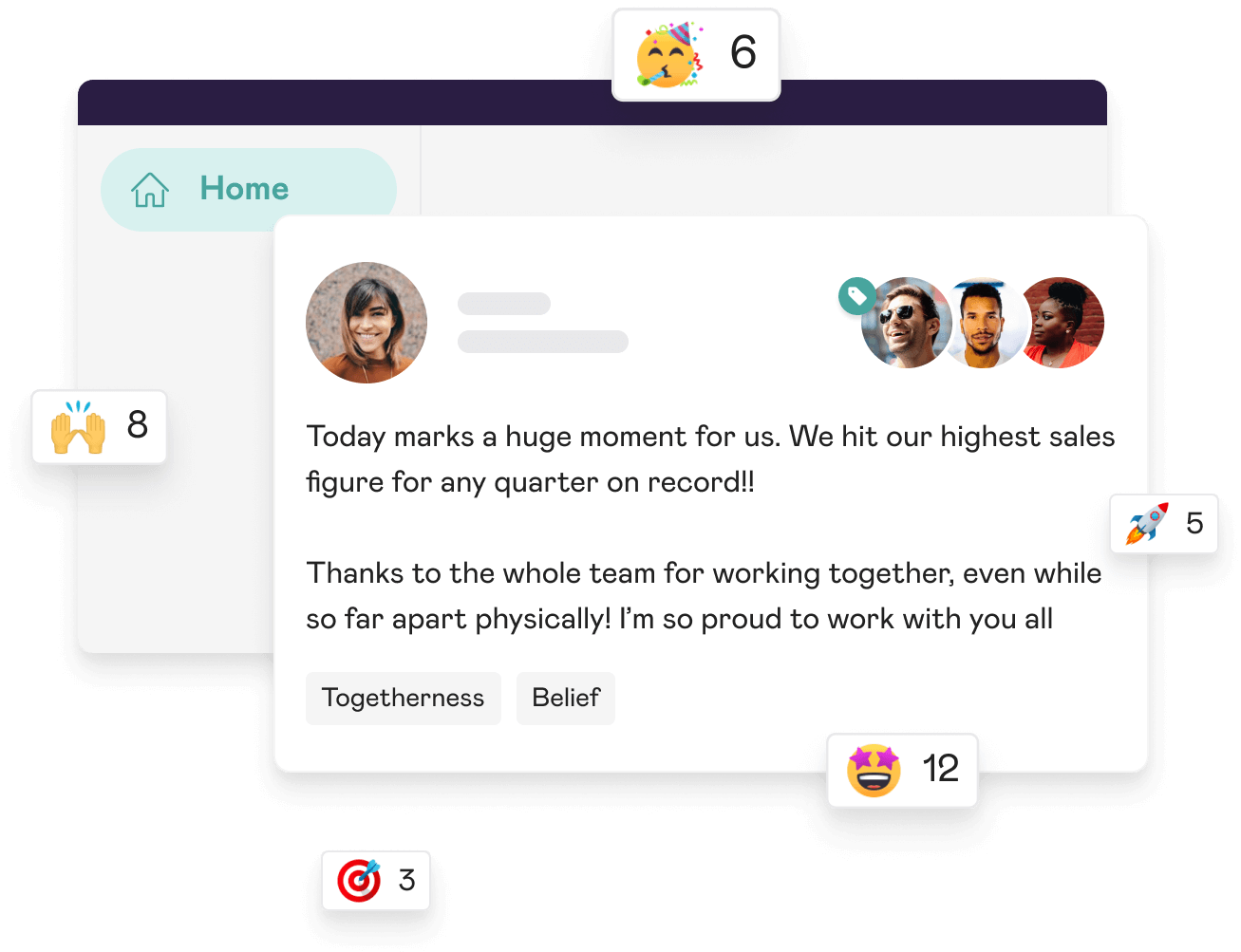
Mo positions itself as a social and user-friendly recognition platform designed to make appreciation a part of everyday work. It effectively supports both manager-led and peer-to-peer recognition, integrating smoothly with popular tools like Microsoft Teams and Slack. Mo’s automated features for milestones and values-based recognition, coupled with smart prompts and real-time insights, help maintain consistency and visibility across teams.
- G2 Rating: 4.6/5
- Strengths: Social and intuitive interface, encourages broad participation, connects recognition to company values, integrated communication tools.
- Best for: Organizations prioritizing a social, easy-to-use platform that encourages widespread participation and aligns recognition with core values.
- Key Features: Peer-to-peer "Moments," manager prompts, automated milestone recognition, values-based recognition, real-time insights.
- Weakness: Its rewards catalog and analytics capabilities may be less extensive compared to more advanced platforms.
3. WorkTango
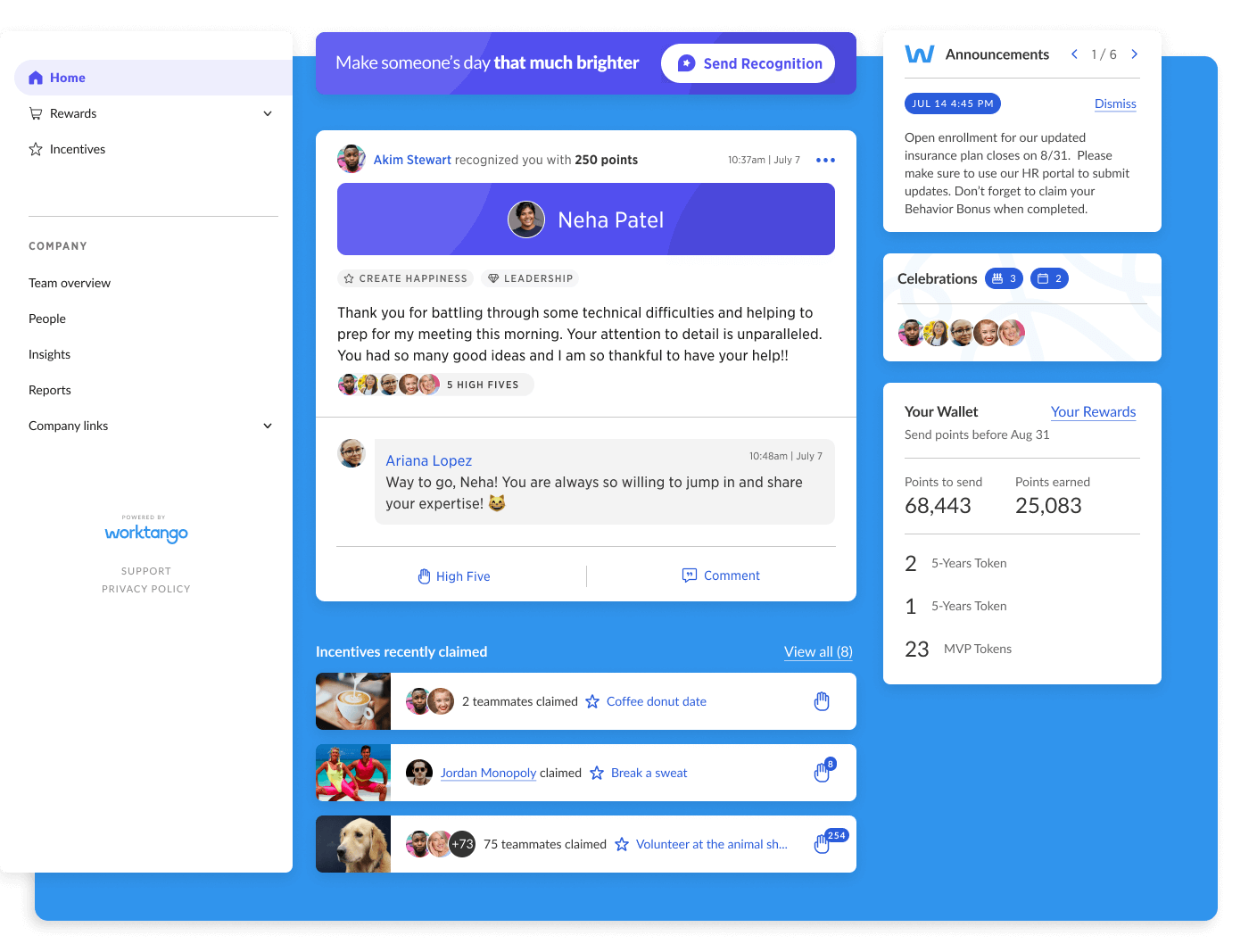
WorkTango offers a comprehensive recognition and rewards platform aimed at streamlining appreciation programs and providing clear visibility into participation. It supports both peer and manager recognition, incorporates automation for milestones and incentives, and delivers robust reporting to track activity across teams. Integrations with collaboration tools and access to a rewards marketplace are also key features.
- G2 Rating: 4.7/5
- Strengths: Integrated recognition and rewards solution, strong automation features, robust reporting capabilities, supports surveys and feedback.
- Best for: Organizations seeking an integrated recognition and rewards solution with strong automation and reporting capabilities.
- Key Features: Peer and manager recognition, automated milestone recognition, surveys and feedback tools, rewards marketplace, analytics.
- Weakness: May not offer the same depth of behavioral insights or advanced analytics found in larger, enterprise-focused platforms.
4. Motivosity
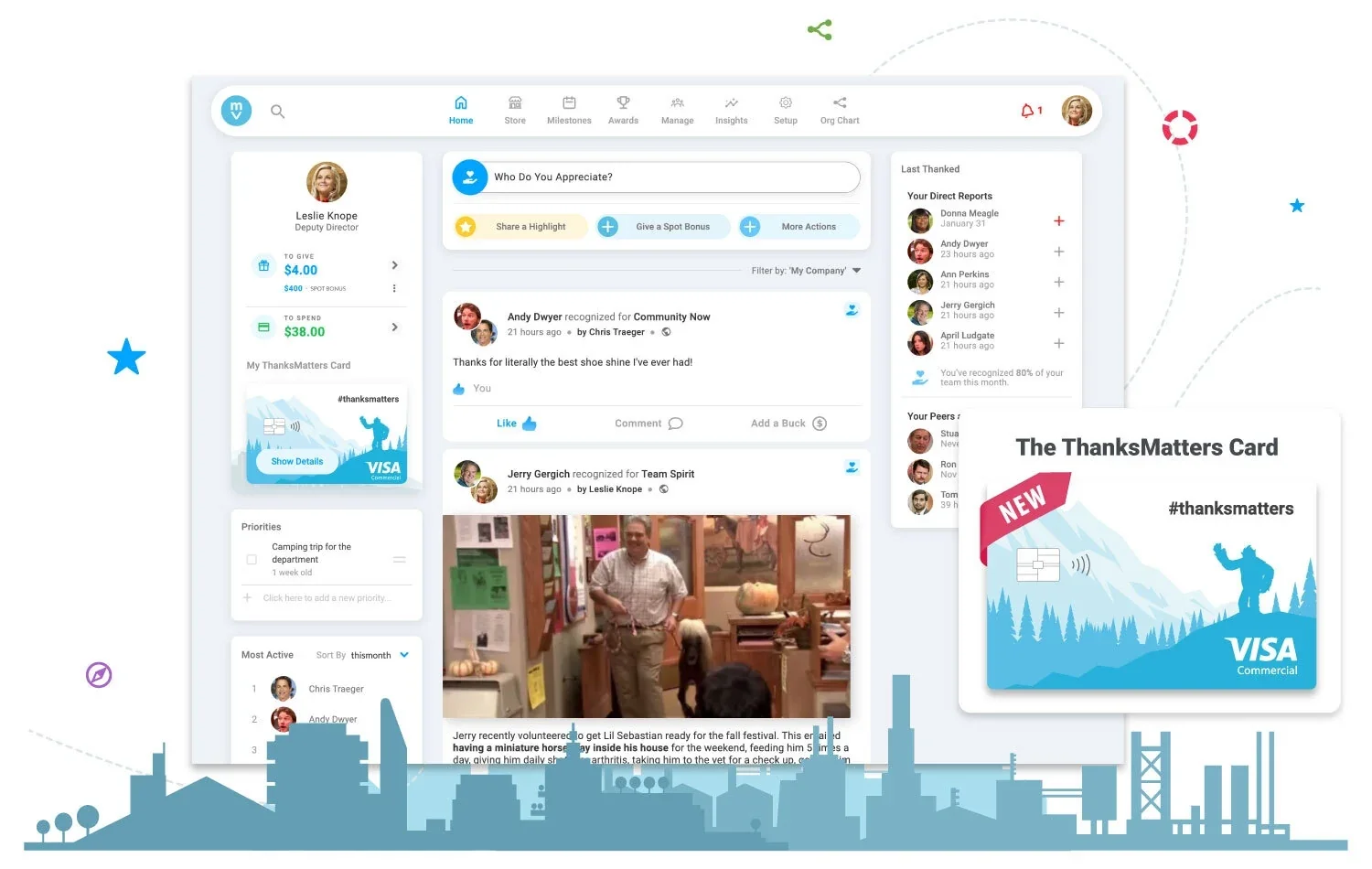
Motivosity focuses on automation and frequent appreciation, providing a platform that supports peer-to-peer and manager recognition, milestone celebrations, and spot bonuses. It includes tools for challenges, awards, and leader participation, complemented by analytics and dashboards for tracking recognition activity, employee sentiment, and program performance.
- G2 Rating: 4.7/5
- Strengths: Automation-driven recognition, emphasis on frequent appreciation, data-driven insights into engagement trends, user-friendly interface.
- Best for: Organizations seeking an automated recognition solution that effectively combines peer recognition, manager tools, and data-driven insights.
- Key Features: Peer and manager recognition, spot bonuses, automated milestone celebrations, awards and challenges, analytics dashboards.
- Weakness: May not offer the same enterprise-level scalability or global support as some larger competitors.
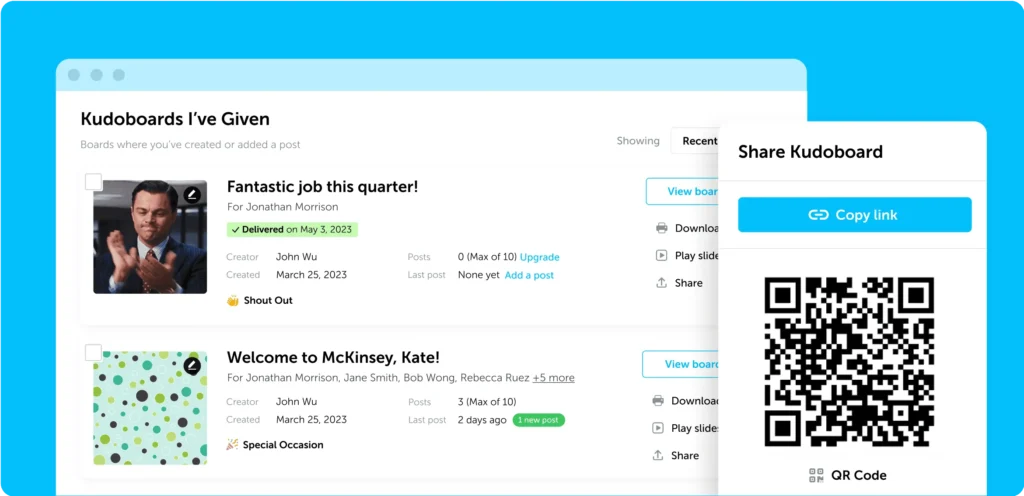
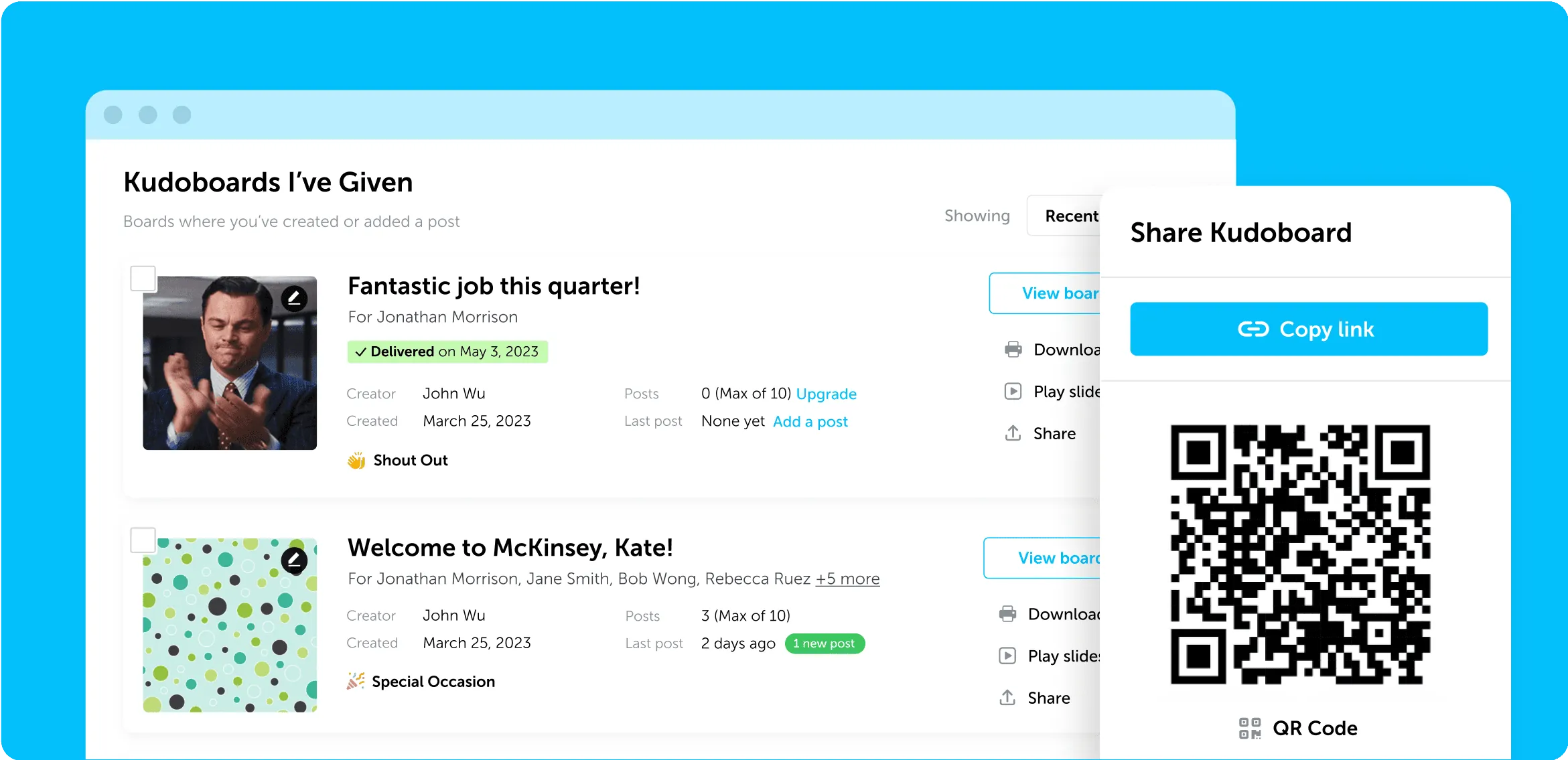
5. Kudoboard
Kudoboard specializes in collaborative digital appreciation, enabling teams to celebrate milestones and achievements through shared e-cards and message boards. It offers automation for birthdays and anniversaries, customizable branding, and integrations with common communication tools, making it ideal for creating visible, personalized moments of appreciation, especially in hybrid or remote settings.
- G2 Rating: 4.8/5
- Strengths: Simple, visual platform for group appreciation, easy to use for celebrating milestones, effective for hybrid/remote teams, customizable branding.
- Best for: Organizations looking for a simple, visual method to celebrate milestones and foster peer recognition in distributed environments.
- Key Features: Collaborative group e-cards, automated birthday/anniversary recognition, customizable branding, integrations with communication tools.
- Weakness: Primarily focuses on social recognition and may not provide the behavioral analytics or deep engagement data of more comprehensive platforms.
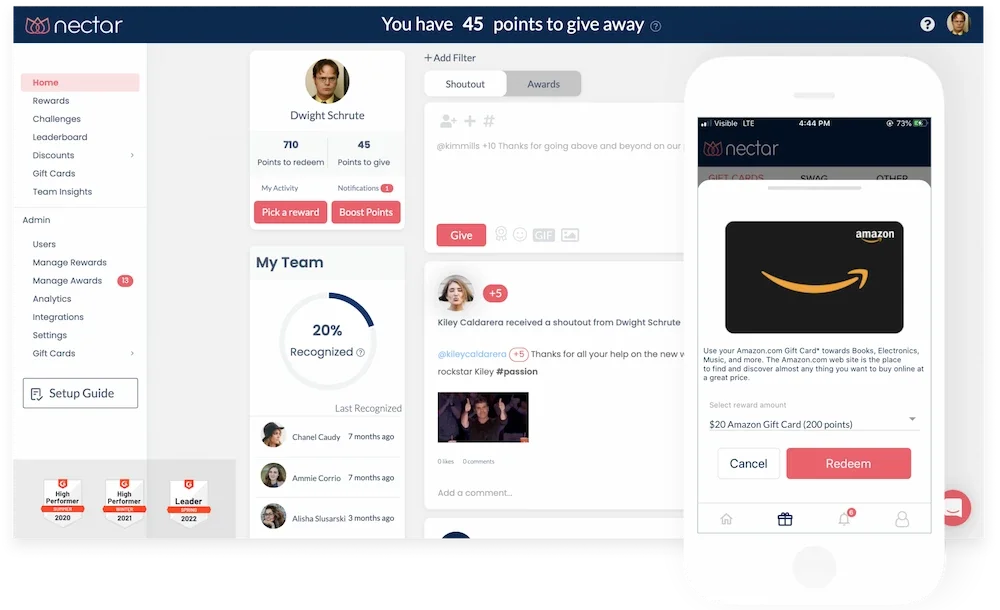
6. Nectar
Nectar aims to build company culture through frequent appreciation, supporting peer-to-peer recognition, nomination programs, and milestone celebrations. It also includes communication tools for company-wide updates and offers customizable reward options like gift cards and branded merchandise.
- G2 Rating: 4.7/5
- Strengths: All-in-one recognition solution, integrates appreciation with internal communication, customizable rewards, supports nominations.
- Best for: Organizations seeking an all-in-one recognition solution that merges appreciation, nominations, and internal communication.
- Key Features: Peer recognition, nomination programs, milestone celebrations, company-wide updates, customizable rewards.
- Weakness: May lack the global reach, depth of analytics, or behavioral science insights of more advanced platforms.
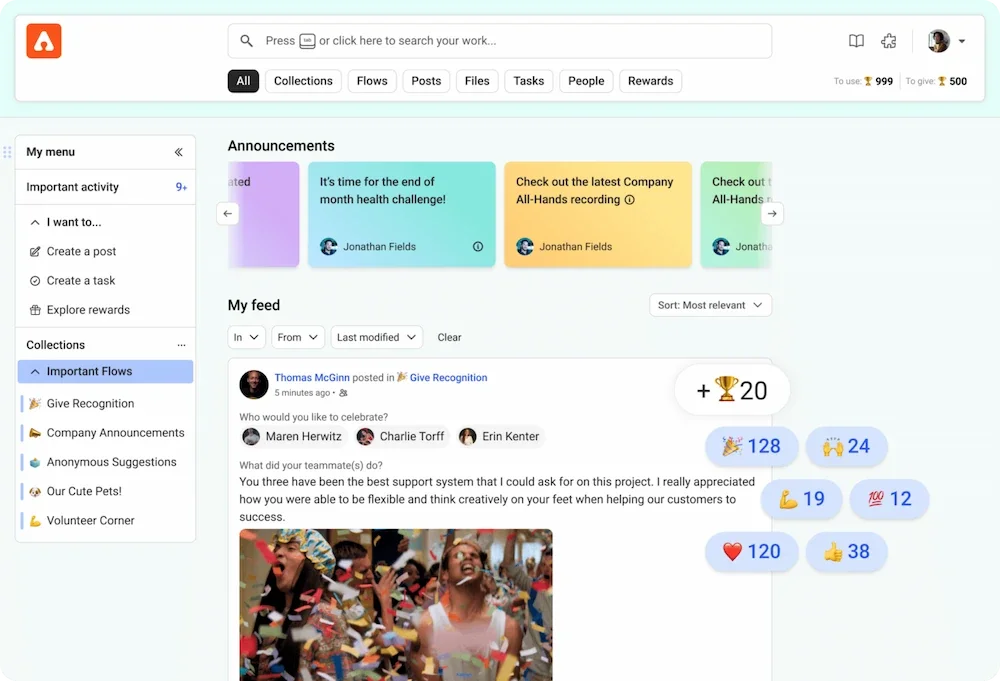
7. Assembly
Assembly provides a recognition and rewards platform focused on peer-to-peer appreciation and value-based recognition, enabling direct recognition within Slack, Microsoft Teams, or via the web. It creates a visible social feed for celebrating achievements and milestones, supporting awards, challenges, and automated celebrations with analytics that track engagement and participation.
- G2 Rating: 4.9/5
- Strengths: Seamless integration with communication tools, strong emphasis on peer recognition, visible social feed for achievements, good for value-based recognition.
- Best for: Organizations prioritizing a peer recognition platform tightly integrated with everyday communication tools.
- Key Features: Peer-to-peer recognition within Slack/Teams, social feed, awards and challenges, automated celebrations, analytics.
- Weakness: May not offer the same depth of analytics or large-scale customization as more data-driven platforms.
8. TerryBerry
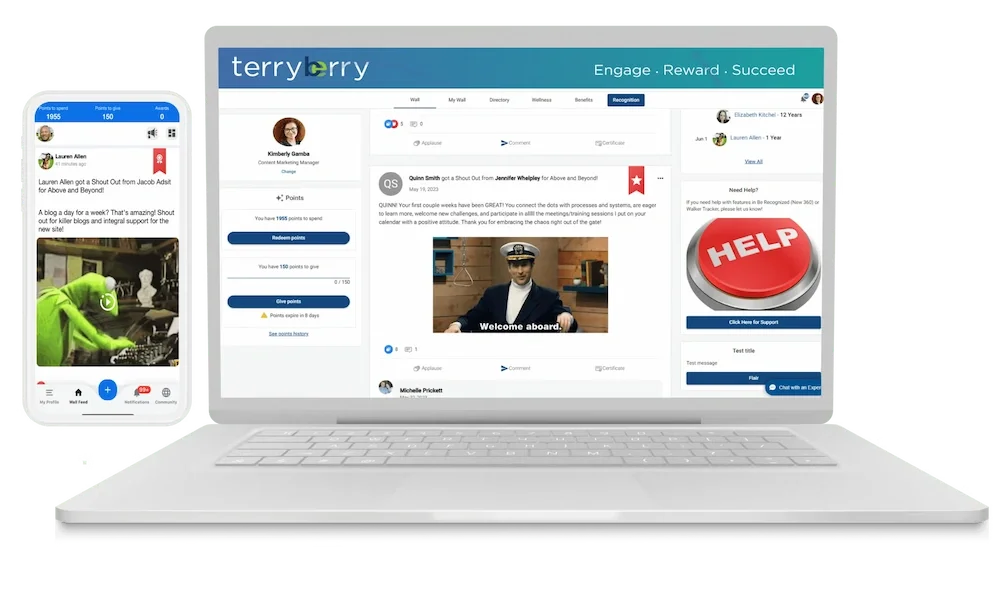
TerryBerry offers a unified platform for recognition, wellness, and feedback. It supports service awards, peer recognition, and milestone programs, alongside sentiment surveys and analytics for measuring culture and eNPS. Designed for distributed workforces, it blends digital and symbolic awards with data-driven insights.
- G2 Rating: 4.6/5
- Strengths: Unified approach to recognition, wellness, and engagement measurement; blends digital and symbolic awards; strong analytics for culture measurement.
- Best for: Organizations seeking a unified approach to recognition, wellness, and engagement measurement within a single platform.
- Key Features: Service awards, peer recognition, milestone programs, sentiment surveys, eNPS tracking, analytics.
- Weakness: May not offer the same recognition frequency data or global marketplace variety as more specialized platforms.
9. Guusto
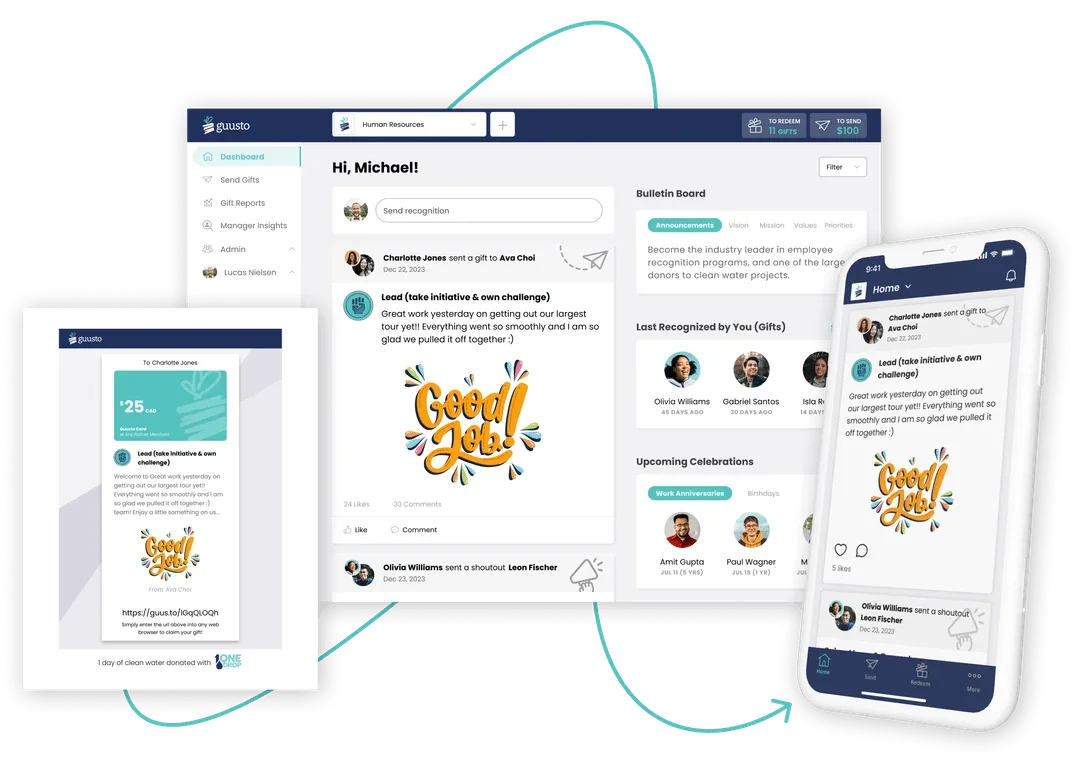
Guusto utilizes a direct dollar-value reward system instead of points, allowing recognition to be sent to employees, contractors, or volunteers without requiring corporate email addresses. It supports peer recognition, milestone programs, and manager-led budgets, with options for digital or printed delivery, making it accessible for deskless teams.
- G2 Rating: 4.9/5
- Strengths: Direct dollar-value rewards, accessible for frontline and dispersed teams, no corporate email required for recipients, flexible delivery options.
- Best for: Organizations with dispersed or frontline teams seeking an accessible recognition platform with flexible reward delivery.
- Key Features: Direct dollar-value rewards, peer and manager recognition, milestone programs, digital and printed delivery options.
- Weakness: Its simplified structure may not provide the same level of data analytics or program customization found in scalable recognition platforms.
10. Cooleaf
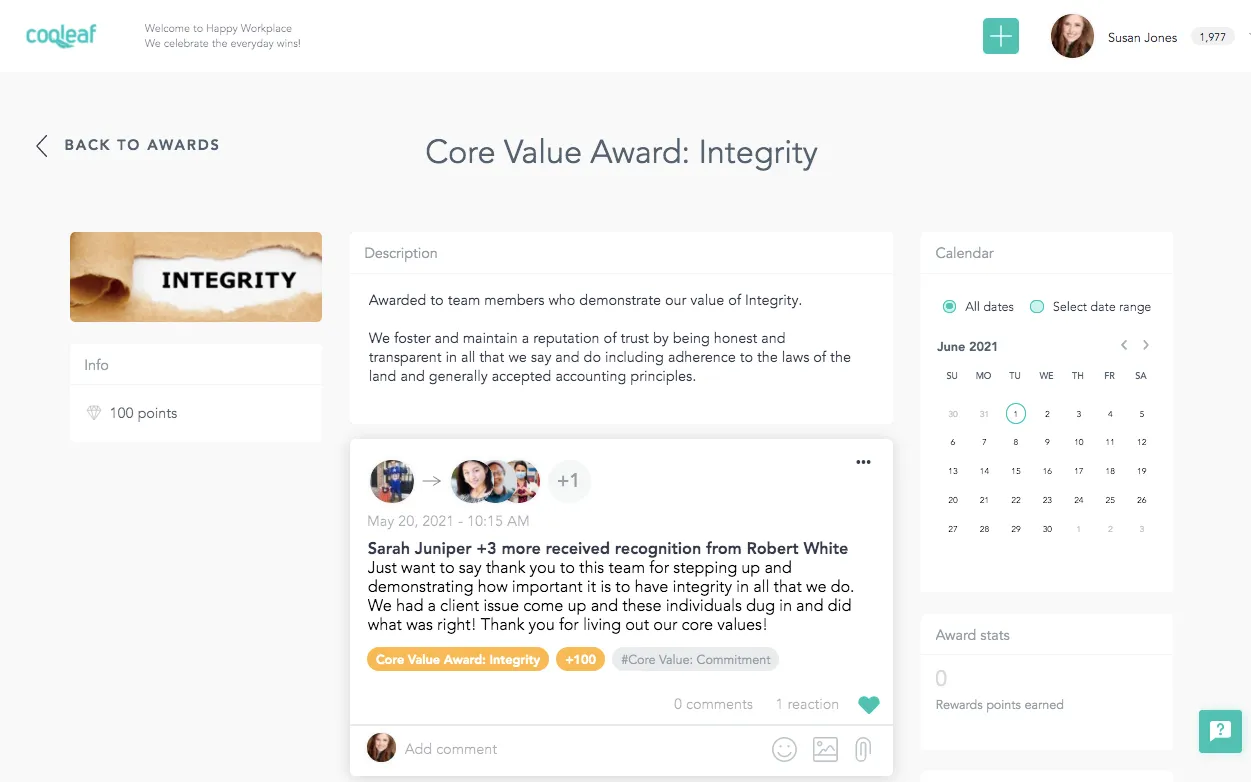
Cooleaf combines recognition, rewards, engagement programs, and employee feedback into a single platform. It enables organizations to celebrate achievements, promote company values, and automate milestones while collecting real-time insights through engagement surveys and dashboards. It also supports community building through social feeds and learning initiatives.
- G2 Rating: 4.9/5
- Strengths: All-in-one platform for recognition, engagement, and feedback; real-time insights through surveys; supports community building and DEI programs.
- Best for: Companies looking to manage recognition, engagement, and feedback initiatives within a single platform.
- Key Features: Social recognition, rewards, engagement surveys, community building, DEI programs, real-time dashboards.
- Weakness: Its broader engagement focus may limit the specialization and global rewards variety found in platforms built primarily for large-scale recognition.
11. Espresa
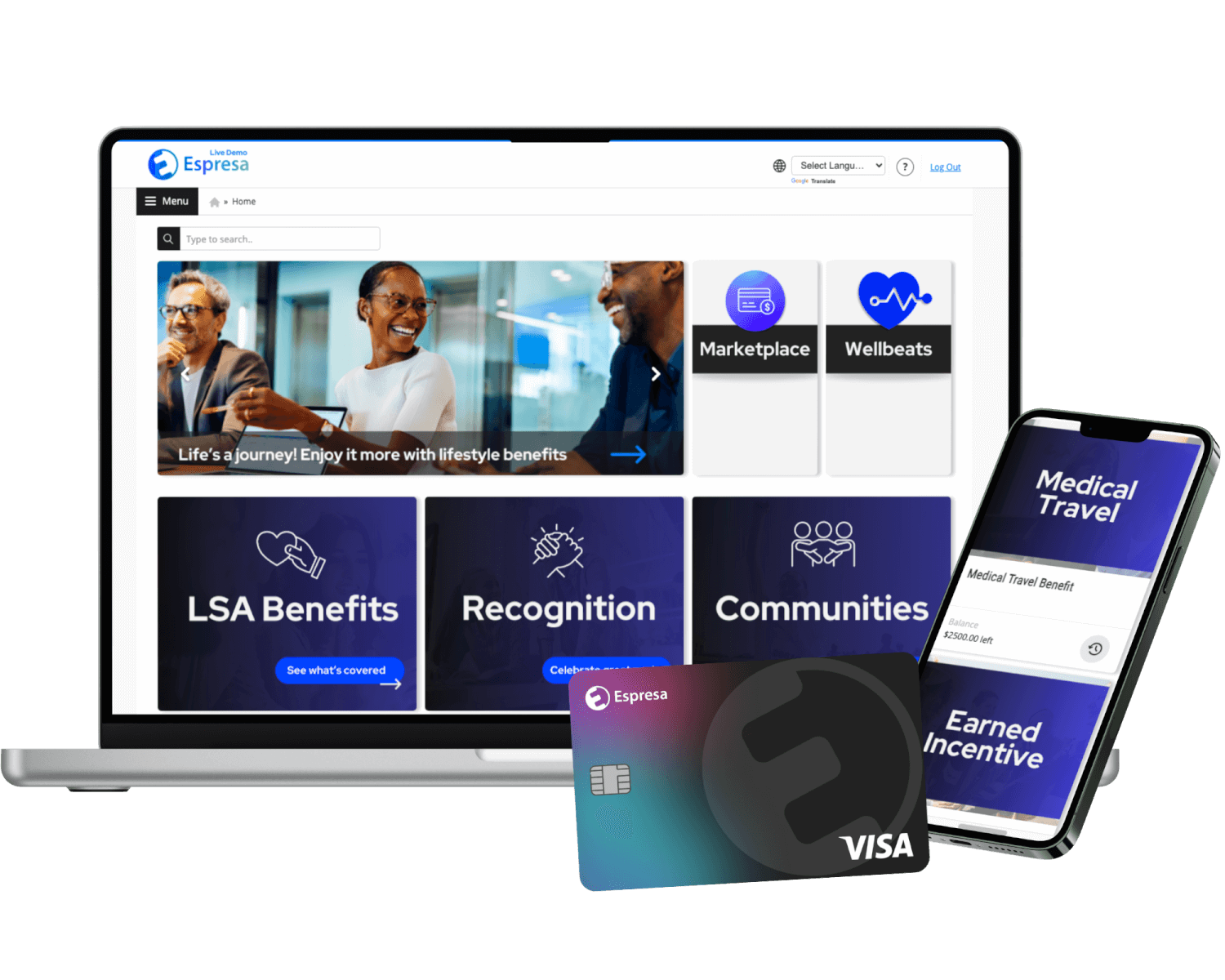
Espresa offers a recognition and rewards platform that integrates appreciation, wellbeing, and lifestyle benefits. It supports peer-to-peer and cross-organizational recognition with both monetary and non-monetary options, accessible through a mobile-first design.
- G2 Rating: 4.3/5
- Strengths: Combines recognition, wellbeing, and lifestyle benefits; mobile-first design; global zero-markup rewards marketplace.
- Best for: Organizations seeking to combine employee recognition, wellbeing programs, and lifestyle benefits within a single digital platform.
- Key Features: Peer-to-peer recognition, wellbeing programs, lifestyle benefits, global rewards marketplace.
- Weakness: Its broad scope means recognition tools may not go as deep into data and behavioral insights as more specialized platforms.
12. Matter
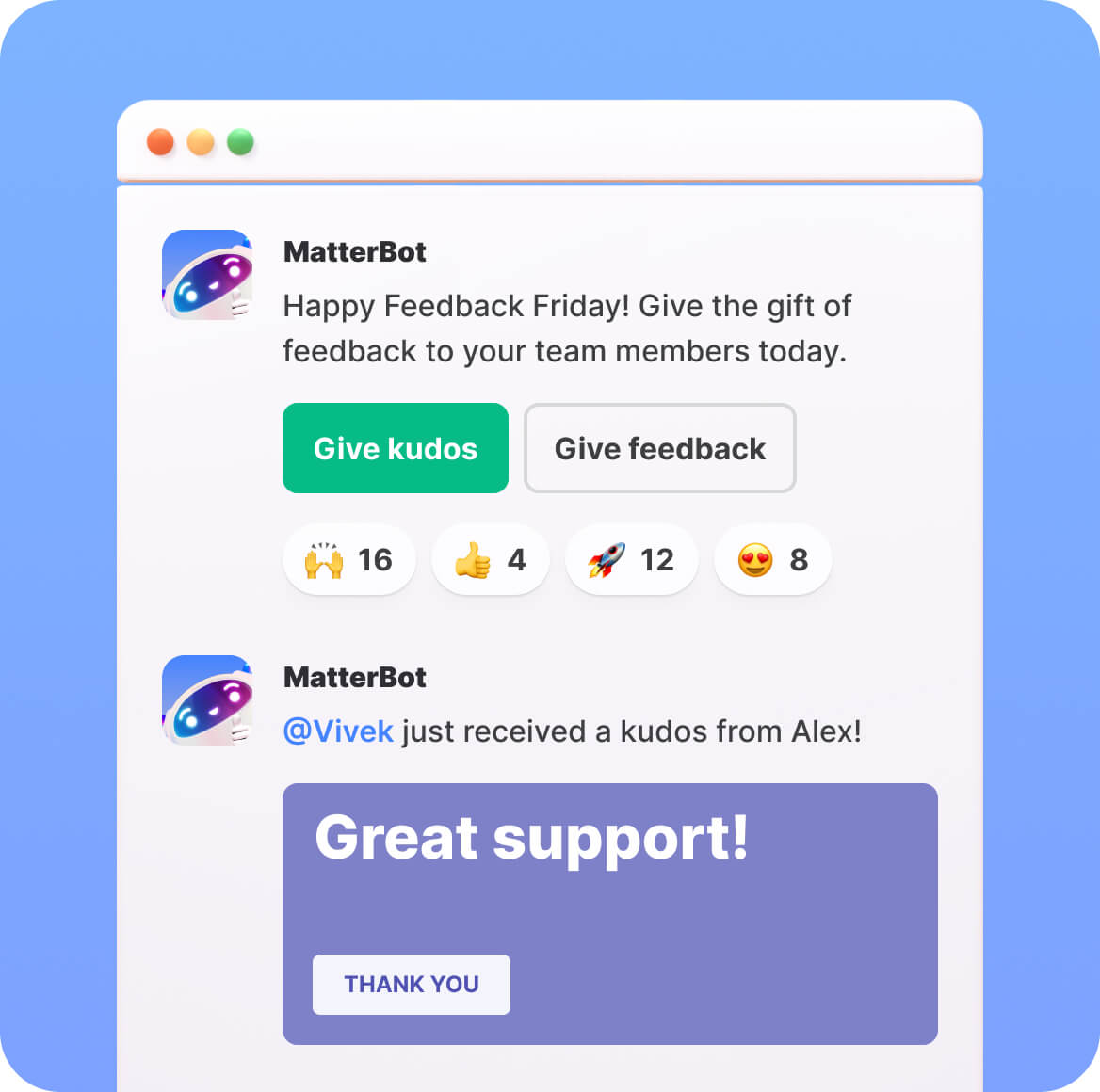
Matter is a recognition and feedback platform built directly for Slack and Microsoft Teams. It encourages peer-to-peer appreciation through features like kudos, automated celebrations, and customizable templates linked to company values. The platform also includes coins-based rewards and pulse surveys.
- G2 Rating: 4.7/5
- Strengths: Deep integration with Slack and Microsoft Teams, encourages peer appreciation, customizable templates, coins-based rewards.
- Best for: Companies that want an easy way to embed recognition and feedback directly into Slack or Teams.
- Key Features: Peer kudos, automated celebrations, value-aligned templates, coins-based rewards, pulse surveys.
- Weakness: May lack the deeper reporting, customization, and global scalability offered by larger recognition platforms.
13. Empuls (Xoxoday)
Empuls is an employee engagement platform that consolidates recognition, rewards, surveys, incentives, and communication tools. It supports feedback collection, peer recognition, and reward distribution across global teams, with AI-driven analytics and a wide range of integrations for scalability.
- G2 Rating: 4.6/5
- Strengths: Comprehensive engagement platform, global reward distribution, AI-driven analytics, extensive integrations.
- Best for: Organizations looking for a single platform to manage recognition, engagement, and employee communication across multiple regions.
- Key Features: Recognition, rewards, surveys, incentives, AI analytics, global reach.
- Weakness: Its broad engagement focus may limit the depth of customization and recognition-specific insights.
14. Connecteam
Connecteam offers an all-in-one platform for managing deskless teams, integrating operations, communication, HR, and engagement tools. Its recognition features allow managers to celebrate wins, issue digital badges, and distribute gift cards directly within the app.
- G2 Rating: 4.6/5
- Strengths: All-in-one app for deskless teams, integrates operations and engagement, mobile-first recognition.
- Best for: Organizations with large or distributed frontline and deskless workforces seeking an integrated app.
- Key Features: Digital badges, gift card distribution, internal communication, operations management.
- Weakness: Recognition capabilities may feel secondary compared to platforms specializing in engagement and behavioral insights.
15. Vantage Circle
Vantage Circle is an all-in-one platform combining recognition, wellness, surveys, and perks. It features social feeds, awards, automated milestones, and a large global rewards catalog, with quick rollout and broad integration options.
- G2 Rating: 4.7/5
- Strengths: Consolidated engagement suite, extensive global rewards catalog, quick implementation, broad integration options.
- Best for: Organizations seeking a consolidated engagement suite with broad reward coverage.
- Key Features: Social recognition, wellness programs, surveys, global rewards catalog, perks.
- Weakness: May not match the depth of behavioral analytics or advanced recognition science offered by more specialized platforms.
Choosing the Right Employee Recognition Platform: Key Considerations
Selecting the most suitable employee recognition platform requires careful consideration of organizational needs and goals. There are numerous platforms available, but not all are designed to enhance the employee experience and drive tangible results. The right platform can significantly improve employee engagement, reinforce desired behaviors, and achieve impactful business outcomes.
When comparing recognition platforms, several critical tips and considerations should guide the decision-making process:
13 Key Tips for Choosing a Top Employee Recognition Platform:
- Alignment with Company Culture: The platform should complement and enhance your existing organizational culture, not clash with it.
- Ease of Use for All Employees: It must be intuitive and accessible for every employee, regardless of their technical proficiency.
- Frequency and Visibility: The platform should encourage frequent recognition and ensure it is visible across the organization.
- Meaningful Rewards: The reward options should be diverse, desirable, and genuinely appreciated by your workforce.
- Integration Capabilities: Seamless integration with your existing HRIS and communication tools is crucial for smooth operation.
- Mobile Accessibility: A mobile-first approach or a robust mobile app is essential for a distributed workforce.
- Customization Options: The ability to tailor the platform and rewards to your specific needs is important.
- Robust Reporting and Analytics: Access to data that demonstrates the program’s impact on engagement, retention, and productivity is vital.
- Scalability: The platform should be able to grow with your organization.
- Security and Compliance: Ensure the platform meets your organization’s data security and privacy requirements.
- Customer Support: Reliable and responsive customer support is essential for smooth implementation and ongoing use.
- Cost and ROI: Evaluate the pricing structure and ensure it aligns with your budget and offers a clear return on investment.
- Behavioral Science Backing: Platforms informed by research on human motivation and behavior tend to be more effective.
What to Consider When Choosing an Employee Recognition Platform:
- Employee Demographics and Preferences: Understand what motivates your workforce. Are they driven by monetary rewards, experiences, or social recognition?
- Organizational Size and Structure: A platform suitable for a small startup might not suffice for a global enterprise. Consider your company’s geographical distribution and reporting structures.
- Specific Business Objectives: Are you primarily looking to boost retention, improve productivity, enhance company culture, or drive specific behaviors? The platform should align with these objectives.
- Integration with Existing Technology Stack: Avoid creating data silos. Ensure the platform can communicate effectively with your current HR and communication tools.
- Budgetary Constraints and ROI: Determine a realistic budget and focus on platforms that offer a demonstrable return on investment through improved employee metrics.
The Most Popular Employee Recognition Software: A Deep Dive
Achievers stands out as the most popular employee recognition software globally, serving over 4 million employees across 164 countries. Its widespread adoption is attributed to its ability to drive recognition frequency at more than double that of other providers. Organizations that leverage Achievers’ advanced features and programs often report up to five times greater impact on critical business drivers like engagement, productivity, and retention.
The platform’s popularity stems from its comprehensive approach, which combines social and monetary recognition with integrated reporting, analytics, connection tools, and AI-driven insights within a unified system. Achievers is designed to be widely used, easily accessible, and built to support consistent participation at scale, offering enterprise-grade capabilities for both growing and large companies.
Key reasons for Achievers’ popularity include:
- High Recognition Frequency: Fosters a culture of continuous appreciation.
- Global Reach and Scalability: Supports diverse workforces across different geographies.
- Actionable Insights: Provides data-driven understanding of recognition’s impact.
- Seamless Integrations: Connects with essential business systems for a unified experience.
- Science-Backed Approach: Utilizes behavioral science to maximize effectiveness.
- Comprehensive Reward Options: Offers a vast global marketplace for personalized rewards.
Securing Executive Buy-In for Employee Recognition Platforms
To gain executive buy-in for an employee recognition platform, it is crucial to demonstrate how the recognition strategy directly contributes to overarching business outcomes. Research from the State of Recognition Report highlights that companies with robust recognition cultures exhibit several key advantages:
- Higher Employee Engagement: Employees feel valued and motivated.
- Improved Employee Retention: Reduced turnover leads to cost savings and institutional knowledge retention.
- Enhanced Productivity: Recognized employees are often more productive and innovative.
- Stronger Company Culture: A positive and appreciative work environment fosters loyalty and collaboration.
- Increased Profitability: The cumulative effect of higher engagement, retention, and productivity often translates to better financial performance.
When leaders perceive recognition not just as a perk but as a strategic driver of culture and performance, securing their support becomes significantly easier. This alignment ensures that when comparing top platforms, the chosen solution will be one that genuinely serves the organization’s strategic objectives.
General Motors: Transforming Recognition into a Global Culture Driver
With a vast workforce exceeding 160,000 employees across six continents, General Motors (GM) faced the challenge of consistently reinforcing its values, connecting a globally dispersed workforce, and making recognition easy, visible, and meaningful for everyone. Their previous recognition programs were fragmented and manual, hindering consistent leadership recognition and employee visibility. GM required a unified global platform that was user-friendly, organization-wide visible, and tightly aligned with company behaviors.
By implementing a single, integrated recognition platform powered by Achievers, GM successfully embedded recognition into the daily workflows of its employees worldwide. This move simplified peer recognition, made it effortless for leaders to participate, and automated milestone celebrations. The initiative replaced dozens of disparate local programs with a shared, consistent experience, making recognition frequent, social, and scalable.
The results of this transformation were profound:
- 1.5x increase in recognition frequency: More employees were being recognized more often.
- 3x increase in manager recognition: Leadership actively participated in reinforcing positive behaviors.
- 2x increase in employee recognition: Peer-to-peer appreciation flourished.
- 5x increase in recognition tied to company values: Employees understood and were motivated by the company’s core principles.
- 10% improvement in employee engagement scores: A clear indicator of a more motivated and connected workforce.
General Motors’ success story exemplifies how easily usable, visible, and integrated recognition, when embedded into everyday work, can scale to drive significant cultural and business improvements.
The Ultimate Goal: Employee Recognition Platforms That Deliver Tangible Results
The core purpose of advanced employee recognition platforms, such as Achievers, is to deliver measurable results. With twice the industry average recognition frequency, leading integrations, and recognition strategies that demonstrably drive behavior change, platforms like Achievers help organizations accelerate improvements in engagement, productivity, and retention.
It’s about creating recognition that not only feels good for the recipient but also contributes positively to the organization’s bottom line. By transforming everyday moments into sustained business momentum, these platforms foster a workplace where appreciation is a continuous, positive force. For organizations still evaluating their options, understanding the demonstrable impact and unique capabilities of platforms like Achievers is key to making an informed decision that will benefit their workforce and their business.
Information and pricing cited in this article were sourced from vendor websites as of the publication date.