
A palpable tension hung in the air of the boardroom, a stark illustration of high-stakes decision-making. At the head of the table sat a Vice President, presiding over a budget meeting where two critical strategic initiatives vied for the same limited pool of funds. The room was a battleground of entrenched facts and impassioned arguments, each side firmly rooted in their respective data and viewpoints. The VP, caught in the crossfire, paused, a deep breath momentarily stilling the charged atmosphere. In a move that defied the expected protocol of concluding the discussion, he signaled to a young protégé observing from the periphery, a quiet invitation whispered across the room: "Come in. See how this meeting unfolds." This seemingly small gesture, an act of deliberate inclusion in a moment of intense ambiguity, rippled through the room, its implications resonating beyond the immediate budget debate.
The protégé’s initial hesitation was met with a collective, questioning gaze from senior leaders. Yet, the door remained ajar, a silent testament to the VP’s unconventional choice. This decision, to allow an observer into a high-pressure situation, provided the protégé with an unparalleled learning opportunity. It was a front-row seat to witness not just the outcome of the financial allocation, but the very process by which a seasoned leader navigated uncertainty. The VP, in real-time, engaged in complex financial calculations, persistently probed with "why" questions to uncover underlying assumptions, and masterfully regulated his own emotions to achieve a delicate balance between competing priorities and an overarching commitment to the organization’s shared direction.
Following the intense session, a debrief between the VP and his protégé offered a profound insight into the true nature of leadership development. While a mere ten minutes were dedicated to dissecting the financial data, an entire fifty minutes were devoted to dissecting the critical juncture where the VP leaned back, reiterated his "why" for the third time, and patiently awaited a more profound understanding before rendering a decision. This was not a lesson found in any job description or succession plan; it was a visceral demonstration of leadership in action.
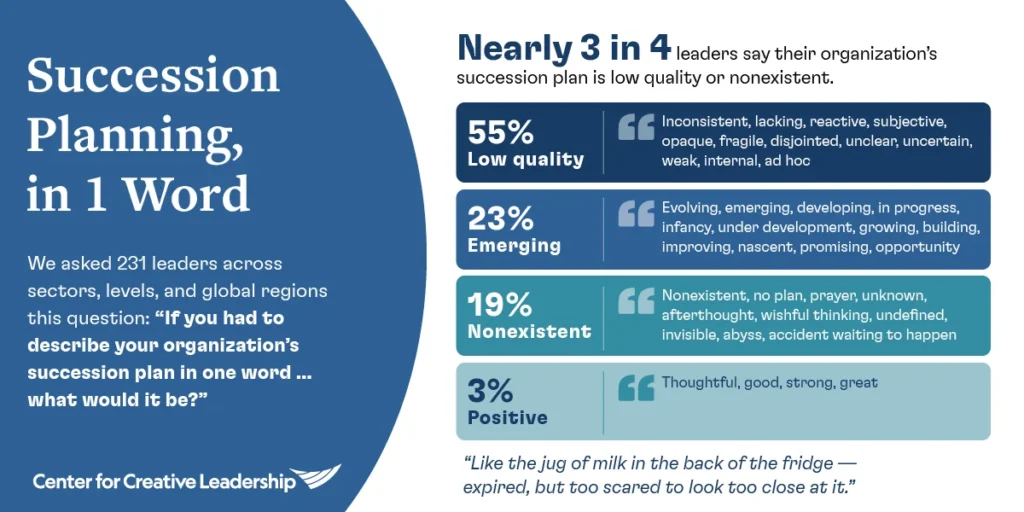
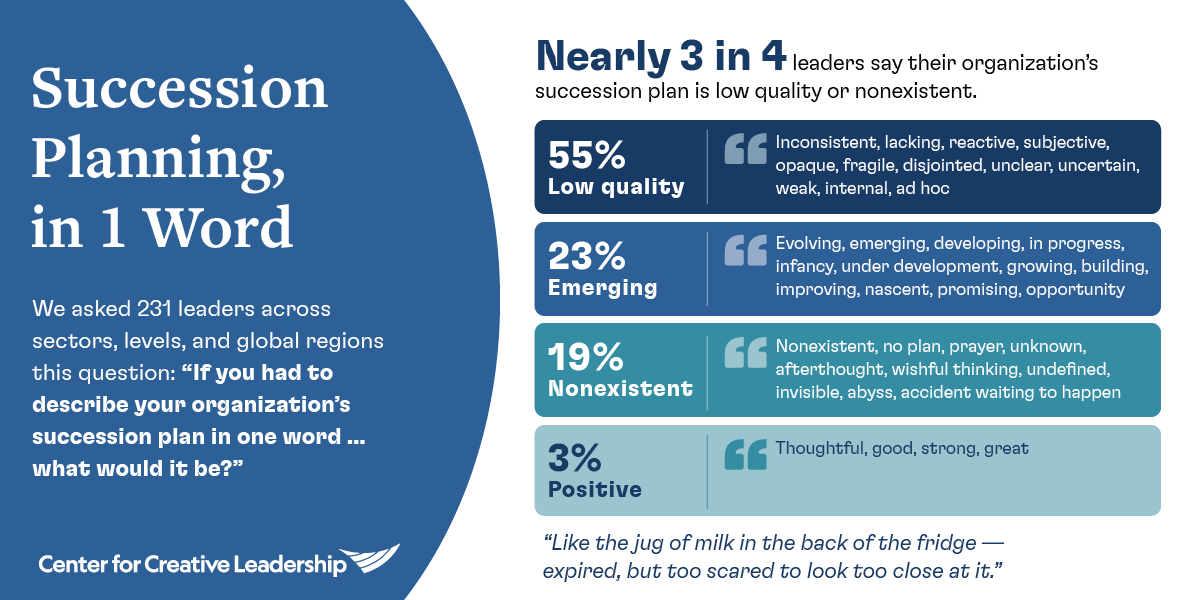
The implications of this narrative extend far beyond a single mentor-mentee relationship. Organizations at scale, much like individuals, face a stark reality: wisdom, when hoarded, depreciates, but when shared, it compounds exponentially. This principle is underscored by recent succession research, which reveals a critical deficiency in organizations that approach succession planning as a reactive scramble. Such an approach cripples their capacity to simultaneously balance short-term operational needs with long-term strategic vision. Without proactive development, these organizations are ill-equipped to identify roles that would cause the most disruption if vacant, nor do they possess the high-leverage strategies to mitigate such risks. The imperative, therefore, is for organizations to reframe succession not as a perfunctory administrative task, but as a dynamic, living system of leadership development. This system must cultivate a robust "wisdom infrastructure" capable of identifying and nurturing the right leaders well before they are critically needed.
Knowledge Transfer vs. Wisdom Transfer: The Shift From Replacement to Readiness
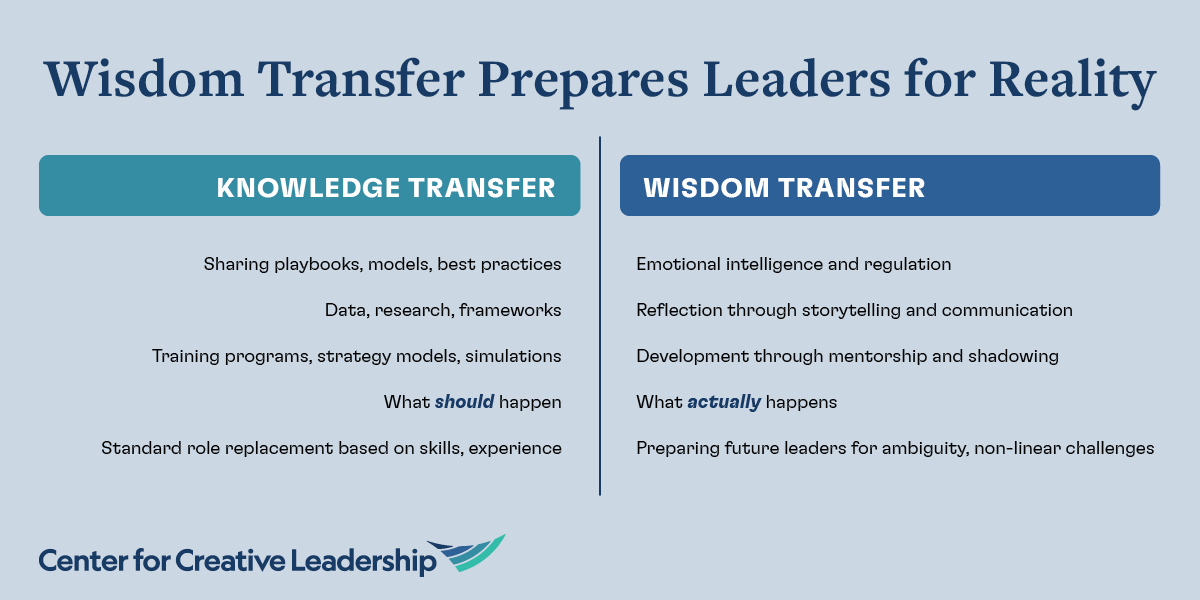
Our extensive research into leadership succession reveals a prevalent organizational tendency to view succession planning primarily as a mechanism for knowledge transfer. This traditional approach focuses on the tangible, the operational, and the easily quantifiable aspects of leadership. It involves the diligent completion of forms, the deployment of standardized frameworks and data analytics for decision-making, the communication of best practices, and the selection of individuals based on role-specific skills and established expectations. This is akin to preparing a leader for the ideal scenario, where all variables are predictable and all challenges can be met with pre-defined solutions.
Knowledge transfer effectively addresses questions such as:
- What are the core responsibilities of this role?
- What are the essential technical skills required?
- What are the established operational procedures and protocols?
- What are the key performance indicators for this position?
However, knowledge transfer, while foundational, proves insufficient in cultivating the resilient, high-performing succession systems demanded by today’s volatile business landscape. The most critical moments of leadership, as consistently reported by C-suite executives, often occur outside these idealized scenarios. What happens when a key leader departs unexpectedly? How does an organization respond to unforeseen external shocks? What are the actions of leaders when their established playbooks falter, and they find themselves in uncharted territory for which they have no formal training? It is precisely in these junctures that leadership wisdom becomes paramount.
Leadership wisdom is defined as the sophisticated ability to interpret complex contexts, anticipate cascading consequences, and exercise consistent, sound judgment in the face of ambiguity and uncertainty. Wisdom transfer, therefore, is the intentional and deliberate sharing of this accumulated judgment, seasoned experience, and keen discernment from one generation of leaders to the next. It is the critical process that equips future leaders with the capacity to navigate the inherent complexities and uncertainties of leadership roles.
Our research unequivocally demonstrates that organizations achieving the most effective leadership transitions are those that embed the transfer of wisdom as a central tenet of their succession infrastructure. This requires a fundamental shift in perspective, prompting organizations to ask more profound questions, such as:

- How do we foster the ability to discern underlying patterns in complex situations?
- What are the critical unwritten rules and cultural nuances that shape organizational dynamics?
- How do we cultivate the capacity to anticipate unintended consequences of decisions?
- What are the ethical considerations that guide our most challenging choices?
- How do we ensure continuity of organizational purpose and values during times of change?
Wisdom transfer fundamentally reframes succession from a static, procedural exercise into a dynamic, strategic mindset. When leaders recognize its profound importance, they begin to perceive succession not merely as a checklist to be completed, but as one of their most significant opportunities for leadership development and organizational legacy. As vividly illustrated by the opening anecdote, the essence of wisdom transfer often begins with a simple, yet powerful, personal invitation: "Come with me so I can show you how this really works." This direct, experiential approach offers a pathway to cultivating leaders who are not just knowledgeable, but truly wise.
Succession Infrastructure: Creating Avenues for Wisdom Transfer
If wisdom transfer is the indispensable component of effective succession, the crucial question then becomes: how can this concept be practically integrated into an organization’s existing succession processes? The journey begins with a deliberate step back, an examination of the entire system across multiple temporal horizons. To this end, we have identified four core elements that function as structural pillars in a modern, wisdom-powered succession system.
1. Witnessing Decisions in Real-Time
At its zenith, succession planning is intrinsically linked to a carefully crafted journey of leadership development. Arguably, no facet of this journey is more formative than providing emerging leaders with opportunities to witness consequential decisions being made in real-time. This exposure allows them to observe the intricate dynamics of leadership at levels beyond their immediate purview, fostering a deeper understanding of how complex issues are dissected and resolved at the executive strata.
The overarching goal of such immersive experiences is to cultivate the capacity to perceive subtle undercurrents within conversations, to sense the palpable shifts in organizational momentum, and to respond with discerning judgment rather than rote adherence to procedure. Organizational systems that effectively facilitate this process create developmental pathways that encourage the interpretation and integration of these observations into the emerging leaders’ own cognitive and behavioral frameworks. These firsthand encounters provide invaluable insights into the essential capabilities required for advancement, often revealing crucial competencies that are not explicitly delineated in job descriptions. These observations represent some of the most potent forms of wisdom transfer, as emerging leaders directly witness judgment being exercised in high-stakes scenarios.
Your Actionable Insight: Conduct a thorough mapping of the highest-stakes decision-making moments within your organization. Critically assess who is consistently present in these critical discussions and, more importantly, who should be present to gain invaluable exposure and learning.
2. Communicating Continuity Through Leadership Transition
Moments of critical succession arrive, more often than not, without forewarning. They can manifest in rooms filled with individuals who have lost faith, or within cultures undergoing a profound metamorphosis from what they were to what they must become. Navigating these turbulent periods necessitates leaders who possess the inherent ability to continually reorient themselves and their organizations amidst shifting landscapes.
A proven practice emerging from our research is the deliberate formation of a "wisdom council." This council is meticulously constructed to represent genuine influence and deep institutional memory, ensuring that every major organizational function has either its leader or their most trusted direct report in attendance. This creates a dynamic, living network poised to collectively address critical questions: Who are we, who are we becoming, and what fundamental elements must we diligently carry forward?
Organizations that fail to adequately answer these questions during a leadership transition face a significant strategic risk: the erosion of their ability to distinguish between what must be preserved and what must be relinquished. The consequence is often a dual pitfall: either calcification around outdated strengths or the abandonment of the very attributes that were instrumental to their initial viability. The answers to these pivotal questions reside within individuals and surface when wise leaders adeptly read the room, articulating sentiments that are felt but not yet expressed.
Your Actionable Insight: Prior to your next significant leadership transition, meticulously identify the individuals who embody the historical memory and core ethos of your organization. Ensure their active participation and voice are secured within the critical decision-making forums.
3. Fostering Developmental Relationships
Wisdom flourishes most robustly in environments characterized by mutual trust, where individuals feel empowered to engage in candid and honest dialogue. Developmental relationships serve as the primary conduits for wisdom transfer within organizations, providing aspiring leaders with their most impactful guidance as they prepare for and assume new responsibilities.
Judgment, perhaps more than any other leadership attribute, exemplifies the abstract nature of wisdom. It is inherently difficult to teach through conventional means, yet it is absolutely essential to transfer. Developmental relationships cultivate the conditions necessary to refine judgment through a variety of mechanisms: seasoned leaders can walk through hypothetical scenarios, articulate their reasoning processes, compare diverse thought processes, and engage in open discussions about the multifaceted factors that inform their decisions in consequential moments.
Our research has uncovered instances of collegial and mentor-mentee relationships that have sustained themselves across decades, long after formal roles have concluded. This enduring connection suggests that the wisdom transferred through these relationships transcends the confines of a specific position, continuing to compound and enrich over time.
Your Actionable Insight: Actively identify the existing developmental relationships within your organization. Ascertain whether these invaluable connections are being intentionally nurtured and protected, or if they are allowed to dissipate as individuals transition between roles.
4. Mapping Influence Networks
The transfer of organizational wisdom does not rigidly adhere to the hierarchical structure of the organizational chart. Instead, it thrives within nodes where leaders are most intricately connected to a diverse array of stakeholders and perspectives. Network science consistently corroborates findings from our bibliometric research, indicating that the most influential carriers of wisdom and institutional memory are frequently found at the periphery and the bridges of an organization.
Three key network properties are of paramount importance for effective succession planning. Firstly, status reflects the depth and breadth of connections a leader has cultivated within the organizational ecosystem. Leaders rich in wisdom are those who are deeply embedded across multiple spheres of influence simultaneously. Their value to succession planning is often invisible until their departure, highlighting the critical need for proactive identification.
Secondly, boundary spanning involves the ability to effectively bridge diverse functions, generations, and organizational lines, carrying crucial perspectives across these divides. Boundary spanners often dictate agendas and control the flow of information, frequently exerting influence without formal positional authority. Because their influence is relational rather than positional, they may not appear on traditional succession plans, contributing to organizational challenges in understanding why certain initiatives gain traction while others falter.
Thirdly, coalition capacity denotes the ability to forge trust across differences and to hold competing perspectives in productive tension. Organizations that experience a decline in this capacity during leadership transitions often struggle to attract and cultivate the next generation of leaders.
Our research validates the premise that tomorrow’s workforce operates within a global network. Organizational resilience is forged by individuals who have already demonstrated their capacity for survival and adaptation in diverse contexts. It is plausible that your next breakthrough leader may possess a unique perspective, expressed in a language of innovation that you have yet to fully comprehend. Influence network mapping offers a systematic method for identifying these critical individuals before they are urgently needed.
Your Actionable Insight: Undertake a comprehensive mapping of your organization’s influence network. Identify where critical wisdom is concentrated, how it is currently flowing, and who possesses this vital knowledge that may not be evident on the formal organizational chart.
Making Wisdom Transfer a Leadership Development Priority
The knowledge and skills that have propelled an organization to its current standing may prove insufficient for the challenges that lie ahead. We are currently navigating an era where the symbols of leadership development can be generated with unprecedented ease and at no cost. Competency frameworks, feedback templates, and succession documents can all be produced instantaneously by artificial intelligence.
What AI cannot replicate, however, is the human labor of wisdom. This includes the courageous act of a VP opening the door to an aspiring protégé, the enduring commitment of a mentor who remains connected for decades, or the deliberate assembly of a council to shepherd organizational memory through a difficult transition. These endeavors demand time, dedicated presence, and considerable energy. It is precisely these expenditures of human capital that imbue wisdom transfer with its profound value.
Our extensive study of organizations that successfully navigate leadership transitions has led us to a critical conclusion: succession plans falter when wisdom ceases to flow through the transition process. The discerning judgment, the intuitive insights, and the hard-won perspectives that are the exclusive products of years of leading through complex realities are what wisdom transfer is designed to preserve and propagate.
You stand at the nexus of this critical shift in leadership development decisions. You possess the influence to shape the systems, programs, and expectations that ultimately govern leadership behavior. You understand where the vital wisdom within your organization resides, how it is flowing, and where its circulation is impeded. By championing this work, you can transform succession planning from a mere risk-mitigation strategy into a regenerative leadership system that grows demonstrably wiser with each subsequent transition.
You hold the power to construct such a system. And you do not have to embark on this endeavor alone.
The Future of Succession Is Wisdom-Powered
Organizations destined to thrive in the coming year, decade, and indeed, the next century, will be those that recognize leadership wisdom as their most invaluable asset. They will understand that this asset retains its worth only through deliberate and systematic transference. This crucial work cannot be automated, but it can, and must, be intentionally built.
Wisdom transfer represents the transformative pathway from identifying paper successors to cultivating genuinely prepared leaders. It is the mechanism by which an organization develops the capacity to not only maintain its current operations but also to strategically illuminate its future trajectory. And it all begins with an open door – a simple yet profound gesture that signifies an investment in the future of leadership. Organizations that commit to this principle will not only find the leaders they seek but will also ensure those leaders are profoundly ready.
Ready to Take the Next Step?
Succession planning achieves its greatest efficacy when leadership is transferred, not merely assigned. Explore how our innovative Succession Reimagined program can empower your organization to build a robust system for enduring leadership continuity.








