The burgeoning field of artificial intelligence, while promising unprecedented advancements, is poised for a dramatic escalation in costs, signaling a potentially disruptive economic transformation. Recent analyses and industry reports suggest that the price of accessing and utilizing sophisticated AI tools is set to rise substantially, driven by immense infrastructural investment and the pursuit of profitability by leading technology firms. This surge in expenditure, coupled with evolving pricing models, is compelling businesses to re-evaluate their AI strategies and potentially explore alternative operational models.
The Unprecedented Investment in AI Infrastructure
The fundamental driver behind the predicted price hikes is the staggering financial commitment required to build and maintain the sophisticated infrastructure that powers modern AI. The development of large language models (LLMs) and other advanced AI systems demands immense computational power, necessitating the construction and expansion of massive data centers. These facilities are not only resource-intensive but also represent a significant capital outlay.
Data center spending, even when adjusted for inflation, has already surpassed historical benchmarks. Over the past decade, global investment in data centers has ballooned, with current figures indicating a spending trajectory that dwarfs previous infrastructure projects. For context, the inflation-adjusted cost of building the entire 47,000-mile U.S. highway network over four decades was approximately $670 billion. In contrast, the last 12 months alone have seen unprecedented investment in AI-centric infrastructure.

The "Big Four" hyperscalers—Amazon, Alphabet (Google), Microsoft, and Meta—are leading this charge. In 2025, their combined capital expenditure on infrastructure, including data centers and related computing resources, is estimated to be between $370 billion and $410 billion. This figure is projected to climb even higher, with an estimated $650 billion in investment anticipated for 2026, according to a Reuters report citing Bridgewater’s estimates.
Beyond these tech giants, a growing ecosystem of specialized AI infrastructure builders is emerging. Companies like Oracle, CoreWeave, and Elon Musk’s xAI (associated with SpaceX) are significantly contributing to this demand. When these players are factored in, the annualized investment in AI data centers approaches $500 billion, with projections indicating a run rate of $700 billion to $750 billion or more by 2026. This broader universe of "AI data-center builders" signifies a fundamental shift in technological investment priorities. Furthermore, accounting for upstream suppliers such as Nvidia (a key provider of AI chips), TSMC (a leading semiconductor manufacturer), Micron, Intel, SK Hynix, and Seagate (all crucial to the supply chain), an additional $200 billion to $300 billion in investment is injected annually. This brings the total projected run-rate spending for AI infrastructure in 2026 close to an astonishing $1 trillion.
The Gartner Forecast: A Trillion-Dollar Outlook
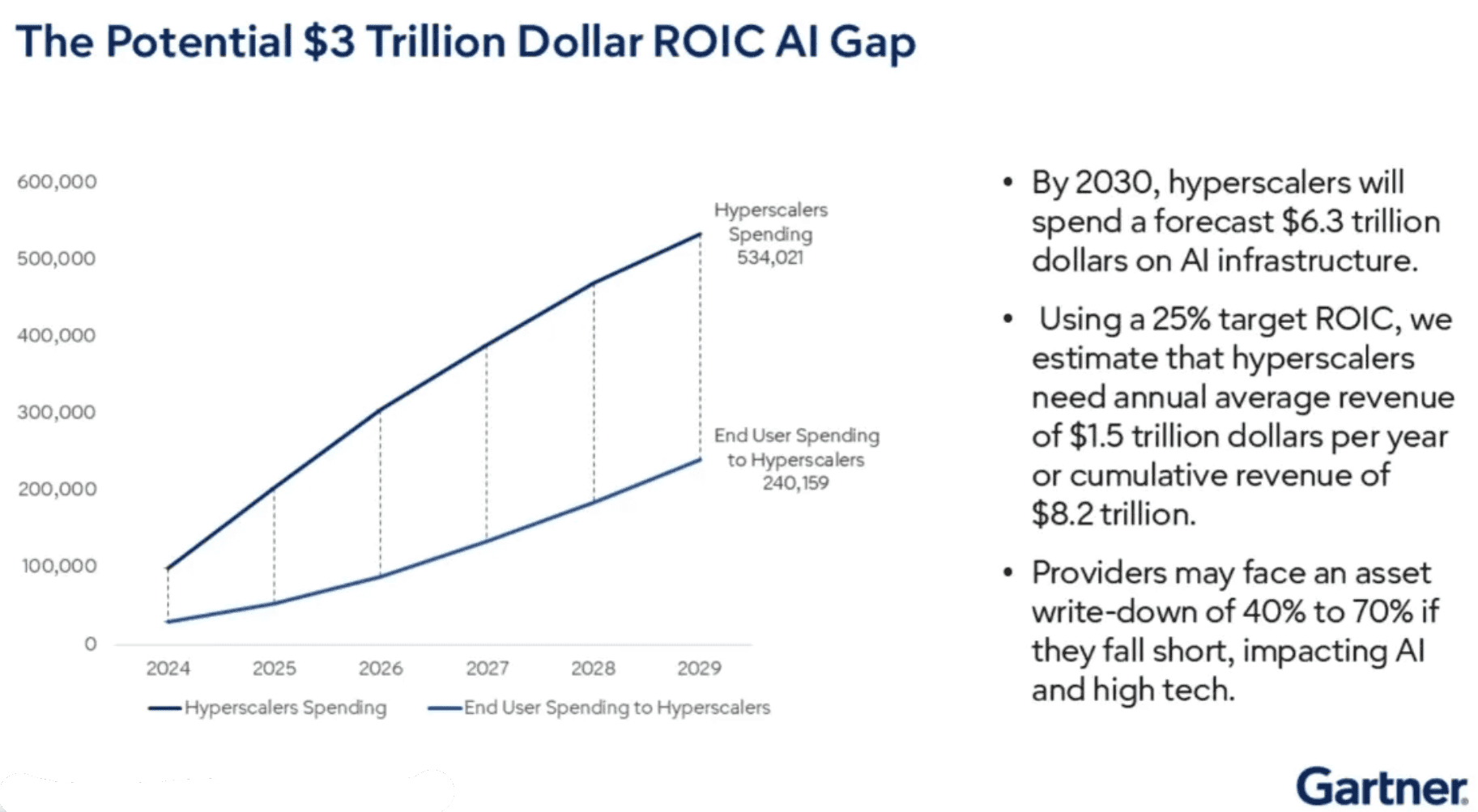
Looking further ahead, the growth trajectory for AI-related expenditures is even more pronounced. Market research firm Gartner forecasts that global spending on AI will reach a staggering $6.3 trillion by 2030. This projection underscores the pervasive integration of AI across industries and the sustained demand for its underlying technological foundation. This sustained demand, coupled with the increasing complexity and scale of AI models, points towards a long-term trend of escalating costs.
Profitability Pressures and Evolving Pricing Models
The substantial investments made by technology companies are not without their expectations of return. As many AI developers, including prominent players like Anthropic and OpenAI, move towards public offerings or increased investor scrutiny, they face mounting pressure to demonstrate profitability. This imperative directly influences their pricing strategies.
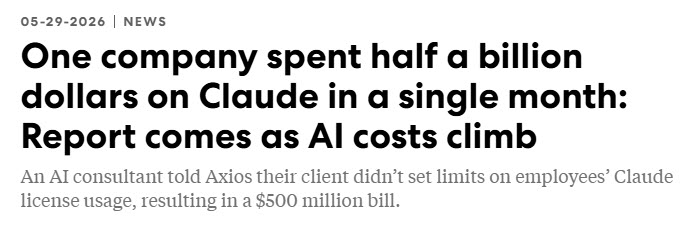
Anthropic, a leading AI research company, has already begun to flex its pricing power. Reports indicate that the company has shifted its pricing model for enterprise customers, moving from flat fees to a usage-based system. This means that businesses whose employees are heavy users of Anthropic’s Claude products, such as its AI coding assistants, are likely to incur significantly higher bills. This change is partly attributed to the company’s adoption of a new version of a technology known as a "tokenizer" for its latest AI models, which can contribute to increased computational costs per unit of output.
The Information reported that Eric Johnson, chief information officer at PagerDuty, a company that aids software engineers in responding to technical outages, is bracing for volatile costs as his 1,200 employees begin leveraging Anthropic’s AI tools. Johnson expressed his expectation of being "surprised" by the upcoming bills, acknowledging that while the value proposition is clear, the cost structure of this nascent technology presents open questions regarding return on investment. Many technology firms and other large Anthropic customers acknowledge this trend and plan to absorb the increased costs, viewing them as a necessary investment to boost productivity through task automation for software engineers and sales teams.
This pricing evolution is not unique to Anthropic. Other Software-as-a-Service (SaaS) giants, including SAP, Workday, Oracle, Salesforce, and Adobe, are also expected to adapt their pricing strategies to reflect the increased operational costs associated with AI integration and to satisfy Wall Street’s demand for strong financial performance. The era of ubiquitous, low-cost AI access may be drawing to a close as companies seek to monetize their significant investments.
The Battle for Price-Performance: A New Frontier
In response to these evolving cost dynamics, the market is beginning to see a competitive response focused on price-performance. Google’s recent announcement of Gemini 3.5 Flash, reportedly priced at a fraction of previous high-end models like Opus 4.7, signifies the official commencement of a battle for cost-effectiveness in AI. This development suggests that while core costs remain high, providers are exploring tiered offerings and optimized models to cater to a wider range of customer budgets and needs. This competitive pressure could, in the long term, help to moderate the rate of price increases, but the initial cost of entry and advanced capabilities will likely remain substantial.
The Economic Implications: A Trillion-Dollar Revenue Challenge
The sheer scale of investment in AI infrastructure necessitates a corresponding increase in revenue generation. To achieve a modest 15% compound annual return over five years—a generous assumption for depreciation—the AI industry will need to generate approximately $1 trillion in new annual revenue. This figure is based on the calculation of the total "new revenue" required to offset the capital expenditure and achieve the desired profitability.
This revenue is expected to be sourced from various sectors, including consumers and businesses. On the consumer side, current global internet advertising spending hovers around $750 billion. For AI companies to recoup their investments solely from advertising, it would likely require a significant doubling or more of the ad volume and potentially less desirable ad experiences.
On the business side, global enterprise software spending is estimated to be around $1.2 trillion, according to Gartner. Doubling this expenditure would represent a substantial shift in corporate IT budgets. The implication is that businesses may face effectively doubling their spending on enterprise software, or a significant increase in advertising costs, for AI investments to yield the expected returns.
Beyond these primary revenue streams, other significant sources of AI-related revenue are anticipated, including government spending on military applications, bio-research, energy research, and the development of entirely new markets driven by AI capabilities. However, the core economic reality remains: the substantial investment in AI infrastructure is unlikely to translate into consistently cheaper computing in the near term, challenging the long-held "Moore’s Law" expectation of ever-decreasing computing costs.

A Re-evaluation of "Cost of Computing"
The notion that computing always gets cheaper is being re-examined in the context of AI. While the cost of personal computing devices has, in some respects, decreased over decades when considering inflation and added functionality (e.g., the original IBM PC in 1981, costing $1,565 without a hard drive, would be around $5,700 today, compared to a modern laptop or smartphone often costing around $3,000), the underlying infrastructure powering advanced AI is experiencing a different economic dynamic. The immense power required for AI training and inference necessitates a fundamental shift in how we perceive the "cost of computing."
Companies like Nvidia, Oracle, Microsoft, and Workday are not solely aiming to replace existing revenue streams with AI; their primary objective is growth. Similarly, Google, Meta, SpaceX, Amazon, and Apple are pursuing expansion. Jensen Huang, CEO of Nvidia, has articulated this clearly: "AI compute is revenue." This statement suggests a move away from traditional seat-based licensing models towards a consumption-based model, where the utilization of AI compute directly translates into revenue.
Navigating the Future of AI Costs and Business Strategy
The rising costs of AI present both challenges and opportunities for businesses. Companies that heavily rely on AI tools, particularly those in software development and sales, will need to develop robust strategies for managing these escalating expenses. This may involve:
- Optimizing AI Usage: Implementing stricter controls and guidelines for AI tool utilization to ensure efficiency and prevent unnecessary consumption.
- Exploring Cost-Effective Alternatives: Investigating tiered pricing models, open-source AI solutions, or specialized AI services that offer a better price-performance ratio.
- Nearshoring or Outsourcing: As some CIOs have indicated, the high cost of AI tools may prompt businesses to consider outsourcing certain AI-related tasks to regions with lower labor costs, such as India, to supplement or replace the functionalities provided by expensive AI platforms.
- Strategic Partnerships: Collaborating with AI providers to negotiate more favorable pricing structures or to gain early access to optimized and cost-efficient solutions.
- Internal AI Development: For organizations with significant technical expertise, developing proprietary AI models or leveraging more efficient open-source frameworks might become a viable long-term strategy.
The current trajectory suggests that the era of freely accessible, low-cost AI is giving way to a more economically grounded reality. The immense investment required to fuel the AI revolution necessitates a significant return, which will inevitably be borne by consumers and businesses. The key for organizations will be to adapt, innovate, and strategically navigate this evolving landscape to harness the power of AI without succumbing to unsustainable costs. The "AI vs. Labor Economy" debate will likely intensify as companies weigh the benefits of AI-driven productivity against its increasing financial demands. This economic shift demands careful planning and a proactive approach to ensure that the promise of AI translates into tangible, sustainable benefits.