The global professional development market, a colossal industry valued at over $400 billion, is undergoing a seismic shift. While traditionally dominated by online course libraries, video platforms, simulations, and certification bodies, this sector is now being fundamentally reshaped by the rapid advancements and pervasive influence of artificial intelligence. This transformation is not merely an incremental upgrade; it represents a discontinuous evolution, moving from a paradigm of "publishing courses" to one of "dynamically delivering learning and professional growth." The implications are far-reaching, impacting professionals, human resources departments, and learning and development (L&D) buyers alike.
The Pillars of Professional Development Under Pressure
For decades, the professional development landscape has been a robust and largely recession-proof sector. Companies consistently invest in upskilling, reskilling, and certifications to foster employee career growth, maintain a competitive edge, and adapt to evolving industry demands. This demand spans a wide spectrum of needs, from foundational entry-level training to the advanced development of seasoned experts. Industry analysts have identified five distinct levels of professional growth:
- Level 1: Foundational Learning: For individuals new to a profession or role, this level focuses on acquiring basic knowledge, understanding industry jargon, and grasping fundamental concepts. Traditional certifications from bodies like SHRM or HCI have historically served this purpose, though their perceived value is increasingly being scrutinized.
- Level 2: Expanding Expertise: Professionals with 2-3 years of experience often seek to deepen their understanding beyond the basics. This includes learning through case studies, advanced use-cases, and exercises that challenge their thinking. For instance, a recruiter might move from general recruitment to specializing in sourcing, skills assessment, and the application of AI in candidate acquisition.
- Level 3: Broadening Specialization: At this stage, professionals possess deep expertise in a narrow domain but lack breadth. They may seek to gain experience in different industries, technologies, or leadership roles. This often involves exposure to new case studies, multi-disciplinary experts, and potentially a transition into management or leadership training, which itself signifies a new career trajectory.
- Level 4: World-Class Advancement: This level encompasses individuals with extensive experience who aim to stay ahead of emerging trends, identify advanced technologies, and broaden their industry exposure. Moving between industries, for example, can provide invaluable perspective and enhance value creation. These individuals might also transition into senior executive roles or explore vast new technological or scientific fields, often seeking "T-shaped" development to complement their deep expertise.
- Level 5: Thought Leadership and Mentorship: The pinnacle of professional development involves senior, tenured experts who aim to share their knowledge through teaching, mentoring, coaching, or writing. Their motivation stems from a desire to contribute to their fields and collaborate with global peers, seeking professional communities and deep research.
Traditionally, training and professional education companies have attempted to address these diverse needs through packaged solutions. However, a significant challenge has been the difficulty in mapping generic training content to the specific, nuanced requirements of advancing professionals. This is where the disruptive force of AI is making its most profound impact.
The AI Revolution in Learning
The integration of AI is fundamentally altering how learning is delivered and consumed. Platforms like ChatGPT, with an estimated 900 million weekly users, have demonstrated the immense appetite for AI-driven knowledge acquisition. Analysis suggests that a substantial portion of these interactions, potentially 40% or more, are dedicated to learning – seeking information, developing skills, or problem-solving. This rapid adoption highlights a natural human inclination towards exploration and inquiry, akin to childhood learning.
Two key aspects of AI’s effectiveness in learning stand out:

- Intuitive Inquiry-Based Learning: AI agents facilitate an easy and natural way to ask questions, learn, and satisfy curiosity. This "questioning" approach mirrors how humans naturally explore and acquire knowledge.
- Holistic Information Interconnection: The underlying AI models, such as those used by OpenAI, interconnect information through AI embeddings. This allows for a systemic and holistic understanding, moving beyond linear learning paths. Learners can freely ask for explanations, delve deeper into topics, or skip sections, significantly enhancing the speed and quality of their learning experience.
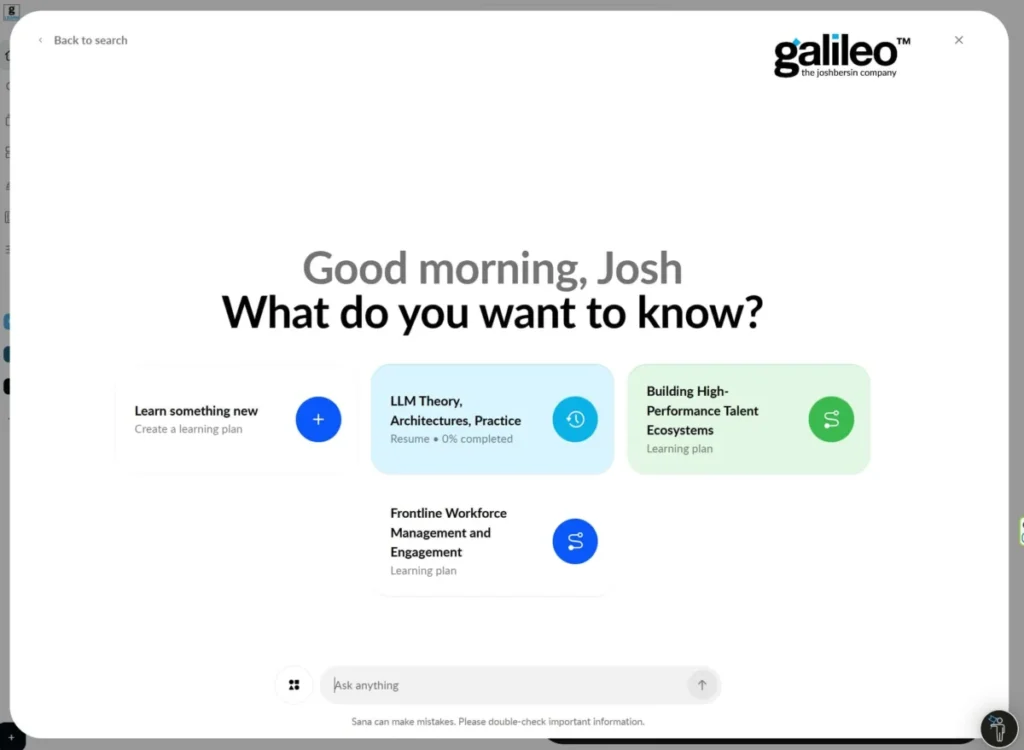
Companies like Galileo are leveraging this AI-native infrastructure to create personalized learning experiences. These platforms can offer dynamic content, simulations, role-playing scenarios, and answer user questions in real-time, acting as "Supertutors." This capability extends beyond static course modules, allowing for adaptive learning journeys that are tailored to an individual’s role, prior interactions, and evolving needs.
Disruption Across the Market Segments
The professional development market can be broadly categorized into five key segments: learning platforms (LMS, LXP), learning content (course libraries, programs), content development tools, certifications, and learning consultants. Each of these segments is facing significant disruption from AI:
The Shift from Publishing to Dynamic Delivery
The traditional "publishing paradigm" of L&D involved identifying needs, gathering experts, designing courses, and then "publishing" them into learning management systems for users. This model, while groundbreaking in its time and still relevant for high-touch, premium experiences, is being eclipsed by AI-native approaches.
AI-native platforms, such as Galileo, excel at collecting, generating, translating, and delivering content dynamically. They can ingest vast amounts of information, including internal company content, and weave it into personalized learning experiences. This means that instead of consuming pre-packaged courses, users can interact with an AI that can generate new experiences on demand, answer specific questions, and adapt to their learning pace and style.
This shift has profound implications for content development. The need for extensive instructional design, manual translation, and laborious video generation is diminishing as AI automates these processes. Complex features like career pathways, learning paths, and skills taxonomies can now be machine-generated, freeing up L&D departments to focus on strategic initiatives rather than operational tasks.
The result is a more personalized, efficient, and cost-effective learning experience for the end-user. Vendors are no longer just selling content; they are providing a platform-optimized, personalized, and user-friendly learning ecosystem. The potential for cost reduction is significant, with some companies reporting up to a 40% decrease in L&D spending while simultaneously improving the employee experience.

The Role of Generative AI in Content Creation
The capabilities of generative AI are expanding rapidly, enabling the creation of sophisticated learning materials. Tools like Sora are demonstrating the ability to produce professional-quality educational videos from text prompts, a process that previously required substantial resources. YouTube’s automatic chapter generation in videos, even without full AI integration, hints at the future of making any audio or video content easily digestible and educationally structured.
Furthermore, AI’s ability to understand and adapt to individual user profiles is a game-changer. By analyzing reading levels, learning preferences, and technical interests, AI platforms can deliver content that is not only relevant but also optimized for individual comprehension. Integration with user data, such as meeting transcripts and communication styles, allows AI to deeply understand an individual’s context, language, and thought processes, leading to highly personalized and effective learning.
Implications for Professionals, HR, and L&D Buyers
The ongoing transformation of the professional development market has significant implications for all stakeholders:
For Professionals:
The advent of AI-powered learning agents means that employees will have unprecedented access to personalized development resources. These agents, accessible via smartphones and personal computers, will become central to career advancement. Employees will be able to ask questions about career paths, skill development, and even how to leverage new skills for increased compensation or opportunities, such as taking on additional shifts with higher pay. This democratization of learning empowers individuals to take greater control of their professional journeys.
For HR and L&D Departments:
The L&D function is on the cusp of a radical reimagining. Many of the tasks that have traditionally consumed L&D resources – such as translation, skills architecture development, LMS publishing and metadata management, and the creation of job aids – are becoming fully automated. This presents an opportunity to re-engineer L&D strategies, shifting focus from operational execution to strategic impact. By embracing AI, HR and L&D departments can achieve significant cost reductions while delivering a far more personalized and impactful employee experience. The ability to integrate internal company processes and cultural nuances with external expert knowledge creates a uniquely valuable learning environment.
For Vendors and Consultants:
The professional development vendor and consulting landscape must adapt quickly to survive and thrive. The "old model" of publishing courses is becoming obsolete for the majority of professional development needs. Vendors are advised to be bold, explore emerging AI platforms, and consider strategic partnerships, acquisitions, or in-house development of AI capabilities. The demand for AI-driven learning solutions is expected to surge, presenting a significant opportunity for innovation and growth. Companies that fail to integrate AI into their offerings risk becoming irrelevant in a rapidly evolving market.
A Timeline of Transformation
The current shift represents a culmination of trends that have been developing for years. The rise of online learning platforms in the late 1990s and early 2000s disrupted traditional classroom training. Companies like Udacity, Coursera, and Udemy emerged as leaders in this space. However, recent market dynamics, including significant stock price declines for publicly traded companies and consolidations like the Coursera-Udemy merger (though this specific merger was an initial incorrect assumption in early analysis, the trend of consolidation and pressure on traditional models is evident), signal a fundamental challenge to the established business models.
The rapid adoption of generative AI tools like ChatGPT in the last few years has accelerated this disruption. The realization that a significant portion of AI usage is for learning purposes has forced established players to confront the limitations of their static content libraries. The emergence of AI-native platforms, exemplified by Galileo, signals the next evolutionary step, moving beyond content delivery to dynamic, personalized learning experiences.
Future Outlook and Innovation
The future of professional development is intrinsically linked to AI. We can expect continued innovation in areas such as:
- AI-Powered Coaching and Mentorship: Virtual coaches that provide personalized guidance, feedback, and career pathing.
- Advanced AI Assessments: Tools that can accurately gauge skills and identify development needs through sophisticated analysis.
- Automated Content Generation: AI systems capable of creating diverse learning materials, including videos, audio, interactive simulations, and assessments, tailored to specific needs.
- Personalized Learning Agents: Agents that understand individual learning styles, preferences, and career aspirations, delivering bespoke development pathways.
- Seamless Integration: Learning experiences that are deeply embedded within daily workflows and employee portals, making learning an organic part of work.
As the market reinvents itself, the focus will shift from simply providing access to information to delivering deeply personalized, adaptive, and outcome-oriented learning experiences. The companies that can successfully navigate this AI-driven transformation will be best positioned to meet the evolving demands of the modern workforce and redefine the future of professional growth. The disruption is not just about technology; it’s about fundamentally rethinking how individuals learn, grow, and advance in their careers.