No author masterfully employs the built environment as a lens for human psychology quite like J.G. Ballard. His seminal 1975 novel, High-Rise, presents a towering structure that acts as both a crucible for social isolation and a potent metaphor for the internal struggles of its inhabitants. Over three months, as the building’s services degrade, the 2,000 residents, increasingly detached from the outside world within the confines of the 40-storey edifice, are forced to confront their true selves and those of their neighbors. This proximity, rather than fostering connection, devolves into selfishness and, ultimately, savagery. Ballard chillingly describes the structure: "Like a huge and aggressive malefactor, the high-rise was determined to inflict every conceivable hostility upon them." This exploration of gated communities and their potential for breakdown in a near-future scenario is a recurring motif in Ballard’s work. While a Brutalist high-rise naturally evokes themes of class and hierarchy, Ballard’s focus was more profound. In a 1998 interview, he stated, "People aren’t moving into gated communities simply to avoid muggers and housebreakers. They’re moving in… to get away from other people. Even people like themselves."
This deep-seated human impulse towards self-imposed separation warrants significant attention in our ongoing discourse about the role of work in our lives. This is a conversation that remains underdeveloped, particularly at a time when social media already contributes to our perceived isolation from diverse human experiences. The repercussions of extended lockdowns are now manifesting, with a large-scale study of 16,000 individuals in France highlighting a significant shift in social dynamics. Respondents reported that confinement severely tested and, in some instances, fundamentally altered personal relationships. Although the period of lockdown was relatively brief in the context of a lifetime, the reported "radical" changes suggest that long-term alterations to social ties may have occurred for many. New friendships have emerged, while others have faded. Perhaps most concerningly, individuals have begun to retreat into their respective demographic bubbles, reinforcing pre-existing divides. Even as employees return to physical workspaces, a sense of disconnection and heightened animosity in each other’s presence can persist. This hostility, rooted in isolation, can manifest in detrimental ways.
The pervasive theme of isolation is explored with characteristic insight by Dror Poleg in a recent piece that draws compelling parallels between our digital echo chambers and the burgeoning segregation within the physical world. Poleg posits: "Under the economics of scarcity, locations are optimized to appeal to the highest number of people. This is true for apartment buildings, for office buildings, and for cities as a whole. Most of the people I see on the street in New York are different from me. We have different backgrounds, different levels of income, and different tastes. As we walk by each other, each of us is listening to a different song on their Airpods, but all of us are sharing the same physical space. But under the economics of abundance, we will no longer have to share the same space. The locations we will occupy could become as customized to our taste as the songs on our playlist. This means that the distribution of people and economic activity could – and likely would – become more segregated." He further observes, "Online, we can already retreat into our own bubbles and avoid any people and ideas that are not to our taste or outside of our comfort zone. Offline, there is plenty of segregation as well. But cities force us to interact with people from a diversity of backgrounds, income brackets, and ideological groups. Cities might soon lose the power to do so."
The Peril of Abandoning Creative Hubs
These concerns resonate deeply as businesses increasingly consider relocating from major urban centers to more localized work settings. Steve LeVine, in a 2020 article, examined the potential impact on Silicon Valley, particularly noting the swiftness with which tech firms have discarded the concept of serendipity – a long-standing driver of innovation – without a clear vision for its replacement. LeVine warned, "There is a risk if we don’t get it right. History’s creative hubs have been ephemeral – when Florence declined in the 16th century, it was not replaced by another concentration of artistic genius. The world simply went without. Granted, Florence didn’t have Zoom or the cloud, but so far both of those have fallen short in the present crisis. If a demise of serendipity leads to Silicon Valley’s decline, the world is unlikely to get an equal substitute. We may simply lose our engine of technological advancement."
Despite this trend, there are indications of a counter-movement advocating for the retention of in-person collaboration, while acknowledging that a complete return to pre-pandemic norms is neither feasible nor desirable. Gerry Taylor of Orangebox articulated this perspective effectively: "We need to remember that, while a comfortable family environment and a readily available space for focused work have eased the transition to home working for many of us, not everyone’s circumstances are as conducive to productivity. For younger generations particularly, who we know want and need to be mentored, and who tend to live in shared, cramped inner-city homes with no dedicated workspaces and little or no outside space, being forced to work from home full-time would be both a mental health and a productivity disaster. It’s also clear that video calls and meetings, despite their utility, will never let us grasp the vitality offered by the nuances of face-to-face conversation, being able to read people’s body language or forge multiple human connections during our workday."
The Specter of Urban Decay: Ballardian Echoes in the Modern City
Parallel to discussions about the demise of the office, there are ongoing debates concerning the potential decline of cities themselves. The desertion of public spaces is a recurring theme in Ballard’s oeuvre, most notably in his 1988 anthology, Memories of the Space Age. His writing possesses a dreamlike quality, depicting how environments retain a spectral memory of their past, mirroring the disoriented state of his characters. In "The Dead Astronaut," he paints a stark picture: "Cape Kennedy has gone now, its gantries rising from the deserted dunes. Sand has come in across the Banana River, filling the creeks and turning the old space complex into a wilderness of swamps and broken concrete. In the summer, hunters build their blinds in the wrecked staff cars; but by early November, when Judith and I arrived, the entire area was abandoned. Beyond Cocoa Beach, where I stopped the car, the ruined motels were half hidden in the saw grass. The launching towers rose into the evening air like the rusting ciphers of some forgotten algebra of the sky."
The past few years have yielded numerous images that echo this desolation. Many individuals who ventured into cities during the pandemic described profound feelings of displacement and a sense of abandonment within these once-vibrant urban landscapes. The concept of "dead spaces" – environments that retain their physical form but have lost their human inhabitants and vitality – is a common trope in post-apocalyptic and horror narratives. Such spaces possess a compelling, uncanny aura, evoking a sense of profound solitude. This imagery resonates deeply, appearing in works like H.G. Wells’s The Time Machine and Gustave Doré’s 1872 book London: A Pilgrimage, which includes an illustration of a ruined, deserted London in the distant future. Danny Boyle effectively captured this atmosphere in his 2001 film 28 Days Later, utilizing the rare dawn hours when London could be filmed empty.
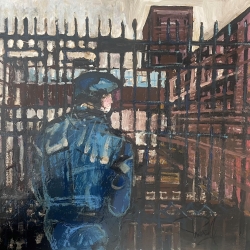
Richard Peter’s iconic photographs of the Dresden ruins in 1945 similarly evoke this sense of lost grandeur. The buildings, or at least their spectral remains, stand as testaments to a vanished populace. The city, once known as the "Florence of the Elbe," now stands as a monument to its former self. This is the fate of places cast aside by time yet still occupying space, a paradox we struggle to reconcile. This tension is observable across many formerly prosperous industrial towns, where the ghosts of their former glory are often visible atop modern retail outlets. Their emptiness compels us to re-examine cities with fresh perspectives, recognizing them as spaces stripped bare of human presence and the temporal structures that define them. In these abandoned locales, we don’t merely observe the passage of time; we confront our own ephemerality.
Reclaiming Urban Spaces: Lessons from History
However, this does not preclude the possibility of reclaiming these abandoned spaces. In a podcast discussion, business theorist Scott Galloway and Bruce Daisley explored the potential for an exodus of knowledge workers from urban centers to create a vacuum that could be filled by others. A significant decrease in urban living costs, they suggest, could encourage the influx of artisans and younger populations into areas previously deemed unaffordable.
London, for instance, has a long history of experiencing such cycles of urban ebb and flow. Even seemingly modern concepts like coworking have roots in the ability of artisans and craftspeople to secure flexible, short-term, and affordable spaces, often in proximity to like-minded individuals. Clerkenwell, in London, possesses a rich, long-standing association with creative talent, startups, philanthropy, and the arts and crafts movement. Figures like architect Mike Franks played a pivotal role in the area’s regeneration from the 1970s onwards, weaving these diverse strands together and leveraging the area’s multicultural and anarchic character to foster entrepreneurial talent long before the term "coworking" was coined.
Franks, supported by the Greater London Council, secured a redundant book depository for himself and the Urban Small Space collective. This space was transformed into the Clerkenwell Workshops, providing basic, affordable, and short-term facilities to nurture new creative businesses, particularly in the arts and crafts sector. While the ownership, model, and clientele of the Workshops have evolved over the past four decades, the space itself endures. Thomas A. Hutton, in his book The New Economy of the Inner City, observes that the development of the Clerkenwell Workshops mirrors that of many inner-city industrial districts: "The ‘metalworking, printing, weaving and instrument making … has largely given way to a contemporary tenant base which conforms to the dominant orientations of the twenty-first century global metropolis including applied design, cultural production, media and communications and property management’."

This approach, though potentially appearing radical in the context of the now-mainstream coworking phenomenon, represents a practical, time-tested solution deeply embedded in Clerkenwell’s history. It is a model poised to continue thriving as long as individuals are driven by a desire to innovate, launch new ventures, and apply creative thinking to their endeavors. Such an approach may offer a path forward, enabling us to create more vibrant and dynamic cities rather than merely witnessing them transform into spectral echoes of their former selves.