
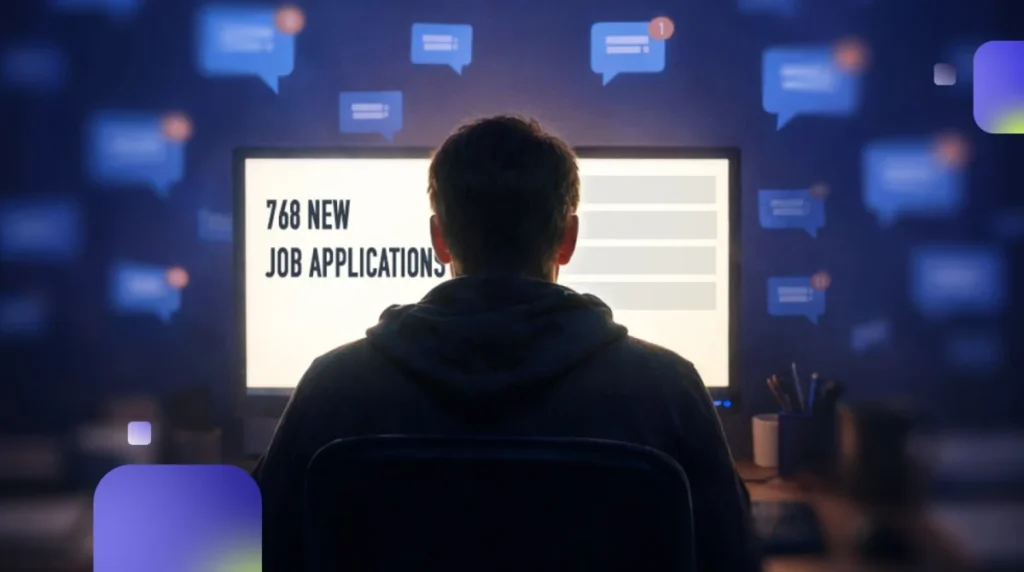
A profound transformation is underway in the realm of hiring, fundamentally altering how companies identify and engage with prospective talent. This significant shift is evident across major recruitment platforms, with Workable reporting a striking statistic: approximately 10% of all job applications processed through its robust platform are now submitted using AI mass-apply tools. This emerging trend prompts critical questions for employers worldwide: Is this a genuine, disruptive force, or merely a misinterpreted evolution in candidate behavior? The answer, according to industry leaders, leans heavily towards the former, necessitating a strategic re-evaluation of established recruitment practices.
The Inexorable Rise of AI in Candidate Tools
The advent of AI-powered tools designed to streamline the job application process marks a pivotal moment in the history of talent acquisition. For candidates, these tools offer an unprecedented level of efficiency, enabling them to generate tailored resumes, craft compelling cover letters, and submit applications to numerous openings with minimal manual effort. This surge reflects a broader societal integration of artificial intelligence, where individuals increasingly leverage technology to optimize personal and professional tasks. The 10% figure observed by Workable is not an isolated anomaly but rather an indicator of a growing movement, with projections suggesting this percentage will continue its upward trajectory as AI becomes more sophisticated and accessible.
Historically, the job search process has evolved from physical resumes and newspaper classifieds to online job boards and professional networking sites. Each technological leap brought its own set of challenges and opportunities for both job seekers and employers. The internet, for instance, democratized access to job opportunities but also led to an exponential increase in application volume, necessitating early forms of digital screening. AI mass-apply tools represent the next frontier, promising to further automate the initial stages of the job search. This development is particularly appealing in competitive job markets or for individuals seeking to make a career transition, where the sheer volume of applications often dictates success. Industry analysts estimate that a significant proportion of job seekers, particularly among younger demographics and tech-savvy professionals, are either currently using or planning to adopt AI-driven tools for their job hunt within the next year, underscoring the permanence of this trend.
Challenging Perceptions: Real Candidates, Evolved Methods
The initial reaction among some recruiters to the influx of AI-assisted applications has been one of skepticism, often viewing them as a form of "application pollution" or indicative of a lack of genuine interest from candidates. The instinct for many has been to implement measures to block or filter out such applications entirely, fearing that they represent "fake" candidates or a diluted talent pool. However, this perspective may be short-sighted and potentially detrimental to an organization’s hiring efforts.
Workable CEO Nikos Moraitakis offers crucial insight, challenging this conventional wisdom. "These aren’t ‘fake’ candidates. The vast majority are real people with real resumes," Moraitakis states emphatically. This perspective reframes the issue, shifting the focus from the authenticity of the applicant to the evolving methodology of application. The core truth remains that behind these AI-generated submissions are individuals actively seeking employment, often with legitimate qualifications and genuine career aspirations. Their use of AI merely signifies their adaptation to a technologically advanced environment, much like using email instead of postal mail, or an online form instead of a paper application.
Moraitakis further underscores the gravity of resisting this change with a potent historical analogy: "Refusing AI-assisted applications in 2025 is a little like refusing applications that came from the web in 1997." This comparison highlights the potential for businesses to be left behind if they fail to adapt to prevailing technological shifts. In the late 1990s, companies that embraced online applications gained a competitive edge in accessing a broader, more diverse talent pool. Today, those that dismiss AI-assisted applications risk alienating and excluding a growing segment of qualified, proactive individuals who are simply leveraging the most efficient tools available to them. This refusal could inadvertently lead to a narrower talent funnel, missing out on high-potential candidates who are otherwise perfectly suited for open roles.
Workable’s Proactive Stance: Adapt, Don’t Resist
Recognizing the inevitability and utility of AI in the candidate journey, Workable has adopted a strategic approach centered on adaptation rather than resistance. The company acknowledges that as more candidates utilize AI tools, the primary challenge for employers shifts from identifying AI-generated applications to effectively separating "signal from noise" within an ever-increasing volume of submissions. This challenge is compounded by the fact that application volumes, driven by both human and AI efforts, continue to multiply.
To address this, Workable is actively enhancing its platform’s capabilities to provide clearer signals regarding candidate identity and intent throughout the inbound application funnel. This involves leveraging its extensive dataset and proprietary behavioral pattern analysis – insights only visible at Workable’s scale – to help hiring teams discern genuine interest from indiscriminate mass applications. For instance, Workable’s improved systems can analyze patterns in application frequency, identify inconsistencies across multiple submissions, or flag candidates who show sustained engagement with specific job postings beyond the initial application. This allows recruiters to focus their valuable time on candidates who demonstrate a higher likelihood of being a good fit and genuinely interested in the role and company.
The emphasis is on empowering employers with the intelligence needed to navigate this new landscape effectively. As Moraitakis articulates, "The winners will be the employers with tools that can separate signal from noise." This means moving beyond simplistic filters that merely block AI-generated content and instead adopting sophisticated analytical frameworks that can identify the human intent and quality behind the technologically facilitated submission. This proactive strategy ensures that companies can continue to access a wide talent pool while maintaining efficiency and quality in their screening processes.
The Imperative of AI for Recruiters: A Countermeasure and an Ally
The increasing prevalence of AI in candidate applications necessitates a parallel evolution in the tools available to recruiters. The principle is clear: as application volume grows, AI must be employed to process AI. This isn’t merely about managing quantity; it’s about enhancing the quality and fairness of the screening process.
Workable is at the forefront of equipping recruiters with advanced AI-powered screening tools designed to ensure both efficiency and equity. These tools are engineered to:
- Accurately assess qualifications: AI can rapidly parse resumes and cover letters, extracting key skills, experiences, and educational backgrounds, and comparing them against job requirements with remarkable precision. This helps surface highly relevant candidates quickly.
- Identify genuine fit: Beyond keywords, AI can analyze linguistic patterns, project descriptions, and even external data points (with candidate consent) to gauge a deeper alignment with the role and company culture.
- Reduce unconscious bias: By standardizing initial screening criteria and processing applications based purely on predefined qualifications, AI can help mitigate human biases that might inadvertently influence decisions based on names, demographic information, or other non-job-related factors. This promotes a more equitable hiring process.
- Flag anomalies and potential red flags: AI can identify unusual application patterns, repetitive submissions, or discrepancies that might warrant further human review, acting as an early warning system against potential misuse of mass-apply tools.
- Streamline communication: AI-powered chatbots and automated response systems can manage initial candidate inquiries, schedule interviews, and provide feedback, freeing up recruiters for more strategic tasks.
This dual application of AI – by both candidates and recruiters – creates a dynamic where technology acts as both the challenge and the solution. As Moraitakis succinctly puts it, "We’re going to need AI as a countermeasure to AI." This isn’t a battle against technology but rather an intelligent integration of AI to maintain balance, fairness, and effectiveness in the hiring ecosystem. Without such sophisticated tools, recruiters risk being overwhelmed by the sheer volume of applications, potentially leading to slower hiring cycles, increased costs, and the inadvertent overlooking of stellar candidates.
Looking Ahead: The Future of Talent Acquisition
The trajectory of talent acquisition is irrevocably shaped by the ongoing advancements in artificial intelligence. AI is expanding the scale of processes that were once considered inherently human and intimate, from initial candidate outreach to the preliminary stages of assessment. In this rapidly evolving environment, modern recruitment tools are not merely advantageous; they are essential for maintaining effective, fair, and human-centered hiring practices.
The future will undoubtedly see candidate tools become even smarter, more personalized, and more pervasive. Consequently, application volumes are projected to continue their upward trend, creating an even greater imperative for robust and intelligent recruitment technologies. The competitive landscape for talent will intensify, placing a premium on organizations that can swiftly and accurately identify and engage with the best candidates.
Despite these technological shifts, Workable’s core mission remains steadfast: to help employers find and hire great people. The tools and methodologies may change, but the fundamental objective of connecting talented individuals with suitable opportunities endures. This mission is now more critical than ever, as the challenge lies in leveraging technology to enhance, rather than detract from, the human element of hiring.
The integration of AI also raises important considerations regarding ethics and transparency. Ensuring that AI tools are designed and implemented responsibly, with clear guidelines to prevent bias and promote fairness, will be paramount. Companies must commit to auditability and explainability in their AI-driven processes, providing transparency to candidates about how their applications are being evaluated. The goal is not to replace human judgment but to augment it, allowing recruiters to focus on the nuanced aspects of candidate evaluation, such as cultural fit, soft skills, and strategic potential, which require uniquely human discernment.
As Moraitakis concludes, encapsulating the sentiment of this new era in talent acquisition: "The job market isn’t going back. It’s time to build the infrastructure that lets great hires rise to the top – no matter how they knock on the door." This powerful statement serves as a rallying cry for employers to embrace innovation, adapt their strategies, and invest in the technologies that will define the future of successful hiring. The ability to effectively harness AI, both as an enabler for candidates and an essential tool for recruiters, will be the hallmark of leading organizations in the years to come, ensuring that the best talent is never missed, regardless of their preferred method of entry.






