
The global higher education sector is currently undergoing a structural transformation as Artificial Intelligence (AI), Machine Learning (ML), and Deep Learning move from the periphery of experimental technology into the core of institutional operations. While these technologies have already disrupted industries such as finance, healthcare, and logistics, their integration into the university ecosystem is proving to be a pivotal shift in how academic institutions manage scale, engagement, and student success. Historically, universities have relied on manual, labor-intensive processes for everything from student recruitment to academic grading. However, the emergence of sophisticated AI models is allowing institutions to automate routine tasks, personalize the student journey, and optimize administrative efficiency in ways that were previously impossible.
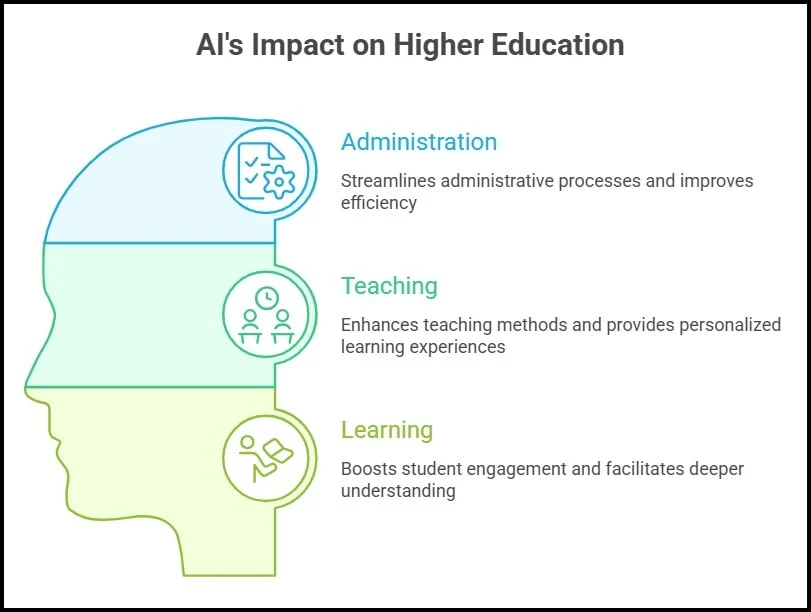
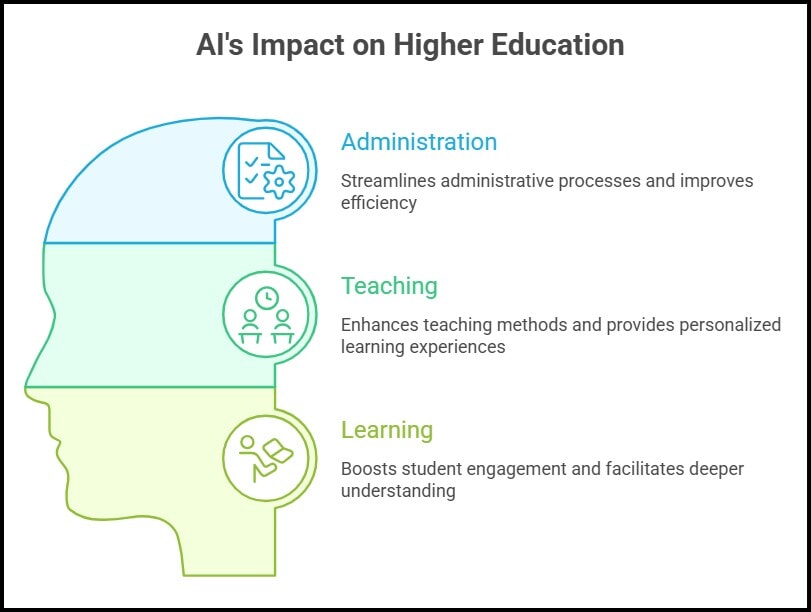
Industry analysts observe that the application of AI in higher education generally falls into three primary domains: administrative operations, teaching methodologies, and the student learning experience. While the integration of AI into pedagogy—such as the use of virtual tutors and personalized curriculum design—is considered to be in its nascent stages, the administrative application of these technologies is already yielding significant dividends. For many universities, the "Intelligent Campus" is no longer a futuristic concept but a functional reality aimed at navigating the complexities of modern enrollment and student retention.
The Shift Toward Administrative Automation
The immediate impact of AI is most visible in the administrative sector, where universities face the daunting task of managing vast quantities of data and responding to thousands of student inquiries. The recruitment cycle, in particular, represents a high-stakes environment where speed and personalization are critical. Prospective students often apply to multiple institutions simultaneously, and the speed of an institution’s response can be the deciding factor in a student’s enrollment decision.
Traditional counseling departments are frequently overwhelmed by the volume of queries, leading to delays that can jeopardize recruitment targets. To address this, many institutions have deployed AI-driven "counselor bots." Unlike traditional chatbots that rely on static, pre-programmed responses, these advanced AI agents utilize Natural Language Processing (NLP) to understand context and intent. Available 24/7, these bots can interact with prospective students in a manner that mimics human conversation, providing tailored recommendations based on a student’s academic background, career aspirations, and financial constraints.
The data suggests that this level of responsiveness significantly improves conversion rates. By analyzing behavioral patterns and engagement metrics, AI systems can determine the optimal time and channel—whether via email, SMS, or social media—to reach out to a student. This level of hyper-personalization ensures that the university remains "top of mind" throughout the application process, effectively moving students through the enrollment funnel with minimal human intervention.
Streamlining the Admissions Lifecycle
The application of Machine Learning extends deep into the admissions office, particularly for high-demand programs. For example, elite MBA programs or medical schools often receive thousands of applications for a limited number of seats. The task of screening these applications is historically slow and prone to human bias or fatigue.
AI is now being utilized to automate the initial screening phases. Using NLP, automated essay scorers can evaluate the quality of written submissions, checking for coherence, vocabulary, and alignment with the program’s values. By setting specific threshold scores, institutions can automatically filter out candidates who do not meet baseline requirements, allowing human admissions officers to focus their time on the most promising applicants.
More importantly, these algorithms are designed to "improve with age." Through a feedback loop known as reinforcement learning, the AI can be trained on historical data. If the system identifies that students who were admitted with certain characteristics have a high rate of program completion and post-graduation success, it can adjust its selection criteria to prioritize those traits in future cycles. Conversely, if a specific set of criteria correlates with high dropout rates, the algorithm self-corrects to refine its predictive accuracy.
Supporting Student Success and Retention
Beyond enrollment, the focus of AI in higher education is increasingly shifting toward student retention. Institutional funding and reputation are often tied to graduation rates, making "student success" a top priority for university boards. AI-driven predictive analytics tools are now being used to monitor student behavior in real-time. By analyzing data points such as Learning Management System (LMS) login frequency, library resource usage, and mid-term assessment scores, AI can identify "at-risk" students long before they fail a course or drop out.
Once an at-risk student is identified, the system can trigger automated interventions, such as suggesting a meeting with a tutor or providing additional study materials. This proactive approach allows universities to scale their support services, ensuring that every student receives the attention they need without requiring a massive increase in human staff.
Market Context and Economic Impact
The move toward AI integration is backed by significant financial investment. Recent market reports suggest that the AI in education market is projected to reach a valuation of over $20 billion by 2030, growing at a compound annual growth rate (CAGR) of nearly 40%. This growth is driven by the increasing demand for personalized learning and the need for operational efficiency in the face of rising tuition costs and fluctuating enrollment numbers.
Chronologically, the adoption of these technologies has followed a clear path. The early 2010s saw the introduction of basic data analytics and early-stage LMS platforms. By 2018, the use of chatbots for basic FAQs became common. Following the global shift to remote learning in 2020, the pace of adoption accelerated, leading to the current era where Deep Learning and generative models are being integrated into the very fabric of the institutional framework.
Perspectives from Academic Leadership and Stakeholders
The reaction to the "AI-first" approach in higher education is generally positive among administrators, though it remains a subject of debate among faculty. University provosts often highlight the "efficiency gain" as the primary benefit. "By automating the repetitive administrative tasks that consume hundreds of man-hours, we are able to reallocate our human talent toward mentorship and complex problem-solving," noted one administrator from a prominent research university.
However, some faculty members express concerns regarding the "depersonalization" of education. There is an ongoing discourse regarding the ethics of using algorithms to grade essays or decide admissions, with critics pointing to the potential for "algorithmic bias" if the training data reflects historical prejudices. In response, many institutions are establishing AI ethics committees to oversee the deployment of these tools, ensuring that transparency and fairness remain central to the process.
Students, for their part, have shown a high degree of comfort with AI-driven interactions. A recent survey of undergraduate students indicated that over 70% preferred the immediate response of an AI bot for administrative queries over waiting 24 to 48 hours for a human response via email.
Broader Implications and the Road Ahead
As AI technology continues to evolve, the distinction between administrative AI and pedagogical AI will likely blur. We are moving toward an era of "intelligent tutoring systems" that can adapt to a student’s unique learning pace in real-time. While these technologies are currently in the early adoption phase, they represent the next frontier of the educational landscape.
The implications of this shift are profound. Universities that successfully integrate AI will be able to operate at a scale previously reserved for massive open online courses (MOOCs) while maintaining the personalized touch of a traditional brick-and-mortar institution. This "hybrid" model of efficiency and personalization is expected to become the gold standard for global education.
In conclusion, the transformation of higher education through AI, Machine Learning, and Deep Learning is a non-linear evolution. It is a fundamental rewriting of the institutional playbook. From the moment a prospective student first visits a university website to the day they walk across the stage at graduation, AI is increasingly acting as the silent engine driving their journey. For universities worldwide, the mandate is clear: those that embrace these advanced technologies will lead the next century of academic excellence, while those that hesitate risk becoming obsolete in an increasingly digital world.






