The Foundational Role of Engagement and Recognition
In today’s competitive global economy, human capital is increasingly recognized as an organization’s most valuable asset. The ability to attract, retain, and maximize the potential of talent directly correlates with long-term viability and innovation. Employee engagement, defined as the emotional commitment an employee has to their organization and its goals, transcends mere job satisfaction. It manifests as discretionary effort, a willingness to go above and beyond the basic requirements of a role, driven by a deep sense of purpose and connection. Recognition, in this context, is not simply a reward for a job well done; it is a continuous feedback mechanism, a cultural signal, and a psychological anchor that validates effort, reinforces positive actions, and illuminates the path to collective success.
When engagement and recognition are harmonized, they form a potent synergy that profoundly influences workplace culture. They become the clearest articulation of what an organization values, thereby serving as the fastest means to shape desired behaviours, build sustained momentum, and cultivate a workforce that not only meets expectations but consistently exceeds them. This symbiotic relationship transforms everyday effort into tangible energy, fosters deeper connections among colleagues and with the organization, and solidifies commitment, ultimately allowing individuals and teams to stand out.
Evolution of Workplace Dynamics: A Historical Perspective
The understanding of employee motivation and productivity has evolved significantly over the past century, moving from purely transactional models to more human-centric approaches. In the early 20th century, the era of Scientific Management, epitomized by Frederick Taylor, focused primarily on efficiency, standardization, and monetary incentives. Employees were often viewed as cogs in a machine, with little consideration for their psychological needs or intrinsic motivators.
The mid-20th century brought the Human Relations Movement, sparked by the seminal Hawthorne Studies, which revealed that social factors, feelings of belonging, and managerial attention significantly impacted productivity, often more so than physical working conditions or financial remuneration. This marked a pivotal shift, introducing the concept that employees’ emotional and psychological well-being played a critical role in their performance.
By the late 20th and early 21st centuries, the focus broadened to "employee satisfaction" surveys, which, while useful, often measured superficial contentment rather than deep-seated commitment. It was the advent of the "employee engagement" framework, notably popularized by Gallup, that truly changed the discourse. Engagement research moved beyond satisfaction to probe the emotional and cognitive connection employees had with their work, identifying key drivers such as opportunities for growth, meaningful work, and, crucially, recognition.
The challenges of the 21st century, including rapid technological advancements, globalization, and most recently, the seismic shifts brought by the COVID-19 pandemic, have further accelerated this evolution. The rise of remote and hybrid work models, coupled with phenomena like the "Great Resignation" and persistent talent shortages, has amplified the strategic importance of employee experience. In this dynamic landscape, structured and consistent recognition has emerged not as a luxury, but as an essential tool for maintaining morale, fostering connection across distributed teams, and ensuring organizational resilience. The modern workplace demands a proactive and integrated approach to human capital, where recognition is no longer an ad-hoc gesture but a strategic imperative woven into the fabric of daily operations.

The Multifaceted Impact of Recognition on Engagement
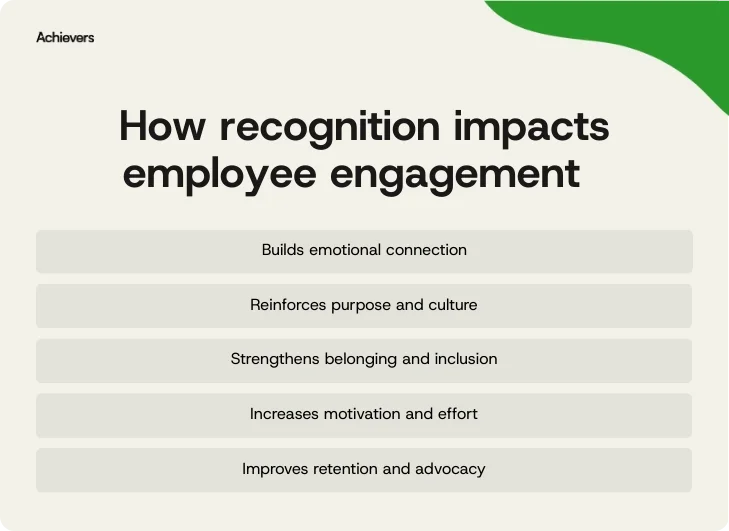
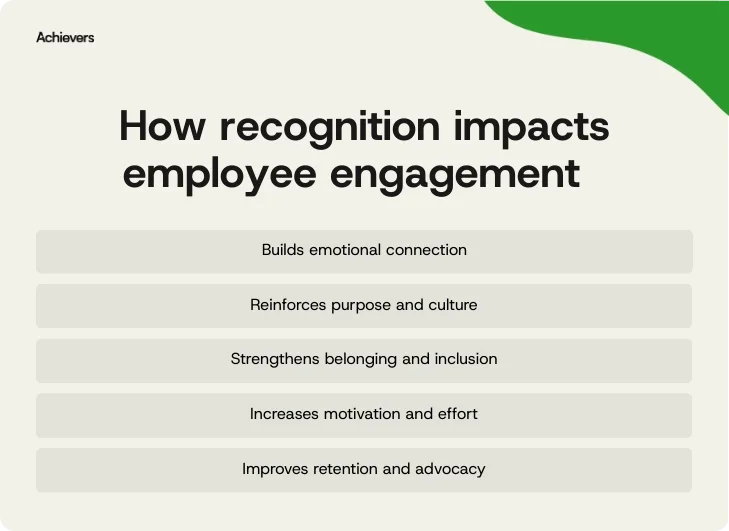
Recognition plays a direct and indispensable role in cultivating employee engagement by providing clear reinforcement of what constitutes valuable work and why it matters. This clarity is paramount, especially considering findings from Gallup indicating that only one in three U.S. workers strongly agree they have received recognition or thanks for doing good work in the past week. This significant "recognition gap" represents a substantial missed opportunity for organizations to capitalize on one of the most cost-effective yet high-impact strategies for talent management. When executed effectively, recognition yields a cascade of benefits:
-
Builds Emotional Connection: Feeling genuinely recognized fosters a profound personal connection between employees and their work, as well as with the organization itself. When an individual’s efforts are acknowledged and celebrated, they feel seen, valued, and understood, rather than invisible or dispensable. This affirmation strengthens trust in leadership and commitment to the organizational mission. From a neuroscientific perspective, receiving positive recognition can trigger the release of dopamine, a neurotransmitter associated with pleasure and motivation, reinforcing the desired behaviour and creating a positive feedback loop that encourages future engagement. Recognition, therefore, serves as a powerful reminder that an employee’s contributions genuinely count.
-
Reinforces Purpose and Culture: Strategic recognition transforms abstract company values and mission statements into tangible, everyday realities. By specifically highlighting behaviours that exemplify core organizational values – such as innovation, collaboration, integrity, or customer focus – leaders help employees understand precisely how their daily work contributes to the broader strategic objectives. This clarity provides a sense of purpose, illustrating what success looks like in practice and how individual actions align with the collective vision. It codifies the desired culture, making it accessible and actionable for every employee.
-
Strengthens Belonging and Inclusion: The manner in which recognition is distributed, and its frequency, sends a potent signal about who is valued and who truly belongs within an organization. Fair, transparent, and visible recognition practices are critical for fostering an inclusive environment. When all employees, regardless of their background, role, or demographics, have equitable opportunities to be recognized, it gives them a voice and reinforces the perception that their contributions are equally significant. This sense of belonging is a fundamental human need and a cornerstone of psychological safety, significantly reducing the likelihood of employees feeling marginalized or mentally disengaging.
-
Increases Motivation and Productivity: Recognition acts as a powerful catalyst for sustained motivation and enhanced productivity. When progress, effort, and achievements are acknowledged, employees are intrinsically motivated to maintain and even elevate their performance. This positive reinforcement encourages greater focus, energy, and care in their work. Data from the Achievers 2025 State of Recognition AWI Report underscores this, revealing that 91% of employees would invest more effort if they felt meaningfully recognized. This suggests that appreciation is not merely a soft skill but a hard-edged productivity tool, directly influencing discretionary effort and output.
-
Improves Retention and Advocacy: Employees are significantly more likely to remain with organizations where they feel genuinely appreciated and valued. Consistent recognition reinforces the message that employees matter, that their contributions are noticed, and that they are integral to the company’s success. This sense of value not only drastically improves employee retention rates but also transforms satisfied employees into enthusiastic advocates for the organization. They become promoters of the company’s brand, both internally and externally, contributing to a positive employer reputation that aids in talent attraction. Beyond being an engagement initiative, industry analysts like Brandon Hall Group highlight that recognition data can serve as a powerful source of workforce intelligence, revealing patterns related to employee behaviour, organizational alignment, retention risks, and overall performance, enabling data-driven business outcomes.
Strategic Frameworks for Boosting Engagement Through Recognition
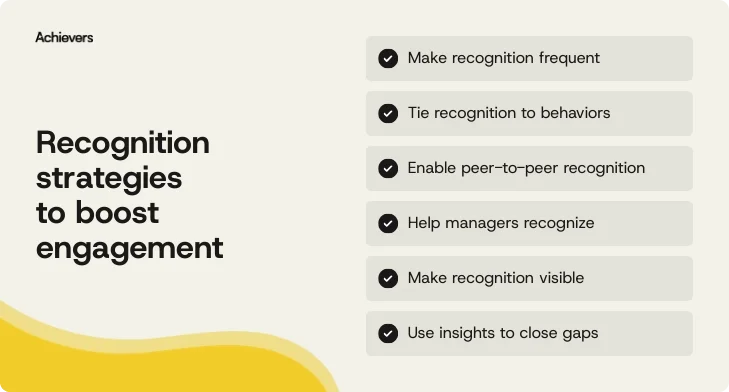
While the principle of recognition is straightforward, its effective implementation requires more than sporadic "great jobs" or annual accolades. It demands a deliberate strategy, a consistent rhythm, and a deeply embedded workplace culture that perceives appreciation as an integral part of work, not an optional add-on. Here are six practical, evidence-based strategies to transform recognition into a robust driver of engagement:
-
Make Recognition Frequent, Not Occasional: Engagement flourishes in the daily micro-moments where effort is acknowledged and contributions are noticed. Infrequent recognition, such as an annual award, lacks the immediacy and continuous reinforcement needed to sustain momentum. Frequent, in-the-flow recognition provides real-time feedback, eliminating guesswork for employees about whether their actions are making an impact. When employees consistently know their contributions are seen and valued, they remain actively engaged in generating more of that positive impact. This consistent "drip feed" of appreciation builds continuous positive reinforcement.
-
Tie Recognition to Specific Behaviours and Values: Generic praise like "good job" is often ineffective in shaping culture or driving specific outcomes. For recognition to be truly impactful, it must be specific, detailing the exact behaviour or action being commended and explicitly linking it to the organization’s core values. For instance, instead of "thanks for your hard work," a more effective recognition might be, "Thank you for proactively collaborating with the marketing team on the Q3 campaign, demonstrating our value of ‘Teamwork First’ and significantly accelerating project delivery." This specificity builds clarity, instills confidence, and fosters a shared understanding of what excellence looks like within the organizational context.
-
Enable Peer-to-Peer Recognition: Managers, by virtue of their role, cannot observe every valuable contribution. Peers, however, are often privy to the subtle yet significant moments that drive success: the quick assist, the creative problem-solving, the "save of the day" that might otherwise go unnoticed by leadership. Empowering employees to recognize each other creates a broader, more authentic network of appreciation. This democratizes recognition, generating more touchpoints for positive feedback, strengthening interpersonal connections, and fostering a more human-centric culture where appreciation is a shared responsibility, not solely a top-down directive.
-
Help Managers Recognize Often and Well: Managerial recognition carries disproportionate weight due to the inherent power dynamics. However, managers often require training and support to deliver recognition effectively. Organizations must equip managers with the skills and confidence to provide recognition that is timely, specific, authentic, and clearly tied to impact. By developing strong recognition habits, managers can significantly strengthen trust with their teams, enhance alignment with organizational goals, and make engagement feel deeply personal rather than a programmatic mandate from HR. This requires ongoing education, tools, and clear expectations for leadership.
-
Make Recognition Visible Across the Organization: Public and visible recognition amplifies the message of what is valued beyond individual teams or departments. When employees can observe recognition occurring across various functions and levels, it reinforces a consistent cultural narrative about desired behaviours and achievements. This transparency also creates learning opportunities, allowing employees to glean insights from their colleagues’ strengths and successes. Furthermore, visible recognition fosters a stronger sense of collective identity, helping individuals feel part of something larger than their immediate role, thereby bolstering overall organizational cohesion.
-
Use Insights to Close Engagement Gaps: Modern recognition platforms generate invaluable data that can provide a panoramic view of an organization’s engagement landscape. By analyzing patterns of recognition – who is being recognized, by whom, for what, and with what frequency – leaders can proactively identify thriving areas as well as potential blind spots, inequities, or struggling teams. For example, a lack of recognition for a particular demographic group or department might signal an inclusion issue or a lack of visibility for certain types of work. Using these data-driven insights to adjust recognition habits ensures that appreciation is distributed consistently and inclusively, serving as an early warning system to address disengagement long before it escalates into turnover. This approach transforms recognition from a reactive measure into a proactive strategic intelligence tool.
Empirical Validation: The Proof Behind the Practice
The assertion that recognition significantly impacts engagement is not merely anecdotal; it is robustly supported by extensive data. Reports like the Achievers Engagement & Retention Report and the State of Recognition Report offer thousands of data points that consistently tell the same story: when employees feel genuinely seen and appreciated, nearly every other aspect of their work experience improves.
-
Meaningful Work: A staggering statistic reveals that one in four employees who feel appreciated are 12 times more likely to find their work meaningful. This transformation moves work beyond a mere list of tasks, imbuing it with purpose and significance. This sense of meaning is the bedrock of sustainable engagement, serving as an anchor that keeps employees aligned with organizational values, connected to their purpose, and invested in building a future with their current employer. It transcends fleeting satisfaction, fostering deep psychological commitment.
-
Enhanced Engagement and Productivity: The frequency of recognition directly correlates with its impact. Weekly recognition does not just generate positive feelings; it establishes a clear, consistent feedback loop that helps employees maintain focus, confidence, and energy. When recognition is a regular occurrence, employees are liberated from the guesswork of whether they are on the right track, allowing them to channel their cognitive resources more effectively. This clarity demonstrably boosts motivation, reinforces desired behaviours, and results in employees being three times more engaged and 2.6 times more productive.
-
Building Leader Trust: The quality of the manager-employee relationship is paramount. Data indicates that manager recognition makes employees 19 times more likely to trust their leader. Trust is not forged during formal performance reviews; it is cultivated in the everyday moments when managers acknowledge effort, progress, and impact. When trust levels are high, communication becomes more fluid, alignment on goals improves, psychological safety flourishes, and employees are more willing to follow their leaders through periods of change and uncertainty. This trust is a cornerstone of effective leadership and team cohesion.
-
Mitigating Turnover Risk: In an era of intense talent competition, retention is a critical concern. Nearly one in three employees explicitly state that better recognition would reduce their propensity to seek new employment. Retention is not solely a function of compensation or benefits; it is profoundly influenced by whether employees feel valued. When recognition is absent, the silence can be interpreted as a lack of appreciation, a signal that their contributions are not valued, or that their future potential within the organization is limited. Conversely, consistent positive feedback reinforces their worth, builds psychological commitment, and provides compelling reasons for them to remain, effectively reducing the temptation to refresh job boards.
Achievers: Orchestrating the Link Between Recognition and Engagement
Employee engagement is not a singular program or an isolated event; it is a cumulative outcome built through a multitude of daily employee experiences. These experiences include feeling informed, supported, valued, and genuinely connected to meaningful work. Within this intricate tapestry of the employee journey, recognition plays an absolutely central and indispensable role. It is the mechanism that translates abstract values into concrete actions, transforms individual effort into measurable impact, and converts organizational intentions into observable behaviours that employees are eager to repeat.
This is precisely where platforms like Achievers come into play. Achievers is designed to seamlessly integrate recognition, actionable insights, and the employee voice into a unified experience, ensuring that engagement is not left to chance or fragmented across disparate tools. By facilitating frequent, meaningful, and highly visible recognition, organizations can consistently reinforce their most important values, proactively identify and close engagement gaps, and cultivate cultures where individuals do more than merely perform. They actively participate, take immense pride in their contributions, and become enthusiastic promoters of the work they are a part of.
Ultimately, when recognition is strategically woven into the very fabric of how work gets done—when it becomes an intrinsic part of daily operations and interactions—the pursuit of employee engagement ceases to be an uphill battle. Instead, engagement emerges organically, manifesting as a proud, invested, and high-performing workforce that drives sustainable success.