The burgeoning field of artificial intelligence, once lauded for its potential to democratize access to advanced capabilities, is poised for a dramatic shift in its economic landscape. A growing consensus among industry analysts and financial observers suggests that the price of AI tools and services is on the cusp of a significant escalation, a development that promises to introduce substantial disruption across various sectors. This anticipated surge is not a matter of arbitrary price hikes but a direct consequence of the immense and escalating costs associated with building and maintaining the foundational infrastructure required to power sophisticated AI models.
The core of this impending price adjustment lies in the sheer capital expenditure involved. Delivering cutting-edge AI technology is an inherently expensive endeavor, primarily driven by the insatiable demand for computational power. Data center construction and expansion, even when adjusted for inflation, have already surpassed the historical investment in monumental infrastructure projects. For instance, the inflation-adjusted cost to construct the entirety of the 47,000-mile U.S. highway network over four decades is estimated to be around $670 billion. However, the investment in AI infrastructure alone is rapidly approaching and, in some projections, will soon exceed this figure annually.
Unprecedented Investment in AI Infrastructure
Recent financial data paints a stark picture of the scale of investment in AI infrastructure. Over the past twelve months, the "Big Four" hyperscale cloud providers – Amazon, Alphabet (Google), Microsoft, and Meta – have collectively invested between an estimated $370 billion and $410 billion in 2025. This figure, which accounts for capital expenditures, finance leases, and fiscal year adjustments, is projected to climb to approximately $650 billion in 2026, according to estimates cited by Reuters and based on data from Bridgewater.
When expanding the scope to include other significant players in the AI data center construction arena, such as Oracle, CoreWeave, and emerging entities like xAI (backed by Elon Musk’s SpaceX), the annualized investment in recent times surges to around $500 billion. Projections for 2026 indicate this figure is on track to reach between $700 billion and $750 billion, or even higher. These numbers represent recent annualized spending and do not encompass broader market commitments, such as multi-year "Stargate-style" contracts, which represent contracted capacity rather than immediate capital outlay.

The ecosystem of AI infrastructure extends beyond the cloud providers and data center builders. Companies that manufacture the critical components for these operations, including Nvidia (the dominant player in AI chip production), TSMC (the world’s largest contract chip manufacturer), Micron, Intel, SK Hynix (major memory chip manufacturers), and Seagate (a leading hard drive manufacturer), are also experiencing unprecedented demand. Their combined investments are estimated to add another $200 billion to $300 billion, pushing the total projected annual spending run-rate for AI infrastructure towards a staggering $1 trillion by 2026.
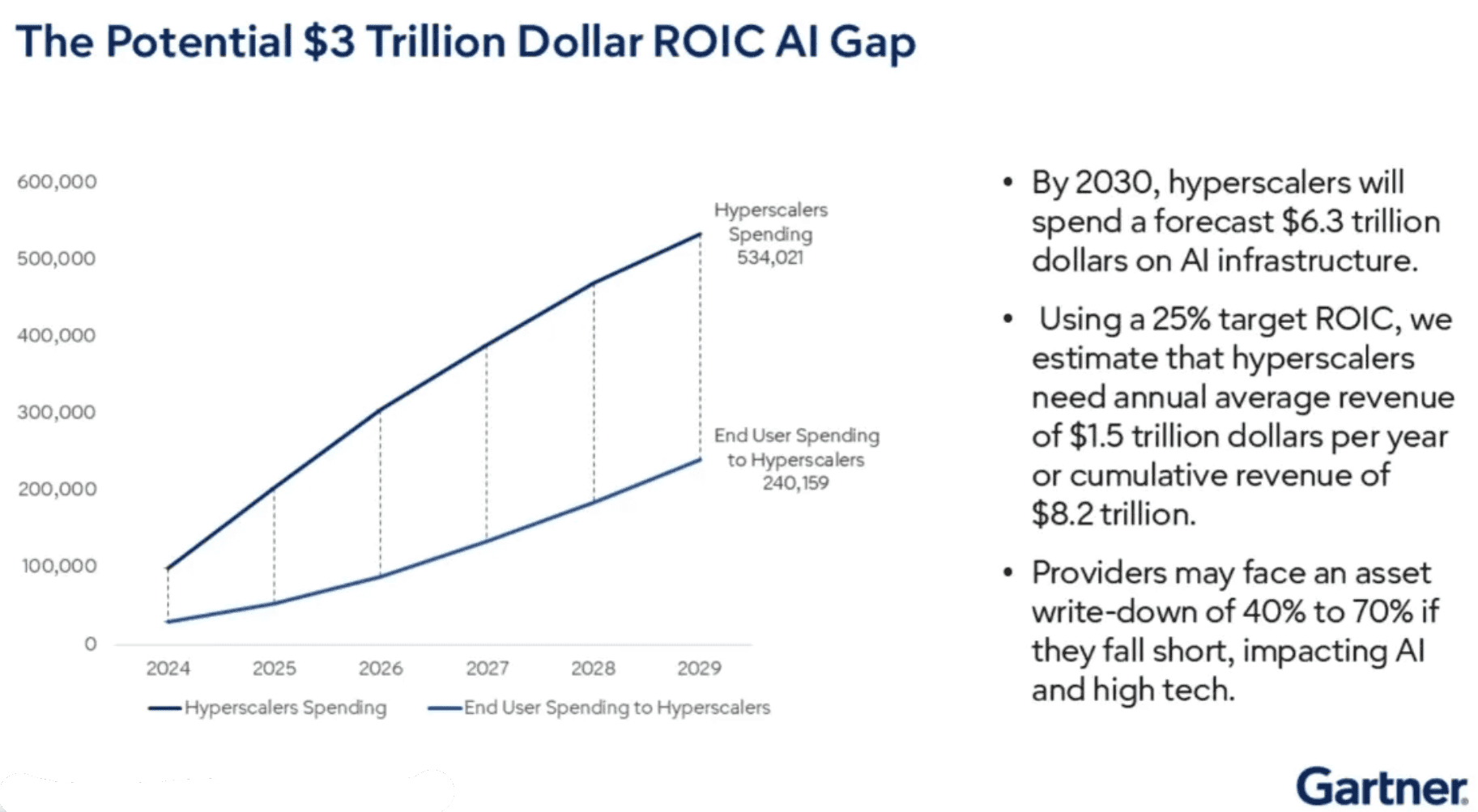
This upward trajectory is further underscored by long-term forecasts. Gartner, a prominent technology research firm, projects that global spending on AI-related infrastructure and services could reach an astonishing $6.3 trillion by 2030. This forecast highlights the sustained and exponential growth anticipated in the AI market, driven by both technological advancements and increasing enterprise adoption.
The Pressure to Monetize and the Impact on Pricing
The escalating infrastructure costs directly translate into pressure on AI developers and service providers to recoup their investments and generate profits. Many of these companies, particularly those that have recently gone public or are contemplating an IPO, such as Anthropic and OpenAI, are under intense scrutiny from investors to demonstrate positive gross margins. For instance, Anthropic is reportedly nearing profitability on its core offerings. This financial imperative will inevitably lead to price increases for their AI tools and services.
Furthermore, established software giants, often referred to as "SaaSapocalypse" companies like SAP, Workday, Oracle, Salesforce, and Adobe, are also keen to showcase robust financial performance to Wall Street. As they integrate AI capabilities into their existing product suites, they will likely pass on the increased operational costs to their enterprise customers, further contributing to the overall rise in AI-related software expenses.
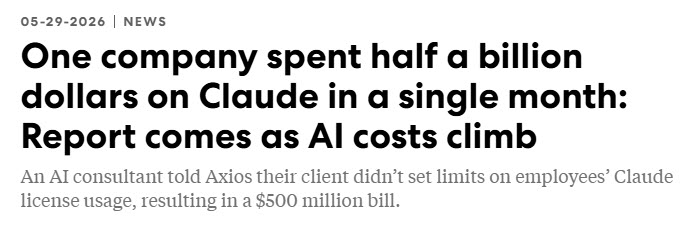
The recent pricing adjustments by Anthropic serve as a bellwether for this trend. The company has transitioned to a usage-based pricing model for its enterprise customers, charging based on the volume of AI utilized rather than flat subscription fees. This shift, coupled with the adoption of new technologies like advanced tokenizers for its latest AI models, is expected to lead to significantly higher bills for businesses that are heavy users of Anthropic’s Claude products. Reports indicate that many technology firms and large Anthropic clients are prepared to absorb these increased costs, viewing the productivity gains from AI-driven automation as a worthwhile trade-off.
Customer Reactions and the Search for Alternatives
The prospect of escalating AI costs is already prompting businesses to re-evaluate their strategies. In recent client interactions, IT leaders have expressed concerns about the rising expense of AI tools. Notably, some Chief Information Officers (CIOs) and Chief Human Resource Officers (CHROs) have begun exploring the possibility of "outsourcing" AI development and implementation to engineering talent in countries like India, where labor costs are significantly lower. This sentiment suggests a potential shift in the global talent pool for AI development as businesses seek to mitigate the financial impact of soaring AI tool prices.
Eric Johnson, CIO at PagerDuty, a company that assists software engineers in responding to technical outages, articulated this growing concern. He stated, "I am preparing myself to be surprised by the bills. We believe that there’s a lot of value here. Unfortunately, it’s fairly new technology, so there’s some open questions that we’re gonna be working through around its costs and getting a return on the investment." His statement reflects the common sentiment of businesses grappling with the evolving cost structure of AI adoption.
The competitive landscape is also reacting to this pricing pressure. In a significant development, Google announced the release of Gemini 3.5 Flash, a new AI model positioned as being "10-times less expensive" than its predecessor, Opus 4.7. This move signals the beginning of a price-performance battle among AI providers, as they strive to balance cutting-edge capabilities with affordability in the face of increasing infrastructure expenses.
The Economic Imperative: A Trillion-Dollar Revenue Challenge
The underlying economic reality is that the massive investments in AI infrastructure necessitate substantial revenue generation. To achieve a hypothetical 15% compound return on investment over a five-year depreciation period – a generous assumption for such rapidly evolving technology – the AI industry requires annual new revenue generation at or above $1 trillion. This figure, while staggering, is considered a conservative estimate given the profit margins inherent in AI development.
This revenue must be sourced from consumers, advertisers, and businesses. While consumer-facing AI applications might contribute, the scale of current global internet advertising spending, estimated at around $750 billion, suggests that even a doubling of "junky ads" would not fully cover the AI investment.
On the enterprise side, the global market for software is approximately $1.2 trillion, according to Gartner. A doubling of this market to accommodate AI-driven solutions represents a significant, albeit potentially achievable, expansion. This implies that businesses may face effectively doubling their spending on enterprise software or a substantial increase in advertising costs if the consumer market is targeted.
Beyond these primary revenue streams, the U.S. government’s significant spending on military applications and the emergence of new markets for AI in bio-research, energy research, and other scientific endeavors will also contribute to the overall AI revenue pie. However, the fundamental challenge remains: the era of consistently decreasing computing costs, often associated with Moore’s Law, is unlikely to persist in the near term for AI infrastructure.
Historical Context and Future Implications
The notion that computing perpetually becomes cheaper needs a historical perspective. The original IBM PC, released in 1981 for $1,565 (without a hard disk), would cost approximately $5,700 in today’s inflation-adjusted dollars. Modern PCs, while often priced around $3,000, come with significantly more advanced capabilities and are often part of a broader personal computing ecosystem that includes smartphones. This suggests that the "cost of computing" for individuals, when viewed holistically, has not seen a drastic decline over the past 45 years, and the current AI boom represents a new phase of increased investment.
The current trajectory indicates that the "wonderful AI" is indeed quite expensive. Unless it fundamentally replaces existing technologies and processes on a large scale, the primary outcome will be increased costs for consumers and businesses. From an economic standpoint, this necessitates demonstrable gains in productivity, health, or other benefits that have not yet been fully realized or quantified.

Companies like Nvidia, Oracle, Microsoft, and Workday are not merely aiming to replace existing revenue streams with AI; they are pursuing growth. Similarly, Google, Meta, SpaceX, Amazon, and Apple are driven by the imperative to expand their market share and profitability. As Nvidia CEO Jensen Huang has succinctly put it, "AI compute is revenue." This statement underscores a significant shift away from traditional seat-based licensing models towards a model where the underlying computational power and its utilization become the primary drivers of revenue. This transition will redefine how businesses procure and pay for AI capabilities.
The implications of this impending cost surge are far-reaching. Businesses that heavily rely on AI for their operations will need to strategically manage their budgets, explore cost-optimization strategies, and rigorously assess the return on their AI investments. The potential for a bifurcated market, where only large enterprises can afford the most advanced AI solutions, is a real concern. Furthermore, the exploration of alternative talent pools and pricing models will continue to shape the global AI landscape. As the industry matures, the balance between innovation, accessibility, and economic sustainability will be a critical factor in determining the long-term success and societal impact of artificial intelligence.