The relentless acceleration of change within the modern workplace is no longer a subtle undercurrent but a palpable force impacting professionals globally. A significant finding from Deloitte’s 2026 Global Human Capital Trends report highlights this pervasive challenge: one in three workers navigated a staggering 15 or more major organizational changes over the past year. Compounding this strain, a mere 27% of organizations express confidence in their ability to effectively manage such continuous flux. This pronounced disparity between the velocity of change and organizational capacity to absorb it has coalesced into a widely recognized phenomenon: "change exhaustion."
This growing concern was a central theme in recent discussions with leading talent executives, prompting a critical question: how can organizations foster environments where employees not only endure constant transformation but actively thrive, remaining relevant and pursuing growth? This inquiry forms the crux of a broader strategic imperative for businesses aiming to retain a competitive edge in an increasingly dynamic global economy.
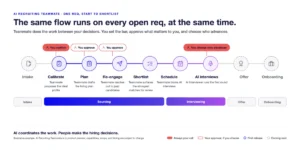
During a recent webinar, Sue Cantrell, Vice President of Products, Workforce Strategies at Deloitte, shared insights from the latest Human Capital Trends research. A particularly striking revelation from their analysis indicated that the most successful organizations are not necessarily those that have mastered traditional change management protocols. Instead, they are distinguished by their strategic pivot from viewing change as a series of discrete, often disruptive, events to be overcome, towards embedding adaptability into the very fabric of daily operations. This fundamental shift in perspective is observed by experts at the intersection of people strategy and product development, such as those at Eightfold.ai, who emphasize that the differentiator is rarely a lack of effort or intention, but rather a critical deficit in visibility.
This "visibility gap" is not an abstract concept; it manifests directly in the everyday decision-making processes of managers. Deloitte’s research underscores the severity of this issue with a stark statistic: only 11% of managers strongly agree that they possess the necessary data and tools to make informed decisions regarding task allocation and team composition. This implies that nearly 90% of managers are tasked with critical people-related decisions without adequate data to guide them. This is not a reflection of managerial unwillingness; the overwhelming consensus among managers is a desire to make optimal choices. However, they are often compelled to rely on outdated methods such as memory recall, headcount reports, and sheer intuition. The profound consequence of this data deficit is that strategic objectives formulated in executive boardrooms fail to translate into tangible progress on the ground, as frontline managers lack the granular insights required to effectively deploy talent.
The most adaptive organizations, therefore, are actively implementing distinct strategies to bridge this gap. Their approaches can be broadly categorized into three key strategic pillars that enable them to navigate the evolving landscape of work with agility and resilience.
Orchestrating Talent to Meet Evolving Work Demands
A significant departure from traditional, rigid annual planning cycles, leading organizations are adopting a dynamic approach to talent deployment. Instead of adhering to fixed plans and executing them over extended periods, these forward-thinking companies continuously assess emerging capability needs and strategically redeploy both human capital and artificial intelligence resources to meet these demands. The principle of orchestrating capability and capacity with speed was identified as the paramount priority in Deloitte’s latest study, with an overwhelming 88% of respondents deeming it crucial. Despite this widespread recognition of its importance, a mere 7% of organizations report making substantial progress in this area.
The tangible benefits of this agile talent orchestration are considerable. A compelling case in point is Levi Strauss. By assembling a cross-functional team and augmenting their capabilities with AI, the company successfully designed, launched, and marketed an entirely new product line within a remarkably short timeframe of three months. This accelerated innovation cycle resulted in a significant 15% boost in sales, demonstrating the powerful synergy between strategic talent deployment and rapid market responsiveness. This approach underscores a shift from a static workforce model to a fluid one, where talent is viewed as a dynamic resource that can be reconfigured to address immediate and future business needs.
The underlying enabler for this type of dynamic orchestration is a robust understanding of the skills and capabilities present within the workforce. Without this clarity, attempts to redeploy talent can be inefficient, misdirected, or even detrimental. The ability to map skills to evolving project requirements and market opportunities allows organizations to proactively identify talent gaps and bridge them swiftly, minimizing delays and maximizing impact. This also involves leveraging technology to gain real-time insights into project pipelines and the skills required to execute them, enabling a more proactive and less reactive approach to resource allocation.
Empowering Managers with Comprehensive Talent Visibility
A critical component in closing the aforementioned 11% data gap for managers lies in providing them with a clear and comprehensive view of the talent already within their organization. This visibility is transformative. NTT DATA, for instance, reported a substantial 52% improvement in internal placement rates and a remarkable 128% increase in employees proactively seeking new opportunities after granting its managers enhanced visibility into existing internal skill sets. This internal focus revealed that many roles for which they were actively recruiting externally were already filled by existing employees possessing the requisite skills. Deloitte’s research further corroborates the efficacy of this approach, indicating that organizations leading in this area are approximately twice as likely as their peers to report both stronger financial performance and greater job satisfaction and meaning for their employees.

This enhanced visibility allows managers to move beyond assumptions and make data-driven decisions about internal mobility, development, and project assignments. Instead of relying on anecdotal evidence or limited personal knowledge, they can access detailed profiles of their team members’ skills, experience, and career aspirations. This not only leads to more effective talent utilization but also fosters a culture of internal growth and development. Employees are more likely to feel valued and engaged when they see clear pathways for advancement within the organization, rather than feeling the need to look elsewhere for new challenges.
The implications of this strategy extend to talent acquisition and retention. By fully understanding the internal talent pool, organizations can reduce reliance on costly external recruitment efforts, optimize onboarding processes for internal transfers, and identify potential flight risks by proactively addressing employees’ career development needs. This focus on internal talent development is not merely a cost-saving measure; it is a strategic investment in building a more agile, skilled, and committed workforce capable of adapting to future challenges. The ability to identify and nurture internal talent also contributes to a stronger employer brand, attracting high-caliber external candidates who seek organizations that prioritize employee growth.
Cultivating Continuous Development Over Episodic Training
The imperative to help individuals remain relevant in a rapidly changing professional landscape is the other critical half of the adaptive workforce equation. Similar to the trends observed in talent orchestration, the desire for adaptiveness is widely acknowledged, with 85% of respondents in Deloitte’s research deeming it important. Yet, again, only a modest 7% of organizations report significant progress in fostering this adaptiveness. The most progressive and adaptive organizations are actively embedding continuous development into the daily workflow of their employees, moving away from the traditional model of infrequent, once-a-year training events.
These organizations surround their employees with support mechanisms that are integrated into the flow of work. This includes leveraging AI-powered coaches, offering short, daily learning challenges, and providing personalized development recommendations. Crucially, these initiatives are underpinned by a clear understanding of each individual’s current capabilities and their potential future growth trajectories. A prime example of this approach comes from a global biotech company that implemented this strategy. The result was a 30% increase in internal mobility and the avoidance of millions of dollars in potential severance costs by successfully redeploying existing employees rather than resorting to layoffs.
This continuous development model is intrinsically linked to the concept of a "learning organization," where acquiring new skills and adapting to new technologies is not an optional add-on but a core operational function. By making development an ongoing process, organizations can ensure that their workforce remains agile, resilient, and equipped with the skills needed to tackle emerging challenges and capitalize on new opportunities. This also fosters a culture of lifelong learning, empowering employees to take ownership of their career development and continuously enhance their value to the organization. Furthermore, by linking development to specific career pathways and organizational needs, companies can ensure that learning initiatives are not only engaging but also strategically aligned with business objectives.
The synergy between these three interconnected strategies is profound. Effective talent orchestration hinges on a live, dynamic understanding of what individuals can do to accurately route work. Similarly, fostering adaptability requires this same granular insight to effectively route growth opportunities. The common thread, and often the missing input, is a unified, comprehensive view of talent that serves both functions. Many organizations, however, inadvertently create silos by funding these as separate, competing programs, thereby diminishing their overall impact.
Underpinning all these efforts is the fundamental principle of trust. In the professional sphere, progress and adaptation occur at the speed of trust. Employees must have confidence in the systems and processes that manage their data, understanding where their information resides and how it is utilized. This is a reasonable expectation, and it is imperative that technology partners are held to the same rigorous standards. Companies like Eightfold.ai, for instance, are actively demonstrating this commitment by publishing their bias-test results and maintaining stringent certifications such as ISO certification and FedRAMP authorization. Transparency in data handling and algorithmic fairness is not merely a compliance requirement; it is the bedrock upon which sustained employee willingness to adapt is built.
The future of work is not a distant prospect; it is unfolding in real-time. The transition from pervasive "change exhaustion" to a sustainable competitive advantage is not about demanding more from employees, but rather about equipping them, and their managers, with a shared, transparent view of talent. This shared understanding is essential for strategically directing both work and growth opportunities, ultimately empowering individuals to take the lead in decisions that significantly impact their careers and the organization’s success.
For those seeking a more in-depth exploration of the research, real-world case studies, and actionable strategies, a comprehensive discussion with Sue Cantrell is available on demand. This webinar provides invaluable insights into orchestrating an adaptive workforce and transforming the challenges of change into opportunities for growth and competitive advantage.
Watch the webinar on demand.