
For much of the past year, prevailing analysis of the United States job market suggested that Artificial Intelligence (AI) was not a significant driver of employment slowdowns. Data and expert conversations consistently pointed towards broader economic factors like cost-cutting measures and general uncertainty as the primary culprits behind job market cooling. However, as the calendar turns to 2026, a notable shift is becoming apparent, with a growing divergence in unemployment rates between recent college graduates and more experienced workers, hinting at AI’s emerging, albeit complex, role.
Unemployment Rate Escalates, Signaling Economic Slowdown
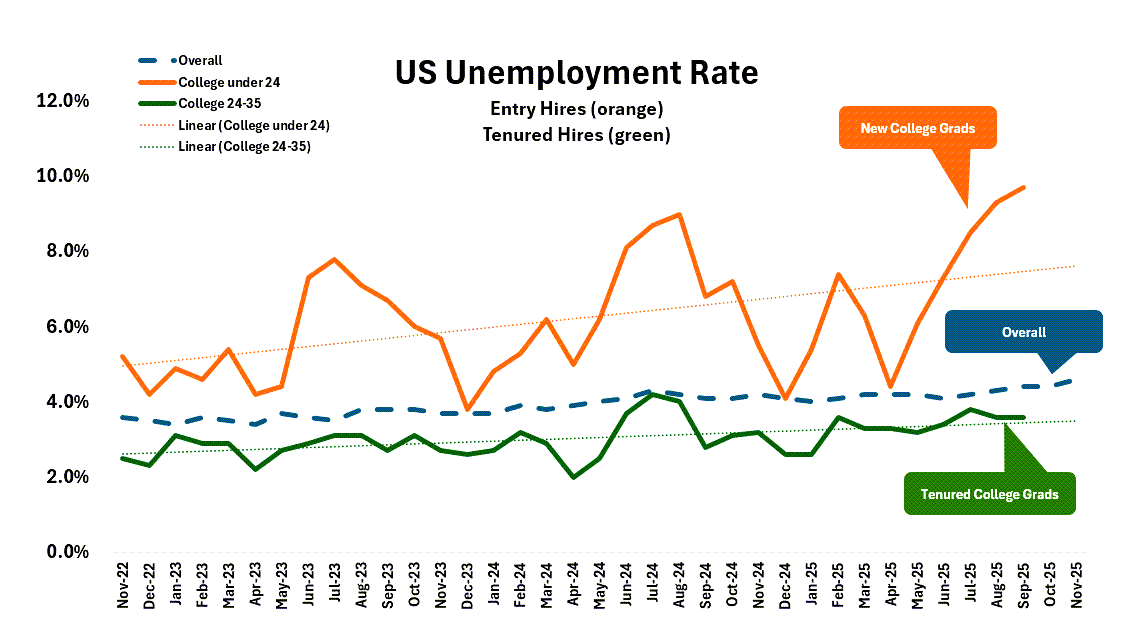
The overall US unemployment rate has seen a marked increase, reaching 4.6% in late 2025. This figure represents a significant jump from the 4.2% recorded a year prior, an increase of 9.5%. More strikingly, when compared to November 2023’s rate of 3.7%, the current unemployment figure signifies a substantial 24.7% surge over a two-year period. This trend is particularly concerning given that the unemployment rate stood at a relatively stable 3.6% in November 2022.
This upward trajectory in unemployment is indicative of a broader economic deceleration following the post-pandemic surge in consumer spending, often dubbed "revenge buying," which characterized 2021 and 2022. Contributing factors to this slowdown include the persistent effects of U.S. tariffs, ongoing inflationary pressures, and a sustained period of relatively high interest rates, all of which constrain business investment and consumer demand.
A Tale of Two Workforces: Graduates vs. Experienced Professionals
A deeper examination of the unemployment data reveals a pronounced divergence when segmenting the workforce by age and experience. Specifically, a contrast emerges between new college graduates (aged 24 and younger) and more seasoned professionals (aged 25-35).
Unemployment Trends: A Growing Divide
-
Tenured College Graduates (Age 25-35): The unemployment rate for this demographic has remained consistently below the national average. This stability is attributed to their accumulated skills, developed judgment, and the maturity in decision-making that comes with professional experience. These individuals are generally more adaptable and possess a deeper understanding of organizational needs, making them more resilient in fluctuating economic conditions.
-
New College Graduates (Age 24 and Younger): In stark contrast, the unemployment rate for recent graduates is trending sharply upward. As of late 2025, this rate has approached 10%, a level not seen since the peak of the pandemic recovery in July 2021. Historical data indicates that such elevated unemployment levels for young college graduates are rare, with the only comparable period being 2011, during the prolonged recovery from the 2008 Great Recession. This correlation raises concerns about the long-term career prospects for this generation entering a transformed labor market.
The Declining Demand for Higher Education in the Job Market
Further complicating the outlook for recent graduates is a discernible trend in the broader job market’s educational requirements. Data indicates that jobs not requiring a college degree constitute approximately 82% of the workforce, an increase from 79% five years ago. This suggests a dual impact: not only is AI potentially influencing hiring decisions for roles that previously required degrees, but the overall landscape is shifting towards positions that do not necessitate a four-year qualification. This could lead to a devaluing of traditional higher education for certain career paths and potentially reduce the number of college-educated roles available in the future.
AI’s Evolving Role: From Peripheral Factor to Emerging Influence
While the initial impact of AI on job displacement was perceived as minimal, the current economic climate suggests a more nuanced and evolving influence. The concern is not solely about AI directly replacing jobs, but rather its indirect effects on hiring strategies, skill requirements, and the overall structure of the workforce.
Key Developments Underpinning the Shift:
-
AI as a Productivity Tool, Not a Replacement: The narrative around AI is transitioning. Instead of viewing AI as a direct job eliminator, there’s a growing understanding that it functions as a powerful productivity enhancement tool. This means that roles may be redefined rather than eradicated, with human workers collaborating with AI to achieve greater efficiency. However, this shift necessitates a reevaluation of skills and training.
-
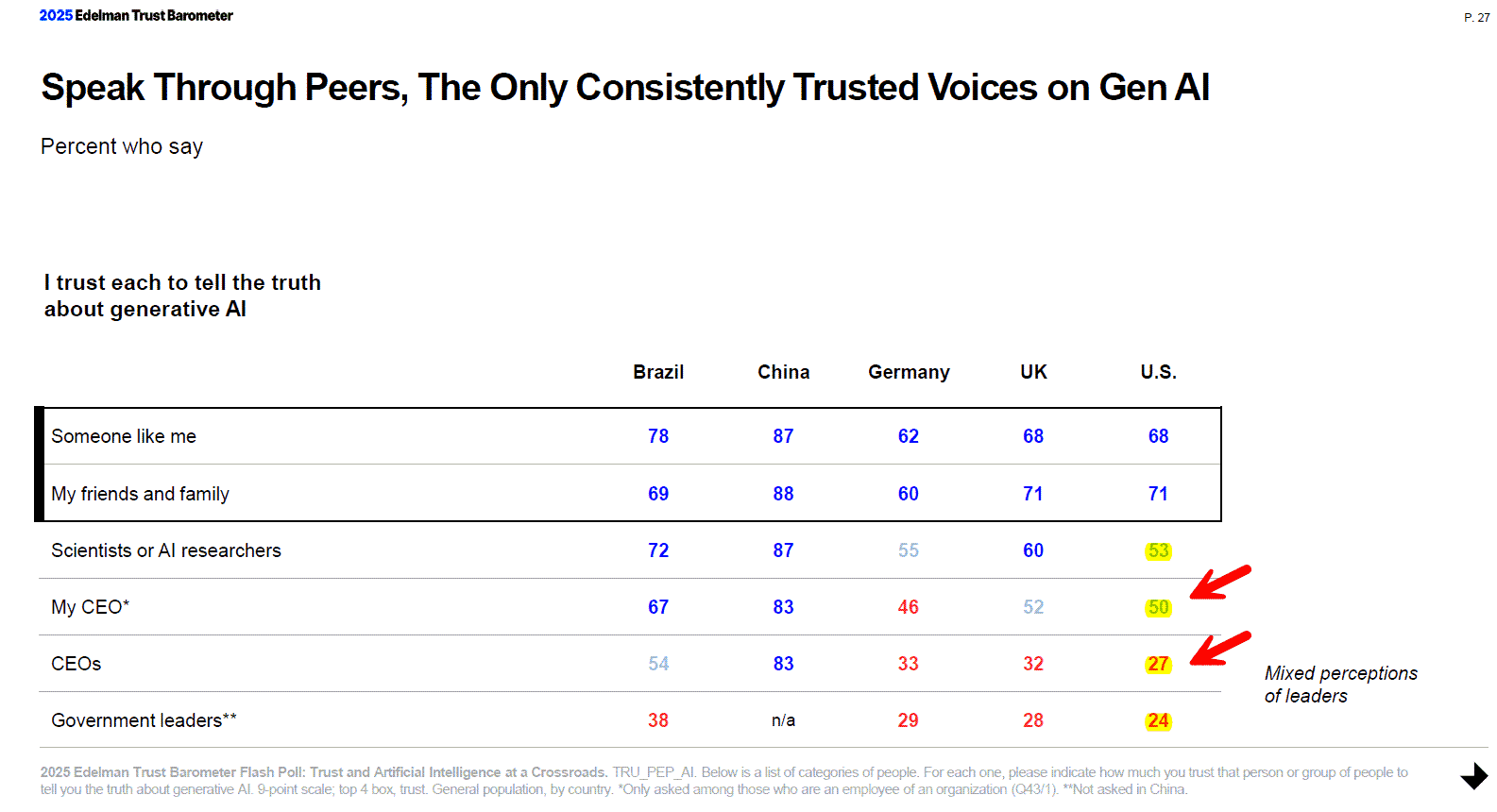
The "Trust Gap" in AI Adoption: A significant hurdle in the widespread integration of AI into the workforce is the prevailing sentiment regarding trust. Recent surveys, such as the Edelman Trust Barometer’s flash poll on Trust in Artificial Intelligence, highlight a critical distinction: while there might be a growing belief in the potential value of AI, there is a significant deficit in trust concerning the AI platforms themselves and the entities deploying them. This lack of confidence, particularly among employees, can lead to resistance to change, reduced engagement, and a slowdown in the adoption of new AI-driven processes. When only half of employees believe what leaders are communicating about AI, it breeds uncertainty and inhibits innovation.
-
AI as a "Socio-Technological" Innovation: AI is not merely a technological advancement; it is a "socio-technological" innovation with profound societal and sociological implications. Its integration impacts how people interact, learn, and perform their jobs. This requires a human-centric approach to its implementation, addressing not just the technical aspects but also the human elements of change management, communication, and employee well-being. The anxiety surrounding AI, if not managed effectively, could inadvertently lead to decreased economic productivity as individuals grapple with uncertainty about their future roles and earning potential.

The Societal Impact of AI Anxiety
The pervasive uncertainty surrounding AI’s long-term impact on employment contributes to heightened economic insecurity among the workforce. Concerns about job security, career progression, and future earning capacity can lead to employee apprehension, which, in turn, can stifle innovation and reduce overall economic output. This "AI anxiety" can create a self-fulfilling prophecy, where fear of technological displacement leads to behaviors that hinder productivity.
The path forward, therefore, lies not in ignoring the discourse around AI but in fostering open and transparent communication. The exact scope of AI’s impact remains an evolving question, and many current AI platforms are arguably overstating their immediate value. Navigating this landscape requires a collective effort to become comfortable with increasingly sophisticated AI applications, from conversational interfaces and personalized communications to AI-driven performance reviews and avatar-based interviews.
As we move into 2026, the integration of AI is expected to accelerate, bringing with it technologies like "digital twins," advanced robotics, and more sophisticated human-like animations in the workplace. Companies are already exploring AI agents designed to assist in learning and development, such as Galileo Learn’s "Josh Agent," which provides coaching and challenges to users.
Strategic Implications for Employers and Employees
The current employment landscape presents critical strategic considerations for both employers and individuals.
Advice for Employers: Rethinking Entry-Level Hiring
Employers who are currently hesitant to hire entry-level candidates may be overlooking a significant opportunity. Younger workers, having grown up with digital technologies, are often more receptive to and adept at adopting AI tools. They are more likely to embrace AI not just to enhance existing tasks but to fundamentally reimagine how work is done. This propensity for innovation makes them potential catalysts for organizational reinvention.
The "Superworker" Phenomenon: AI as a Leveler
AI is emerging not as a job killer but as a significant "job leveler." For younger workers, AI democratizes access to information and research, capabilities previously held by seasoned experts. With a willingness to engage with these tools, individuals can accelerate their journey from apprentice to expert. The same principle applies to job seekers; there is an unprecedented opportunity to become deeply knowledgeable about a company before even the initial recruiter contact.
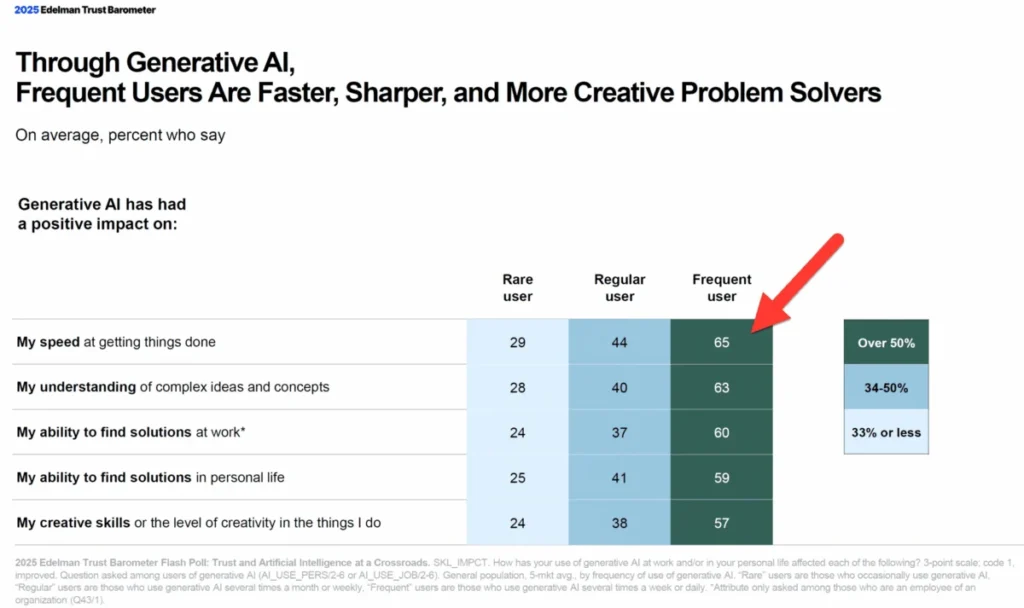
For more experienced professionals, the challenge is to avoid relying solely on past achievements. Continuous learning and adaptation are paramount. Embracing new technologies and advancements within their domain is crucial to remaining relevant and effective. Research indicates that frequent AI users report a higher likelihood of finding solutions at work and completing tasks more efficiently, underscoring the tangible benefits of AI adoption.
Guidance for Hiring Managers and Executives
Hiring managers and executives must be wary of the "tenure trap." While experienced employees possess invaluable institutional knowledge, their resistance to adopting AI in fundamentally new ways could limit their long-term effectiveness. A younger candidate, perhaps less experienced in the company’s traditional operations but proficient in AI, might quickly surpass their more tenured colleagues in terms of adaptability and innovation. The key is to discern whether senior employees view AI as a tool to "do things the old way faster" or as an opportunity to "rethink the way we work."
A Note for HR Leaders and Recruiters
Human Resources leaders and recruiters play a pivotal role in shaping the future workforce. They should recognize that younger workers may possess a faster learning curve and a greater potential to drive productivity gains through AI adoption. Identifying and nurturing these "AI pioneers" could be instrumental in building a highly capable and future-ready workforce.
A Message for CEOs and Executive Leadership
For CEOs and senior executives, transparency and strategic foresight are essential. Current research suggests that AI is primarily a "scaling technology," designed to enhance existing operations and create new efficiencies, rather than a direct tool for job elimination. An honest and supportive approach to AI integration will foster employee trust, accelerate adaptation, and ultimately ensure the company’s competitive edge in an evolving economic landscape.
The ongoing evolution of AI presents a complex interplay of technological advancement and human adaptation. The job market, particularly for new graduates, is demonstrating the initial ripples of this transformation. By fostering open dialogue, embracing continuous learning, and strategically integrating AI, both individuals and organizations can navigate this new era and unlock its potential for growth and innovation. The future of work hinges on our collective ability to adapt and evolve alongside these powerful new tools.







