
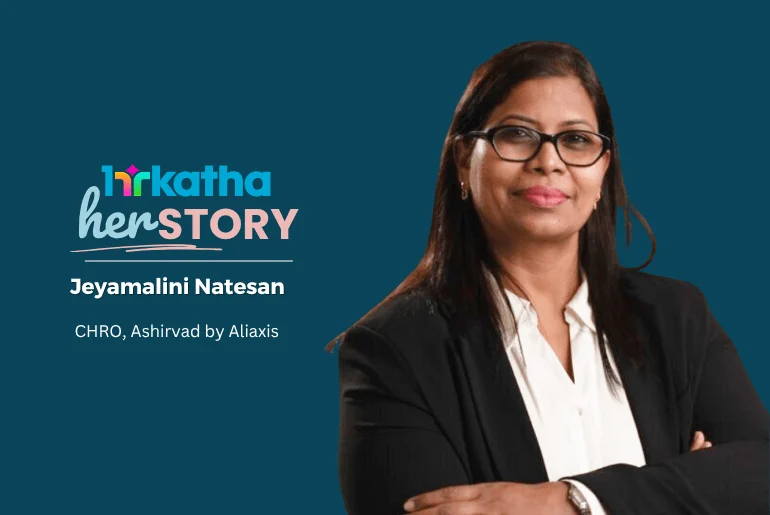
Jeyamalini Natesan, a distinguished figure in human resources, currently serves as the Chief Human Resources Officer (CHRO) at Ashirvad by Aliaxis, where her career trajectory exemplifies a profound evolution of the HR function from a traditional support role to a critical strategic business partner. Her journey, marked by diverse industry exposure, a relentless pursuit of learning, and an unwavering commitment to both business priorities and employee well-being, offers a compelling blueprint for modern HR leadership. Natesan’s early professional experiences laid the groundwork for her distinctive approach, granting her direct access to top-tier leadership, including MDs and CEOs. This unparalleled early exposure provided her with an invaluable understanding of overarching business strategies and, crucially, illuminated the path for HR to transcend administrative functions and become an indispensable driver of organizational success.
The Genesis of a Strategic HR Mindset: Early Lessons in Business Acumen and Empathy
From the outset of her career, Jeyamalini Natesan recognized that effective HR was not merely about managing people but about understanding the intricate dynamics of business operations and aligning human capital strategies directly with organizational objectives. This early insight was pivotal in shaping her philosophy, emphasizing that HR’s true value lies in its capacity to contribute to strategic decision-making and drive tangible business outcomes. Her interactions with senior leaders underscored the necessity of a holistic perspective, where HR interventions are not isolated initiatives but integral components of a larger corporate vision.
Beyond strategic alignment, Natesan’s formative years instilled in her a fundamental appreciation for the human element within the corporate ecosystem. She observed that individuals respond uniquely to similar situations, a realization that profoundly influenced her professional ethos. This understanding crystallized her belief that modern HR demands a nuanced blend of agility, empathy, and an acute ability to continuously balance the imperatives of business priorities with the legitimate expectations and aspirations of employees. In a rapidly evolving global economy, where talent is a primary differentiator, Natesan understood that an empathetic approach, coupled with strategic foresight, was paramount for fostering a resilient and high-performing workforce. This foundational wisdom continues to inform her leadership style and strategic direction at Ashirvad by Aliaxis, a leading manufacturer and supplier of PVC and CPVC pipes and fittings, and a part of the global Aliaxis group.
Forging Credibility: The Imperative of Data-Driven Decisions and Courageous Advocacy
Navigating the professional landscape as a woman in a leadership role, particularly within a domain often stereotyped as "soft," presented Jeyamalini Natesan with a subtle yet persistent challenge: the need to consistently demonstrate that her expertise extended far beyond conventional people management. This challenge, while common for women aiming for executive roles in various sectors, was met by Natesan with a proactive and strategic response. She committed herself to deepening her understanding of core business functions, financial metrics, and market dynamics, ensuring that every HR decision was not only well-informed but also meticulously data-driven and directly linked to broader organizational goals.
The transformation of HR into a data-driven function has been a significant trend globally, with reports from institutions like Deloitte and Gartner consistently highlighting the shift towards HR analytics and evidence-based decision-making. Natesan was an early adopter of this philosophy, recognizing that quantifiable results and clear alignment with business objectives were essential for elevating HR’s credibility. Continuous learning became a cornerstone of her professional development, allowing her to stay abreast of industry trends, technological advancements, and evolving best practices. This relentless focus on outcomes and measurable impact bolstered her standing as a strategic partner.
However, Natesan posits that knowledge and strategic planning alone were insufficient. Her experience revealed that true influence and credibility were forged through the courage to articulate insights and advocate for strategic HR initiatives, irrespective of hierarchical structures. "In addition to having the knowledge and action plan, having the courage to speak up, irrespective of hierarchy, brought in the credibility and influence," she states, encapsulating a vital lesson for aspiring leaders. Over time, this assertive communication style became as crucial as her thorough preparation, enabling her to transition from merely contributing to HR discussions to actively influencing broader business strategies and organizational policies. This courage to speak up resonates with modern leadership theories that emphasize psychological safety and the importance of diverse voices in decision-making, where leaders who empower and model courageous communication foster more innovative and resilient organizations.
A Career Defined by Versatility: Navigating Industry and Geographical Transitions
One of the most defining characteristics of Jeyamalini Natesan’s career has been her willingness to embrace significant professional risks by moving across diverse industries and geographies, repeatedly venturing into unfamiliar territories. Her professional journey spans an impressive array of sectors, including consulting, automotive, banking and financial services, pharmaceuticals, complex chemical manufacturing, startups, and even packaging. This multi-sector experience is atypical for many HR leaders, who often specialize within a particular industry.
Each of these transitions demanded a profound commitment to learning and adaptation. Natesan had to quickly assimilate new business models, understand distinct cultural nuances, and collaborate effectively with teams that harbored vastly different expectations and operational methodologies. This constant reinvention required her to critically evaluate whether previously successful strategies and solutions would remain effective in a new context. "I have been into consulting, automotive, banking and financial services, pharmaceuticals, complex chemical manufacturing, startups and even packaging," she shares, highlighting the breadth of her experience. Furthermore, her responsibilities extended to managing multiple unions across various locations, including through periods where maintaining uninterrupted operations presented significant challenges – a testament to her robust negotiation and stakeholder management skills.
This extensive exposure cultivated a deep sense of intellectual curiosity and an aversion to rigid adherence to familiar solutions. The experience taught her the invaluable lesson of remaining perpetually curious and open to change, rather than becoming overly attached to past successes or conventional wisdom. "When you remain curious and open to change, you build resilience and broader perspective," she advises. For Natesan, these cross-industry moves were not merely about accumulating a diverse portfolio of experiences; they were about repeatedly embracing the role of a learner, shedding preconceived notions, and continuously adapting her leadership toolkit to new environments. This adaptability is increasingly vital in a globalized economy, where disruptions are frequent, and the ability to pivot swiftly is a competitive advantage. Her journey serves as a powerful testament to the value of experiential learning and the development of a versatile, resilient leadership mindset.
Strategic HR: The Synthesis of Business Needs and Employee Well-being
In her current capacity as CHRO, Jeyamalini Natesan frequently confronts some of the most challenging dilemmas in modern leadership: situations where immediate business imperatives appear to clash directly with employee expectations and welfare. In these critical moments, her decision-making framework is anchored in core organizational values, principles of fairness, and robust data-backed insights. However, she also strongly advocates for looking beyond conventional solutions, believing that difficult situations present unique opportunities for creative problem-solving.
"Challenges are opportunities to create solutions that are more balanced and sustainable," she believes. This philosophy underscores her commitment to finding win-win scenarios, where the pursuit of business objectives does not come at the expense of employee morale or long-term organizational health. This approach aligns with contemporary research highlighting the link between employee well-being, ethical leadership, and sustainable business performance. Companies that prioritize fairness and employee voice during difficult times often experience higher engagement and loyalty.
This integrated philosophy also shapes her approach to performance management. While recognizing the importance of stretch goals and ambitious targets for driving growth, Natesan emphasizes that these cannot exist in isolation. For employees to consistently meet and exceed higher expectations, they must be adequately supported with the right training, access to appropriate technology, and timely, constructive feedback. This holistic view of performance management contrasts with purely punitive or outcome-focused models, which often lead to burnout and disengagement.
"Performance and empathy must coexist to build a lasting high-performance culture," she asserts. For Natesan, these two concepts are not competing ideas but rather complementary forces. She argues that sustained high performance is far more likely when employees clearly understand what is expected of them, feel valued, and are genuinely equipped with the resources and support needed to deliver. This symbiotic relationship between performance and empathy fosters an environment where individuals are empowered to thrive, contributing optimally to organizational success while feeling respected and understood.
Championing Diversity and Inclusion: Addressing Gaps in Manufacturing
Jeyamalini Natesan has witnessed tangible progress in representation and inclusion within corporate environments over the years. Organizations are increasingly prioritizing flexibility, employee well-being, and creating conditions that enable women to sustain and advance their careers. This shift reflects a broader societal movement and growing recognition among businesses that diversity, equity, and inclusion (DEI) are not merely ethical imperatives but crucial drivers of innovation, resilience, and financial performance. Global studies consistently demonstrate that diverse teams outperform homogeneous ones in creativity, problem-solving, and employee engagement.
At Ashirvad by Aliaxis, Natesan and her team have implemented targeted initiatives designed to support women across various stages of their professional and personal lives. Programs like "Women of Wonder (WOW)" and "WOWMOM" exemplify this commitment, aiming to provide comprehensive support systems. "Ensuring women feel safe at work is our priority. Providing the needed infrastructure and policies that facilitate a safe work atmosphere and career growth opportunities are key to our DEI agenda," she shares, underscoring the foundational aspects of their strategy. This includes addressing not only career development but also the practical considerations that enable women to balance professional ambitions with personal responsibilities.
However, Natesan is acutely aware that progress should not be mistaken for completion. She points out that significant disparities persist, particularly in sectors like manufacturing, which historically have been male-dominated. The representation of women in manufacturing remains a critical area needing substantial improvement globally. For Natesan and her team, the challenge extends beyond merely introducing new programs; it involves fundamentally reshaping the environment to create genuine conditions that encourage more women to enter, remain, and ultimately progress within the manufacturing sector. This requires addressing systemic biases, fostering inclusive cultures, providing mentorship opportunities, and ensuring equitable access to challenging roles and leadership pathways. Her focus is on creating sustainable change that transcends mere compliance, aiming for a truly inclusive workforce that reflects the diversity of society.
The Blueprint for Strategic HR: Care, Dare, and Deliver
Natesan articulates her vision for strategic HR through the powerful mantra: "Strategic HR means anchoring our purpose and values, care, dare and deliver, in our ways of working." This philosophy is not just a slogan; it is a practical framework that guides her team’s operations and strategic planning.
In practice, this framework begins with establishing absolute clarity around both the "what" (the goals and objectives) and the "how" (the methods and capabilities required to achieve them). Goals must be precisely measurable and meticulously aligned with overarching business priorities. Concurrently, the organization must cultivate the internal capabilities necessary to deliver on these ambitions. This dual focus on clear objectives and robust execution capabilities is central to Natesan’s strategic HR model.
To build and strengthen these capabilities, her team at Ashirvad by Aliaxis employs a range of targeted interventions. These include "Catalyst" for leadership development, "Lead with Purpose" programs to instill a values-driven leadership ethos, and specialized emerging leadership programs designed to nurture the next generation of talent and solidify the leadership pipeline. These initiatives are carefully crafted to not only impart technical skills but also to foster critical soft skills such as emotional intelligence, adaptability, and strategic thinking, which are indispensable for future leaders.
For Natesan, strategic HR transcends the mere design of policies or the implementation of programs. It is fundamentally about creating an organizational ecosystem that fosters peak performance, develops a future-ready workforce, and empowers every individual to take ownership of sustainable, profitable growth. This expansive view demands that HR professionals possess not only an intimate understanding of employee needs but also a profound grasp of the business’s strategic direction and its aspirations for the future. By connecting human capital strategies directly to the organization’s evolving identity, Natesan ensures that HR remains a central pillar of Ashirvad by Aliaxis’s success.
Future-Proofing the Workforce: Leading in a VUCA World
Jeyamalini Natesan is a staunch advocate for preparing organizations and their people for an environment characterized by volatility, uncertainty, complexity, and ambiguity (VUCA). "We are in a VUCA world, and change is here to stay," she points out, acknowledging the permanent state of flux that defines the contemporary global landscape. For her, future-proofing the workforce begins with a fundamental acceptance that permanence itself has become an increasingly rare commodity in the business world.
However, Natesan stresses that simply asking people to adapt is insufficient. The primary responsibility of leadership in a VUCA environment is transparent communication. Leaders must articulate clearly what a change entails, including both the opportunities it presents and any potential consequences or challenges. This open dialogue builds trust and reduces anxiety, which are critical for navigating periods of significant transition.
Crucially, Natesan believes that employees must have a voice during the implementation phases of change. When individuals understand the rationale behind a change and feel that their perspectives are heard and considered in its shaping, they are far more likely to take ownership of the new direction rather than merely comply passively. This participatory approach fosters a sense of psychological ownership and commitment, which is vital for successful change management.
To further equip the workforce, structured learning, development interventions, and comprehensive leadership programs provide the necessary capabilities to operate effectively in new and evolving environments. These programs are designed not just to update skills but to cultivate resilience, critical thinking, and adaptive leadership qualities. For Natesan, true resilience is not cultivated by repeatedly exhorting people to "embrace change"; it grows organically when individuals understand the nature of the change, actively participate in its process, and feel genuinely equipped and supported for whatever comes next. This holistic and empathetic approach to change management ensures that Ashirvad by Aliaxis remains agile and its workforce remains robust in an ever-shifting global marketplace.
The Enduring Legacy of an HR Visionary
Jeyamalini Natesan’s career journey and leadership philosophy underscore a profound truth about modern human resources: it is no longer a peripheral function but a strategic imperative. Her ability to integrate deep business acumen with genuine empathy, her courage to challenge norms, and her unwavering commitment to continuous learning have positioned her as a transformative leader in the HR domain. From her early experiences understanding business strategy to her current role championing DEI and future-proofing the workforce at Ashirvad by Aliaxis, Natesan exemplifies how HR can drive sustainable growth, foster inclusive cultures, and empower individuals to thrive amidst constant change. Her approach serves as an inspiring model for leaders striving to build resilient, high-performing organizations that genuinely value their people as their most strategic asset.








