The efficacy of an employee recognition budget transcends mere numerical allocation; it hinges on a meticulously designed program capable of driving tangible business outcomes. Such programs aim not only to acknowledge employees but to fundamentally alter behaviors, illuminate performance indicators, and embed a vibrant culture into the daily operational fabric of an organization. Many companies invest in recognition initiatives with genuine intent, yet fail to realize a substantial return on investment. The programs exist, the intentions are sound, but recognition often remains reactive, heavily reliant on individual managers, or stripped of meaningful rewards, leaving employees feeling undervalued. While feeling valued is a cornerstone of high-performing teams, a budget in isolation is insufficient; program design must precede financial commitment. This article delves into the critical aspects of establishing both a robust recognition budget and the strategic program it supports, providing a defensible framework for finance and leadership.
Understanding the Foundation: What Constitutes an Employee Recognition Budget?
An employee recognition budget represents the formalized annual financial commitment an organization dedicates to acknowledging and rewarding its workforce. This allocated capital fuels a spectrum of initiatives, ranging from informal peer-to-peer acknowledgments and manager-led commendations to formal recognition for career milestones and the provision of redeemable rewards. The absence of a defined budget often relegates recognition to an ad-hoc, reactive practice – an afterthought rather than an integrated organizational process. Research consistently indicates that recognition programs coupled with tangible rewards significantly outperform those relying solely on verbal or written acknowledgment. This highlights the importance of a structured financial plan to ensure consistent and impactful recognition.
Determining the Optimal Investment: How Much Should Be Spent Per Employee?
The journey toward an impactful employee recognition program can commence with modest investments, potentially as low as $5 per employee per month, equating to $60 annually per individual. For a mid-sized organization of 500 employees, this translates to an annual budget of $30,000. Organizations cultivating exceptionally strong recognition cultures, however, typically allocate a more substantial sum, often in the range of $50 to $60 per employee per month. This higher investment enables the integration of multiple recognition layers, including peer-to-peer acknowledgments, manager-driven awards, formal milestone celebrations, and a diverse catalog of rewards from which employees can make selections.
The disparity between the lower and higher expenditure benchmarks is not a function of organizational size but rather the depth and comprehensiveness of the recognition program. A crucial element for program success is the establishment of a recurring and predictable budget. Sporadic or inconsistent recognition efforts erode program credibility and employee trust. For financial departments, a clearly delineated budget line item is essential. Managers require a defined allocation to empower their recognition efforts. Crucially, employees need to perceive recognition as an intrinsic component of the organizational framework, not an unpredictable surprise.
Deconstructing the "1% of Payroll" Benchmark
While the oft-cited benchmark of allocating 1% of payroll to recognition initiatives is not inherently flawed as a starting point, it often proves insufficient for true strategic implementation. A generic benchmark fails to account for the unique variables within an organization, such as its specific headcount, overarching cultural objectives, and the precise nature of the recognition programs it intends to implement. A budget derived from such generalized figures may lack the specificity required to gain traction with finance departments. This presents a significant challenge for many HR leaders; their hesitation often stems not from a lack of belief in the value of recognition, but from the absence of a concrete, defensible financial figure.
Uncovering Current Spending: How to Audit Existing Employee Recognition Expenditure
Before embarking on the construction of a formal recognition budget, a comprehensive audit of current, often informal, spending is imperative. Many organizations underestimate their existing expenditure on recognition, as these funds are frequently dispersed across various departmental expense reports, procurement orders, and even individual manager credit cards, with little centralized oversight. To establish an accurate baseline, a four-step approach can be employed:
- Identify all existing recognition-related expenditures: This involves cataloging all forms of monetary and non-monetary acknowledgments, including spot bonuses, gift cards, team lunches, celebratory events, and service awards.
- Gather data from relevant departments: Finance, procurement, and departmental managers should be consulted to aggregate information on all expenditures related to employee appreciation and rewards.
- Quantify the total informal spend: Sum all identified expenditures to determine the organization’s current, albeit uncoordinated, investment in recognition.
- Analyze the nature and frequency of existing recognition: Understanding how, when, and why current recognition is provided offers valuable insights into employee preferences and program effectiveness.
Once this comprehensive figure is established, the conversation with finance transforms. Instead of requesting entirely new expenditures, the focus shifts to consolidating existing, often inefficiently managed, resources into a structured and impactful employee recognition program.
Deconstructing Recognition Programs: Six Types and Their Budgetary Implications
Most organizations do not operate with a single, monolithic recognition program. Instead, they typically implement a layered approach, integrating various types of recognition tailored to their specific workforce, culture, and strategic objectives. Research from Quantum Workplace underscores the significant impact of rewards, revealing that 82% of employees find recognition more impactful when accompanied by a tangible reward, rather than solely acknowledgment. Understanding the nuances of different recognition program types is crucial for effective budgeting.
| Recognition Type | What It Covers | Budget Impact |
|---|---|---|
| Peer-to-Peer Recognition | Points-based shoutouts exchanged between employees, via platform or communication tools. | Low per-employee cost, high frequency. |
| Manager-Led Recognition | Awards initiated by managers, tied to team contributions and direct observation. | Moderate; scales with manager participation. |
| Spot Recognition | In-the-moment awards for specific behaviors or achievements outside formal cycles. | Variable; depends on manager allocation and frequency. |
| Values-Based Recognition | Recognition explicitly linked to company values, reinforcing desired behaviors. | Low incremental cost; integrated into award structure. |
| Milestone & Tenure Recognition | Awards for work anniversaries, promotions, life events, and years of service. | Predictable; budgetable by headcount and tenure data. |
| Performance-Based Rewards | Redeemable rewards (gift cards, experiences, swag) tied to contributions and results. | Variable; depends on point redemption and catalog. |
Programs focused on peer-to-peer and values-based recognition tend to have a low cost per instance and thrive on high frequency. Milestone and performance-based rewards offer greater predictability, facilitating more effective advance planning and budgeting. Organizations that rely on a single recognition modality, often manager-led, risk creating "recognition deserts," where some teams receive frequent acknowledgment while others go extended periods without it. This inconsistency can manifest in elevated turnover rates long before formal exit interviews capture the sentiment.
Architecting an Effective Recognition Program: Key Attributes
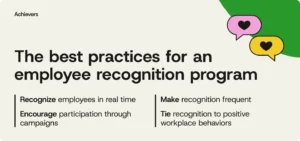
A well-designed recognition program is the engine that drives the value of any allocated budget. Organizations that successfully leverage recognition to foster cultural transformation typically exhibit five key characteristics:
- Strategic Alignment: Recognition initiatives are directly linked to overarching business objectives and company values, ensuring that efforts are focused on behaviors that drive organizational success.
- Inclusivity and Accessibility: The program is designed to be accessible to all employees, regardless of department, level, or location, fostering a sense of belonging and shared appreciation.
- Timeliness and Consistency: Recognition is delivered promptly after the desired behavior or achievement, and the program operates with a consistent rhythm, preventing an "all-or-nothing" experience for employees.
- Meaningful Rewards and Recognition: The forms of acknowledgment and the rewards offered are perceived as valuable and relevant by the employees receiving them, going beyond superficial gestures.
- Data-Driven Insights: The program incorporates mechanisms for tracking and measuring recognition activities, providing data to assess effectiveness, identify trends, and inform future program enhancements.
Strategic Allocation of the Employee Recognition Budget
Securing budget approval is the initial hurdle; effectively allocating those funds is the subsequent critical phase. Most successful recognition programs divide their budgets across three primary categories: everyday recognition, milestone recognition, and performance-based awards.
A foundational principle for allocation suggests that the largest portion should be directed towards everyday recognition. Research indicates that employees who receive recognition monthly or more frequently are approximately 80% more likely to report high levels of engagement. This underscores the adage that frequent, smaller gestures often yield greater impact than infrequent, large ones.
Several key allocation decisions significantly influence the budget’s overall performance:
- Frequency vs. Value: Balancing the frequency of recognition opportunities with the perceived value of the rewards offered.
- Centralized vs. Decentralized Control: Determining the appropriate level of autonomy for managers in awarding recognition versus a more centralized approach for consistency.
- Reward Catalog Curation: Ensuring that the available rewards are diverse, desirable, and aligned with employee preferences.
- Technology Investment: Allocating funds for a robust recognition platform that facilitates seamless program execution, tracking, and reporting.
Budget Readiness Checklist: Is Your Program Prepared for Financial Scrutiny?
Before presenting a formal budget proposal, a thorough self-assessment is recommended. Answering the following questions can illuminate areas requiring further development:
- Is there a clear understanding of the desired outcomes of the recognition program?
- Has the program’s design been finalized, detailing the types of recognition and rewards to be offered?
- Is there a system in place to track recognition activities and measure their impact?
- Are managers equipped and trained to effectively deliver recognition?
- Is there a plan for communicating the recognition program to all employees?
- Have employee preferences for recognition and rewards been surveyed or understood?
- Is there a clear link between the recognition program and broader organizational goals?
If the answers to several of these questions remain uncertain, it signals a need to solidify the program’s foundational elements before focusing solely on budgetary figures.
Making the Internal Case: Justifying the Recognition Budget to Leadership
The process of obtaining approval for a recognition budget involves a distinct strategic approach compared to merely determining the optimal spending amount. The conversation with finance or senior leadership is most effective when it is supported by three key pillars:
- Demonstrable Return on Investment (ROI): This involves quantifying the anticipated benefits of a robust recognition program, such as improved employee retention, increased productivity, and enhanced employee engagement.
- Data-Backed Projections: Presenting a clear, personalized budget figure derived from internal data and program design, rather than relying on generic industry benchmarks.
- Phased Implementation Plan: Proposing a staged investment approach, allowing leadership to see early wins and build confidence in the program’s efficacy before committing to the full budget.
The often-overlooked cost of neglecting employee recognition cannot be overstated. Lack of recognition is consistently cited as a primary driver of employee attrition, ranking alongside compensation and workload. When framing the recognition budget, it is crucial to position it not as an ancillary perk, but as a strategic retention tool – a component with a quantifiable financial impact that resonates with business leaders. The cost of replacing an employee, which can range from 50% to 200% of their annual salary depending on the role and seniority, starkly contrasts with the comparatively modest investment required for a proactive recognition program, typically ranging from $5 to $10 per employee per month.
Building a Budget: Leveraging Digital Tools for Efficiency
Recognition programs often falter not due to a lack of commitment from HR professionals, but because they are not provided with actionable financial figures. To address this, Quantum Workplace offers a complimentary Employee Recognition Budget Calculator, designed for rapid deployment and personalized output. This tool, which takes approximately five minutes to complete, requires users to input their headcount and specify their desired program design. The output is a customized annual budget, a detailed per-employee breakdown, and a summarized report formatted for presentation to leadership or finance departments. This calculator is specifically tailored for HR leaders seeking to move beyond guesswork and establish concrete, data-driven recognition strategies.
Frequently Asked Questions: Navigating Employee Recognition Budgets
How much should an employee recognition budget be per employee?
Meaningful recognition programs can begin with an investment of approximately $5 per employee per month. Leading organizations, particularly those integrating comprehensive reward systems, often allocate between $50 and $60 per employee per month. The precise figure is contingent upon the program’s design, the organization’s size, and its specific objectives.
What is the distinction between recognition and rewards?
Recognition encompasses the act of acknowledging an employee’s contributions and efforts. Rewards, conversely, are the tangible benefits employees receive, such as gift cards, experiences, or redeemable points. Programs that strategically combine both recognition and rewards demonstrate significantly greater impact compared to those relying solely on acknowledgment.
How do I establish a recognition budget for a 500-person company?
Begin by considering the total headcount and then identifying the specific types of recognition to be funded. For instance, implementing a peer-to-peer recognition program at $5 per employee per month for 500 employees would result in an annual budget of $30,000. Subsequent layers of awards and rewards can be integrated based on organizational goals and available resources.
What constitutes a comprehensive employee recognition program?
A comprehensive program typically includes peer-to-peer recognition, manager-led awards, redeemable reward options, formal recognition for milestones, and an integrated platform that ensures consistency and facilitates tracking of recognition activities across the entire organization.
How can I effectively justify a recognition budget to senior leadership?
Anchor the discussion in the financial implications of employee turnover. Recognition programs represent a fraction of the cost associated with replacing an employee. Support this argument with a specific, internally derived budget figure, rather than relying on external benchmarks, and present a phased investment plan that allows for incremental approvals.
Is recognition software beneficial for smaller teams?
For organizations exceeding 100 employees, investing in recognition software is generally advisable. Without a dedicated platform, recognition efforts tend to remain dependent on individual managers and lack consistency. A software solution embeds recognition into the daily workflow and provides HR with valuable data for measuring program effectiveness.