Employee engagement programs are proving to be indispensable tools for organizations seeking to cultivate stronger connections, enhance retention rates, boost overall performance, and significantly improve the employee experience. In 2026, the most effective programs seamlessly integrate into regular employee interactions, moving beyond sporadic campaigns to become foundational elements of the workplace. These initiatives strategically prioritize recognition, rewards, robust employee feedback mechanisms, clear career development pathways, holistic well-being support, flexibility, and a pervasive sense of belonging, all designed to make employees feel genuinely valued, supported, and intrinsically linked to overarching organizational goals.
Understanding Employee Engagement Programs
At its core, an employee engagement program is a meticulously structured organizational effort aimed at elevating the quality of an employee’s work experience. This is achieved by systematically strengthening their bond with their organization, direct manager, immediate team, and the specific role they inhabit. These programs serve as vital frameworks, enabling Human Resources departments and management to proactively establish conditions conducive to high engagement. They foster an environment where employees are encouraged to feel deeply valued, actively involved, consistently supported, and fully empowered to contribute their utmost. Practical features supporting this objective often include social and monetary recognition systems, sophisticated survey and feedback tools, and myriad opportunities designed to facilitate genuine employee connection.
The Contemporary Imperative: Why Engagement Matters Now More Than Ever
The current business landscape presents unprecedented challenges, making employee engagement programs not just beneficial but critically necessary. Many organizations are grappling with a pervasive sense of employee disconnection, erosion of trust, a fragile sense of belonging, and a diminished long-term commitment from their workforce. The shift towards more distributed and hybrid work models, accelerated by recent global events, has fundamentally altered traditional workplace dynamics.
Compelling research from the 2026 State of Recognition Report, which surveyed 3,000 employees globally, starkly illustrates this reality: less than 33% of respondents reported feeling a strong sense of connection or purpose within their organizations. This data underscores a critical gap between employee expectations and their actual experience. As workforces become increasingly decentralized and employee expectations regarding work-life integration, purpose, and autonomy continue to evolve, organizations are compelled to establish consistent, embedded strategies. These strategies must ensure employees consistently feel valued, supported, and deeply connected to their work and the broader organizational mission. Well-designed and consistently implemented engagement programs are instrumental in fortifying relationships between leaders and peers, thereby cultivating more resilient, adaptive, and ultimately, more successful workforces capable of navigating ongoing change.
Who Benefits Most: Addressing Experience Gaps
Employee engagement programs exert their most significant positive impact on employees who experience varying degrees of disconnection from their work, managers, colleagues, or the organization as a whole. This includes a broad spectrum of the workforce: new hires navigating their initial transition, frontline employees often overlooked in corporate initiatives, remote and hybrid workers facing unique isolation challenges, and employees who consistently lack regular recognition, clear growth opportunities, or meaningful managerial support. Engagement programs are specifically engineered to bridge these critical experience gaps. They achieve this by systematically creating more avenues for employees to receive recognition for their contributions, provide honest and constructive feedback, forge stronger connections with their colleagues, and discover meaningful growth and development opportunities that align with their career aspirations. Critically, these programs are most effective when they not only collect feedback but also provide actionable insights, demonstrating a clear link between employee sentiment and business results, as highlighted in the Brandon Hall Group’s analysis of recognition’s influence on retention, performance, and workforce alignment.
The Mechanics of Success and Failure
Employee engagement programs demonstrably succeed when they foster a pervasive sense of appreciation among employees, strengthen their bonds with colleagues and managers, actively support their professional growth, and align their individual contributions with core organizational values. Their efficacy is further amplified when management and leadership not only solicit but also demonstrably act upon employee feedback, and consistently acknowledge and reinforce active participation within the program. Conversely, these programs frequently falter when they collect feedback without translating it into meaningful action, offer infrequent or inconsistent recognition, or fail to adequately address the diverse needs of various employee groups. Such failures inevitably hinder the development of trust, authentic connection, and sustainable engagement, often leading to cynicism and disengagement.
Integrating Engagement into the Organizational Fabric
Employee engagement programs are not confined to isolated initiatives; rather, they are woven into the very fabric of an organization’s daily operations and strategic touchpoints. They manifest prominently in comprehensive onboarding experiences that set the tone for a new hire’s journey, in regular manager one-on-one meetings that foster individualized support, within robust employee recognition programs that celebrate achievements, in collaborative team meetings, through structured employee surveys, during crucial career development conversations, via enriching mentorship programs, at milestone celebrations, through proactive wellness initiatives, and within vibrant Employee Resource Groups (ERGs).
Crucially, accessible engagement programs are increasingly integrated into the software and digital tools employees utilize daily, such as Slack, Zoom, or Microsoft platforms like Copilot and Teams. This ubiquitous integration ensures a consistent program experience, enabling employees across global locations or dispersed teams to maintain vital connections with one another and with the overarching business objectives, regardless of their physical proximity.
Core Pillars of Effective Engagement: A Deep Dive into Program Types
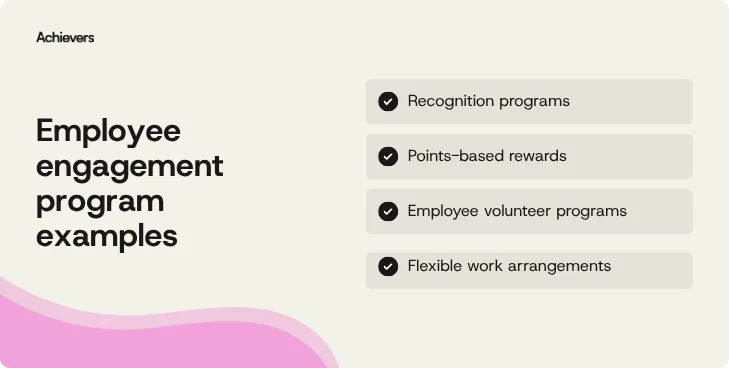
In practice, employee engagement programs function by creating consistent and varied opportunities for employees to actively participate in and shape the organizational culture. This translates into tangible actions such as regularly recognizing employee contributions, systematically collecting and acting upon feedback, actively supporting career growth and development, celebrating significant personal and professional milestones, actively encouraging peer-to-peer connections, and reinforcing exceptional work through both monetary and points-based rewards.
Here are some exemplary engagement programs and their practical application:
1. Recognition Programs:
These are arguably among the most potent tools for shaping culture and driving performance. Real-time recognition for embodying company values and delivering results directly correlates with increased engagement. Employees gain clarity on what truly matters and feel genuinely appreciated for their contributions. This can range from peer-to-peer shout-outs and leadership awards to social moments of appreciation integrated into daily workflows.
- How to Implement: Establish a user-friendly platform for real-time recognition. Define clear company values and desired behaviors to link recognition to. Encourage both top-down and peer-to-peer appreciation. Integrate recognition into team meetings and company communications.
- How to Measure Success: Track the frequency and volume of recognition events per employee. Monitor participation rates across departments. Analyze correlations between recognition and employee sentiment scores or retention rates. Observe cultural shifts towards appreciation.
2. Points-Based Rewards:
Effective when personalized, a points-based system offers employees choice, allowing them to redeem rewards that genuinely align with their preferences and lifestyles. Options might include gift cards, travel experiences, company merchandise, or charitable donations. This flexibility makes rewards feel thoughtful and human, while being scalable and manageable.
- How to Implement: Design a tiered points system linked to specific achievements or recognition. Partner with a diverse redemption catalog provider. Clearly communicate how points are earned and redeemed. Ensure rewards are accessible globally.
- How to Measure Success: Track points issued and redeemed. Monitor the diversity of redeemed rewards. Collect employee feedback on reward options and perceived value. Analyze impact on motivation and performance metrics.
3. Employee Volunteer Programs:
These programs foster a deeper sense of purpose by offering opportunities for employees to give back to the community. Through volunteer days, cause-based campaigns, or donation matching, employees see their work aligning with a greater good. This strengthens belonging, pride, and cultural alignment, naturally driving engagement.

- How to Implement: Identify local and global causes aligned with company values. Organize team volunteer days or skill-based volunteering opportunities. Implement a donation matching program. Promote and celebrate employee participation.
- How to Measure Success: Track volunteer hours and participation rates. Survey employees on their sense of purpose and connection to company values. Measure community impact and public relations benefits.
4. Flexible Work Arrangements:
Offering hybrid schedules, flexible hours, or compressed workweeks empowers employees with greater control over their work-life balance, supporting well-being, autonomy, and trust. Organizations leading with flexibility often report higher engagement and reduced burnout.
- How to Implement: Develop clear policies for hybrid, remote, or flexible hours. Invest in technology to support remote collaboration. Train managers on managing flexible teams effectively. Ensure equitable opportunities for all work arrangements.
- How to Measure Success: Monitor employee satisfaction with flexibility options. Track productivity and quality of work for flexible employees. Analyze retention rates and burnout indicators. Gather feedback on challenges and successes of flexible models.
5. Mentorship Opportunities:
Mentorship programs pair employees with experienced guides, aiding skill development, challenge navigation, and career planning. These relationships boost confidence, strengthen internal networks, and embed a culture of continuous learning and support.
- How to Implement: Establish a formal mentorship program with clear objectives. Match mentors and mentees based on skills, goals, and interests. Provide training for mentors and guidelines for mentees. Facilitate regular check-ins and feedback.
- How to Measure Success: Track participation rates in mentorship programs. Survey mentees on skill development and career clarity. Assess mentor satisfaction and leadership development. Monitor internal mobility and retention of mentees.
6. Team-Building Activities:
Shared challenges, team lunches, community projects, and ERG-led activities build camaraderie and allow employees to connect on a personal level. These interactions transform coworkers into collaborators, enriching the organizational culture.
- How to Implement: Organize a variety of activities catering to diverse interests (e.g., virtual escape rooms, in-person workshops, social gatherings). Encourage team leads to schedule regular informal meet-ups. Allocate budget for team-building initiatives.
- How to Measure Success: Collect feedback on enjoyment and perceived value of activities. Observe improvements in team cohesion and communication. Track participation rates and cross-departmental interactions.
7. Wellness Programs:
Modern wellness programs extend beyond gym discounts to encompass physical, mental, and emotional health support. This includes coaching, mindfulness resources, and accessible wellness initiatives, demonstrating genuine care for employees’ holistic well-being.
- How to Implement: Offer a range of resources like mental health counseling, fitness challenges, ergonomic assessments, and stress management workshops. Promote healthy eating and active lifestyles. Integrate wellness into employee benefits.
- How to Measure Success: Track utilization rates of wellness resources. Conduct employee surveys on perceived support for well-being. Monitor health-related absenteeism and presenteeism. Analyze impact on overall employee satisfaction.
8. Charity Work:
Engaging in charity work, including campaigns, fundraising events, and social impact initiatives, provides employees with a shared sense of purpose beyond their daily tasks. This collective impact strengthens culture, deepens connection, and demonstrates the organization’s values in action.
- How to Implement: Select reputable charities aligned with company values. Organize company-wide fundraising events or volunteer days. Encourage individual fundraising with company support. Promote and celebrate impact.
- How to Measure Success: Track funds raised and volunteer hours contributed. Survey employees on their sense of pride and connection to company values. Monitor media coverage and reputational benefits.
9. Onboarding Programs:
Effective onboarding ensures new hires feel welcomed, prepared, and connected from day one. A combination of training, cultural immersion, and early mentorship provides clarity, building a strong foundation for long-term engagement and success.
- How to Implement: Develop a structured onboarding plan extending beyond the first week. Assign onboarding buddies or mentors. Provide comprehensive training on company culture, tools, and processes. Schedule regular check-ins during the first few months.
- How to Measure Success: Track new hire retention rates. Conduct new hire surveys on satisfaction and preparedness. Monitor time-to-productivity for new hires. Gather feedback from managers on onboarding effectiveness.
10. Employee Resource Groups (ERGs):
ERGs create vital spaces for connection, advocacy, and shared experience among diverse employee populations. Through development opportunities and culture-building initiatives, ERGs elevate diverse voices and translate inclusion into a measurable organizational strength.
- How to Implement: Support the formation and growth of ERGs with clear guidelines and resources. Provide executive sponsorship for each ERG. Promote ERG activities and contributions. Integrate ERG insights into diversity and inclusion strategies.
- How to Measure Success: Track ERG membership and event participation. Conduct surveys on feelings of belonging and inclusion among ERG members. Monitor diversity metrics within leadership roles.
11. Employee Voice and Feedback Tools:
Regular check-ins, pulse surveys, and always-on feedback channels provide employees safe and accessible avenues to share what’s working and what’s not. When organizations act on this feedback and communicate openly, trust flourishes.
- How to Implement: Deploy a multi-channel feedback strategy (e.g., anonymous surveys, suggestion boxes, regular 1:1s, engagement platforms). Train managers on active listening and feedback response. Ensure confidentiality and anonymity where appropriate.
- How to Measure Success: Track feedback submission rates and response times. Monitor changes in employee sentiment and engagement scores. Measure the implementation rate of feedback-driven initiatives.
12. Clear Career Pathways:
Understanding potential growth trajectories, required skills, and success metrics fosters stronger workplace commitment. Clear career pathways remove guesswork, replacing it with momentum and encouraging employees to invest in their future within the organization.
- How to Implement: Develop transparent career frameworks outlining roles, responsibilities, and skill requirements. Offer training and development programs aligned with career paths. Provide career coaching and planning resources.
- How to Measure Success: Track internal promotion rates and talent mobility. Survey employees on clarity of career paths and development opportunities. Monitor retention rates of high-potential employees.
13. Formal Award Programs:
Formal award programs, from service milestones to culture champion awards, celebrate significant contributions tied to core values. They add focus and excitement to recognition, reinforcing organizational principles and aspirations.
- How to Implement: Establish clear criteria for various award categories. Develop a fair and transparent nomination and selection process. Host formal award ceremonies or events to celebrate recipients.
- How to Measure Success: Track participation in nomination processes. Collect feedback on the perceived fairness and prestige of awards. Monitor the impact of award recipients on team morale and performance.
14. Flexible Work and Meaningful Time Off:
Robust PTO policies and paid volunteer opportunities enable employees to manage work and life effectively, preventing burnout. Trust and support in this area lead to sustained engagement, balance, and organizational pride.
- How to Implement: Implement competitive paid time off policies (e.g., unlimited PTO, extended parental leave, paid volunteer days). Encourage employees to fully utilize their time off. Model work-life balance from leadership.
- How to Measure Success: Track PTO utilization rates. Survey employees on their work-life balance satisfaction. Monitor absenteeism and presenteeism trends. Analyze the impact on employee retention and well-being scores.
Crafting a Robust Engagement Strategy: A Step-by-Step Guide
Building an effective employee engagement program requires a strategic, iterative approach:
1. Identify Engagement Challenges: Begin by thoroughly understanding where employees experience disconnection. This involves analyzing employee survey data, feedback channels, turnover trends, program participation rates, and manager insights to pinpoint issues related to recognition, belonging, communication, career growth, or managerial support.
2. Set Clear Goals and Success Metrics: Before launching any program, define what success looks like. Objectives might include improving employee retention by X%, increasing recognition participation by Y%, strengthening manager effectiveness scores, supporting career development, or boosting overall employee sentiment. Choose metrics that are directly aligned with these specific goals.
3. Choose Engagement Programs That Address Employee Needs: Select programs directly addressing the identified challenges, whether for the entire workforce or specific groups. For instance, a robust rewards and recognition program can drive desired behaviors and build culture, while mentorship and career development initiatives address skill gaps and future opportunities. Prioritize programs that solve specific problems over attempting to launch too many initiatives simultaneously.
4. Train Managers on Best Practices: Managers are pivotal to program success. Provide them with comprehensive training, clear guidance, and explicit expectations regarding recognition, coaching, feedback, and employee development. Consistent reinforcement from managers ensures programs are integrated into daily operations.
5. Measure Participation and Employee Outcomes: Continuously track both activity and impact. Monitor participation rates, employee feedback trends, recognition activity, retention trends, overall engagement scores, and other metrics tied to your goals to ascertain whether the program is generating meaningful, positive change.
6. Adjust Programs Based on Employee Feedback: Engagement programs must be dynamic. Regularly collect feedback, identify any issues hindering participation or effectiveness, and make data-driven improvements based on employee input. Programs that actively listen and adapt are far more successful in the long term.
Strategic Selection: Choosing the Right Employee Engagement Program
The choice of engagement programs is critical and should be informed by several strategic considerations:
1. Start with Your Workforce Reality: Programs are most effective when they reflect the diverse ways and locations in which employees work. Frontline, hybrid, global, and desk-based teams experience connection differently. Programs must be universally accessible and relevant across all roles, locations, and schedules.
2. Be Clear on the Problem You’re Solving: Different programs yield different outcomes. Recognition primarily strengthens performance and retention. Feedback programs uncover risks and opportunities. Career pathways support long-term growth. Clarity on your primary goal prevents "initiative overload" and ensures programs are complementary rather than competing for attention.
3. Prioritize Consistency Over Novelty: A program’s long-term, sustained value far outweighs its initial launch excitement. Engagement improves through repeated, visible experiences integrated into daily tools and routines, not through one-off events or annual rollouts.
4. Design for Scale, Not Perfection: The most impactful engagement strategies focus on programs that can consistently scale connection as the organization evolves. If a program only serves a segment of the workforce, its design or support mechanisms require rethinking to ensure broader applicability.
5. Look for Connection, Not Just Participation: High participation metrics do not automatically equate to high engagement. The most powerful programs help employees feel genuinely seen, heard, and appreciated by their peers, leaders, and the organization. When programs successfully strengthen these fundamental connections, authentic engagement naturally follows.
The Power of Feedback: Driving Program Enhancement
Feedback is the lifeblood of continuous improvement for engagement programs:
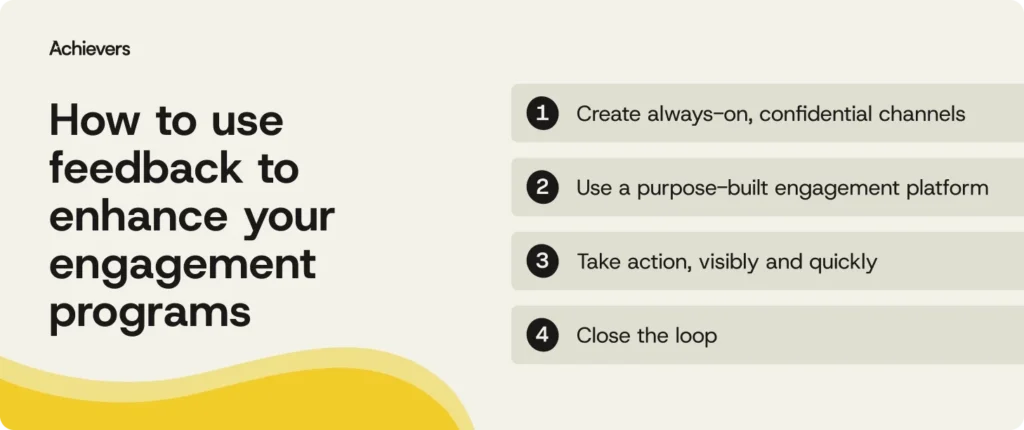
1. Create Always-On, Confidential Channels: Employees need easy, accessible, and safe avenues to share their thoughts. Always-on, confidential channels – ranging from employee survey questions and digital suggestion boxes to HR chatbots – demonstrate that input is welcome at any time, not just during formal review periods.
2. Use a Purpose-Built Engagement Platform: A dedicated employee engagement platform consolidates surveys, sentiment analytics, and feedback history. This provides comprehensive insights into engagement drivers and inhibitors, empowering leaders to act swiftly and with precision.
3. Take Action, Visibly and Quickly: Nothing erodes employee engagement faster than ignored feedback. When concerns are raised – whether about workload, team dynamics, or resource gaps – organizations must respond with clarity, empathy, and urgency. Action, not merely acknowledgment, is the catalyst for genuine culture change.
4. Close the Loop: Transparency is key. Share what feedback was received, what actions are being taken in response, and the rationale behind those decisions. Whether it’s launching new training, updating a policy, or allocating additional resources, clear communication transforms feedback into a shared success story, reinforcing trust.
Hallmarks of a Successful Employee Engagement Program
Launching engagement programs is merely the initial step; sustaining them demands intentionality, strategic alignment, and a culture that genuinely prioritizes its people. When the right environment underpins the right initiatives, employees transcend mere presence – they are inspired, connected, and eager to contribute.
Here are the nine indispensable elements that elevate good programs to exceptional outcomes:
1. Clear, Human Communication: Open and consistent communication fosters alignment and builds trust. Whether through pulse surveys, all-hands updates, or one-on-one check-ins, employees want to feel informed, heard, and valued.
2. A Clear Purpose: A well-articulated purpose and strong organizational values transform daily tasks into meaningful contributions, cultivating a culture of shared momentum and direction.
3. Accountability That Empowers Growth: Growth-powered accountability involves setting clear expectations, providing regular constructive feedback, and celebrating progress. When employees understand performance metrics and receive ongoing support, motivation and focus remain high.
4. Recognition That’s Frequent and Meaningful: Frequent, meaningful recognition is a powerful behavior-shaping tool that significantly drives productivity, performance, reinforces culture, and enhances retention. When employees feel seen and appreciated by peers, leaders, and teams, their engagement and loyalty increase exponentially.
5. Strong Leadership: Effective leaders lead with empathy, consistent recognition, and clarity. They model desired behaviors and create environments where others can grow and thrive. The best leaders build trust and foster cultures that scale it throughout the organization.
6. Continuous Development: Opportunities for continuous development, including mentorship, upskilling initiatives, or stretch assignments, signal an organization’s investment in its employees. This investment builds loyalty and keeps top talent engaged and committed.
7. Culture That Creates Belonging: Engagement flourishes in cultures where people feel safe to express themselves, take calculated risks, and bring their authentic selves to work. A strong, inclusive culture is a distinct competitive advantage.
8. Purpose-Driven Impact: Programs that are impact-driven, supporting community involvement, sustainability, and ethical practices, generate a sense of pride and meaning that extends far beyond the job description.
9. Connection That Works Across Roles, Regions, and Realities: Great engagement programs ensure consistent connection and care for global, hybrid, and frontline employees alike. This means recognition reaches frontline teams in real-time, communication transcends time zones, and experiences feel inclusive, irrespective of an employee’s role, location, or schedule.
The Business Impact of Employee Engagement
Employee engagement transcends mere morale; it is a powerful driver of organizational momentum. When employees feel recognized, connected, and supported, they do more than simply show up – they lean in, speak up, and consistently go the extra mile. This is why leading businesses worldwide not only invest in engagement but actively construct their cultures around it.
Here’s a look at the tangible business impacts:
1. Higher Productivity: Engaged employees are inherently energized. When individuals feel seen, supported, and aligned with organizational values, they are demonstrably more focused, efficient, and motivated to exceed expectations.
2. Stronger Company Culture: Recognition, transparent communication, and a clear purpose form the bedrock of a robust company culture. Programs reinforcing these elements cultivate environments where employees feel valued, included, and genuinely excited to be long-term contributors to the organization.
3. Increased Retention: Employees remain with organizations where they feel heard, recognized, and supported. A comprehensive engagement strategy, anchored in feedback, growth, and appreciation, transforms talent into loyal, long-term contributors. According to People Managing People, organizations with high employee engagement experience a remarkable 59% reduction in turnover in low-turnover companies and 24% in high-turnover companies.
4. Better Collaboration: From Employee Resource Groups (ERGs) to volunteer initiatives and team-building events, engagement programs strengthen inter-personal and inter-departmental relationships across the organization. This fosters greater trust, improved teamwork, and enhanced cross-functional impact.
5. Improved Well-being: Engagement and well-being are inextricably linked. Flexible work arrangements, accessible mental health resources, and comprehensive wellness support unequivocally demonstrate that leaders genuinely care for their employees, both within and outside the workplace.
6. Stronger Alignment with Company Vision: When employees clearly understand how their individual work contributes to the broader organizational vision, motivation naturally follows. Engagement programs are instrumental in making this connection explicit, translating overarching purpose into tangible performance.
7. More Innovation and Growth: Engaged employees are proactive; they generate new ideas, actively seek out opportunities for improvement, and consistently invest in their personal and professional development. These behaviors are crucial drivers of innovation, organizational agility, and sustainable long-term growth. Engagement statistics from Small Biz Trends indicate that highly engaged business units are 21% more profitable.
8. Higher Customer Satisfaction: Content and empowered teams directly translate to satisfied customers. When employees are engaged and feel supported, it positively reflects in every customer interaction, building trust, fostering loyalty, and creating memorable brand experiences. Research from Gallup confirms this, showing that engaged employees contribute to a 10% increase in customer ratings.
Enterprise Considerations for Scaling Engagement Programs
For large enterprise organizations, scaling engagement programs effectively requires careful strategic foresight:
1. How the Program Fits Within the Existing Tech Ecosystem: Engagement programs achieve optimal results when they seamlessly integrate into existing workflows. Integrations with core HR systems and collaboration tools ensure that recognition, feedback, and communication occur naturally where work actually happens, which is particularly vital for frontline and global teams.
2. Data Privacy Rules and Security Processes: Employees must have full assurance that their data is handled responsibly and their feedback remains confidential. Clear privacy standards, robust security practices, and transparency regarding how insights are utilized encourage employees to speak up without apprehension about potential consequences.
3. Consistent Program Standards and Metrics: Establishing clear, consistent standards – encompassing values, recognition behaviors, and success metrics – empowers people leaders and program administrators to localize and bring the program to life in ways that resonate effectively within their specific contexts.
4. Real-Time Engagement Data and Insights: The sheer volume of data is less important than its actionable quality. Instead of collecting every possible metric, prioritize insights that enable leaders to quickly understand what is working well, where connection points are faltering, and what requires immediate attention. Engagement truly improves when employees observe that their feedback directly leads to tangible action.
5. Program Longevity and Scalability: Programs must be designed for long-term sustainability, supported by clear ownership, and possess sufficient flexibility to evolve as the workforce undergoes changes. If a program relies heavily on constant manual effort or the heroic efforts of a few champions, its momentum and long-term viability will inevitably be compromised.
Wesley’s Success Story: A Case Study in Employee Engagement
Wesley, a dedicated nonprofit healthcare and housing provider, faced a dual challenge: fostering a stronger organizational culture across its nursing workforce while simultaneously addressing critical retention issues and enhancing overall employee engagement. Their strategic objective was to encourage greater peer-to-peer recognition among employees. To effectively achieve these ambitious goals, Wesley partnered with Achievers to launch "Inspire," a comprehensive, company-wide recognition and rewards program meticulously designed around fostering employee belonging and enabling seamless peer-to-peer recognition.
The Inspire program significantly enhanced accessibility to recognition across various shifts and diverse locations, empowering employees at all levels to celebrate achievements, nominate colleagues for awards, send meaningful e-cards, and redeem points-based rewards tailored to their preferences. Crucially, Wesley also integrated employee pulse surveys to systematically gather feedback, gaining invaluable insights into what mattered most to its dedicated workforce.
The results of this strategic initiative were profoundly impactful:
- A significant increase in employee engagement scores, indicating a workforce that felt more connected and valued.
- Enhanced peer-to-peer recognition frequency, cultivating a culture of appreciation and mutual support.
- Improved employee retention rates, particularly within critical nursing roles, demonstrating the program’s impact on long-term commitment.
- Greater alignment with organizational values, as recognition reinforced desired behaviors and cultural norms.
By moving beyond solely manager-driven recognition, Wesley successfully empowered employees at every level to actively contribute to and shape a stronger, more supportive workplace culture, proving the transformative power of a well-implemented engagement strategy.
Achievers: Driving Results Through Connected Engagement Programs
Achievers empowers organizations to transition employee engagement from a fragmented collection of programs into a unified, connected employee experience. Through its integrated platform, offering sophisticated recognition tools, personalized rewards, advanced employee feedback mechanisms, celebration features, and real-time reporting and analytics, organizations gain the capability to precisely identify engagement challenges and implement actionable steps to better support their people. Whether the strategic objective is to improve retention, increase recognition frequency, strengthen manager effectiveness, or cultivate a deeper sense of belonging, Achievers equips HR leaders with the comprehensive tools necessary to embed engagement as a consistent, invaluable component of the entire employee journey.