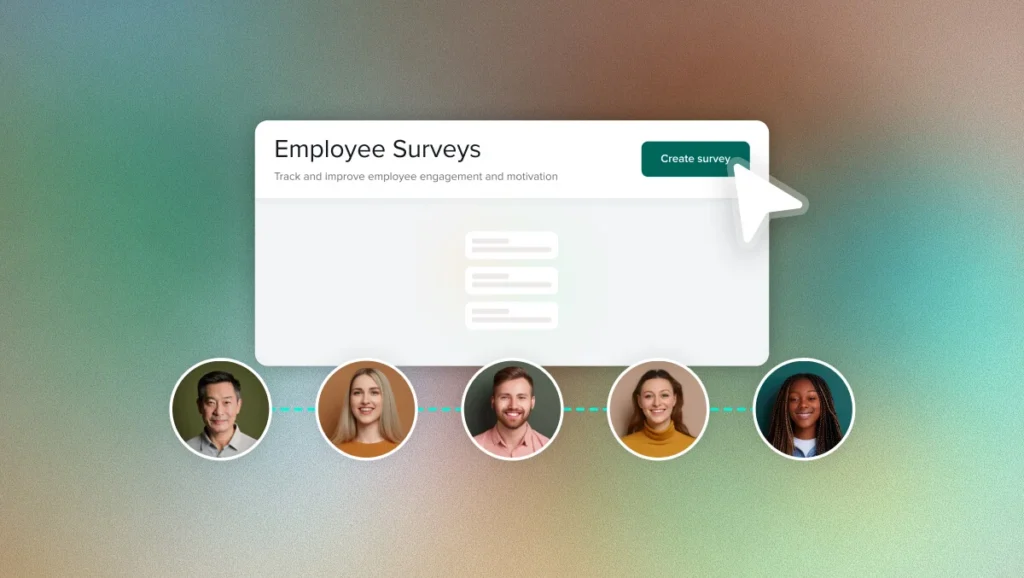
Workable, a leading provider of recruiting and HR software, has announced the launch of its new Employee Surveys feature, a significant enhancement designed to empower HR teams to understand employee sentiment and engagement directly within the platform. This strategic addition eliminates the need for external survey tools, manual data exports, or complex workarounds, providing a seamless, integrated solution for collecting, analyzing, and acting upon employee feedback. The feature, which includes built-in anonymity and segmentation capabilities, aims to help organizations gather honest insights, identify emerging trends early, and address potential issues proactively before they escalate into significant retention challenges.
The introduction of Workable’s Employee Surveys marks a pivotal moment in the evolution of HR technology, reflecting a broader industry trend towards integrated, all-in-one platforms that consolidate various HR functions. For years, HR professionals have grappled with fragmented data ecosystems, often relying on disparate systems for applicant tracking, performance management, and employee engagement surveys. This fragmentation frequently led to inefficiencies, data silos, and a limited ability to connect employee feedback directly with other critical HR data points, such as hiring pipelines or performance metrics. Workable’s latest offering directly addresses these pain points, promising a more holistic and data-driven approach to employee experience management.
The Evolving Landscape of Employee Engagement
In today’s dynamic labor market, employee engagement and retention have ascended to the top of strategic priorities for organizations worldwide. The cost of employee turnover is staggering, with estimates ranging from half to twice an employee’s annual salary, encompassing recruitment costs, onboarding expenses, lost productivity, and the impact on team morale. Beyond mere cost, a highly engaged workforce is consistently linked to superior business outcomes, including increased productivity, higher profitability, improved customer satisfaction, and enhanced innovation. According to Gallup’s "State of the Global Workplace" report, only a small percentage of employees worldwide are truly engaged, highlighting a persistent challenge for businesses striving for competitive advantage.
Recognizing this critical need, HR teams have increasingly turned to employee surveys as a primary mechanism to gauge the pulse of their workforce. These surveys, ranging from annual engagement assessments to pulse checks and lifecycle surveys, provide invaluable insights into employee morale, satisfaction with working conditions, perceptions of leadership, and alignment with organizational values. However, the effectiveness of these surveys has often been hampered by methodological challenges, privacy concerns, and, crucially, the difficulty of integrating survey data with other HR information systems.
Addressing HR’s Data Fragmentation Challenge
Prior to this release, Workable customers, like many organizations globally, often had to juggle multiple external survey tools. This process typically involved exporting survey results, manually analyzing data in spreadsheets, and then attempting to cross-reference this information with their existing HR data – a time-consuming and error-prone endeavor. This fragmentation not only created operational hurdles but also limited the depth of analysis possible, making it challenging to identify nuanced trends or understand the root causes of employee dissatisfaction. For instance, connecting feedback about workload issues directly to an employee’s tenure or specific department often required significant manual effort and educated guesswork.
Workable’s new feature directly confronts this challenge by embedding survey capabilities natively within its platform. This integration means that HR teams can now:
- Create and customize surveys: Design a variety of survey types, from comprehensive engagement surveys to targeted pulse checks, using intuitive tools.
- Send surveys seamlessly: Distribute surveys directly to specified employee segments within the Workable system, leveraging existing employee data for targeted communication.
- Ensure anonymity and trust: Guarantee employee anonymity for feedback, fostering an environment where individuals feel safe to share honest opinions without fear of reprisal. This is crucial for obtaining candid insights, as employees are more likely to provide critical feedback when their responses cannot be traced back to them.
- Segment results for granular analysis: Analyze feedback by various demographic or organizational filters (e.g., department, team, tenure, location), allowing HR to pinpoint specific areas of strength or concern within different employee groups.
- Analyze data in real-time: Access dashboards and reports that visualize survey results, spot trends, and identify outliers without the need for manual data manipulation.
- Connect feedback to HR actions: Directly link survey insights to actionable HR initiatives, such as refining retention strategies, improving training programs, or adjusting workplace policies, all within the same ecosystem.
Workable’s Strategic Move: A Closer Look at the New Feature
The Workable Employee Surveys feature is designed to fit naturally into existing HR processes. For instance, an HR manager can easily schedule a quarterly pulse survey for a specific department experiencing high turnover, then analyze the anonymous feedback to uncover potential issues related to management, workload, or career development. The platform’s ability to segment data allows for comparing feedback across different teams or locations, providing a clear picture of organizational health and identifying best practices or areas needing immediate attention.
The embedded nature of the tool means that HR teams no longer waste valuable time on administrative tasks associated with external tools. The entire workflow, from survey creation to analysis and reporting, is centralized. This efficiency gain allows HR professionals to shift their focus from data collection mechanics to strategic interpretation and intervention, ultimately making them more effective business partners. The system is engineered to provide actionable insights, translating raw data into clear, digestible reports that can inform leadership decisions and drive meaningful organizational change.
The Power of Integrated Analytics: Spotting Trends and Preventing Turnover
The true power of Workable’s integrated survey solution lies in its analytical capabilities. By having survey data reside within the same platform as other HR data, organizations can achieve a level of insight previously unattainable. For example, if a survey reveals a dip in morale among employees hired within the last year, HR can cross-reference this with onboarding process data or initial training feedback to identify potential gaps. Similarly, if a specific manager consistently receives lower scores in leadership effectiveness, this can be flagged for targeted coaching or development programs.
This proactive approach is instrumental in preventing small issues from snowballing into significant retention problems. Early detection of dissatisfaction related to compensation, work-life balance, or career growth opportunities allows HR to intervene with tailored solutions, potentially saving the company the high costs associated with employee turnover. Furthermore, demonstrating that employee feedback is heard and acted upon significantly boosts employee trust and engagement, creating a virtuous cycle of communication and improvement.
Industry Context: The Rise of All-in-One HR Platforms
Workable’s launch of Employee Surveys aligns with a broader industry shift towards comprehensive Human Capital Management (HCM) suites. Companies are increasingly seeking single-vendor solutions that can manage the entire employee lifecycle, from recruitment and onboarding to performance management, compensation, and now, engagement. This consolidation offers several advantages: simplified vendor management, consistent user experience, and, most importantly, integrated data analytics across all HR functions. By expanding its offering beyond its core recruiting strengths, Workable is positioning itself as a more complete HR partner, capable of addressing a wider spectrum of organizational needs. This move also intensifies competition in the HR tech market, pushing other vendors to enhance their own integrated offerings.
The Business Case for Engagement: Supporting Data and Statistics
The tangible benefits of robust employee engagement strategies are well-documented. Studies consistently show that companies with highly engaged employees outperform their competitors. For instance, research from Aon Hewitt indicates that a 5% increase in employee engagement is linked to a 3% increase in revenue in the subsequent year. Furthermore, organizations with high employee engagement rates report 21% higher profitability and 17% higher productivity, according to Gallup. Conversely, low engagement correlates with higher absenteeism, increased safety incidents, and higher quality defects. The ability to collect and act on feedback efficiently, as offered by Workable’s new feature, directly contributes to improving these critical business metrics. The investment in tools that foster engagement is not merely an HR overhead but a strategic business imperative with a clear return on investment.
Leadership Perspectives and Market Reception
While specific official statements from Workable leadership regarding this particular release are not provided in the original text, one can infer the strategic rationale. A Workable CEO or Head of Product would likely emphasize the company’s commitment to empowering HR teams with tools that simplify complex processes and drive measurable outcomes. A hypothetical statement might read: "Our new Employee Surveys feature is a direct response to the evolving needs of HR professionals who require deeper, more actionable insights into their workforce. By embedding this critical functionality directly into Workable, we are not just providing a tool; we are offering a strategic advantage, enabling our clients to foster stronger, more engaged teams and build resilient organizational cultures."
From the perspective of an HR professional, the reception is likely to be positive. An HR Manager at a mid-sized tech company, for example, might state: "The ability to run engagement surveys without leaving Workable is a game-changer for our team. We’ve struggled with integrating data from external survey providers, and this new feature will save us countless hours while giving us a much clearer picture of what our employees truly need. The anonymity and segmentation capabilities are particularly valuable for driving honest feedback and targeted action."
A Chronology of Workable’s Innovation Journey
Workable was founded in 2012 with a mission to simplify hiring for companies of all sizes. Over the past decade, it has steadily expanded its platform beyond its initial focus on applicant tracking (ATS) to encompass a broader range of HR functionalities. This evolution reflects a continuous commitment to innovation and responding to the changing demands of the HR landscape. From integrating AI-powered candidate sourcing to streamlining interview scheduling and now offering robust employee feedback mechanisms, Workable has consistently aimed to provide a comprehensive, user-friendly solution for the entire talent lifecycle. The launch of Employee Surveys is a natural progression in this journey, reinforcing its position as an integrated HR solution provider.
Implications for HR Professionals and the Future of Work
The implications of integrated employee survey tools like Workable’s are profound for HR professionals. It elevates their role from administrative oversight to strategic leadership. With easier access to real-time, actionable data, HR teams can become more proactive partners in shaping organizational strategy, influencing everything from talent acquisition and development to organizational culture and change management. This shift underscores the growing importance of data literacy and analytical skills within the HR function.
For employees, this development signals a greater commitment from organizations to listen to their voices and act on their feedback. A well-implemented survey program, especially one that guarantees anonymity and demonstrates tangible follow-up, can significantly enhance employee trust and foster a culture of open communication. In an era where employee well-being and psychological safety are paramount, providing a reliable, integrated channel for feedback is not just a feature; it’s a foundational element of a modern, empathetic workplace. The future of work demands agile organizations that can quickly adapt to employee needs, and integrated feedback mechanisms are central to this adaptability.
Availability and Next Steps for Workable Users
Workable has made the new Employee Surveys feature readily accessible to its client base. Existing customers interested in exploring its capabilities are encouraged to contact their dedicated account managers for a detailed walkthrough and personalized guidance on implementation. For prospective clients or those looking to experience Workable’s comprehensive suite of tools, the company offers a 15-day free trial, providing an opportunity to test the new survey functionality alongside other core features. Additionally, product specialists are available to provide in-depth demonstrations, showcasing how Employee Surveys can be tailored to meet specific organizational needs and objectives.
This latest innovation from Workable represents more than just a new feature; it signifies a commitment to delivering a truly integrated and intelligent HR platform. By bringing employee feedback directly into the core HR ecosystem, Workable is empowering organizations to build stronger, more engaged, and ultimately more successful workforces, ushering in a new era of data-driven employee experience management.