Employee disengagement stands as a pervasive and significant business risk, directly undermining productivity, increasing turnover, and eroding organizational culture. In this challenging landscape, well-designed employee incentive programs emerge as a critical strategic tool, capable of transforming workplace dynamics and delivering tangible business advantages. When exceptional contributions go unacknowledged, employees inevitably disengage, leading to a demonstrable decline in output and a costly surge in staff departures. Recent findings from the Achievers Workforce Institute starkly illustrate this challenge, revealing that a mere 26% of employees are actively engaged, and only 25% report feeling genuinely appreciated at work. These figures serve as an urgent call to action for any organization committed to attracting and retaining top-tier talent. The economic repercussions of an unmotivated workforce are staggering; estimates suggest that unhappy employees cost the U.S. economy an astounding $1.9 trillion annually in lost productivity alone – a figure that underscores the immense financial weight of this issue.
The encouraging news, however, is that this narrative is not immutable. Thoughtfully constructed employee incentive programs possess the power to reverse these trends. When executed effectively, they ignite motivation, consistently reinforce desired behaviors, and foster a vibrant organizational culture where individuals feel genuinely seen, heard, and valued. Conversely, poorly implemented programs quickly become ineffective, gathering dust and failing to move the needle on critical engagement metrics. This article will delve into the foundational elements that render employee incentive programs effective, explore the psychological underpinnings of their success, and present a comprehensive list of 25 actionable incentive ideas designed to boost engagement and performance with confidence.
Defining Employee Incentive Programs: A Strategic Framework
Employee incentive programs are formalized, structured initiatives designed by organizations to motivate and acknowledge employees for their meaningful contributions and achievements. These programs leverage a diverse array of rewards – including peer-to-peer recognition, performance bonuses, points systems redeemable for various items, professional development opportunities, and additional paid time off – to systematically reinforce behaviors that directly contribute to organizational objectives and drive positive results. When meticulously crafted and implemented, these programs cultivate an environment where employees feel profound appreciation and value, consistently leading to elevated engagement levels, superior performance outcomes, and significantly improved retention rates over time.
Fundamentally, these programs serve as powerful signals, conveying to employees, "We recognize your effort, and it unequivocally matters." By strategically deploying meaningful rewards, organizations can proactively encourage and amplify behaviors crucial for success, such as cross-functional collaboration, innovative problem-solving, exceptional customer service, and overall high-quality work.
The Undeniable Importance of Strategic Incentives

Employee incentive programs are indispensable because they establish a systematic mechanism for acknowledging and rewarding exceptional work. This can manifest through various forms: financial bonuses, redeemable points, public recognition, opportunities for career advancement, wellness benefits, lifestyle perks, and more. Critically, the most impactful programs extend beyond mere reward distribution; they actively shape and guide employee behavior in alignment with organizational goals.
The dichotomy between successful and unsuccessful programs often lies in their strategic design and consistent application. According to the Achievers Workforce Institute’s 2026 Engagement and Retention Report, employees who feel genuinely appreciated exhibit significantly more positive workplace outcomes. While the original article did not list specific percentages, industry research consistently shows that appreciated employees are:
- More productive and innovative.
- More likely to be loyal and remain with the company long-term.
- More engaged and invested in their work.
- More likely to recommend their employer to others.
- More resilient to stress and less prone to burnout.
The inherent power of incentive programs stems from their ability to tap into fundamental human psychological principles. The "magic" of these programs often resides in the frequency and meaningfulness of rewards, which create a clear, positive association between effort, task completion, and tangible outcomes. This direct linkage intrinsically motivates employees to strive for and achieve targets. Organizations that strategically embrace incentive programs consistently report higher success rates in achieving their strategic objectives, demonstrating the clear motivational advantage these initiatives provide.
Moving beyond antiquated, annual "years of service" awards, and embedding incentives as an integral, daily component of the organizational culture can profoundly transform performance. When employees experience consistent recognition and reward, their performance demonstrably improves, and their likelihood of long-term tenure increases. Furthermore, businesses that offer well-structured sales incentives frequently observe impressive revenue growth, and professionals who express satisfaction with their overall benefits package are statistically more content in their roles. This creates a mutually beneficial scenario where both employees and the organization thrive.
Comprehensive Benefits of Employee Rewards Programs
Employee reward programs serve as a potent mechanism for organizations to reinforce desired behaviors that drive performance, simultaneously strengthening overall engagement and fostering deeper connections across the entire workforce.
Key benefits include:
- Enhanced Employee Engagement: Regular recognition and tangible rewards make employees feel valued, increasing their emotional commitment to the organization and its goals.
- Improved Productivity and Performance: Incentives motivate employees to exceed expectations, leading to higher output, better quality work, and more innovative solutions.
- Reduced Turnover and Increased Retention: When employees feel appreciated and see clear paths to reward, they are significantly less likely to seek opportunities elsewhere, saving substantial recruitment and training costs.
- Stronger Organizational Culture: Programs foster a positive, supportive work environment characterized by appreciation, collaboration, and a shared sense of purpose.
- Attraction of Top Talent: A robust incentive and recognition program enhances an organization’s employer brand, making it a more desirable workplace for highly skilled professionals.
- Reinforcement of Company Values: By linking rewards to behaviors that embody core organizational values, companies can effectively embed these principles into daily operations.
- Boosted Morale and Job Satisfaction: The act of receiving recognition and rewards significantly contributes to employee happiness and overall satisfaction with their work environment.
- Increased Collaboration and Teamwork: Incentives can be structured to reward team achievements, encouraging greater cooperation and shared success.
When integrated with frequent, social recognition practices, reward programs become an exceptionally powerful tool for shaping organizational culture and driving measurable, positive impact across every facet of the business.
Elevating Employee Engagement Through Strategic Rewards
Employee engagement flourishes when recognition is not only meaningful but also consistently delivered. Its impact scales dramatically when robustly supported by tangible rewards. Rewards amplify the effect of recognition by transforming appreciation into something concrete and memorable. They signal that contributions are not merely acknowledged in the moment but are deeply valued by the organization as a whole. However, similar to recognition, rewards only effectively drive engagement when they are deployed consistently and explicitly tied to behaviors that align with strategic objectives.
The empirical evidence is unequivocal: a profound sense of appreciation directly correlates with heightened engagement. According to the Achievers Workforce Institute’s (AWI) 2026 Engagement and Retention Report, employees who feel appreciated are an astonishing 12 times more likely to perceive their work as meaningful and 17 times more likely to envision a long-term career trajectory within their current company. Rewards serve to reinforce this appreciation, elevating a simple acknowledgment into an experience that employees internalize and are motivated to repeat.
Crucially, consistency is the differentiating factor. AWI’s 2026 State of Recognition Report research demonstrates that employees who receive frequent, meaningful recognition are 2.6 times more likely to be productive and 6 times more likely to remain with their company for an extended period. When recognition is seamlessly integrated with a rewards system, organizations can more readily maintain this vital frequency, thereby cultivating a pervasive culture of appreciation across all teams and departments.
When executed correctly, rewards transcend mere motivation; they actively guide and shape behavior. They clearly delineate what constitutes success, powerfully reinforce core company values, and inspire employees to maintain and even elevate their high level of contribution. Over time, this systematic approach builds a workplace culture where employees feel genuinely seen, comprehensively supported, and continuously inspired to perform at their absolute best.
The core takeaway is clear: rewards are not simply an optional add-on to recognition; they represent a potent, indispensable tool for embedding appreciation into the daily fabric of the employee experience. We will now explore various ways employee incentive programs can significantly enhance employee engagement.
25 Proven Employee Incentive Programs to Boost Engagement
For organizations seeking to cultivate a culture of recognition and motivation, these 25 proven employee incentive programs offer a comprehensive starting point, building appreciation one reward at a time.
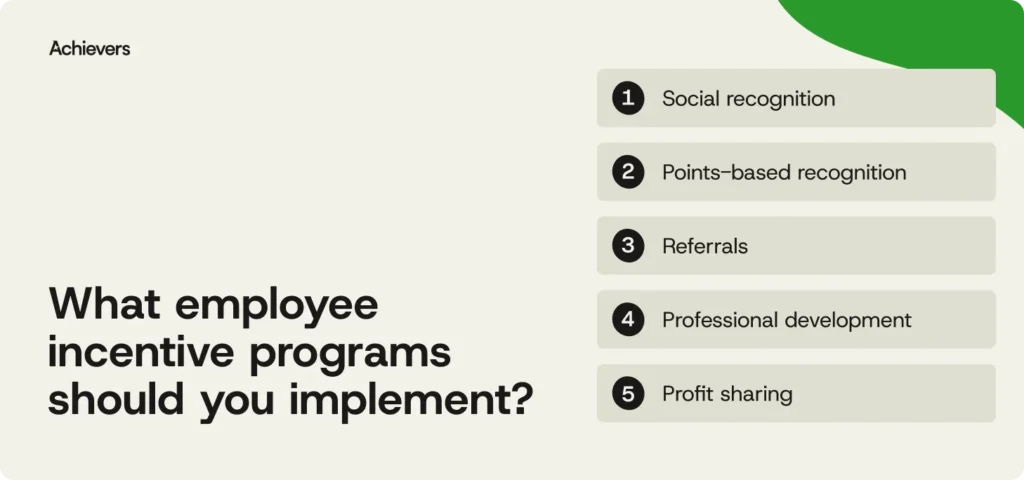
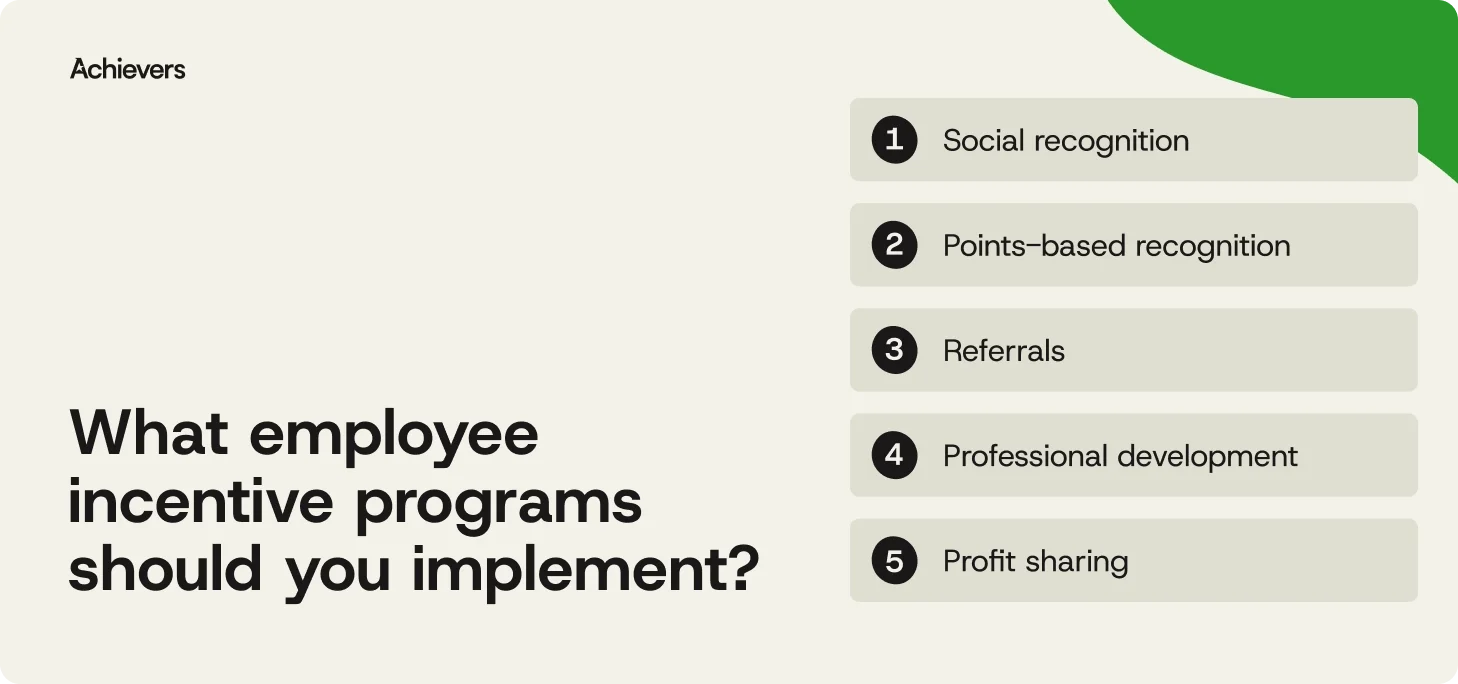
- Social Recognition Programs: These platforms illuminate everyday achievements, making effort visible across the organization. This visibility fosters connection and belonging. Employees who feel appreciated are significantly more likely to feel connected to their managers and supported in their well-being, and critically, are far less likely to seek employment elsewhere.
- Points-Based Recognition Programs: These systems provide employees with choice and meaning. Individuals earn points for performance or recognition, which can then be redeemed for a wide array of goods, services, or experiences through a reward marketplace. This flexibility boosts morale and sustains high performance, with AWI data confirming that employees are highly likely to repeat actions for which they receive points.
- Referral Programs: Leveraging employees as brand ambassadors, these programs tap into the power of strong peer connections, a key driver of engagement and retention. With tiered rewards and integration into broader recognition initiatives, these programs not only attract top talent but also foster enthusiasm within the existing team.
- Professional Development Programs: Investing in employee growth translates directly into increased productivity and loyalty. Companies offering training to engaged employees report higher productivity and profitability. These programs are also a powerful retention strategy, as access to growth opportunities significantly impacts an employee’s long-term career outlook within the company.
- Profit-Sharing Programs: Directly linking individual effort to collective success, profit-sharing fosters a deep sense of ownership and investment. Whether through direct profit distribution or 401(k) matches, these programs significantly enhance employee motivation and long-term commitment.
- Health and Wellness Programs: Beyond superficial perks, these programs are crucial for preventing burnout and ensuring employee well-being. Employees who feel supported in their health are more appreciated and less likely to leave, demonstrating the intrinsic link between well-being and engagement.
- Tuition Reimbursement Programs: A strategic investment in human capital, tuition reimbursement not only boosts retention but also enhances employee preparedness and confidence in their roles. Such educational support yields significant returns in terms of skill development and loyalty.
- Bonuses and Raises: Direct financial incentives remain a powerful and clear expression of appreciation. Transparent goals and attainable targets ensure these rewards motivate employees to strive for excellence without fostering unhealthy competition.
- Fun Gifts: Surprise gifts, whether gadgets or experiences, serve as delightful tokens of appreciation. Personalization or the option of gift cards amplifies their impact on morale.
- Additional Time Off: Extra paid time off is a highly valued reward, signaling appreciation and actively combating burnout. It offers employees crucial time to recharge, leading to renewed energy and satisfaction.
- Choice of Projects: Empowering employees to select projects aligned with their passions and strengths boosts motivation, engagement, and the quality of their work, fostering a sense of ownership.
- Employee Benefits Program: A comprehensive benefits package extends beyond salary, demonstrating an organization’s commitment to employee health, financial security, and overall happiness. Such benefits are pivotal for both retention and talent attraction.
- Human Resources Development: Focusing on long-term skill enhancement and career progression dramatically increases engagement and satisfaction. Investing in talent development signals a commitment to employee growth, motivating high performers.
- Performance Management Programs: Modern performance management should continuously connect work to growth and impact, moving beyond annual reviews to a recognition-led, ongoing experience of feedback, coaching, and development.
- Travel Incentives: These programs transform achievement into memorable experiences, offering fully paid trips for hitting significant targets. Options like the Achievers Travel Store provide global choices, making travel a potent strategic differentiator for morale and loyalty.
- Commission Programs: Directly linking effort to financial reward, commission structures are highly effective for sales teams, aligning individual success with company growth.
- Flextime Programs: Offering flexible working hours is a powerful retention tool, demonstrating trust and enabling employees to better balance personal and professional commitments, thereby boosting engagement.
- Employee Resource Groups (ERGs): ERGs foster a vital sense of belonging and connection, which are strong predictors of retention. By providing supportive spaces, ERGs enhance engagement, collaboration, and loyalty, while signaling an inclusive culture.
- Customized Learning Stipends: Empowering employees to invest in their own growth through stipends for courses or conferences demonstrates organizational support for personal development, motivating continuous learning.
- Sabbatical Leave Rewards: Rewarding loyalty and preventing burnout, sabbaticals allow employees to fully recharge, returning with renewed vigor and fresh perspectives for new challenges.
- Green Commuting Incentives: Promoting eco-friendly commuting options aligns with sustainability values and demonstrates care for employee well-being, reducing costs and improving health.
- Wellness Challenges with Rewards: These programs gamify healthy habits, turning fitness or nutrition goals into engaging team competitions that foster spirit and well-being.
- Family-Oriented Perks: Offering benefits like scholarships or allowances for family activities showcases a company’s commitment to employees’ personal lives, enhancing work satisfaction and loyalty.
- Recognition Through Peer Awards: Empowering employees to recognize each other’s contributions builds a positive, inclusive environment, boosting morale and encouraging exceptional effort from all levels.
- Innovation Incentives: Rewarding creative ideas that drive business improvements with bonuses or leadership opportunities fosters a culture of innovation, empowering employees to initiate change and continuous improvement.
Best Practices for Implementing Impactful Employee Incentive Programs
Selecting the right incentive programs is merely the first step; successful implementation requires adherence to several best practices to ensure maximum impact and sustain engagement.
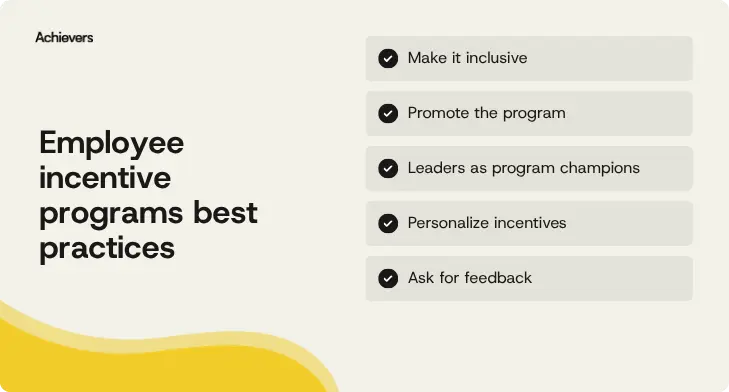
- Ensure Program Inclusivity: A truly effective incentive program caters to the diverse needs and preferences of the entire workforce. This involves offering a broad spectrum of incentives that resonate with various teams and individual motivations. Critically, recognition should extend not only to high-performing participants but also to those who champion and administer the program. A user-friendly, accessible platform is paramount to ensure all employees feel involved, valued, and empowered to engage with and benefit from the rewards.
- Actively Promote Incentive Programs: Visibility is key to participation. Develop a comprehensive communications strategy that actively raises awareness and sustains employee engagement. This can include a multi-channel approach: internal posters, dedicated email campaigns, intranet announcements, and team meetings. Furthermore, it is essential to integrate program awareness into the onboarding process for new hires, ensuring they understand the opportunities from their very first day.
- Cultivate Leadership Buy-in and Advocacy: Leaders are not just managers; they are the primary champions and role models for incentive programs. When leadership actively participates, demonstrates enthusiasm, and consistently utilizes the programs, it creates a powerful ripple effect throughout the organization. Providing comprehensive training for leaders on how to effectively engage with and promote incentives ensures consistent application and reinforces their value.
- Personalize Incentives for Maximum Impact: A "one-size-fits-all" approach rarely succeeds. Leverage data, AI-driven insights, and direct employee feedback to tailor rewards to individual motivations and preferences. This might involve conducting internal surveys, holding HR hackathons to brainstorm creative solutions, or simply fostering open dialogues. Personalizing incentives demonstrates that the organization genuinely understands and appreciates its team members.
- Actively Solicit and Incorporate Feedback: Avoid making assumptions about employee preferences. Regularly solicit feedback through pulse surveys, anonymous feedback platforms, and direct conversations. This continuous dialogue not only helps refine programs to maintain their relevance and effectiveness but also powerfully signals to employees that their voices are heard and valued, fostering a sense of ownership and trust.
Key Performance Indicators (KPIs) to Measure Program Success
To ascertain whether an employee incentive program is delivering genuine impact, organizations must establish clear Key Performance Indicators (KPIs) that directly link recognition initiatives to crucial metrics such as engagement, retention, and overall performance. The right metrics transcend mere activity tracking; they illuminate what is working, identify areas for improvement, and demonstrate how recognition directly supports broader business outcomes.
- Participation Rates: This KPI measures the breadth and reach of the program. Tracking the percentage of employees actively engaging helps assess if the program is inclusive, accessible, and deeply embedded across the entire organization, rather than being utilized by only a select few.
- Recognition Frequency: How often recognition occurs is a critical indicator. High frequency signals that appreciation is becoming an integral part of daily work interactions, rather than an occasional, inconsistent event. More frequent and timely recognition is a strong hallmark of a healthy and vibrant recognition culture.
- Employee Engagement Scores: Regular engagement surveys provide invaluable insights into shifts in morale, motivation, and connection over time. When incentive programs are functioning optimally, improvements in engagement scores are typically observed, particularly in areas related to feeling valued and appreciated.
- Retention and Voluntary Turnover: This is arguably one of the clearest and most impactful indicators of program success. Effective incentive programs should directly contribute to higher employee retention rates and a significant reduction in voluntary turnover, especially among high performers and in critical roles.
- Performance Metrics: Organizations should analyze relevant business outcomes such as goal attainment rates, sales growth figures, project completion timelines, or customer satisfaction scores. When incentives are strategically designed to reinforce desired behaviors, these performance metrics should show corresponding positive movement.
- Employee Feedback: Qualitative feedback provides essential context that quantitative data alone cannot capture. Pulse surveys, open-text responses, focus groups, and one-on-one conversations help organizations understand employees’ lived experiences with the program and assess whether it genuinely aligns with individual and team motivations.
- Reward Redemption Rates: This metric reveals the perceived value of the rewards offered. If rewards remain largely unredeemed, it may signal a disconnect or mismatch between the incentives provided and what employees truly desire or value.
To deepen analytical insight, organizations should also consider incorporating metrics such as productivity gains, reduced absenteeism rates, and internal mobility or promotion rates. Collectively, these indicators provide a holistic view, connecting recognition and incentive programs to long-term workforce outcomes. Consistent reporting and benchmarking are crucial to ensure that employee incentive programs not only perform effectively in the present but also continuously evolve and deliver sustainable results over time.
Making Employee Incentive Programs Truly Meaningful
Recognition transcends a simple pat on the back; it is the fundamental assurance that one’s work holds significance. The most successful companies understand this deeply, strategically recognizing the right behaviors to gain a distinct competitive advantage. Platforms like Achievers specialize in transforming recognition into measurable business results, leveraging tools grounded in behavioral science and psychology.
By achieving double the engagement rates of alternative platforms, Achievers empowers organizations to sculpt their workforce and significantly elevate performance. This translates into greater reward value for every dollar invested, a fivefold increase in engagement, and a platform that integrates seamlessly into existing workflows. Leading businesses choose to recognize with Achievers because they grasp the profound truth: shaping employee behavior is synonymous with shaping organizational success. Effective incentives cultivate genuine appreciation, and appreciation, in turn, transforms everything.