A robust employee recognition program has transcended its traditional role as a mere reward system, emerging as a foundational pillar for organizational growth and strategic talent management. For human resources leaders navigating dynamic work environments, from rapidly expanding mid-market teams to expansive global enterprises, recognition provides a tangible mechanism to reinforce core values, sustain employee engagement, and mitigate talent attrition amidst escalating demands. This shift underscores recognition’s evolution from a discretionary perk to an indispensable business imperative, transforming routine employment into an environment where individuals are motivated to excel and contribute their best work.
The Evolving Landscape of Employee Appreciation
The modern workforce operates in an era marked by significant shifts, including the rise of hybrid and remote work models, heightened awareness of employee well-being, and an increasingly competitive global talent market. In this context, employee recognition has gained unprecedented prominence as a critical tool for fostering a positive workplace culture and directly influencing performance. Recent industry data, such as the 2025 State of Employee Recognition Report, indicates a compelling correlation: employees who receive weekly recognition are 2.6 times more likely to report being at their most productive. This statistic highlights that effective recognition is not merely about fostering goodwill; it is a direct catalyst for enhanced productivity and superior business outcomes.
Historically, employee recognition often consisted of infrequent, top-down commendations or standardized service awards tied to tenure. However, contemporary approaches emphasize continuous, integrated, and multi-directional appreciation. Today, organizations are increasingly seeking to build programs that resonate deeply with employees, sparking intrinsic motivation and delivering measurable impact across all levels of the enterprise. This evolution reflects a deeper understanding of human psychology in the workplace, moving beyond transactional rewards to cultivate genuine appreciation and belonging.
Defining and Understanding Employee Recognition Programs
An employee recognition program serves as a structured, systematic framework designed for companies to formally acknowledge and reward the diverse contributions of their workforce. This encompasses both significant achievements and the consistent daily efforts that collectively drive business operations forward. Such programs offer a reliable methodology for highlighting exemplary work, visibly demonstrating company values in action, and sustaining high levels of employee motivation. A comprehensive recognition program typically incorporates a variety of approaches, ranging from formal top-down acknowledgments and informal peer-to-peer commendations to a spectrum of tangible and intangible reward types, all designed to fit diverse budgetary considerations and cultural contexts.

The Indispensable Role of Recognition in Modern Business
The importance of robust recognition programs cannot be overstated in today’s dynamic and competitive landscape. These initiatives are fundamental for any organization committed to cultivating an engaged, productive, and loyal workforce. By consistently creating opportunities for employees to feel acknowledged and valued for their contributions, recognition programs serve multiple critical functions: they incentivize desirable behaviors, strengthen organizational culture, and ultimately enhance financial performance. Research by leading analytics firms like Gallup consistently demonstrates a strong correlation between employee engagement and key business outcomes, with highly engaged teams typically exhibiting 21% greater profitability and 17% higher productivity. Recognition, in its various forms, acts as a primary driver of this engagement, fostering an environment where individuals feel seen, heard, and appreciated.
Who Benefits: The Universal Application of Recognition Initiatives
Employee recognition programs are pertinent for organizations across all developmental stages and operational scales. This includes burgeoning mid-market teams establishing foundational consistency in their culture, as well as multinational corporations scaling recognition across diverse geographical regions and complex organizational structures. The efficacy of such programs is not primarily predicated on organizational size, but rather on the establishment of a clear, repeatable, and deeply embedded methodology for integrating appreciation into the daily fabric of work life. When recognition is delivered consistently and inclusively, its reach extends to every organizational tier, benefiting frontline workers, hybrid teams, remote staff, and global departments alike. This universality ensures that no employee feels overlooked, fostering a pervasive sense of belonging and intrinsic value that underpins a thriving workplace.
Optimal Integration: Where Recognition Programs Should Reside
For maximum impact and sustained engagement, an employee recognition program should seamlessly integrate into existing workflows and communication channels. For many organizations, this begins with incorporating the program into widely used collaboration and productivity tools such as Slack, Microsoft Teams, or Outlook. This technological integration ensures ease of access and reduces friction in the act of giving and receiving recognition. However, its presence should extend beyond mere technological integration, becoming an inherent component of the broader workplace culture. It must be visibly woven into team meetings, town halls, internal newsletters, and informal interactions. When appreciation is evident and delivered during crucial moments, it is perceived as authentic, meaningful, and difficult to disregard. The objective is not to introduce complexity or additional tasks but to simplify the act of recognition, thereby ensuring its consistent and natural application throughout the organization.
Maximizing Impact: The Power of Timely and Frequent Recognition
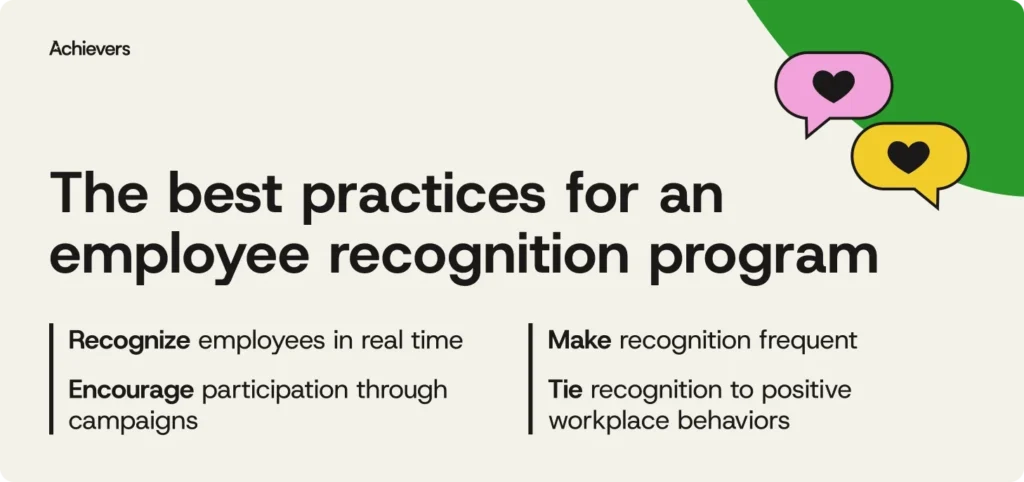
The efficacy of recognition programs is significantly amplified when appreciation is deeply integrated into the daily rhythm of work. Achievers’ research, for example, indicates that weekly recognition correlates with employees being 2.6 times more productive and nine times more likely to experience a profound sense of belonging. This underscores the importance of immediacy. Timely recognition, delivered precisely in the moment of contribution, conveys sincerity and amplifies impact by directly linking the behavior to the positive feedback. Conversely, delayed acknowledgment risks appearing as an afterthought rather than genuine appreciation, significantly diminishing its power to reinforce positive behaviors and motivate future performance. Frequent recognition transforms isolated acts of appreciation into a continuous cultural practice, embedding gratitude into the organizational DNA.
Strategic Framework for Building an Employee Recognition Program
Developing an effective employee recognition program requires deliberate planning, a clear understanding of the desired organizational culture, and an iterative approach to implementation. It is not an instantaneous process but rather a journey involving thoughtful structure, strategic execution, and continuous refinement. The following step-by-step guide provides a robust framework for successful program development, applicable to organizations of all sizes and complexities:

1. Program Design: Crafting a Tailored Approach
Designing a recognition program is akin to creating a bespoke solution, demanding adaptability to allow for continuous adjustments that align with evolving team dynamics and business objectives. The ultimate objective is to develop a program that is intuitively easy to use, seamlessly integrating into employees’ daily routines without adding undue burden.
- Setting Clear Objectives: Every impactful recognition program is anchored by a well-defined purpose. Key questions to address include: Is the program intended to boost overall employee engagement, enhance critical talent retention rates, or foster specific behaviors aligned with core company values? These strategic objectives must guide the program’s structure, selection of recognition types, and methods of measurement. Establishing Key Performance Indicators (KPIs), such as participation rates, recognition frequency per employee, or the percentage of employees recognized, is essential for tracking progress. Furthermore, explicitly linking recognition outcomes to broader business goals enables the calculation of a clear Return on Investment (ROI), vital for securing executive buy-in.
- Cultural Alignment: Organizational culture serves as the foundational blueprint for an effective recognition system. A truly great recognition program does not attempt to fundamentally alter existing cultural norms; rather, it amplifies and reinforces the unique attributes that define the workplace. Whether the culture is characterized by high energy and innovation, mission-driven focus, or collaborative teamwork, the recognition program should authentically reflect these traits. Recognition gains greater resonance and impact when it explicitly connects to core company values, thereby reinforcing the desired culture while celebrating individual contributions that embody those values.
- Budget Allocation: Adequate financial provisioning is critical for the sustained viability and effectiveness of any recognition program. Whether allocating resources for specialized software platforms, tangible rewards, communication strategies, or administrative overhead, a meticulous approach to budgeting is imperative. Sustainable programs prioritize long-term value over initial grand gestures, ensuring resources are utilized effectively for ongoing impact rather than a fleeting, one-time splash.
- Policy Formulation: Program policies serve as the operational manual, providing clarity and establishing equitable expectations for all participants. These guidelines, while not necessarily rigid, must clearly define what constitutes recognizable behavior, who is authorized to issue recognition (e.g., managers, peers), and the mechanics of reward distribution. Transparent and well-communicated policies ensure a level playing field, mitigate potential biases, and promote fairness across the organization. Providing concrete examples of effective recognition further aids in setting clear standards and encouraging desired behaviors.
- Global Scalability Considerations: For organizations with an international workforce, the capacity for global scalability is no longer a luxury but a fundamental requirement. The chosen platform and program design must support employees irrespective of their geographical location, linguistic background, or time zone, ensuring a consistent and inclusive experience for everyone. This global reach is vital for fostering a unified corporate culture and ensuring every employee feels seen, valued, and connected to the broader organizational mission.
2. Program Introduction: Building Momentum and Understanding
A successful program launch extends beyond a mere announcement or an email blast; it necessitates deliberate intention, clarity in communication, and sustained momentum to drive adoption. Cultivating excitement through a meticulously planned rollout, comprehensive employee education, and active leadership involvement is paramount. It is crucial to articulate clearly why recognition is important, its benefits to both individuals and the organization, and how it can be seamlessly integrated into daily work life.
Furthermore, equipping managers with relevant data — such as recognition volume, monthly active users, or team participation rates — empowers them to lead by example, transforming recognition from a perceived mandatory task into a meaningful and organic cultural practice. Key Performance Indicators (KPIs) to track during and after launch include: overall program participation rates, average recognition frequency per employee, percentage of employees recognized at least once, average value of recognition received, and correlation with employee engagement survey scores.
3. Measuring Results: Continuous Improvement and Validation
Following implementation and adoption, the critical phase of measuring results begins. This involves rigorously assessing program effectiveness and identifying areas for continuous refinement. While recognition inherently taps into emotional and human connections, its business value is best substantiated through quantifiable data and analytics. Tracking key metrics such as employee retention rates, engagement scores, productivity metrics, and even customer satisfaction provides tangible evidence of the program’s impact.
Comparing pre- and post-launch data helps identify trends, validate the program’s efficacy, and pinpoint specific areas of success or challenge. Integrating qualitative feedback through employee surveys, focus groups, and informal interviews offers invaluable insights, revealing immediate successes and identifying longer-term gaps or areas for improvement. Actively soliciting and responding to employee feedback demonstrates that their voices are valued, which itself contributes significantly to higher engagement and a stronger sense of belonging. This iterative process of asking, listening, analyzing, and adapting is what transforms good recognition programs into truly great ones that deliver sustained value.
Selecting the Optimal Recognition Platform
The effectiveness and scalability of a recognition program are intrinsically linked to the underlying technology platform. Leading recognition platforms offer seamless integration with employees’ daily workflow tools, facilitating effortless peer recognition without disrupting productivity. Key selection criteria for such a platform include: user-friendliness across various devices and interfaces, scalability to accommodate future organizational growth, robust analytical capabilities for data-driven insights, comprehensive security features, and reliable, responsive customer support. A truly effective platform must be adaptable, capable of evolving with organizational changes, new objectives, and shifting work methodologies, thereby ensuring sustained recognition efforts and long-term program viability.
Best Practices for Maximizing Program Impact
To ensure an employee recognition program consistently achieves its objectives and maintains high impact, adherence to several tried-and-true best