
The contemporary marketplace has undergone a fundamental transformation, shifting from a linear path to purchase to a complex, multi-channel ecosystem where the average B2B buyer now utilizes approximately ten different channels to interact with suppliers. This data, corroborated by McKinsey & Company, highlights a critical reality for modern enterprises: the traditional model of siloed marketing departments—where social media, public relations, and advertising operate independently—is no longer viable. To maintain visibility and build trust in an era of information saturation, organizations must adopt a rigorous Integrated Marketing Communications (IMC) strategy. This approach ensures that every touchpoint, from an initial social media impression to a final sales consultation, delivers a unified, coherent brand narrative.
The Shift Toward Omnichannel Complexity
In previous decades, a marketing campaign might have consisted of a television commercial supported by print advertisements. Today, the buyer’s journey is characterized by "omnichannel" behavior. A potential customer may discover a brand via a podcast appearance by a C-suite executive, research the company through third-party review sites, consume a series of educational blog posts, and engage with targeted LinkedIn advertisements before ever speaking to a sales representative.
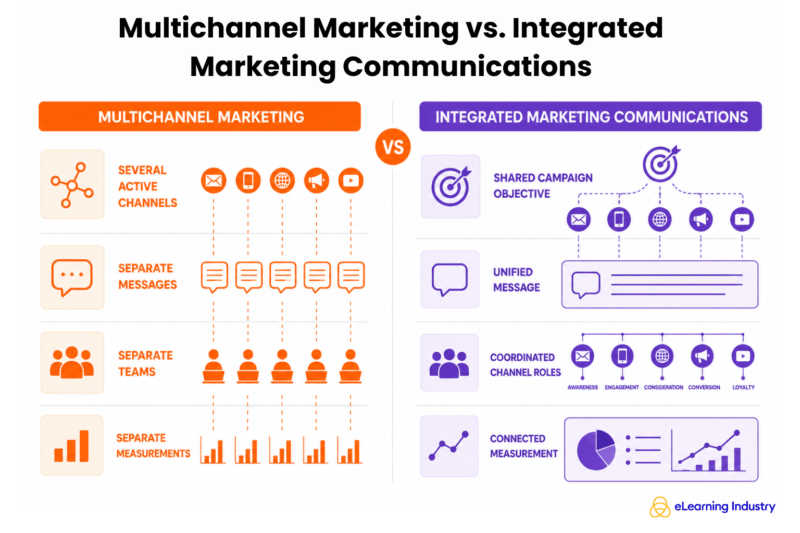
This fragmentation presents a dual challenge: maintaining message consistency across diverse platforms and ensuring a seamless transition between stages of the sales funnel. IMC addresses this by aligning advertising, public relations, content marketing, and direct sales under a single strategic umbrella. The goal is not merely to be present on every platform, but to ensure that each interaction reinforces the core brand value proposition while serving a specific functional role in the customer’s decision-making process.
The UNIFY Framework: A Methodology for Integration
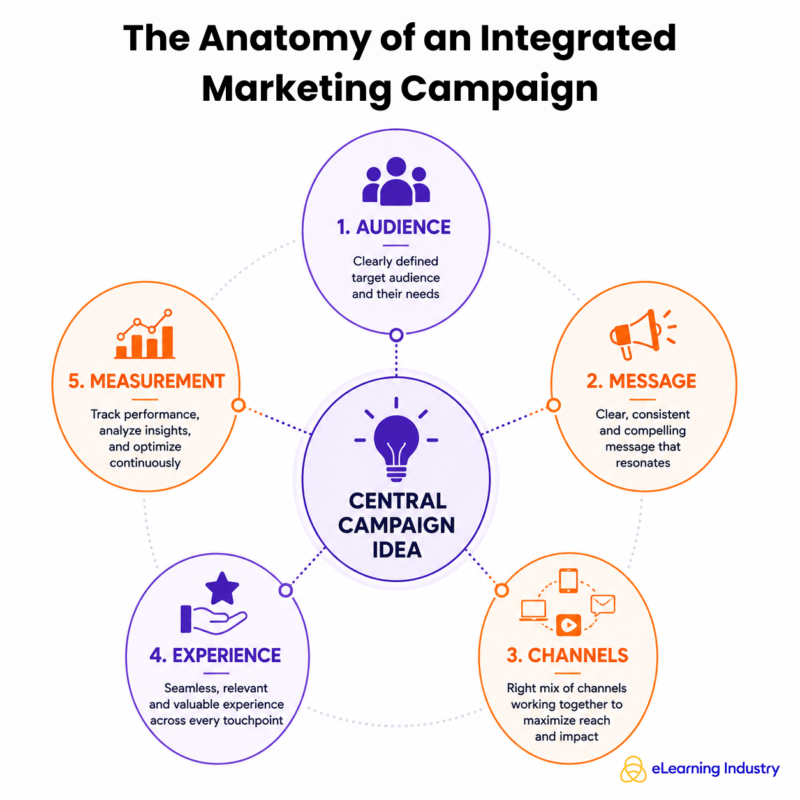
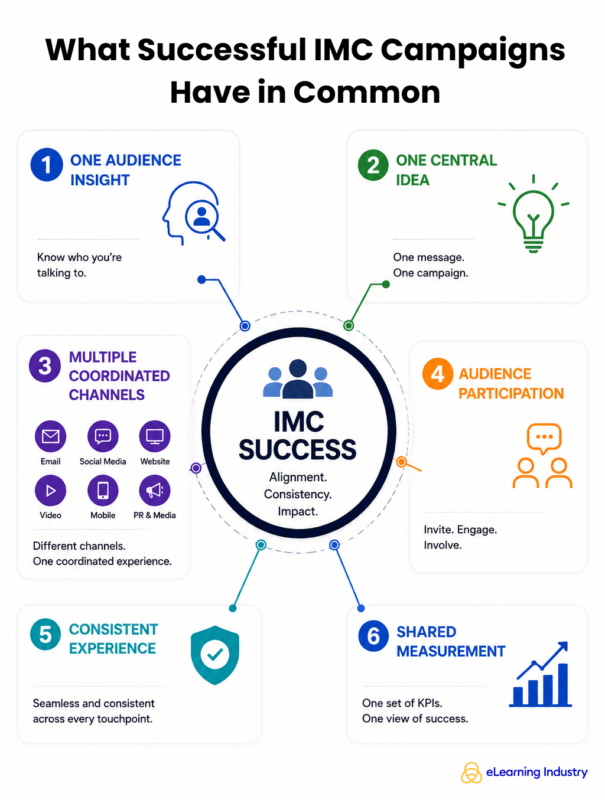
Successful integrated campaigns are rarely the result of chance; they require a structured methodology to align creative output with business objectives. Industry experts often point to the "UNIFY" framework as a benchmark for developing these initiatives.
Understand the Audience: The process begins with deep demographic and psychographic analysis. Marketers must identify not only who the target buyer is but also the specific pain points that drive their search for a solution and the media consumption habits that dictate where they spend their time.
Name the Central Idea: At the heart of every successful IMC campaign is a "big idea"—a singular, compelling proposition that is flexible enough to be adapted across different media without losing its essence. This idea must be differentiated from competitors and deeply relevant to the audience’s needs.
Integrate the Channel Roles: Rather than duplicating content across every platform, a strategic IMC approach assigns specific roles to each channel. For instance, social media may be used for top-of-funnel awareness and community engagement, while white papers and webinars serve as high-authority assets for the consideration phase.
Form a Consistent Experience: This involves the alignment of visual identity, tone of voice, and strategic messaging. Whether a customer is reading a technical case study or viewing a 15-second video ad, the "look and feel" of the brand must remain unmistakable.
Yield and Measure Impact: Integration allows for a more holistic view of performance. Instead of measuring clicks or impressions in isolation, marketers can track how different channels influence one another, eventually contributing to pipeline velocity and total revenue.
Benchmark Analysis: Global Leaders in Integrated Communications
To understand the practical application of IMC, it is necessary to examine the campaigns that have defined the discipline over the last decade. These examples illustrate how diverse industries—from consumer goods to enterprise software—leverage integration to achieve market dominance.
1. Coca-Cola: "Share a Coke"
Coca-Cola’s decision to replace its iconic logo with individual names was a masterclass in integrating product design with digital communication. The campaign utilized packaging as the primary marketing vehicle, which then fueled a massive social media movement. By encouraging consumers to find and share bottles with their names, the brand turned a mass-market product into a personalized experience. The integration succeeded because the central message—that a global brand can be personal—was supported by retail activation, outdoor advertising, and digital personalization tools.
2. Spotify: "Wrapped"
Spotify’s annual "Wrapped" campaign demonstrates the power of data-driven integration. By transforming individual user data into shareable, aesthetic stories, Spotify turned its product features into a global cultural event. The campaign integrated the in-app experience with social media sharing, email marketing, and out-of-home (OOH) billboards featuring aggregated data trends. This created a feedback loop where the product generated the content, and the content drove further product engagement.
3. Salesforce: The Trailblazer Ecosystem
In the B2B sector, Salesforce has moved beyond traditional software marketing to create a comprehensive "ecosystem." Their IMC strategy integrates professional certification, community forums, massive live events (Dreamforce), and executive thought leadership. The central message focuses on "customer success," positioning Salesforce not just as a vendor but as a partner in digital transformation. This integration builds high levels of brand loyalty and reduces churn by making the brand a part of the customer’s professional identity.
4. HubSpot: Inbound Marketing
HubSpot did more than sell a CRM; they "sold" a methodology. Their integrated approach combined educational content (The HubSpot Academy), original research, SEO-optimized articles, and free software tools. By aligning their marketing with the very "inbound" principles they advocated, they established a high degree of authority. Every webinar and blog post served as a lead-generation tool that funneled prospects toward their paid software ecosystem.
The Divergence of B2B and B2C Integration
While the core principles of IMC remain constant, the execution differs significantly between Business-to-Consumer (B2C) and Business-to-Business (B2B) markets. B2C campaigns often prioritize emotional resonance, identity, and immediate conversion. They rely heavily on high-reach channels like television, influencer partnerships, and viral social content.
Conversely, B2B IMC campaigns must account for longer sales cycles and the involvement of multiple stakeholders. A typical B2B purchase involves a "buying committee" that includes technical users, financial gatekeepers, and executive sponsors. Consequently, B2B integration focuses on risk reduction and business impact. The "integrated" elements often include technical white papers for the users, ROI calculators for the finance team, and high-level vision pieces for the C-suite, all held together by a consistent brand promise.
Technical Evolution: AI and the Future of Search
The rise of Artificial Intelligence (AI) and Generative Engine Optimization (GEO) is currently reshaping the IMC landscape. As consumers increasingly use AI-powered platforms like ChatGPT, Perplexity, and Gemini to research products, the traditional rules of Search Engine Optimization (SEO) are evolving.
In this new environment, brand consistency is more than a creative choice; it is a technical requirement. AI models aggregate information from across the web to provide answers to user queries. If a brand’s messaging is inconsistent—if its LinkedIn profile makes one claim while its website makes another—AI systems may struggle to verify the brand’s authority, leading to lower visibility in AI-generated responses.
Furthermore, AI allows marketing teams to scale their IMC efforts with unprecedented efficiency. Generative AI can take a single piece of "pillar content," such as a 50-page research report, and automatically reformulate it into social media snippets, email newsletters, and executive summaries, all while maintaining the original tone and data accuracy. This ensures that the "UNIFY" framework can be applied at a speed and scale previously impossible for human teams alone.
Managing the Risks of Disintegration
Despite the clear benefits of IMC, many organizations continue to struggle with "disintegrated" marketing. Common pitfalls include:
- Visual Over Strategic Consistency: Matching logos and colors is insufficient if the underlying message is contradictory.
- Content Duplication: Simply posting the exact same text on every channel ignores the unique nuances of each platform. Effective IMC requires "reimagining" content for different contexts.
- Siloed Measurement: Evaluating each channel’s ROI in a vacuum fails to account for the "halo effect" where awareness channels (like PR) drive performance in conversion channels (like Paid Search).
Conclusion: The Long-term Impact of Integration
The ultimate goal of Integrated Marketing Communications is to build "brand equity"—the intangible value that allows a company to charge a premium and maintain customer loyalty in a competitive market. By ensuring that every interaction is consistent, relevant, and supportive of a central narrative, companies can cut through the noise of the digital age.
As the economy continues to digitize, the brands that succeed will be those that view marketing not as a collection of separate tactics, but as a single, connected experience. Whether through the use of original research to build authority or the deployment of AI to maintain message consistency, the strategic integration of communication remains the most effective way to turn market presence into market share. For modern enterprises, IMC is no longer an optional luxury; it is the foundational architecture of sustainable growth.






