The modern recruitment landscape is characterized by an escalating challenge: securing top talent is no longer just about finding qualified individuals, but about engaging them at the speed of the market. A common scenario, all too familiar to recruiters, highlights this critical issue. A promising candidate applies, successfully navigates initial screening, and appears to be an ideal fit for an open role. They possess the requisite qualifications, exhibit enthusiasm, and follow up diligently within the expected timeframe. However, by the time a human recruiter can dedicate sufficient attention to them, the candidate has often accepted another offer. This isn’t a reflection of insufficient effort on the part of the recruitment team, but rather a systemic failure in the architecture of the hiring process itself.
This phenomenon, often described as "ghosting" from the candidate’s perspective, is increasingly becoming an expected outcome in many hiring cycles. The core of the problem lies not in a lack of capable candidates, but in the inherent slowness and coordination overhead of traditional hiring workflows. In a competitive job market, the most sought-after professionals are actively pursued by multiple organizations and, by necessity, move with swiftness. This creates a paradox for Chief Human Resources Officers (CHROs): the perceived scarcity of talent is often compounded by an organizational inability to respond with the urgency that top candidates require. Consequently, organizations are not only struggling to fill roles but are actively losing candidates they had already identified and deemed suitable, simply due to delays in the hiring pipeline.
The implications of this speed deficit are profound. Organizations that can address this challenge first are poised to not only hire faster but also to hire better. By engaging candidates promptly, they can select from a more complete and competitive pool of applicants, rather than relying on the dwindling fraction of candidates who possess the patience to wait for a drawn-out process. This shift in focus from mere pipeline management to a strategic emphasis on speed and candidate experience is becoming a defining factor in organizational success.
The Historical Underpinnings of Hiring Latency
The contemporary recruitment process was largely designed for an era with different market dynamics and technological capabilities. It was built around the assumption that human capital would manage every facet of the hiring journey – from initial sourcing and screening to interview scheduling, feedback coordination, and offer extension. Each sequential step, each handoff between individuals, introduced inherent latency. This latency, in turn, created vulnerabilities for candidate attrition.
While advancements in technology, such as Applicant Tracking Systems (ATS), have digitized many administrative tasks, they have often done so without fundamentally altering the underlying workload or reducing the cognitive load on recruiters. ATS platforms have streamlined the collection of candidate information and application management, but the manual coordination and progression of candidates through different stages often remain a significant bottleneck. This means that despite the digitization of forms, the actual work of moving a candidate from one phase to the next still requires considerable human effort and time.
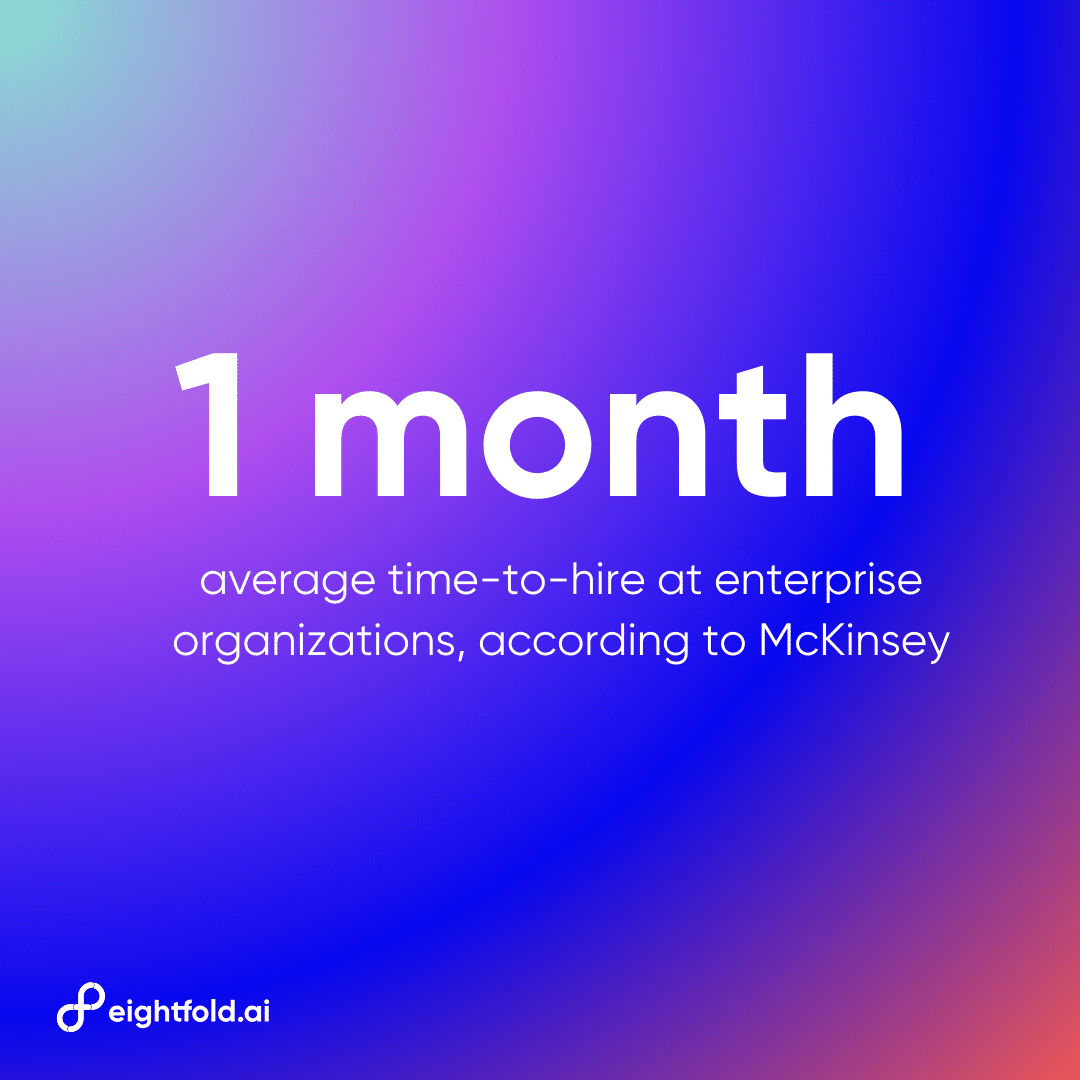
According to a report by McKinsey, approximately two-thirds of current HR tasks, including elements of recruitment, are considered automatable. Yet, the average time-to-hire for enterprise organizations frequently extends well beyond a month. This prolonged duration means that a candidate who applies on a Monday and receives no communication by Friday may already be updating their resume and exploring other opportunities. This "Human Scale ceiling" is not a limitation of the dedication or skill of recruitment teams, but rather a consequence of the inherent physics of a process designed around finite human bandwidth.
In an environment where agile, AI-native competitors can deploy sophisticated digital interviewing capabilities on demand, organizations adhering to traditional, human-centric hiring models face a significant structural disadvantage. The speed at which these AI-powered systems can operate, conducting interviews and providing initial assessments around the clock, far outpaces the capabilities of even the most efficient human teams.
Augmenting Responsiveness, Not Replacing Human Connection
A common concern regarding the integration of AI in hiring is the potential erosion of the human element in the recruitment process. CHROs often question whether automating interviews might diminish the crucial aspects of human judgment, empathy, and nuanced understanding that are vital in assessing candidates. These are valid concerns that underscore the importance of framing AI’s role appropriately. The objective of AI Interviewer, for instance, is not to replace human judgment but to eliminate the unproductive waiting periods that plague traditional hiring.
A closer examination of current recruitment workflows reveals that recruiters often spend a disproportionate amount of their time on coordination and administrative tasks rather than on activities that truly require human insight. Persuading a hesitant finalist, nurturing relationships with passive candidates, or making the critical decision between two equally qualified individuals are the tasks that demand human emotional intelligence and strategic thinking. In contrast, scheduling interviews, managing back-and-forth communications, and sifting through high volumes of initial applications are often repetitive and time-consuming.
AI Interviewer addresses this by taking on the execution layer of these tasks. It can conduct structured interviews autonomously, available 24/7, and in over 28 languages. This capability allows organizations to handle any volume of applications, from a single candidate to millions, with consistent efficiency. Moreover, AI Interviewer focuses on evaluating skills and capabilities objectively, rather than being influenced by superficial factors such as appearance or presentation style. This not only enhances speed but also promotes fairness by reducing unconscious bias.
The liberation provided by AI Interviewer empowers recruitment teams to ascend to higher-value activities. Freed from the minutiae of scheduling and initial screening, recruiters can dedicate their expertise to strategic planning, in-depth candidate assessment, relationship building, and the crucial task of closing top talent who have multiple options. This transformation shifts recruiters from being mere administrators of the hiring process to becoming strategic talent architects. This represents a move from "Human Scale" operations to "Agent Scale," enabling recruitment functions to operate at the pace of the market rather than perpetually playing catch-up.
The Candidate Experience as a Strategic Advantage
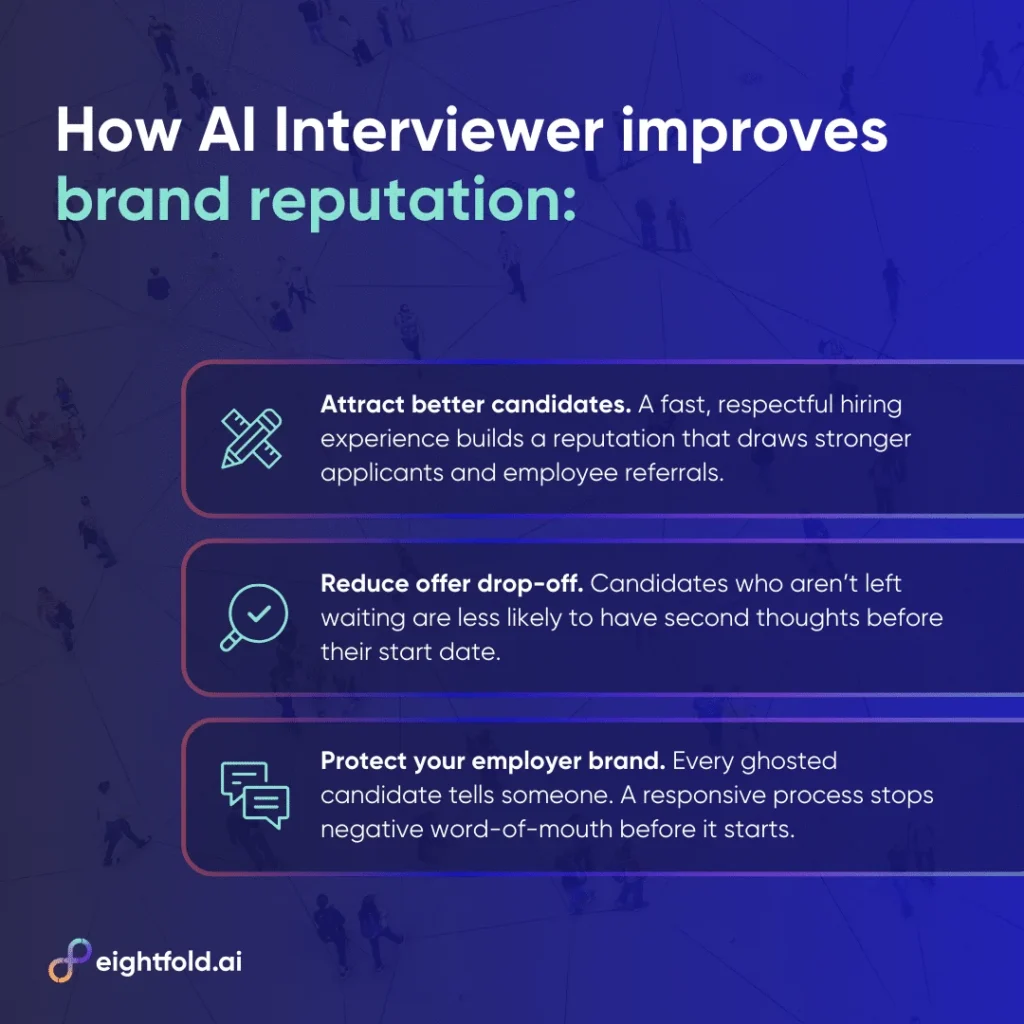
The repercussions of slow hiring extend beyond internal inefficiencies to impact an organization’s employer brand. Every candidate who experiences ghosting or a prolonged, unresponsive process becomes an ambassador of that negative experience. In today’s interconnected professional world, word-of-mouth, online reviews, and professional networks are powerful conduits for information. A qualified applicant who times out of an organization’s process and joins a competitor will likely share their experience, potentially deterring future high-caliber candidates.
AI Interviewer fundamentally reframes this dynamic. It offers candidates an immediate and structured opportunity to showcase their skills and qualifications, on their own schedule. This eliminates the need for them to wait for a recruiter’s availability or chase unresponsive communication. The implicit message conveyed by such a system is clear: "This organization respects your time."
This signal has a compounding effect. Businesses recognized for their swift, fair, and respectful hiring practices attract a higher caliber of talent. They benefit from referrals by existing employees who are confident that the application experience will not be detrimental to their professional reputation. Furthermore, by reducing the extended periods of silence that can cause candidates to reconsider their options, organizations can minimize attrition between the offer stage and the start date. The talent market, it is evident, rewards responsiveness, not merely good intentions.
The Infinite Workforce: Redefining Talent Acquisition Possibilities
The underlying shift enabled by technologies like AI Interviewer is architectural. This AI solution represents a foundational element of what is being termed the "Infinite Workforce" – a model where human professionals focus on orchestration and strategic decision-making, while AI agents handle large-scale execution.
In the context of talent acquisition, this paradigm translates to human oversight of role strategy, hiring criteria definition, candidate relationship management, and the final hiring decision. Concurrently, AI Interviewer takes responsibility for efficiently identifying and presenting the most suitable candidates to human recruiters, ensuring speed, consistency, and scalability irrespective of volume. This strategic division of labor can compress hiring timelines from months to mere days. Consequently, recruitment teams can achieve a five-fold increase in productivity, not through increased effort, but by redirecting their focus to more impactful, human-centric tasks.
For forward-thinking CHROs, the year 2026 is anticipated to mark a significant transition from theoretical exploration to widespread implementation of these advanced workforce models. Organizations that proactively build their Infinite Workforce capabilities are establishing a compounding competitive advantage. Faster hiring translates to accelerated time-to-revenue. A superior candidate experience cultivates richer talent pools. Ultimately, enhanced talent pools directly contribute to superior business outcomes.
The alternative is to maintain existing architectures, where organizations ask candidates to endure extended waiting periods, hoping they remain available. While some may persist, the most desirable candidates are increasingly unlikely to do so. The next generation of exceptional hires is currently evaluating their options, deciding how long they are willing to wait. Organizations that successfully address speed and candidate experience will be the ones to secure these individuals. Those that fail to adapt risk a perpetual shortage of top-tier talent, perpetually wondering why their candidate pipelines consistently run dry. The future of talent acquisition lies not in the volume of applications, but in the agility and thoughtfulness of the response.