Despite widespread recognition of its critical role in fostering stronger performance, higher retention rates, and healthier workplace cultures, employee engagement remains a significant challenge for organizations globally. Recent findings from Gallup highlight a concerning trend, with 17% of employees identified as "actively disengaged"—a stark indicator that the repercussions of neglecting employee engagement extend far beyond missed deadlines, impacting overall organizational vitality and competitive standing.
Engaged employees are not merely cogs in a machine; they are dynamic contributors who generate innovative ideas, provide invaluable support to their colleagues, and build momentum that propels the entire enterprise forward. Conversely, disengaged employees can erode morale, stifle innovation, and exacerbate retention issues, creating a drag on organizational progress. This dichotomy underscores why understanding and actively cultivating employee engagement is not merely an HR function but a strategic business imperative, capable of transforming abstract corporate goals into tangible business outcomes through recognition, meaningful connection, and a pervasive sense of purpose.
The Evolving Landscape of Employee Engagement
The concept of employee engagement has evolved significantly from its nascent understanding as mere job satisfaction. Modern interpretations define it as the emotional commitment an employee has to their organization and its goals. This commitment transcends simple contentment with a role; it signifies a willingness to exert discretionary effort, to go above and beyond what is formally required. Early research in the late 20th century began to distinguish engagement from satisfaction, identifying it as a deeper psychological state linked to motivation and productivity. Today, it is recognized as a complex interplay of individual psychology, leadership practices, organizational culture, and strategic alignment, influencing every facet of a business’s operation. This shift gained prominence as companies recognized that a truly committed workforce offered a competitive edge beyond simply offering good pay and benefits.
For organizations, investing in employee engagement represents one of the smartest strategic decisions possible. A comprehensive global survey, analyzing data from over 3,000 employees worldwide, revealed that a mere 25% of the workforce feels truly engaged at work. This low engagement rate, critically linked to infrequent appreciation, places employee retention at considerable risk. The study further illuminated that employees who feel regularly appreciated are markedly more likely to perceive their work as meaningful (71% versus a dismal 6% among unappreciated staff), feel connected to core company values (56% versus 1%), and envision a long-term career path within their current organization (50% versus 3%). The correlation is clear: consistent, meaningful recognition—whether weekly or monthly—is a powerful driver of both higher engagement and retention, while its absence or infrequency directly correlates with an elevated risk of employee turnover.
In an increasingly competitive global marketplace, engagement serves as a distinct competitive advantage. Organizations that overlook this vital aspect often find themselves grappling with exorbitant churn costs and an endless cycle of exit interviews. Prioritizing engagement, conversely, builds organizational resilience, fuels sustainable growth, and contributes to a stable, committed workforce, potentially saving on the intangible costs associated with constant personnel flux. Industry analysts frequently cite that the cost of replacing an employee can range from half to twice an employee’s annual salary, highlighting the substantial financial implications of high turnover driven by disengagement.
The Multifaceted Impact: 20 Key Benefits of Employee Engagement
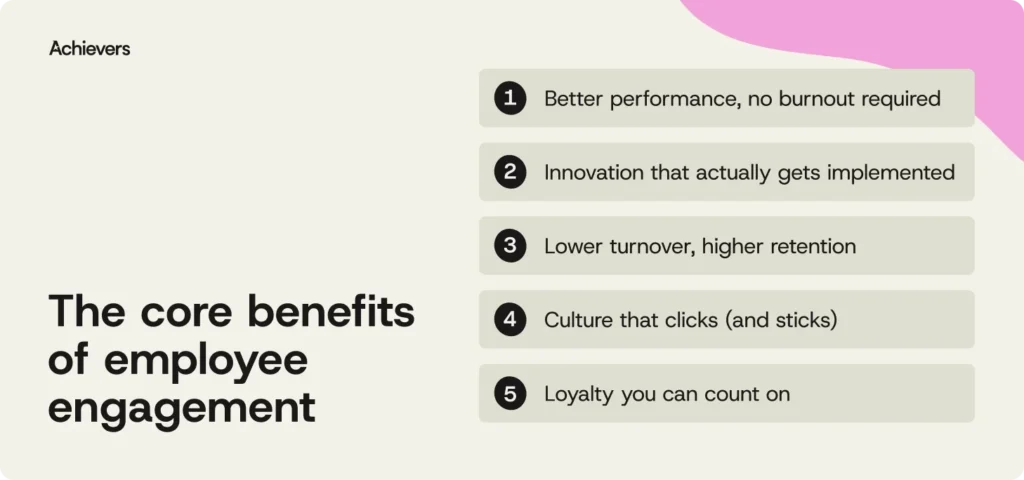
The positive ramifications of robust employee engagement permeate every layer of an organization. Here are 20 critical ways it profoundly impacts business success:
1. Improved Employee Performance and Productivity
Engaged employees are inherently more motivated, focused, and dedicated. They approach challenges proactively, continuously seek opportunities for improvement, and consistently deliver high-quality results that directly benefit the business. This heightened sense of ownership and accountability translates into measurable gains in output and efficiency, setting higher performance benchmarks across teams and departments. The contrast with disengaged teams, where focus and accountability often silently erode, is stark and impactful on overall operational effectiveness. Studies by consulting firms like McKinsey routinely show that highly engaged teams can be up to 21% more productive.
2. Enhanced Innovation and Creativity
A culture of engagement fosters psychological safety, encouraging employees to share novel ideas, experiment with new methodologies, and collaborate effectively to bring solutions to fruition. When individuals feel genuinely invested in outcomes, they are more inclined to push conventional boundaries and offer perspectives that might otherwise be overlooked. This environment transforms speculative "what if" scenarios into tangible prototypes and, ultimately, into sources of sustainable competitive advantage. Without engagement, promising ideas often remain undeveloped, losing their potential impact. Organizations with high engagement are often cited as having significantly higher rates of patent applications and successful new product launches.
3. Bolstering Talent Retention and Reducing Turnover
Disengagement is a primary precursor to voluntary employee turnover. Conversely, engaged employees exhibit greater loyalty and remain with their organizations because they feel a profound connection to their work’s purpose, the company culture, and the tangible impact of their contributions. Engagement signals to employees that their efforts are valued and that a promising future awaits them within the organization. This stability significantly reduces the substantial costs associated with recruitment, onboarding, and training new hires, while also preserving invaluable institutional knowledge. Gallup data consistently shows that highly engaged business units experience 24% lower turnover.
4. Cultivating a Resilient and Positive Workplace Culture
Organizational culture extends beyond a printed mission statement; it is the lived daily experience of every employee. Engagement invigorates this culture by reinforcing shared values, actively promoting cross-functional collaboration, and building deep trust among teams. When employees are engaged, the desired culture is not merely an aspiration but a vibrant, lived reality. This authentic culture becomes a unique differentiator, difficult for competitors to replicate, serving as a proprietary "secret sauce" that fortifies the company’s foundation over time.
5. Strengthening Employee Loyalty and Advocacy
Employee loyalty flourishes when individuals are deeply engaged in their work and possess confidence in their company’s overarching purpose and direction. Engagement cultivates trust and strengthens the bond between employees and their organization, enabling resilience even in the face of adversity. Loyal employees choose to stay not out of obligation, but out of genuine desire. In today’s dynamic labor market, this intrinsic commitment holds greater value than superficial perks or incremental pay increases, fostering long-term dedication without relying on transient incentives. These loyal employees often become informal recruiters and brand champions.
6. Elevating Morale and Psychological Well-being
High morale is synonymous with sustained energy and motivation. Engaged employees exhibit a more positive outlook on their work, and this optimism frequently spreads throughout teams, creating a positive feedback loop. This collective enthusiasm builds momentum, elevating morale and making even challenging workdays feel less daunting. A workforce with high morale is more resilient, collaborative, and generally more pleasant, contributing to a vibrant and productive atmosphere. Moreover, studies link high engagement to lower rates of burnout and improved mental health outcomes for employees.
7. Driving Superior Customer Satisfaction and Brand Reputation
Engaged employees naturally bring empathy, focused attention, and a genuine desire to resolve issues, directly translating into superior customer service, enhanced trust, and increased repeat business. Customers are keenly aware of the distinction between an employee merely fulfilling duties and one who is deeply invested in their role. Ultimately, satisfied employees are foundational to satisfied customers, who in turn become invaluable, unpaid brand ambassadors. Research consistently demonstrates a strong correlation between employee engagement and higher customer satisfaction scores (e.g., Net Promoter Score).
8. More Employee Advocates
Engaged employees become the most ardent champions of their workplace. They readily recommend their organization to friends and professional contacts, passionately promote it on social media platforms, and build authentic credibility for the employer brand without the need for scripted endorsements. Their genuine enthusiasm serves as a powerful magnet for attracting top talent and reinforcing the company’s reputation among customers and stakeholders. Unlike costly paid advertisements, these organic endorsements carry significant weight and believability, forming a crucial part of an authentic employer branding strategy.
9. A Sense of Connection and Belonging
Engagement cultivates an inclusive environment where mutual trust thrives, collaboration occurs more organically, and employees feel secure enough to bring their authentic selves to work. It fosters a powerful sense of being part of something larger than oneself, strengthening team cohesion and promoting healthier organizational cultures. When employees experience a profound sense of belonging, they not only choose to remain with the organization but also flourish, contributing fully and authentically. This deep connection combats feelings of isolation, especially prevalent in remote or hybrid work models.
10. Improved Resiliency and Adaptability
Engaged employees approach uncertainty with curiosity and an open mind, rather than resistance. They are quicker to adapt to new circumstances, more receptive to continuous learning, and more likely to perceive change as an opportunity for growth rather than a disruptive force. This inherent flexibility significantly enhances an organization’s long-term resilience, enabling it to navigate market shifts and unforeseen challenges with greater agility and to transform change into progressive action. In times of crisis, engaged workforces demonstrate greater stability and problem-solving capacity.

11. Reduced Absenteeism
When employees feel a strong connection to their team and their work, their attendance naturally improves. Engaged employees are more inclined to be present, both physically and mentally, leading to fewer unscheduled absences, greater team continuity, and sustained productivity. This contrasts sharply with disengaged employees, who statistically exhibit higher rates of absenteeism, often impacting team output and project timelines. Studies have shown that highly engaged companies experience 41% lower absenteeism.
12. Stronger Employee Well-being
Engagement is intrinsically linked to overall employee well-being. When individuals feel consistently recognized and adequately supported, stress levels tend to decrease, and job satisfaction measurably increases. This positive emotional state translates into sharper cognitive focus, enhanced resilience, and a greater willingness to invest discretionary effort in their work. It establishes a virtuous cycle where employees contribute their best, and the organization reaps substantial benefits, far beyond the efficacy of superficial wellness perks. A holistic approach to engagement often integrates mental health support and work-life balance initiatives.
13. Greater Alignment with Company Goals
Engaged employees possess a clear understanding of how their individual contributions integrate into the broader organizational vision. This clarity drives focused effort, ensures the judicious allocation of resources, and promotes cohesive movement towards shared objectives. Engagement transforms strategic goals from abstract leadership directives into actionable, everyday behaviors. Without this alignment, even the most meticulously crafted strategies risk being misinterpreted or diluted, resulting in fragmented efforts. This ensures that individual effort translates directly into organizational success.
14. Increased Revenue Growth
The positive effects of employee engagement demonstrably impact an organization’s financial performance. Engaged employees deliver superior performance, cultivate exceptional customer experiences, and exhibit greater longevity within the company, collectively reducing operational costs and significantly boosting revenue. Engagement is the catalyst for innovation, the bedrock of loyalty, and the driving force that converts daily work into enduring financial results. It functions as a powerful, albeit often understated, engine of growth, working diligently behind the scenes to optimize the earnings report. Numerous analyses have shown that companies with high employee engagement outperform their peers in revenue growth by significant margins.
15. Improved Team Collaboration
Genuine collaboration thrives in environments where individuals trust one another and are invested in shared objectives. Engaged employees naturally collaborate more effectively, freely exchanging information, constructively addressing conflicts, and building robust relationships that ensure project completion. This fosters the breakdown of departmental silos, accelerates progress, and yields more creative outcomes. True collaboration becomes an ingrained operational norm, leading to greater synergy and shared success.
16. Safer Workplaces, Stronger Compliance
Engaged employees are attentive and conscientious. They meticulously adhere to safety protocols, actively look out for their colleagues’ well-being, and assume personal ownership for executing tasks correctly. This heightened sense of responsibility contributes directly to safer working environments and significantly mitigates compliance risks. Conversely, disengaged employees are more prone to cutting corners, which can lead to safety incidents and regulatory breaches. Engagement, therefore, is not only beneficial for culture but also crucial for operational safety and regulatory adherence. Engaged workplaces often report fewer workplace accidents and a higher adherence to industry regulations.
17. More Effective Onboarding
Engaged employees play a pivotal role in successful onboarding by warmly welcoming new hires, readily sharing institutional knowledge, and facilitating rapid integration into the team. This robust support system shortens the ramp-up period for new employees and instills confidence. When new team members feel genuinely included and supported from the outset, they are significantly more likely to commit to the organization long-term, transforming their initial experience into one of belonging rather than isolation. Effective onboarding, often bolstered by engaged mentors, can improve new hire retention by over 50%.
18. Real Commitment to Diversity, Equity, Inclusion, and Belonging (DEIB)
Engagement elevates DEIB from a policy statement to a lived reality. Engaged employees are more inclined to actively create inclusive spaces where individuals from all backgrounds feel valued, respected, and empowered to contribute their unique perspectives. This intrinsic commitment transforms DEIB initiatives from a mere checklist into an authentic, everyday experience, ensuring that voices are truly heard and appreciated, rather than just acknowledged during mandatory training sessions. A genuinely engaged workforce is inherently more diverse and inclusive, reflecting the broader societal values.
19. Better Cross-Team Collaboration
Optimal collaboration transcends departmental boundaries when individuals feel interconnected and mutually invested in overarching organizational goals. Engaged employees instinctively reach out across departments, exchange ideas freely, and cultivate relationships that ensure the seamless progression of interdisciplinary projects. This open approach significantly enhances organizational agility and overall effectiveness, preventing the common pitfall of teams operating in isolation, leading to disjointed efforts and suboptimal outcomes.
20. More Actionable Employee Feedback
Employee feedback instigates meaningful change only when employees trust that their input is genuinely heard and acted upon. While feedback collection tools provide mechanisms for sharing insights, engagement is the critical factor that makes these tools effective. When leaders consistently acknowledge and act upon feedback, trust is fortified, and continuous improvement becomes an inherent part of the organizational culture. Without this crucial follow-through, feedback mechanisms devolve into mere formalities, often completed solely for incidental incentives, rendering them ineffective.
Strategic Implications for Business Leaders
The pervasive influence of employee engagement extends beyond mere HR metrics, impacting how teams collaborate, how leadership formulates decisions, and how the organization performs on a macro level. In practice, these benefits manifest in several key areas:
Workplace Culture: Engaged employees are active architects of a positive workplace culture. They consistently recognize the contributions of their peers, collaborate synergistically with teammates, and embody core company values. Over time, these behaviors collectively forge a deeper sense of connection and belonging throughout the entire organization, creating an environment where individuals thrive and collective spirit is palpable. This cultural strength is a crucial factor in attracting and retaining top talent in competitive markets.
Employee Retention: Organizations characterized by high employee engagement are optimally positioned to retain their most valuable talent. Employees who feel a profound connection to their work, their colleagues, and the strategic objectives of the business are far more likely to envision a long-term future with their current employer, significantly reducing the propensity to seek opportunities elsewhere. This stability preserves institutional knowledge and reduces the significant financial and operational burdens associated with high turnover.
Business Performance: The direct correlation between employee engagement and business performance is undeniable. This translates into tangible improvements in productivity, a fertile ground for innovation, and precise alignment with strategic goals. Engaged employees contribute a greater volume of ideas, assume enhanced ownership of their responsibilities, and exhibit a laser-like focus on assisting the company in achieving its overarching objectives, directly impacting the bottom line. This makes engagement a key performance indicator for strategic leadership.
Customer Experience: The ripple effects of engagement extend far beyond internal dynamics, profoundly influencing the customer experience. Employees who are deeply invested in their work are inherently better equipped to build genuine trust with customers, adeptly solve complex problems, and consistently deliver positive, memorable interactions that cultivate loyalty and enhance brand reputation. This direct link reinforces the notion that internal culture is externally visible.
The Enduring Imperative of Engagement
Engagement is the fundamental differentiator that separates companies where people merely work from those where people genuinely aspire to work. When employees feel genuinely valued, adequately supported, and intrinsically connected to a meaningful purpose, they not only produce superior work but also demonstrate greater longevity and actively contribute to cultivating a resilient, enduring organizational culture.
For businesses seeking to thrive in the modern economy, recognizing and actively fostering engagement is paramount. It involves more than superficial initiatives; it demands a strategic commitment to regular recognition, effective listening, and the cultivation of behaviors that lead to tangible, measurable results. Disengagement carries significant costs, whereas engagement generates powerful momentum. Organizations that master the art and science of employee engagement don’t just retain their talent; they emerge as leaders within their respective industries, setting benchmarks for excellence and sustainable growth. The benefits of engagement are not merely theoretical; they are the bedrock of lasting organizational success, representing a foundational investment in human capital that yields exponential returns across all business functions.