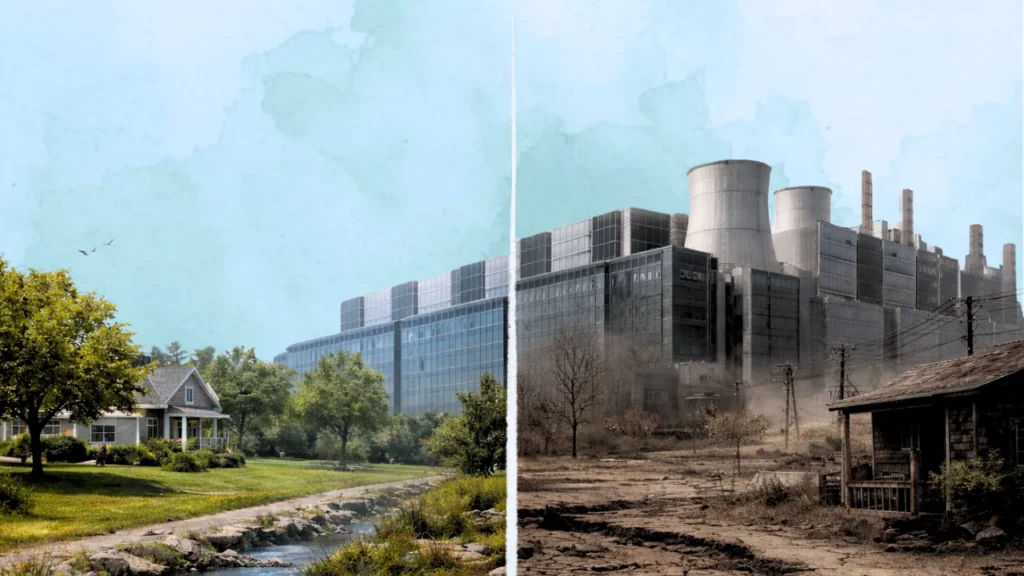
Artificial intelligence is no longer a distant aspiration; it is an actively accelerating force shaping industries and economies worldwide. Beneath the surface of every advanced AI model, automation tool, and enterprise AI platform lies a critical physical infrastructure: data centers. These facilities are expanding at an unprecedented pace, mirroring the exponential growth in AI’s daily utilization. As the world races to harness the power of AI, a fundamental question emerges: who will bear the significant and often hidden costs of powering this technological revolution?
The titans of the AI race – including tech giants like Microsoft, Google, Amazon, Meta, and OpenAI – are collectively investing tens of billions of dollars to bolster their data center capacity. These vast complexes are the indispensable backbone of the burgeoning AI economy, enabling the colossal computational power required for training and deploying sophisticated AI systems. However, their rapid and relentless expansion is sparking critical conversations about sustainability, resource allocation, and the long-term impact on local communities and the global workforce.
The Escalating Demand for Data Center Infrastructure
The foundational elements of artificial intelligence are undeniably physical. While AI itself may feel abstract, its underlying infrastructure is tangible and demanding. Data centers, the nerve centers of the digital age, require immense quantities of electricity to power their servers, cooling systems, and networking equipment. This energy consumption is so substantial that in certain regions, a single data center can demand as much electricity as a small city. For example, reports indicate that large-scale data centers can consume hundreds of megawatts of power, a figure comparable to the electricity needs of tens of thousands of homes.
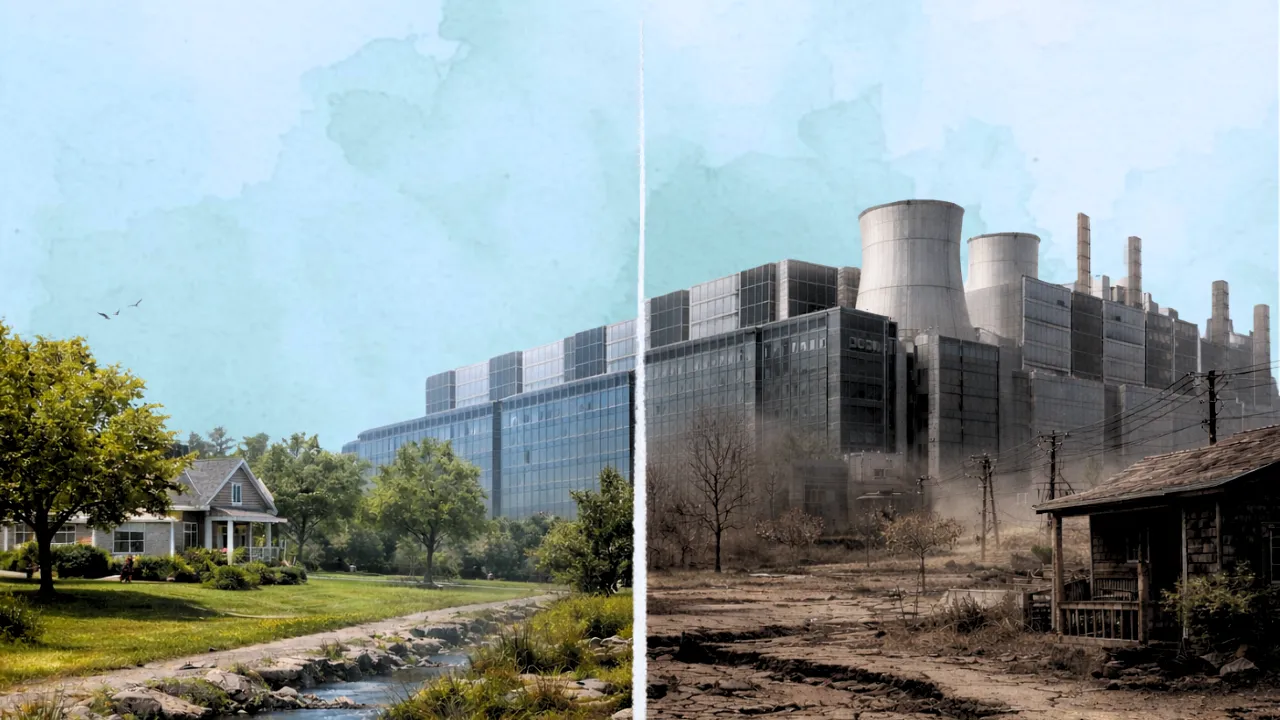
Beyond electricity, water is another critical resource for data center operations. Many modern data centers employ water-based cooling systems to manage the intense heat generated by their high-performance computing hardware. This reliance on water has become a particularly sensitive issue in drought-prone areas, such as the American Southwest. Despite water scarcity concerns, new data center facilities are frequently being established in these regions, often drawn by the availability of land and attractive tax incentives offered by local governments eager for economic development.
This juxtaposition of resource demands and economic incentives is creating significant friction. Local communities, while often presented with the promise of job creation, investment, and increased tax revenue, are increasingly grappling with the long-term environmental and social consequences. The immediate economic boost from construction can be substantial, but it often pales in comparison to the sustained demands placed on local resources and infrastructure.
The Paradox of Data Center Employment
The narrative surrounding data center development often highlights job creation. However, a closer examination reveals a more nuanced reality. While the construction phase of a major data center project can indeed employ thousands of workers, these are largely temporary positions. Once operational, a large data center typically requires a relatively small, highly specialized workforce, often numbering only a few dozen to a few hundred individuals. These roles demand advanced technical expertise in areas such as network engineering, systems administration, and cybersecurity, which may not align with the skill sets of the broader local workforce.
Simultaneously, the very AI systems that these data centers support are actively transforming the labor landscape across numerous industries. Roles in customer support, administrative tasks, entry-level data analysis, and content creation are increasingly being augmented or, in some cases, replaced by AI-powered tools and automation. This creates a significant disconnect: communities may host the energy-intensive and resource-demanding infrastructure, but the economic benefits are often distributed globally through the profits of tech corporations, while local labor markets may face disruption and displacement.

Environmental Strain and the "Data Heat Island" Effect
The environmental footprint of data centers extends beyond their energy and water consumption. A growing body of research indicates that these facilities can have a measurable impact on local climate conditions. A recent study, analyzing two decades of NASA satellite data, has highlighted the emergence of a "data heat island" effect. This phenomenon suggests that data centers can significantly raise ambient surface temperatures in their immediate vicinity. The study found that after a data center became operational, average surface temperatures in the surrounding areas rose by approximately 3.6 degrees Fahrenheit. In some instances, localized temperature spikes reached as high as 16.4 degrees Fahrenheit, with the thermal impact extending for distances of more than six miles.
In regions already contending with resource scarcity and the impacts of climate change, this added thermal burden can exacerbate existing environmental pressures. Increased energy demand from data centers can drive up utility costs for residents and businesses, while the intense competition for water resources can lead to heightened political and social tensions. The localized warming effect can also contribute to increased energy consumption for cooling in surrounding areas, creating a feedback loop of environmental strain.
A Temporary Boom, A Lasting Disruption: The Case of Richland Parish, Louisiana
The impacts of large-scale data center development are not merely theoretical; they are being experienced in communities across the globe. A prominent example is the construction of Meta’s $10 billion Hyperion data center in Richland Parish, Louisiana. This massive project brought a surge of thousands of temporary construction workers to the predominantly rural area, leading to an immediate and substantial increase in demand for housing, food, and local services.
Local businesses, including food trucks and small vendors, initially experienced a boom. However, this positive impact was often short-lived. Many local suppliers struggled to compete with large out-of-state contractors who brought in their own resources and workforce. Residents reported significant disruptions, including rapidly rising rental costs, strained road infrastructure due to increased traffic, and persistent nighttime noise and light pollution, fundamentally altering the character of the once-quiet community.

Upon completion of construction, the Hyperion data center is expected to employ only a few hundred highly specialized workers. This leaves the local infrastructure burdened by the temporary construction boom, while the majority of the long-term economic benefits are likely to accrue to the technology company and its shareholders, rather than the local population. This scenario exemplifies the growing concern that while communities bear the immediate costs of hosting these massive facilities, the ultimate economic gains are not equitably distributed.
The Evolving Future of Work and the Need for AI Infrastructure
Artificial intelligence is no longer confined to research labs; it is deeply embedded in the operational fabric of modern businesses. From enterprise resource planning and financial analysis to healthcare diagnostics, logistics optimization, and knowledge work, AI systems are driving efficiency and innovation. This widespread adoption is, in turn, fueling an insatiable demand for data center capacity, creating a powerful feedback loop between AI development and physical infrastructure expansion.
The future of work, as envisioned by many organizations, relies heavily on continuous computation, real-time data processing, and the ongoing training of complex AI models. All of these capabilities are fundamentally dependent on robust and scalable physical infrastructure. However, the current model of rapid, often centrally planned, data center development raises critical questions about sustainability and equitable distribution of benefits.
Rethinking the Trade-Offs: Towards a More Balanced Approach
The core challenge lies not in halting the inevitable expansion of AI, but in fundamentally rethinking how its necessary infrastructure is integrated into economic and community planning. The current paradigm, where companies prioritize speed and scale of deployment, often leaves communities to negotiate the terms and consequences after development is underway.

A more balanced and sustainable approach would necessitate several key shifts:
- Prioritizing Sustainable Infrastructure: Encouraging the development of data centers that utilize renewable energy sources, implement advanced water conservation techniques, and minimize their environmental footprint. This could involve incentives for adopting green building standards and investing in energy-efficient cooling technologies.
- Community-Centric Planning: Fostering genuine collaboration between technology companies and local communities from the outset of any data center project. This includes transparent impact assessments, open dialogues about resource needs, and robust community benefit agreements that address local concerns and ensure shared prosperity.
- Investing in Local Workforce Development: Implementing proactive programs to train and reskill local populations for the specialized jobs created by data centers and the broader AI economy. This requires foresight and investment from both the public and private sectors to ensure that communities can benefit from the technological advancements they host.
- Transparent Cost Allocation: Developing clear frameworks for understanding and distributing the true costs of AI infrastructure. This includes accounting for energy consumption, water usage, environmental impacts, and the social costs of workforce displacement.
Currently, the incentives are heavily skewed towards rapid deployment, with companies focused on securing competitive advantages through speed and scale. Communities, often lacking the leverage and foresight, are frequently left to react to the implications of these decisions, leading to a misalignment of priorities and outcomes.
The Unanswered Question of Value Distribution
AI is widely promoted as a productivity multiplier, and in many applications, it delivers on this promise. However, productivity gains are not created in a vacuum; they inherently involve the redistribution of value. If AI enables companies to achieve greater output with fewer human resources, and if the physical infrastructure supporting this AI expansion benefits primarily large corporations while offering limited employment opportunities to host communities, then a critical question emerges:
Where does the value generated by AI ultimately reside, and who is left to manage the resulting consequences?

For HR leaders and workforce strategists, this is not an abstract academic debate. It has profound implications for hiring strategies, the urgency and direction of reskilling initiatives, the geographical considerations for talent acquisition and retention, and the long-term sustainability of workforce planning.
A Critical Juncture for Decision-Makers
The expansion of AI infrastructure is outpacing the development of robust frameworks designed to manage its multifaceted impacts. Companies are navigating complex decisions regarding site selection, scaling strategies, and the optimal level of automation. Simultaneously, communities are contending with the tangible realities of strained resources, evolving economic landscapes, potential environmental degradation, and shifts in local labor demand.
The future of work will undoubtedly be shaped by artificial intelligence. However, whether this future will be one of broadly shared prosperity or one characterized by uneven distribution of benefits and burdens hinges on the decisions being made today. These critical decisions will ultimately determine who shoulders the most significant costs in making a future centered around AI a reality, and whether that reality is truly beneficial for all.