The United States labor market is projected to experience significant labor shortages over the next decade, a stark contrast to widespread fears of job displacement due to artificial intelligence (AI). New projections from the Bureau of Labor Statistics (BLS) for the period 2025-2035 indicate a future characterized by a growing demand for workers, an acceleration of AI adoption by businesses, and a fundamental shift in the nature of jobs and required skills. This evolving landscape necessitates a strategic reorientation for organizations, emphasizing the creation of what experts term "Dynamic Organizations," and presents an unexpectedly robust job market for HR professionals.
H2: The Shifting Sands of Workforce Growth
A cornerstone of the BLS projections is the significantly decelerated growth rate of the U.S. workforce. The upcoming decade anticipates a mere 3.5% expansion of the labor pool, a substantial decrease from the 10.9% growth observed in the preceding ten years. This slowdown is a critical factor contributing to anticipated labor shortages, even as AI-driven productivity gains are expected to fuel economic expansion.
The juxtaposition of these trends is striking: while the U.S. Gross Domestic Product (GDP) is forecasted to grow by a robust 22% over the next ten years, the workforce will only expand by 3.5%. This disparity implies an annual labor productivity growth rate of nearly 2%, compelling businesses across all sectors to expedite their AI transformation agendas. This heightened reliance on AI is not primarily for job elimination, but rather to augment existing roles and bridge the widening gap between economic output goals and available human capital.
H3: Underlying Causes of Workforce Stagnation
Several interconnected demographic and policy-driven factors are contributing to this slowdown in labor force growth. Firstly, a sustained period of anti-immigration policies has demonstrably constrained the influx of new workers. Reports from publications like The Economist have highlighted the significant economic ramifications of these restrictive measures, suggesting they will exacerbate existing workforce deficits.

Secondly, declining birth rates across the nation are reducing the pipeline of younger workers entering the labor market. This demographic shift, a trend observed in many developed economies, means fewer individuals are available to replace retiring workers.
Finally, an aging population is a significant contributor. The proportion of workers aged 65 and older is increasing at a disproportionately high rate. Projections indicate that this age group will constitute 8.5% of the workforce by 2035, a 21% increase and seven times the overall workforce growth rate. This demographic trend, coupled with a growing tendency for older workers to re-enter the workforce, as evidenced by nearly 10% of those over 65 "unretiring," points to a more experienced, albeit older, workforce. However, it also underscores the need for organizations to address age-based discrimination in hiring and compensation, a persistent issue highlighted by AARP studies, where a quarter of workers over 50 feel overlooked.
H2: The "Superworker" Phenomenon: AI as an Augmenter, Not an Eliminator
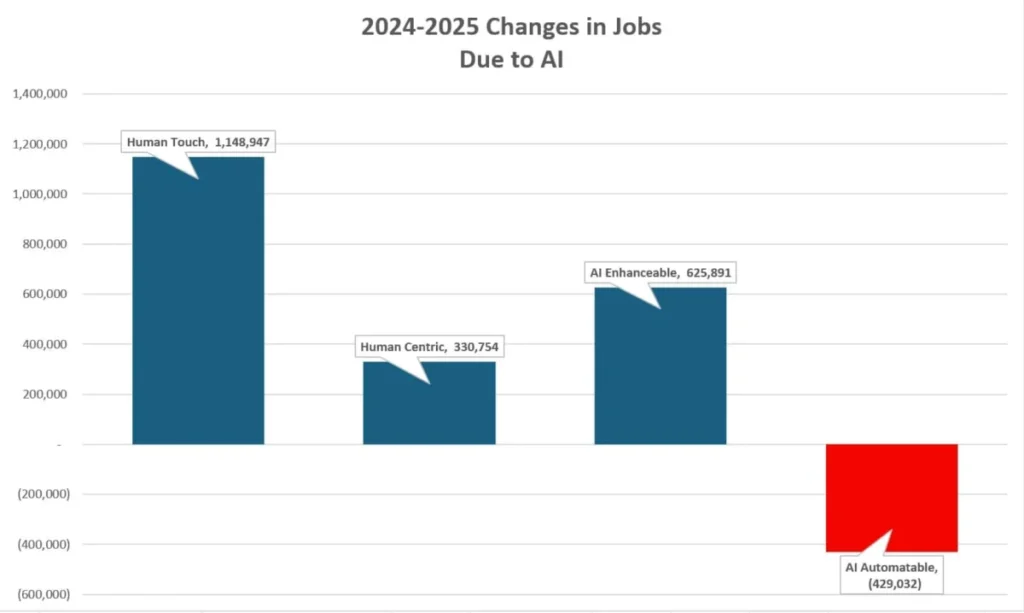
Contrary to prevailing anxieties, the BLS data and subsequent analysis suggest that AI is not on a path to wholesale job elimination. Instead, it is poised to create "Superworker" opportunities, transforming existing roles and enhancing human capabilities. The analysis categorizes the 830 job titles within the BLS taxonomy into four groups: Human Touch, Human-Centric, AI-Enhanced, and AI-Automated.
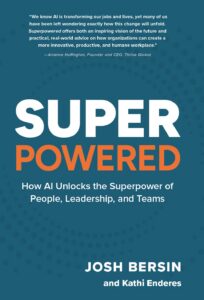
Currently, approximately 61% of U.S. jobs require physical interaction or human-centered skills, with healthcare being the largest segment. AI has the potential to fully automate around 13% of jobs. However, even within the 61% of human-touch and human-centric roles, AI can provide significant support through improved scheduling, training, and data analysis, effectively turning these into "Superworker" roles. The book "Superpowered," by author Josh Bersin, delves into this concept, arguing that AI’s primary impact will be to augment human potential rather than replace it.
H3: The Dynamics of Job Transformation
The BLS projections reveal a clear trend: AI is automating routine administrative tasks. Job titles experiencing the most rapid decline include cashiers, clerks, bookkeepers, secretaries, receiving clerks, retail managers, and tellers – collectively representing about 13% of current jobs. This trend is expected to accelerate, with similar impacts anticipated for certain human-touch roles as robotics mature.
Interestingly, some IT roles, such as computer support specialists, programmers (distinct from software developers), testers, and data entry personnel, are also being categorized as "administrative" and are projected to decline in number and wages. This indicates a shift in the IT landscape, with a greater emphasis on roles that involve complex problem-solving and innovation.
Conversely, high-touch and human-centric jobs are experiencing increasing demand. This includes skilled trades like electricians and plumbers, as well as professions in home health, counseling, and psychology. Emerging fields in energy and power production, aerospace, health sciences, and bio-engineering are also poised for significant growth.
H2: Sectoral Shifts and Evolving Skill Demands
The healthcare sector is identified as a major driver of labor market growth. Home health and personal care aides are projected to comprise 5.5 million workers, with an 18% growth rate. Registered nurses are expected to number 3.7 million, with this segment exhibiting the highest percentage wage growth. Nurse practitioner roles are predicted to surge by 41%, with average wages climbing from $132,000 to $181,000. Overall, healthcare employment is anticipated to expand from 13.3% to 14% of total U.S. employment.
Management, sales, and teaching positions are projected to remain relatively stable, defying some predictions of widespread managerial displacement. The BLS, in agreement with analyses like Bersin’s, anticipates growth in management roles, citing the need for "Supermanagers" to guide and support augmented workforces. While lower-end retail sales may see a decline, high-value sales roles are expected to grow. Teaching positions are also forecast to remain steady, driven by the imperative for continuous reskilling and adaptation to new learning paradigms.
H3: The Wage Premium for "Superworkers"
The economic impact of AI augmentation is manifesting in wage premiums for roles that effectively leverage these technologies. Software engineers who are AI-powered are transitioning from "programmers" to "product leaders" and "problem solvers," commanding higher compensation. Similarly, HR business partners utilizing AI tools to automate data retrieval and policy lookups are evolving into strategic consultants and advisors. These "Superworker" job families are experiencing wage growth at twice the rate of inflation, signaling a clear financial incentive for embracing technological integration.

H2: The Imperative for Dynamic Organizations and Strategic HR
The confluence of AI advancements, demographic shifts, and evolving job market demands necessitates a fundamental organizational shift. Experts advocate for the creation of "Dynamic Organizations," characterized by agility, adaptability, and a proactive approach to workforce development. This requires CEOs and CHROs to spearhead productivity agendas that prioritize not just technological adoption, but also the growth, skill development, retention, and engagement of their human capital.
The job market for HR professionals is consequently becoming "hotter than ever." Their role is evolving from administrative oversight to strategic partnership, focusing on talent acquisition in a competitive landscape, robust training and upskilling programs, and fostering an environment that supports the "Superworker" phenomenon. The challenge lies in managing a workforce that is both aging and increasingly augmented by technology, requiring nuanced approaches to generational diversity and lifelong learning.
H3: Broader Economic Implications and Future Outlook
The projected worker shortages could have a tangible impact on the broader U.S. economy, potentially slowing growth or creating inflationary pressures as companies compete for limited talent. Industries such as healthcare, manufacturing, logistics, retail, entertainment, hospitality, and transportation are expected to face ongoing hiring challenges. The shift away from routine jobs towards those requiring higher cognitive and emotional intelligence will redefine the skills landscape.
The BLS data, analyzed through tools like Galileo, provides a granular view of these occupational forecasts. The overarching narrative is one of transformation rather than elimination. The future of work, as depicted by the 2025-2035 projections, is one where human ingenuity, amplified by AI, will be the key to navigating a landscape of increasing demand and evolving expectations. Companies that proactively embrace this transformation, by investing in their workforce and fostering adaptable organizational structures, will be best positioned to thrive in the coming decade. The era of widespread AI-driven job losses appears to be a mischaracterization; the reality is a complex evolution towards a more augmented and potentially more fulfilling, albeit challenging, future of work.