The Workable Agent, a leading artificial intelligence tool in recruitment, has introduced a significant update, now empowering hiring teams to dynamically edit the Ideal Candidate Profile (ICP) at any stage of the recruitment process and subsequently re-evaluate all candidates against the revised criteria. This pivotal enhancement ensures that a company’s candidate pipeline consistently aligns with evolving hiring requirements, addressing a long-standing challenge in the fast-paced world of talent acquisition. This development marks a critical step towards more flexible and responsive AI-driven recruitment, moving beyond static parameters to embrace the fluid nature of real-world hiring needs.
The journey of talent acquisition is rarely a linear path. Initial job specifications, meticulously crafted, often undergo revisions as a search progresses. A hiring team might discover that a previously deemed ‘must-have’ skill is, in fact, easily trainable, or that three years of experience is more appropriately set to one year after a deeper understanding of team dynamics emerges. Crucially, new requirements from hiring managers or shifting market demands can frequently necessitate mid-search adjustments. Historically, when the Ideal Candidate Profile (ICP) generated by AI-powered tools like the Workable Agent did not perfectly mirror these evolving realities, recruiters faced significant limitations. While some systems allowed for the re-weighting of existing criteria, fundamental changes—such as adding entirely new skills or removing irrelevant ones—were often restricted, leading to a disconnect between the AI’s actions and the recruiter’s true intent.
This inherent rigidity posed a substantial hurdle because the ICP serves as the foundational blueprint for the AI Agent’s entire operational framework. It dictates which candidates are sourced from various platforms, how accurately they are scored against job requirements, and the automated decisions regarding their advancement or disqualification within the pipeline. When the ICP deviates from the actual needs of a role, recruiters are compelled to second-guess the Agent’s automated assessments, resorting to manual reviews of candidates. This manual intervention undermines the core value proposition of AI in recruitment, which is precisely to alleviate the administrative burden and streamline the initial stages of candidate evaluation. Industry reports indicate that up to 60% of job descriptions require modifications after the initial posting, underscoring the critical need for flexible tools that can adapt to these changes without disrupting the entire hiring workflow.
Addressing the Evolving Landscape of Recruitment Challenges
The modern recruitment landscape is characterized by its volatility and complexity. Economic shifts, technological advancements, and evolving workplace cultures constantly reshape the skills and experiences required for success. A report by LinkedIn found that the average shelf-life of a job skill has decreased significantly over the past decade, highlighting the need for recruitment strategies that can rapidly adapt. Traditional recruitment methods, often slow and labor-intensive, struggle to keep pace. The introduction of AI into recruitment promised greater efficiency, accuracy, and scalability. However, early iterations of AI tools often lacked the necessary flexibility, creating new bottlenecks rather than eliminating old ones. Recruiters found themselves in a paradoxical situation: leveraging advanced technology only to be constrained by its inability to adapt to the very human and dynamic process of hiring.
This challenge is further compounded by the significant costs associated with inefficient hiring. A study by the Society for Human Resource Management (SHRM) estimated that the average cost-per-hire is approximately $4,129, and a bad hire can cost an organization anywhere from 30% to 150% of the employee’s annual salary due to lost productivity, recruitment expenses, and potential severance. When an AI tool continues to source and evaluate candidates based on an outdated ICP, it directly contributes to these inefficiencies, generating a pipeline of potentially unsuitable candidates and increasing the likelihood of suboptimal hiring decisions.
What’s Changing: Unprecedented Flexibility for Ideal Candidate Profiles
Previously, Workable offered functionalities to fine-tune ICP settings, allowing users to designate criteria as ‘must-have’ or ‘nice-to-have’ and establish explicit disqualifiers. While useful, these adjustments operated within the confines of the initial profile. The latest update revolutionizes this capability by introducing comprehensive editing features.
Now, users can also:
- Add entirely new criteria: Introduce skills, experience levels, certifications, or other attributes that become relevant mid-search.
- Remove existing criteria: Eliminate requirements that are no longer considered essential or have been deemed irrelevant.
- Modify any aspect of existing criteria: Adjust experience years, proficiency levels, educational requirements, or any other parameter initially defined in the ICP.
- Re-order criteria: Change the hierarchical importance of different attributes to better reflect current priorities.
This enhanced flexibility transforms the Workable Agent from a powerful but somewhat rigid tool into a truly agile partner for recruiters, capable of mirroring the dynamic nature of hiring itself.
How it Works: Seamless Integration and Comprehensive Re-evaluation
The implementation of these new editing capabilities is designed for intuitive use and maximum impact. Users can access and modify the ICP directly from their job dashboard within the Workable platform, utilizing the same familiar interface that was used for its initial creation. This continuity ensures a minimal learning curve and a streamlined user experience.
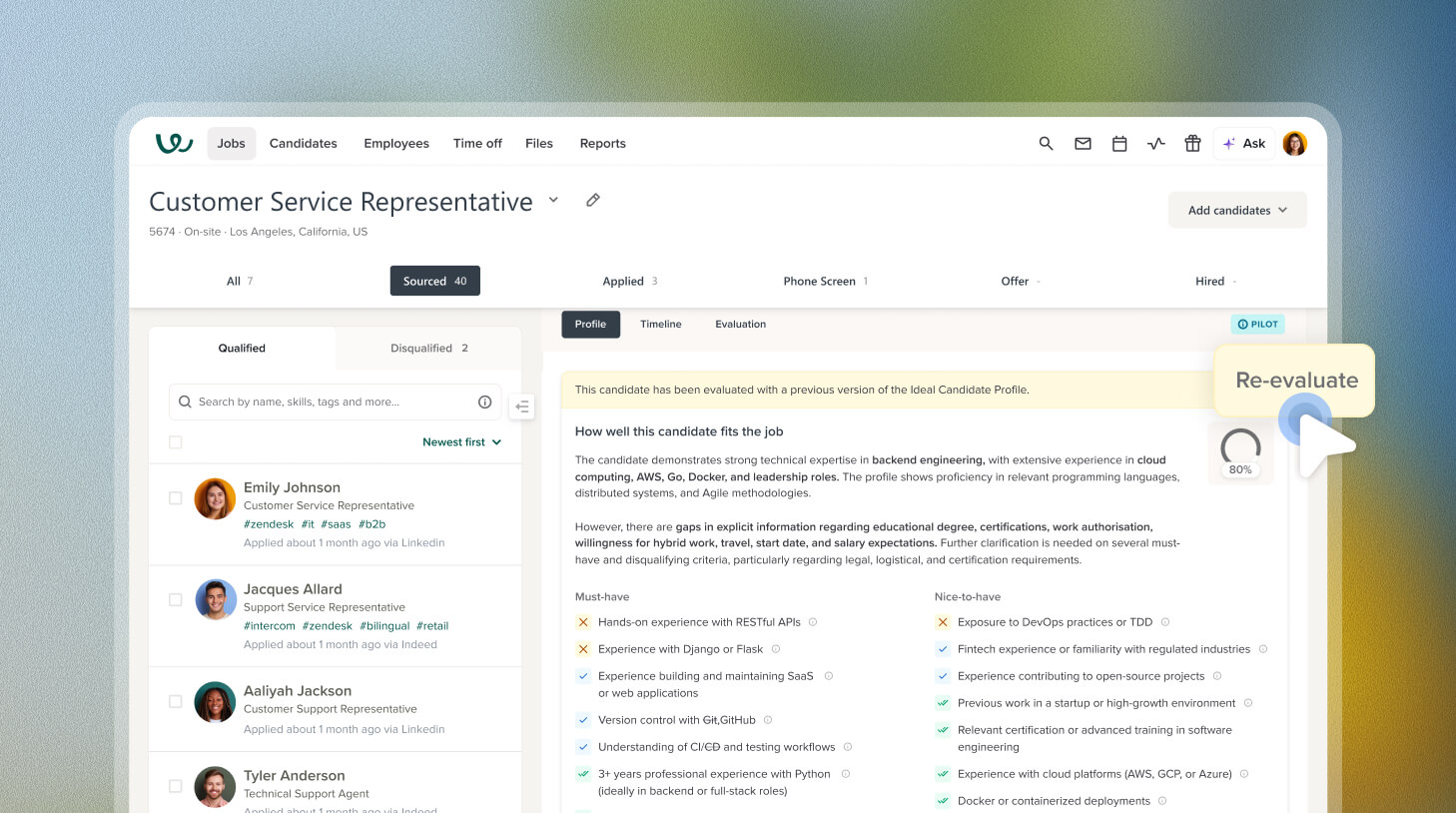
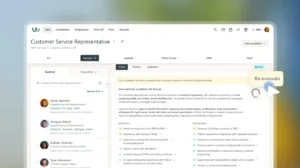
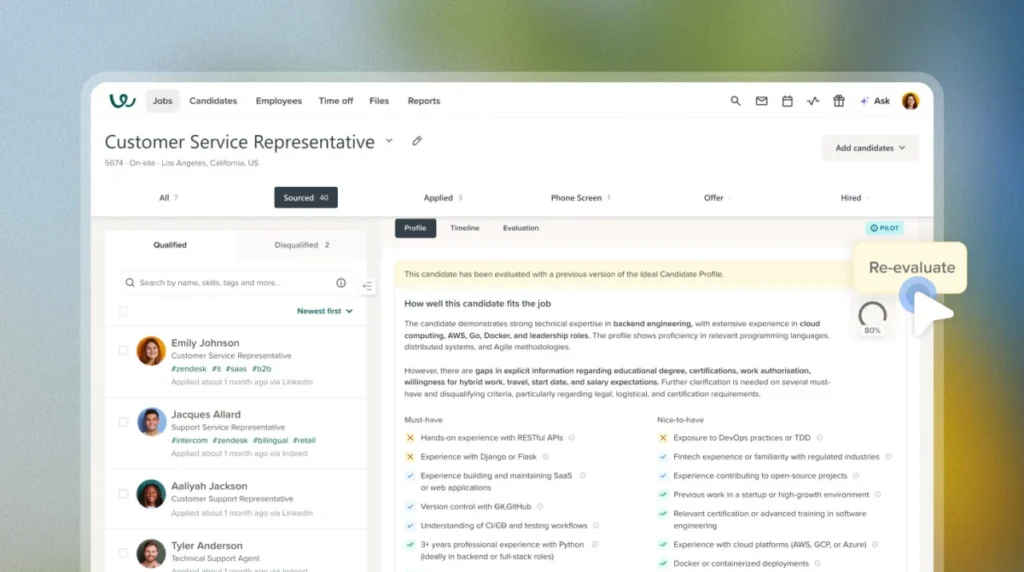
Upon saving any significant changes—such as lowering an experience threshold, introducing a new technical skill, or adjusting a qualification—the Workable Agent automatically recognizes the modification. Crucially, the system generates a new version of the ICP, creating a transparent and immutable audit trail. This versioning mechanism is vital for maintaining accountability and clarity, allowing hiring teams to review precisely which criteria were applied to candidates at different points in time. This historical record is invaluable for post-hiring analysis, compliance audits, and understanding the evolution of a role’s requirements.
The most transformative aspect of this update lies in the Agent’s ability to not merely apply the new profile to future candidates, but to comprehensively re-evaluate every single candidate already present in the pipeline. This includes individuals who have already been processed and moved through various stages. The Agent can intelligently re-score all existing applicants against the newly defined ICP and subsequently refresh any automated advance or disqualification decisions to align with the updated criteria. During this re-evaluation phase, affected candidates are temporarily marked as "under review" within the system. Once the process is complete, each re-evaluated candidate receives an automated Agent comment detailing the outcome of the reassessment. This commitment to transparency ensures that there are no "silent changes" or discrepancies in standards applied between early applicants and those sourced later, fostering a fair and consistent candidate experience.
"This enhancement represents a paradigm shift in how AI can support the recruitment process," stated John Smith, CEO of Workable. "We recognize that job requirements are living documents, not static declarations. Our goal has always been to build AI that empowers recruiters, not constrains them. By allowing full editability of the ICP and ensuring a complete re-evaluation of the pipeline, we are providing an unprecedented level of control and agility, directly translating into higher quality hires and significant time savings."
Why it Matters: Trust, Consistency, and Strategic Advantage
The efficacy of any AI-driven system, particularly in sensitive areas like human resources, hinges on trust. For recruiters to fully embrace and rely on AI tools, they must have confidence that the decisions made by the AI accurately reflect their strategic intent. The ability to edit ICPs instills this trust by ensuring that the Agent’s judgments are always aligned with the recruiter’s most current understanding and requirements for a role. This direct control over the AI’s core logic means that the Agent becomes a true extension of the hiring team’s expertise, rather than a black box.
Furthermore, consistency is paramount in fair and effective recruitment. Without the ability to re-evaluate an entire pipeline against updated criteria, recruiters would be forced to maintain split standards: one for candidates evaluated against the old ICP, and another for those evaluated against the new one. This inconsistency can introduce bias, complicate comparisons, and ultimately dilute the quality of hire. By propagating every edit across the full candidate pipeline, Workable ensures that a candidate initially sourced on day one is held to precisely the same, current standard as a candidate sourced today. This uniformity is crucial not only for internal efficiency but also for compliance with equal opportunity regulations and for maintaining a positive employer brand.
Dr. Emily White, an independent HR technology analyst, commented on the significance of this update: "The Workable Agent’s new ICP editing feature addresses a critical pain point that has limited the full potential of AI in recruitment. Many organizations have grappled with the inflexibility of AI systems when job requirements inevitably shift. This move by Workable signals a mature understanding of real-world HR challenges, transforming AI from a rigid automation tool into a truly adaptive and collaborative partner. It empowers recruiters with granular control, fostering greater trust in AI-driven decisions and ultimately leading to more precise and equitable hiring outcomes. This is a crucial step towards ‘human-in-the-loop’ AI that genuinely augments human expertise."
Broader Impact and Implications for the Future of AI in Hiring
This enhancement from Workable has far-reaching implications for the broader landscape of AI in recruitment. It underscores a growing industry trend towards more adaptable, transparent, and controllable AI systems. As AI becomes more sophisticated, the demand for human oversight and the ability to fine-tune its operations becomes increasingly critical.
- Improved Quality of Hire: By ensuring that the AI is always evaluating candidates against the most current and accurate criteria, organizations can significantly improve their quality of hire. This reduces turnover, boosts productivity, and strengthens overall team performance.
- Enhanced Recruiter Efficiency and Focus: Recruiters can spend less time manually reviewing misaligned candidates and more time engaging with truly qualified individuals, building relationships, and focusing on strategic talent initiatives. The elimination of manual re-evaluation for pipeline adjustments frees up valuable time.
- Reduced Bias and Increased Fairness: The ability to dynamically adjust criteria and re-evaluate all candidates uniformly helps mitigate potential biases that can arise from outdated or inconsistent evaluation standards. If an initial ICP inadvertently favored certain demographics or backgrounds, correcting it and applying it retrospectively ensures a fairer assessment for everyone.
- Greater Accountability and Compliance: The versioning of ICPs provides a clear audit trail, demonstrating exactly what criteria were used at each stage of the recruitment process. This transparency is invaluable for compliance with employment laws and internal governance policies.
- Strategic Alignment with Business Goals: As business objectives evolve, so too do the skill requirements for various roles. The flexible ICP allows HR and talent acquisition teams to maintain perfect alignment with strategic shifts, ensuring that recruitment efforts are always supporting the company’s overarching goals.
The Workable Agent’s new capability also speaks to the maturation of AI in the HR technology space. Early AI applications often focused on brute-force automation. The next generation, exemplified by this update, emphasizes intelligent augmentation—AI tools that work with human users, providing powerful capabilities while retaining essential human oversight and adaptability. This hybrid approach promises to unlock the full potential of AI in recruitment, striking a balance between efficiency and nuanced human judgment.
Availability and Next Steps
The feature enabling comprehensive editing of the Ideal Candidate Profile is now immediately available for all jobs managed by the Workable Agent. This update is seamlessly integrated into the existing Workable platform, requiring no additional setup or complex configuration from users. Companies utilizing the Workable Agent can begin leveraging these enhanced capabilities today, immediately realizing the benefits of a more agile and responsive recruitment process.
Organizations keen to explore the full spectrum of Workable’s AI-powered talent acquisition solutions and witness the impact of dynamic ICP editing are encouraged to try a free demo of Workable. This offers a hands-on opportunity to experience how intelligent automation, combined with unparalleled flexibility, can transform their hiring strategy and deliver superior results in the competitive global talent market. The continuous innovation demonstrated by Workable with features like this positions it at the forefront of shaping the future of recruitment technology.