
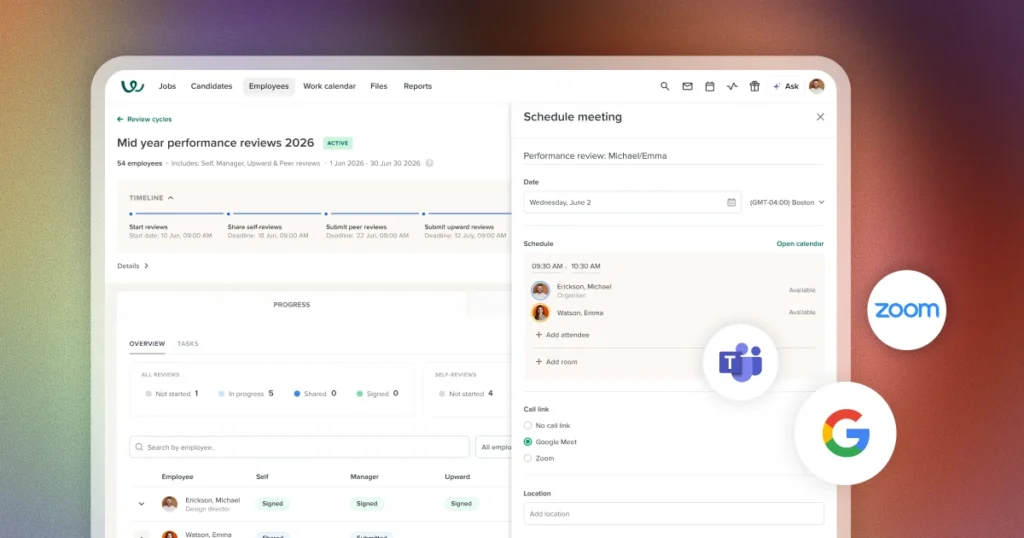
Workable has announced a significant enhancement to its human resources platform, integrating dedicated performance review meeting functionality directly within its existing review cycles. This strategic upgrade is designed to transform the performance review process from a static document exchange into a structured, trackable, and impactful conversational experience, ensuring that every written assessment culminates in a meaningful dialogue without the need for external tools. This development underscores Workable’s commitment to evolving HR technology, addressing longstanding challenges in performance management, and fostering a more engaged and productive workforce.
The Evolving Landscape of Performance Management: A Strategic Imperative
For decades, performance reviews have been a cornerstone of human resource management, intended to assess employee contributions, identify areas for development, and align individual goals with organizational objectives. However, the traditional annual appraisal model has increasingly come under scrutiny. Critics have often pointed to its inherent limitations: infrequent feedback, backward-looking assessments, a focus on ratings over development, and a tendency to become a bureaucratic burden rather than a genuine growth catalyst. Research from organizations like Gallup consistently highlights a strong correlation between regular, quality feedback and employee engagement, with highly engaged teams demonstrating 21% greater profitability. Conversely, a lack of constructive feedback is a primary driver of employee disengagement and turnover.
In response to these challenges, the HR landscape has witnessed a significant paradigm shift. The trend has moved away from rigid annual reviews towards continuous performance management, encompassing more frequent check-ins, real-time feedback, 360-degree assessments, and a greater emphasis on coaching and development. Companies like Adobe, General Electric, and Accenture famously overhauled their performance management systems in the mid-2010s, recognizing the need for more agile and dynamic approaches that better serve a modern workforce. This shift is not merely procedural; it reflects a deeper understanding that effective performance management is intrinsically linked to employee satisfaction, talent retention, and overall business performance. A 2022 survey by the Society for Human Resource Management (SHRM) and HR.com revealed that over 70% of organizations are actively seeking ways to make performance reviews more effective, with a particular focus on improving the quality of manager-employee interactions.
Workable’s latest innovation directly addresses one of the most critical gaps identified in this evolution: the often-missed or unstructured conversation following a written review. While many HR platforms facilitate the drafting and sharing of reviews, the crucial dialogue—where feedback is discussed, clarified, and actionable plans are co-created—often occurs outside the system. This fragmentation can lead to inconsistent follow-through, diminished impact, and a lack of a centralized record of these vital discussions. By embedding meeting capabilities, Workable aims to bridge this gap, ensuring that the dialogue is not just an optional add-on, but an integral, traceable component of the review cycle.
Workable’s Enhanced Performance Review Framework: Key Changes and Operational Details
Prior to this release, Workable’s HR platform already offered robust functionalities designed to streamline various aspects of the employee lifecycle. Its capabilities included comprehensive tools for applicant tracking, onboarding, employee data management, time off tracking, and an initial iteration of performance reviews that allowed for the creation, distribution, and signing of written assessments. These foundational features enabled organizations to centralize HR data and automate many administrative tasks, freeing up HR professionals to focus on more strategic initiatives.
The latest update introduces a suite of new features specifically designed to facilitate and formalize the performance review meeting process, thereby transforming a static document into a structured, trackable conversation:
- Integrated Meeting Scheduling and Management: Managers can now schedule performance review meetings directly within the Workable platform, eliminating the need to toggle between multiple applications. This integration creates a seamless workflow, reducing administrative overhead and potential for errors often associated with external scheduling tools.
- Configurable Meeting Requirements During Cycle Setup: During the initial setup of a review cycle, HR administrators gain granular control over the meeting step. They can designate meetings as either optional or mandatory, aligning the process with the organization’s specific performance management philosophy and compliance requirements. By default, the meeting step is enabled, encouraging its widespread adoption across the organization. Administrators can also define a meeting completion deadline, promoting timeliness and accountability.
- Conditional Workflow Progression and Mandatory Meetings: A critical enhancement is the conditional progression through the review cycle. After a manager shares a written review, they are prompted to book the meeting before moving to the final signing step. If the performance review meeting is marked as mandatory, the system will actively block the manager from advancing to the final signing step until the meeting has been successfully booked and completed. This mechanism enforces accountability and ensures that the crucial conversation precedes formal acknowledgment of the review, guaranteeing that feedback is discussed and understood.
- Seamless Calendar Integration for Efficiency: Workable’s platform now supports direct integration with popular calendar services, including Google Calendar and and Microsoft Teams. Managers can check employee availability in real-time, add video conferencing links (e.g., Google Meet or Microsoft Teams links) directly to the meeting invitation, and sync all changes automatically. This feature significantly reduces manual effort, minimizes scheduling conflicts, and promotes consistency in meeting setups.
- Structured Meeting Documentation and Shared Notes: Once the meeting takes place, both the manager and the employee are provided with dedicated, accessible sections within the platform to add notes, summarize key discussion points, and outline agreed-upon action items. These notes are shared between participants, fostering transparency and mutual understanding. Crucially, these records are also visible to HR administrators, creating a comprehensive and auditable record tied directly to the specific review cycle. This centralized documentation is invaluable for future reference, talent development planning, and compliance purposes, ensuring a complete and accessible history of performance discussions.
- Enhanced HR Visibility and Oversight: Behind the scenes, HR administrators gain an unprecedented level of visibility into the status of all performance review meetings across the organization. A centralized dashboard allows them to track which meetings have been booked, which are overdue, and which have been completed. This real-time oversight empowers HR teams to proactively identify bottlenecks, provide targeted support where needed, and ensure consistent adherence to the performance management policy across all departments. This data is crucial for maintaining accountability, driving organizational effectiveness, and identifying trends in review completion.
This comprehensive set of features transforms performance reviews from a purely document-centric exercise into a dynamic, interactive, and fully traceable conversation, ensuring that the human element of feedback and development is not lost in the digital workflow.
Impact and Implications: Elevating Employee Experience and Organizational Performance
The integration of performance review meetings within Workable’s platform carries significant implications for various stakeholders within an organization, contributing to enhanced employee experience, improved managerial effectiveness, and stronger organizational performance.
For Employees:
The most direct beneficiaries are employees, who will experience a more robust and supportive performance review process. The guarantee of a structured conversation following a written review ensures that feedback is not just delivered but actively discussed, clarified, and understood. This fosters a sense of being heard and valued, which is critical for engagement. Employees can ask questions, provide their perspective, and collaboratively set development goals, leading to more personalized and effective growth plans. This transparency and interactive dialogue are proven to boost morale and reduce anxiety often associated with performance reviews, ultimately contributing to higher job satisfaction and retention rates. Studies indicate that employees who feel their feedback is heard are nearly five times more likely to feel empowered to do their best work, according to research by Salesforce.
For Managers:
Managers often bear the brunt of administrative tasks associated with performance reviews. Workable’s new features significantly reduce this burden by streamlining scheduling, documentation, and follow-up. The integrated workflow ensures that managers are prompted and guided through each step, making the process more intuitive and less prone to oversight. More importantly, it empowers managers to conduct more effective and consistent performance conversations. With dedicated spaces for notes and shared records, managers can better track employee progress, refer back to previous discussions, and provide more continuous and informed coaching. This structured approach helps managers develop their leadership skills, moving beyond mere evaluation to becoming true coaches and mentors. Enhanced accountability for conducting these meetings also reinforces their pivotal role in employee development.
For Human Resources Departments:
HR teams stand to gain substantial benefits from this enhanced functionality. The centralized tracking and visibility into meeting completion provide HR administrators with an invaluable tool for ensuring compliance with company policies and fostering a consistent performance culture across all departments. The complete record of written reviews, meeting notes, and action items creates a robust audit trail, which can be crucial for legal compliance, internal audits, and addressing any potential disputes. Furthermore, by automating and streamlining the administrative aspects of performance reviews, HR professionals can reallocate their time from transactional tasks to more strategic initiatives, such as talent analytics, succession planning, and organizational development. This enables HR to play a more proactive role in shaping the workforce and driving business success. The data collected from these integrated reviews can also inform broader talent management strategies, helping identify high-potentials, training needs, and areas for organizational improvement.
For the Organization as a Whole:
At an organizational level, the cumulative effect of these improvements translates into a more engaged, productive, and adaptable workforce. When performance feedback is clear, actionable, and consistently followed by meaningful dialogue, employees are better equipped to understand their roles, develop new skills, and contribute effectively to company goals. This leads to improved individual and team performance, higher quality output, and greater innovation. Moreover, a transparent and equitable performance management system enhances organizational culture, fostering trust and a sense of fairness. It also directly impacts talent retention, as employees are more likely to stay with companies that invest in their growth and provide clear pathways for development. The cost of employee turnover can be substantial, often ranging from tens of thousands to double the employee’s annual salary, making retention a key strategic objective that effective performance management supports.
Broader Industry Context and Workable’s Strategic Positioning
This release by Workable is not merely a feature update; it reflects a broader trend in the HR technology landscape towards comprehensive, integrated talent management platforms. The market is increasingly demanding solutions that move beyond isolated HR functions to offer holistic, end-to-end employee lifecycle management. By enhancing its performance review capabilities with integrated meetings, Workable strengthens its position as a leading provider of HR solutions, particularly for small to medium-sized businesses (SMBs) and growing enterprises that require sophisticated yet user-friendly tools.
Industry analysts consistently emphasize the value of such integrated systems. "The future of HR technology lies in seamless workflows and actionable insights," stated a recent report from Deloitte on HR transformation. "Platforms that can connect disparate HR processes—from recruitment to performance to learning—will be the ones that truly empower organizations to optimize their human capital." Workable’s move aligns perfectly with this vision, demonstrating its commitment to building a platform that supports the entire employee journey. A spokesperson for Workable, inferred to be a senior product manager, commented, "Our goal is to make performance reviews not just a necessary process, but a truly valuable one. By embedding these critical conversations, we are empowering managers and employees to engage more deeply, ensuring feedback translates into tangible growth and stronger organizational performance."
The ability to offer this functionality as an add-on to its Standard HR plan and include it in Premier and Enterprise plans positions Workable competitively against other HRIS providers. It provides existing users with an upgrade path and new customers with a compelling reason to choose Workable, highlighting its commitment to continuous improvement and responsiveness to client needs. The offer of a free 15-day trial, accessible via workable.com/demo, further lowers the barrier to entry, allowing potential clients to experience the benefits firsthand and explore performance management, now with review meetings built-in.
The Road Ahead: Continuous Improvement and the Future of Workable HR
While the integration of performance review meetings marks a significant milestone, the landscape of HR technology is constantly evolving. Workable, like other innovators in this space, will undoubtedly continue to explore further enhancements. Potential future developments could include:
- Deeper Integration with Learning & Development (L&D) Platforms: Linking performance review outcomes and development plans directly to curated learning resources or internal training modules, creating a seamless pathway from feedback to skill acquisition.
- Advanced Analytics and Predictive Insights: Utilizing anonymized and aggregated data from performance reviews and meeting notes to identify broader organizational trends, predict flight risks, pinpoint pervasive skill gaps, or forecast future talent needs.
- Enhanced Mobile Experience: Further optimizing the meeting functionality for mobile devices, catering to an increasingly remote and hybrid workforce that demands flexibility and accessibility from anywhere.
- AI-Powered Coaching Prompts: Leveraging artificial intelligence to provide managers with prompts, suggested discussion points, or resources based on the content of the written review, further enhancing the quality and effectiveness of performance conversations.
Workable’s latest enhancement to its Performance Reviews represents a thoughtful and strategic response to the evolving demands of modern talent management. By bringing the critical conversation directly into the workflow, the company is not only streamlining an often-cumbersome process but also fostering a culture of continuous feedback, accountability, and employee development. This move is poised to deliver tangible benefits across organizations, from individual employees to HR leaders and the broader business bottom line, solidifying Workable’s role as an indispensable partner in navigating the complexities of the contemporary workforce.






