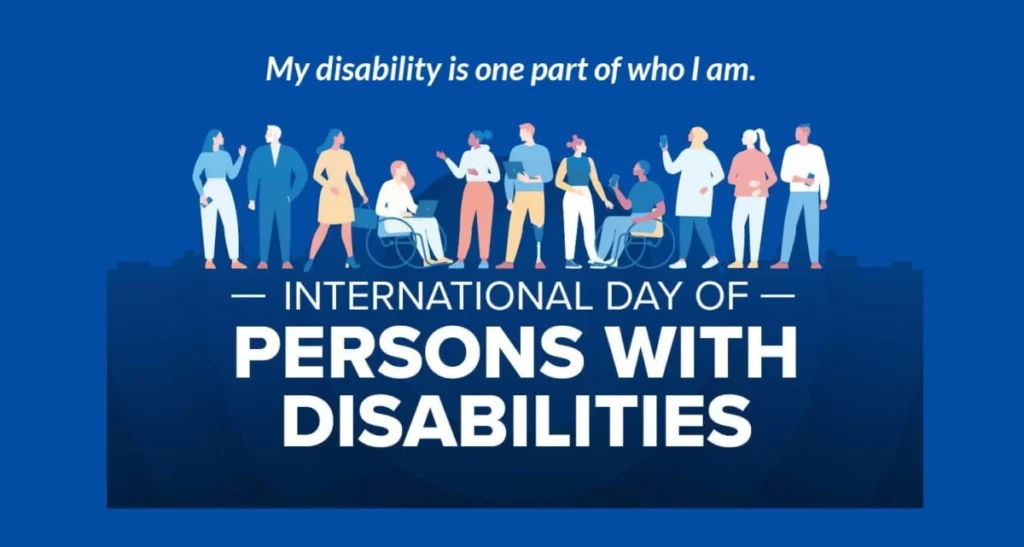
The International Day of Persons with Disabilities, observed annually on December 3rd, serves as a crucial global platform to foster understanding, advocate for the rights of persons with disabilities, and promote their full and equal participation in society. This year, as we mark this significant observance, a closer examination of the multifaceted realities faced by millions reveals not only the challenges but also the immense untapped potential within this demographic, particularly within the global workforce. As professionals, especially those nearing later stages of their careers, gain a deeper appreciation for the inherent diversity of human abilities, recognizing and accommodating disabilities becomes an imperative for inclusive and prosperous societies.
The Scale of the Disability Population and Employment Disparities
The population of individuals with disabilities is substantial and often underestimated. Data from sources such as the U.S. Department of Labor and Census Bureau indicates that between 11% and 13% of the working-age population in the United States experiences some form of disability. However, the stark reality is that only 5% to 6% of this population is actively employed. This significant gap highlights a profound underemployment crisis, with individuals with disabilities being approximately one-third as likely to hold a job compared to their non-disabled peers. This disparity represents a considerable loss of economic potential, not only for the individuals themselves but for the broader economy.
The implications of this employment gap extend beyond individual financial well-being. It signifies a wealth of talent, skills, and perspectives that are not being leveraged. The economic output lost due to this underemployment is a significant concern for policymakers and business leaders alike.
Economic Disparities: Wage Gaps and Global Trends
The economic challenges faced by persons with disabilities are further underscored by persistent wage disparities. Research conducted by the International Labour Organization (ILO) and the World Health Organization (WHO) reveals that disabled workers, on average, earn a 15% lower wage. This disparity is not uniform across all economic contexts. In developed countries, the wage gap for disabled workers, when adjusted for work output and productivity, stands at approximately 12%. In less developed countries, this gap widens significantly, reaching up to 26%.
These organizations posit that these wage differentials are largely attributable to a combination of factors, including overt and subtle discrimination, as well as the limited availability of suitable employment opportunities for individuals with disabilities. This creates a cycle of economic disadvantage that requires concerted efforts to break.
Understanding the Diverse Landscape of Disabilities
The term "disability" encompasses a broad spectrum of conditions, affecting individuals in myriad ways. These can be broadly categorized, with varying prevalence rates among the working-age population:
- Cognitive Disabilities: Affecting approximately 5.3% of the working-age population, equating to an estimated 10.7 million individuals in the U.S. These disabilities can impact learning, memory, problem-solving, and social interaction. For this group, the implementation of neuro-inclusive design principles and the strategic use of AI screening tools are becoming increasingly vital. Companies like Microsoft and SAP are pioneering dedicated hiring programs that leverage technology to create more equitable assessment processes, recognizing the unique strengths of neurodivergent individuals.
- Ambulatory Disabilities: These affect mobility and physical movement, impacting an estimated 4.3% of the working-age population, or approximately 8.6 million individuals in the U.S. For individuals with ambulatory disabilities, the critical need lies in ensuring physical accessibility in workplaces and offering robust remote work options. Despite ongoing efforts by organizations like Newsweek and SHRM to evaluate and rate companies on their accessibility, challenges related to commuting and on-site navigation persist.
- Disabilities Affecting Independent Living: Encompassing conditions that impact an individual’s ability to perform daily living activities, these affect roughly 3.9% of the working-age population, or an estimated 7.9 million individuals in the U.S. These individuals often require flexible scheduling and access to support services to thrive in the workplace.
- Hearing Disabilities: Affecting an estimated 2.0% of the working-age population, or approximately 4.1 million individuals in the U.S., these can range from partial to profound hearing loss. For this group, digital accessibility, including closed captioning and visual safety protocols, are essential.
- Vision Disabilities: Impacting an estimated 2.1% of the working-age population, or approximately 4.3 million individuals in the U.S., these can include low vision to total blindness. Reliance on assistive technologies such as screen readers and adherence to Web Content Accessibility Guidelines (WCAG) 2.2 are crucial for their full engagement.
It is crucial to recognize that many disabilities are not immediately visible. Conditions such as anxiety, Obsessive-Compulsive Disorder (OCD), dyslexia, autism, Attention-Deficit/Hyperactivity Disorder (ADHD), and various other mental or neurological conditions can present subtle challenges. These individuals may encounter difficulties in environments with open floor plans, high noise levels, or unwritten social codes, contributing to higher unemployment rates, sometimes ranging from 30% to 40% higher than their non-disabled counterparts.
The Dual Role of Artificial Intelligence
The advent of Artificial Intelligence (AI) presents a complex, dual-edged sword in the context of disability inclusion. On one hand, AI-powered tools used in recruitment, such as resume screening and assessment platforms, must be meticulously adjusted to avoid inherent biases that could disadvantage candidates with disabilities. Algorithms trained on non-representative data can inadvertently perpetuate existing inequalities.
Conversely, AI offers revolutionary assistive technologies. Tools like Microsoft Copilot can significantly enhance productivity for individuals with various needs. Similarly, advancements in automatic captioning, note-taking, and audio recording software are invaluable in breaking down communication barriers. HR professionals must remain acutely aware that a significant portion of their candidate pool and employee base, potentially exceeding 10%, may benefit from or require these AI-driven accommodations.
Initiatives such as "Return to Office" mandates and "productivity programs," while often well-intentioned, may also require careful recalibration to ensure they do not inadvertently exclude or disadvantage employees with disabilities. HR teams are increasingly recognizing these nuances, but continuous attention and proactive adjustment are paramount.
Shifting from Accommodation to Inclusion
Many organizations are making commendable strides in considering disabilities within their operational frameworks, often driven by legislative mandates. However, a more impactful approach moves beyond viewing disability as a mere "accommodation" and embraces it as a fundamental aspect of diversity and inclusion. When companies adopt a mindset that all individuals contribute value in unique ways, it becomes more natural to integrate people with disabilities as peers and partners, rather than treating their needs as separate or exceptional.
The Business Case for Disability Inclusion
The imperative to address disability inclusion is not solely a matter of social responsibility; it is also a sound business strategy. Companies that prioritize this topic often find that it yields significant financial returns. Beyond the workforce, there is a substantial market of consumers with disabilities. For instance, a recent observation highlighted that over 10% of all food packaging is unusable or difficult to open for disabled consumers, indicating a significant unmet market need.
Furthermore, as previously noted, the economic potential lost due to the employment gap for individuals with disabilities amounts to billions of dollars in untapped workforce productivity. Investing in inclusive practices unlocks this potential, leading to increased innovation, enhanced problem-solving, and a more robust and resilient economy.
A Personal and Societal Imperative
While the International Day of Persons with Disabilities is a designated observance, its significance resonates throughout the year. For many, awareness of disability issues arises from personal connections – a disabled relative or friend. However, the reality is that disabilities can affect anyone at any stage of life. Aging, illness, or accidents can lead to acquired disabilities, at which point individuals often gain a profound and immediate understanding of the challenges faced by the 12% or more of the population who navigate these obstacles daily.
This day provides an opportunity for reflection and action within workplaces. By encouraging a deeper consideration of disability inclusion in all aspects of work, from hiring and onboarding to daily operations and policy development, organizations can foster environments where everyone can thrive.
Research and Future Directions
To further illuminate the economic and business implications of disability inclusion, comprehensive research is essential. Initiatives that analyze how technologies like Google Gemini can be leveraged to present the topic from an economic and business perspective are invaluable. Such research can inform policy, guide corporate strategy, and ultimately drive more equitable outcomes.
Organizations and individuals with successful programs, innovative ideas, or compelling stories related to disability inclusion are encouraged to share their insights. This collaborative approach ensures that research and advisory support globally are comprehensive and impactful, addressing the diverse needs and contributions of persons with disabilities.
The United Nations continues to champion this cause, with various observances and resources available, such as the UN’s dedicated page for the International Day of Persons with Disabilities. Social media platforms, like Instagram, also provide visual montages and discussions that highlight the spirit and purpose of the day. By embracing a holistic and inclusive approach, we can move towards a future where disability is recognized not as a limitation, but as a natural and valuable part of human diversity.