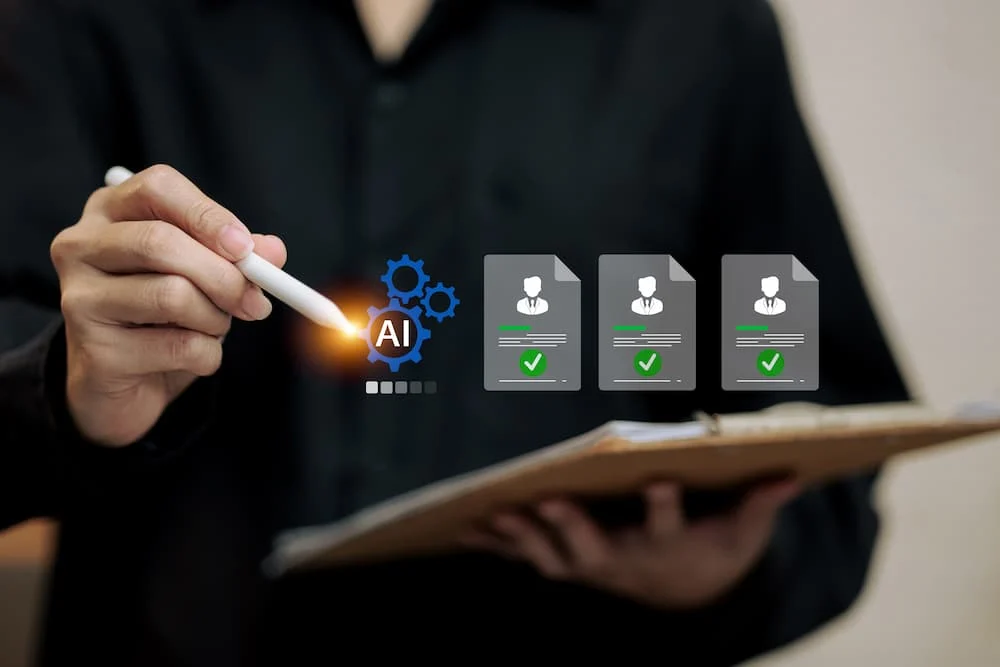
The landscape of human resources, long considered the custodian of an organization’s most human element – its people – is undergoing a profound transformation, driven by the very technology designed to enhance efficiency. Ironically, human resources may be one of the first business disciplines to automate away some of its own humanity. Artificial intelligence (AI) is no longer a futuristic concept in the realm of hiring; it has become an integral component, deeply embedded in processes ranging from resume screening and candidate-role matching to drafting outreach communications and shaping the initial interactions between employers and applicants.
According to research from the Society for Human Resource Management (SHRM) for 2025, recruiting has emerged as the top HR function where organizations are actively deploying AI. This widespread adoption underscores a significant shift in how businesses approach talent acquisition. The primary narrative surrounding AI in HR has, understandably, centered on its capacity to drive efficiency. The promise of faster screening, more accurate candidate-to-role alignment, and a significant reduction in administrative burdens has been a powerful motivator for adoption. This focus on efficiency is particularly resonant in today’s business environment, where many HR departments are tasked with achieving more with fewer resources, making the allure of automated processes undeniably strong.
However, this pervasive focus on efficiency risks overshadowing a more nuanced and potentially detrimental consequence: as hiring processes become increasingly shaped by AI, candidates are learning to adapt their presentations to appeal to algorithms. This phenomenon, while not inherently negative, carries a significant risk of creating a candidate pool that becomes increasingly homogenized and, consequently, interchangeable. This growing homogeneity poses a substantial challenge to the core purpose of hiring – identifying individuals with unique skills, critical thinking abilities, and genuine potential.
The Rise of the AI-Optimized Candidate
The current trajectory points towards the creation of a candidate pool awash with polished, algorithm-friendly professional narratives. These profiles, while appearing robust and compelling at first glance, are increasingly becoming difficult to differentiate. A common thread of keywords, standardized structural formats, and a uniform tone often pervade these AI-optimized documents. This uniformity, smoothed out and often generated by invisible machine learning processes, can obscure the authentic qualities that truly make a candidate stand out.
It is crucial to clarify that this is not an argument against the use of AI in HR. The integration of AI tools does not necessitate a complete abandonment of technological advancements or a regression to purely manual processes. AI undeniably offers substantial value in streamlining hiring operations, making them more efficient and cost-effective. However, the critical concern lies in the potential for over-reliance on these tools, particularly in ceding the most vital aspects of the hiring decision-making process.
HR professionals are not merely administrators tasked with processing applications at speed. Their fundamental role is to identify individuals possessing essential qualities such as sound judgment, effective communication skills, inherent credibility, adaptability, and genuine potential for growth. These qualities become significantly harder to discern when candidates are implicitly or explicitly trained to present themselves in a uniform, algorithm-pleasing manner. This shift should be a point of concern not only for job seekers striving for authentic representation but equally for Chief Human Resource Officers (CHROs) and senior HR leaders who are ultimately responsible for building high-performing teams.
When the hiring funnel becomes saturated with applications that appear remarkably similar, the increase in speed may not always translate into an improvement in clarity or accuracy. The candidate who excels at optimizing their application for an AI-driven process may not necessarily be the individual who possesses the strongest judgment, the clearest strategic thinking, or the most enduring long-term fit within an organization. This concern is substantiated by SHRM’s research, which indicates that approximately 19% of organizations utilizing automation or AI in their hiring processes have reported that their tools have overlooked or unfairly screened out qualified applicants. This one-in-five statistic warrants significant attention from HR leadership, raising the fundamental question of whether AI is truly identifying the best talent or merely rewarding proficiency in algorithmic optimization. The core dilemma becomes: are we enhancing the hiring process itself, or are we merely accelerating a process that may be missing the fundamental point of identifying exceptional individuals?
The Challenge of False Positives in AI-Driven Hiring
An added layer of complexity for HR leaders is the persistent problem of false positives. A candidate who has been extensively optimized for AI-driven hiring might present an exceptionally strong profile on paper, yet reveal a marked lack of depth upon closer examination in practical scenarios. The resume appears pristine, the language is sharp, and interview responses are meticulously polished. However, this polish is not a substitute for sound judgment, nor is fluency in presentation synonymous with genuine organizational fit. When hiring systems begin to reward candidates for sounding "right" rather than for being "right," organizations inadvertently risk mistaking superficial presentation for substantive capability. This not only increases the likelihood of overlooking genuinely qualified individuals but also potentially elevates less suitable candidates with a false sense of earned confidence.
For years, job seekers have been advised to refine their professional narratives and articulate their value propositions clearly. This advice, in itself, was sound. However, the current environment represents a significant paradigm shift. Candidates are no longer just polishing their messages; many are effectively outsourcing this crucial aspect of their job search. They are leveraging AI tools to rewrite resumes, tailor LinkedIn profiles, generate cover letters, prepare for interviews, and meticulously smooth out any perceived imperfections in their presentation, all in the pursuit of making a favorable impression.
The cumulative effect of this widespread practice is a curious and disquieting form of sameness. While everyone appears polished, fewer candidates manage to be truly memorable. In a competitive talent market, memorability – the ability to leave a lasting positive impression that transcends superficial optimization – often becomes a critical differentiator that is increasingly overlooked.
Redefining Hiring: Beyond Qualifications to Value Creation
At its core, hiring is about bringing individuals into an organization who will add tangible value. This is particularly true for leadership positions, where organizations are not merely filling a checklist of qualifications. They are seeking individuals who can be trusted to think critically, communicate effectively, and contribute meaningfully in environments where nuanced judgment is paramount. The focus shifts to a candidate’s capacity to navigate pressure, ambiguity, and responsibility. These essential attributes become considerably more challenging to assess when every aspect of a candidate’s presentation has been subjected to rigorous optimization.
This is where authenticity transcends a mere buzzword and emerges as a critical asset. In an AI-dominated hiring market, authenticity gains significant value precisely because it remains one of the most difficult qualities to convincingly fabricate. A distinct point of view, a clear and individual voice, a credible career narrative, and examples grounded in genuine, lived experience are all powerful differentiators that generic resume polishing simply cannot replicate.
For CHROs and senior HR leaders, this necessitates a strategic recalibration. The hiring process cannot be reduced to an entirely automated exercise. While AI can serve as a powerful enabler for recruiting functions, it should not supplant years of accumulated hiring instinct and practical experience. AI should function as a supportive tool, not a wholesale replacement for human insight. Its capabilities in sorting, summarizing, and reducing repetitive tasks are invaluable. It can expedite candidate screening and promote greater consistency in the initial stages of the hiring process. However, it must not become a substitute for human judgment, especially when evaluating nuanced traits such as trustworthiness, communication prowess, leadership presence, or strategic acumen.
The future of securing employment should not devolve into a competition to see who can most effectively optimize themselves for a particular software algorithm. Similarly, the future of hiring should not be predicated on identifying individuals who stand out after being filtered through the same standardized machine. Organizations that successfully attract and retain top talent will be those that leverage AI to minimize friction points without compromising critical discernment. They will embrace efficiency while consciously preserving ample space for genuine human evaluation and meaningful dialogue.
In an increasingly AI-shaped hiring market, the ultimate differentiator may well be the very quality that a machine cannot fully manufacture: an individual who authentically and unmistakably sounds like themselves. This authentic voice, coupled with demonstrable skills and genuine potential, will likely become the most sought-after attribute in the evolving landscape of talent acquisition.