European workers and HR leaders may harbor anxieties surrounding the integration of artificial intelligence into the workplace, but emerging research from the European Central Bank (ECB) paints a more optimistic picture, particularly as the continent’s premier HR technology conference gears up in Amsterdam. The findings, published by ECB economists Laura Lebastard and David Sondermann, are based on a comprehensive survey of over 5,000 firms across the euro area and indicate that, for the present, AI is acting as a net job creator.
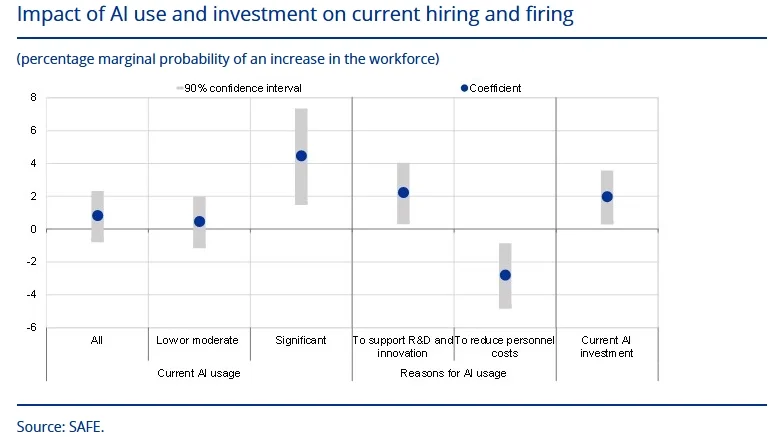
The ECB’s extensive report, "AI and Hiring in Europe," offers a granular look at the current impact of artificial intelligence on employment trends. The research revealed that companies actively investing in AI are demonstrably more likely to expand their workforce. Specifically, AI-intensive firms reported a 4% higher propensity to hire new employees and nearly a 2% greater likelihood of increasing their overall headcount compared to businesses that are not making deliberate investments in artificial intelligence. Furthermore, the economists noted that even firms currently planning AI investments anticipate future staff additions, suggesting a forward-looking confidence in AI’s role in organizational growth.
The Nuances of AI Investment and Hiring Trends
However, the ECB’s analysis underscores a critical distinction: not all AI investments yield the same employment outcomes. The report highlights that firms strategically applying AI to research and development (R&D)-focused initiatives are the primary drivers of this observed hiring growth. Conversely, businesses that primarily utilize AI for cost-reduction purposes are exhibiting negative hiring trends and a concerning uptick in layoffs. This differentiation provides a crucial HR diagnostic, advising leaders to cultivate clarity regarding their specific objectives for AI implementation, rather than adopting a generalized, unfocused approach.
Reassuringly for many, the ECB researchers found that only a modest 15% of surveyed firms cite cost reduction as their primary motivation for adopting AI. This suggests that, broadly speaking, organizations across Europe are positioning AI as a tool for problem-solving and advancement, rather than solely as a mechanism to trim operational expenses. This emphasis on innovation and enhancement over pure austerity could be a significant factor in the current positive employment trajectory.
The report further sheds light on the current state of AI adoption. While two-thirds of surveyed firms report using AI in some capacity, only a quarter are actively investing in its development and integration. This gap implies that many employees are improvising with the most accessible AI tools without the benefit of a cohesive organizational strategy. The researchers also uncovered that the positive hiring effect of AI is currently concentrated within smaller companies. For large enterprises, AI appears to have had a neutral impact on employment levels thus far.
A Shifting Landscape and Future Uncertainty
Despite the current positive outlook, the ECB researchers caution that these findings represent near-term data and that the longer-term picture remains fluid and uncertain. They emphasize that current production processes have not yet undergone the profound transformations that widespread AI adoption could eventually bring. This cautious optimism is further supported by a separate study from the ifo Institute, a respected German economic research institution. The ifo Institute’s survey indicated that many German companies anticipate AI-related job cuts, though this expectation is projected to materialize over a five-year horizon rather than in the immediate future. This divergence in timelines highlights the evolving nature of AI’s impact and the need for continuous monitoring and adaptation.
The findings from the European Central Bank are not isolated observations in the global discourse on AI and employment. A review of recent international reports offers a broader context, suggesting that Europe’s current trends align with a global pattern of AI driving economic value and, in many cases, employment.

Global Perspectives on AI and Employment
PwC’s "2025 Global AI Jobs Barometer," a significant analysis of nearly a billion job advertisements across six continents, provides compelling evidence of AI’s economic influence. The report found that industries with a higher exposure to AI are experiencing substantially faster revenue growth per employee—approximately three times higher than their less AI-exposed counterparts. Furthermore, wages in these AI-intensive sectors are rising at twice the pace observed in other industries. The premium for workers possessing AI skills has also surged, with individuals demonstrating AI proficiency now commanding a 56% wage premium over their peers in similar roles who lack these skills. This figure represents a significant increase from the 25% premium reported the previous year, underscoring the escalating demand and value placed on AI expertise.
Adding to this global perspective, the World Economic Forum’s (WEF) "Future of Jobs Report 2025" offers a projection of the evolving labor market. Drawing on insights from over 1,000 employers across 55 economies, the WEF report forecasts the creation of approximately 170 million new jobs by 2030, while simultaneously predicting the displacement of 92 million existing roles. This results in a substantial net gain of 78 million jobs globally. However, the report also issues a stark warning: workers can expect roughly 39% of their current skill sets to be transformed or become obsolete within the 2025-2030 period. This highlights the imperative for continuous learning and reskilling to navigate the rapidly changing demands of the future workforce.
Taken collectively, these global reports echo the sentiments of the ECB’s findings within Europe. They suggest that AI is currently contributing to economic value creation and employment growth. However, the window of opportunity for workforce preparation and adaptation is rapidly narrowing. The dual narrative of job creation and skill obsolescence necessitates proactive strategies from both employers and policymakers to ensure a smooth and equitable transition into an AI-augmented future.
The European HR Tech Conference: A Forum for Discussion and Strategy
The timing of the ECB’s research release is particularly relevant, coinciding with the lead-up to HR Tech Europe, scheduled to take place on April 22-23 at the RAI Amsterdam. This major event serves as a crucial platform for HR professionals, technology providers, and business leaders to convene, share insights, and explore the latest innovations shaping the future of work. Discussions at HR Tech Europe are expected to heavily feature the practical implications of AI for talent acquisition, employee development, organizational design, and compliance, especially in light of evolving regulations such as the EU AI Act.
The ECB’s research provides a data-driven foundation for many of the conversations that will unfold at HR Tech Europe. The distinction between AI for innovation versus AI for cost-cutting, the concentration of hiring effects in smaller firms, and the overall uncertainty about long-term impacts are all critical points that HR leaders will need to address. The conference offers an opportunity for attendees to learn from experts, network with peers, and develop strategies to harness AI’s potential while mitigating its risks. As businesses grapple with the dual challenges of embracing technological advancement and ensuring workforce resilience, events like HR Tech Europe become indispensable for navigating the complex terrain ahead. The insights gleaned from the ECB’s work can inform attendees on how to approach AI investments strategically, focusing on growth and innovation to foster job creation rather than simply seeking automation for efficiency gains.
Navigating the AI Revolution: Strategic Imperatives for European Businesses
The ECB’s research, coupled with global trends, underscores a fundamental shift in the labor market driven by artificial intelligence. While the immediate outlook for job creation in AI-intensive European firms is positive, a proactive and strategic approach is essential to sustain this momentum and prepare for future transformations.
For HR leaders, the implications are multifaceted:
- Strategic AI Deployment: The distinction between AI for R&D and AI for cost reduction is paramount. Businesses must clearly define their AI objectives, prioritizing applications that enhance innovation, productivity, and employee capabilities. A scattergun approach to AI adoption, without clear strategic goals, risks inefficiencies and potentially negative employment outcomes.
- Focus on Upskilling and Reskilling: The WEF’s projection of significant skill transformation necessitates a robust commitment to continuous learning. Companies should invest in programs that equip their current workforce with the skills needed to work alongside AI, manage AI systems, and adapt to evolving job roles. This proactive approach can turn potential displacement into opportunities for career advancement.
- Understanding AI’s Impact on Different Business Sizes: The observation that smaller companies are currently experiencing a more pronounced positive hiring effect from AI suggests that tailored strategies may be needed for larger enterprises. While AI might not yet be significantly impacting large enterprise headcount, its potential to automate processes and redefine roles remains substantial and requires careful planning.
- Ethical and Regulatory Compliance: With the EU AI Act entering a new phase of implementation, understanding and adhering to its provisions will be crucial. The ECB’s earlier mention of European employers risking significant financial penalties for overlooking AI compliance highlights the importance of proactive legal and ethical considerations in AI deployment. HR leaders must ensure that AI is implemented in a manner that is transparent, fair, and respects employee rights.
- Data-Driven Decision Making: The ECB’s research itself is a testament to the value of data in understanding AI’s impact. Companies should leverage internal data and external research to continuously monitor AI’s effects on their workforce, identify emerging trends, and adjust their strategies accordingly.
The current narrative surrounding AI in Europe is one of cautious optimism, fueled by research indicating job creation. However, this positive phase is a critical juncture. The future trajectory of AI’s impact on employment hinges on strategic choices made today. By embracing AI as a tool for innovation, investing in human capital development, and navigating the evolving regulatory landscape, European businesses can not only adapt to the AI revolution but also thrive within it, ensuring a prosperous and inclusive future for their workforces. The upcoming HR Tech Europe conference in Amsterdam provides an ideal setting for these vital discussions and strategic planning to commence.