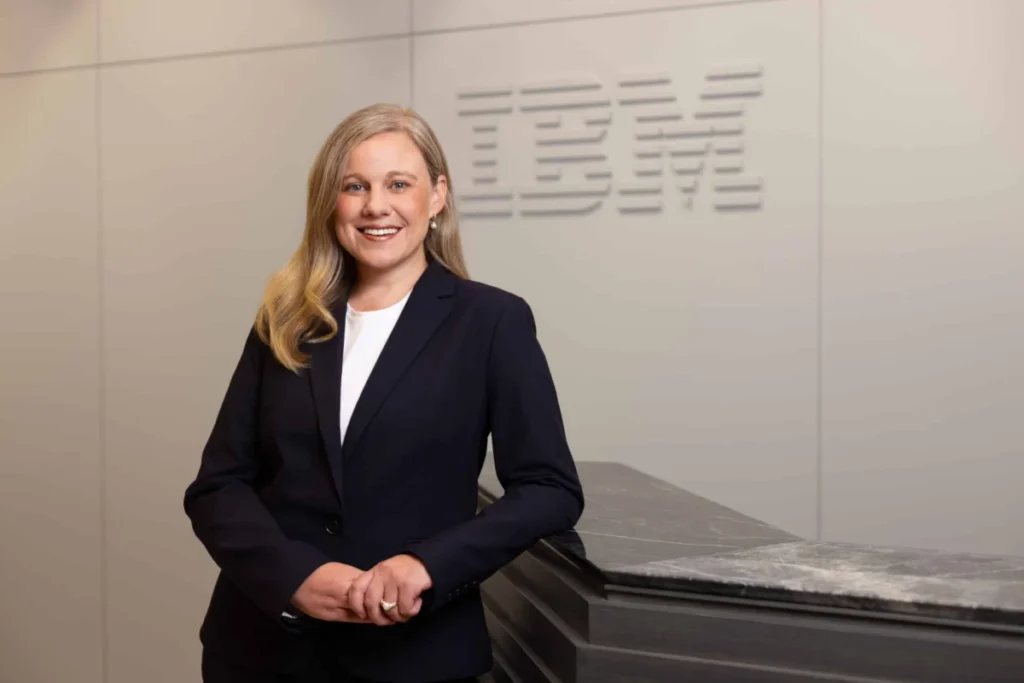
The imperative to enhance workforce productivity has dominated strategic discussions across industries in recent months, fueled by a widespread push for digital transformation and the burgeoning integration of artificial intelligence. Business leaders are keenly focused on optimizing efficiencies and empowering talent within an evolving AI-powered landscape. However, a singular focus on productivity as the sole driver for AI strategy risks overlooking its profound potential, according to Nickle LaMoreaux, IBM’s Chief Human Resources Officer.
Speaking at The Wall Street Journal’s inaugural CPO Council Summit in Palo Alto, California, LaMoreaux, recognized as the 2024 HR Executive of the Year, observed a prevalent tendency among organizations to approach AI transformation at an granular, individual process level. This often translates into inquiries about how AI can assist employees with tasks like drafting emails, synthesizing information, or generating ideas—essentially, how the technology can boost an individual’s daily output.
"Where we as CPOs can get the biggest bang for the buck is figuring out how we can put AI, technology and automation into enterprise workflows," LaMoreaux stated. She advocates for a more expansive vision, urging HR leaders to look beyond individual task augmentation. The true value, she posits, lies in reimagining fundamental operational pathways. This includes scrutinizing how employees access customer support, how managers execute promotion processes, and how HR Business Partners address employee queries. These are the critical workflows that should be at the forefront of AI integration strategies, LaMoreaux emphasized.
While transforming these core processes through AI will undoubtedly yield increased productivity, LaMoreaux asserts that the ultimate objective should be to propel the organization toward measurable enterprise growth. This broader aim, she argues, represents the true promise of AI integration.
Reimagining Workflows for Strategic Reinvestment
The pervasive integration of AI and automation into the modern workplace is undeniably reshaping conversations around workforce planning. This shift is underscored by the ongoing waves of significant workforce reductions observed across various sectors, often attributed, at least in part, to technological advancements.
LaMoreaux challenges the conventional HR perspective on AI’s potential, urging a paradigm shift. She poses a thought-provoking scenario: "What if, in three years, AI could power 50% of the work currently done by humans in your company, but you had to keep your headcount flat, or even double it? What new products could you build? Which new clients could you go after with that freed-up manpower?" This hypothetical prompts a critical reevaluation of how freed-up human capital can be strategically redeployed.
AI undeniably drives efficiencies, leading to enhanced productivity and cost savings. LaMoreaux pointed to IBM’s own experience, citing the company’s achievement of $4.5 billion in free cash flow over the past three years as a direct result of its AI journey. However, she cautions against viewing these gains as solely a boost to the bottom line. To fully capitalize on these efficiencies and foster genuine growth, HR must also meticulously plan how human talent will be reinvested.
"What growth can AI drive? What can we do differently?" LaMoreaux queried, highlighting that many organizations are not adequately focusing on these growth-oriented questions. This lack of strategic foresight, she warned, puts them at risk of "missing the moment" and failing to harness the full transformative power of AI.
AI-Driven Growth Takes Center Stage: The Case of Entry-Level Hiring
IBM’s commitment to viewing AI as a catalyst for growth, rather than solely a productivity enhancer, is a foundational element of its ambitious pledge to triple entry-level hiring within the next three years. This initiative stands in stark contrast to the prevailing trend of hiring freezes or significant cutbacks in entry-level positions observed at many other companies.
LaMoreaux acknowledges the seemingly logical rationale behind reducing entry-level hiring in the short term. AI, she concedes, is increasingly capable of performing many tasks previously handled by junior analysts, call center representatives, and customer support professionals. However, she reiterates that this perspective is often rooted in a narrow, productivity-centric view of AI.
Instead, LaMoreaux advocates for a long-term growth mindset and the strategic redeployment of talent. She envisions a future where entry-level hires are instrumental in expanding an organization’s reach, particularly in pursuing small and medium-sized businesses that may have previously been inaccessible. Similarly, software developers, freed from routine coding tasks by AI, could shift their focus from product maintenance to the development of innovative new products and features.
"It’s a growth mentality," LaMoreaux stated, underscoring its successful implementation at IBM. This approach has demonstrably reoriented roles within the company. For instance, software developers, who historically dedicated 80% to 90% of their time to coding, now find that AI handles much of the low-code development. This allows entry-level developers to dedicate more time to tasks such as debugging automated code, providing enhanced support to customers and clients through customized configurations, and engaging in more complex problem-solving.
The HR function itself has also been a significant area of AI-driven transformation, creating new avenues for talent to contribute to growth. Early-career HR professionals, who were once primarily assigned to call centers to address employee inquiries, now find their roles redefined. Much of this routine work is now managed by IBM’s "Ask HR" chatbot, with human talent strategically layered on top to handle more complex or sensitive interactions.
A key element of this new model involves soliciting employee feedback on their experience with the chatbot. When an employee provides a negative rating, entry-level HR professionals are prompted to follow up via phone. This direct engagement allows for the collection of nuanced feedback, which can then be used to train and refine the AI. Crucially, it also equips new HR entrants with invaluable customer service and problem-solving skills. This redeployment has also had a tangible impact on employee perceptions of the HR department. By freeing up the function to respond more directly to employee concerns, it fosters a greater sense of being heard and valued.
"We have to get comfortable constantly reengineering jobs to the value," LaMoreaux stressed, adding, "and that value is always going to be shifting." This adaptability is paramount in a rapidly evolving technological landscape.
It falls upon HR leaders to effectively communicate the potential of AI-driven growth to both senior leadership and the broader employee base. The narrative needs to shift from AI’s impact on employee productivity to its profound influence on employee experience and organizational expansion. LaMoreaux highlighted that while AI has freed up $4.5 billion in cash flow for IBM, it has also saved an estimated 22 million person-hours. This reduction in time spent on administrative processes has shrunk the workforce’s engagement in such tasks to single-digit percentages.
"We don’t want to just say AI is taking away the drudgery," LaMoreaux concluded. "OK, to do what? We have to get people excited about the ‘to do what’—that’s where the real transformation lies." This forward-looking perspective emphasizes the need to articulate a compelling vision for how AI can unlock new opportunities, drive innovation, and ultimately lead to sustained enterprise growth.
The Broader Impact: A Shift in Strategic Focus
The insights shared by Nickle LaMoreaux at The Wall Street Journal’s CPO Council Summit offer a critical reframing of AI’s role in the modern enterprise. The summit, held in Palo Alto, a global hub for technological innovation, convened leading Chief People Officers and HR executives to discuss the most pressing challenges and opportunities facing the profession. This inaugural event aimed to foster dialogue and share best practices in a rapidly evolving business environment.
LaMoreaux’s emphasis on moving beyond mere productivity gains resonates with a growing body of research and expert opinion. A recent report by McKinsey & Company projected that AI could boost global GDP by $7 trillion over the next decade, driven not only by efficiency gains but also by new product development and increased consumer demand. This broader economic impact underscores the potential for AI to be a significant engine for growth.
The implications of LaMoreaux’s perspective are far-reaching for HR departments. It necessitates a strategic recalibration, moving from a focus on cost-cutting through automation to a more proactive approach centered on talent development and redeployment. This shift requires HR to not only understand the technical capabilities of AI but also to strategically align them with the company’s long-term business objectives.
Organizations that adopt this growth-oriented AI strategy are likely to gain a significant competitive advantage. They will be better positioned to innovate, enter new markets, and attract and retain top talent. Conversely, those that remain fixated on incremental productivity gains may find themselves outmaneuvered by more agile competitors who are leveraging AI for more ambitious transformations.
The challenge for HR leaders lies in effectively communicating this expanded vision. It requires moving beyond technical jargon and articulating the tangible benefits of AI-driven growth in terms that resonate with business leaders and employees alike. This includes demonstrating how AI can unlock new revenue streams, enhance customer experiences, and create more engaging and fulfilling work for employees.
As AI continues its inexorable advance, the debate over its ultimate impact will undoubtedly intensify. However, the message from leaders like Nickle LaMoreaux is clear: the most successful organizations will be those that embrace AI not as a tool for simply doing more with less, but as a powerful catalyst for achieving unprecedented growth and innovation. The future of work, it appears, hinges on a strategic redefinition of what AI can truly enable.