
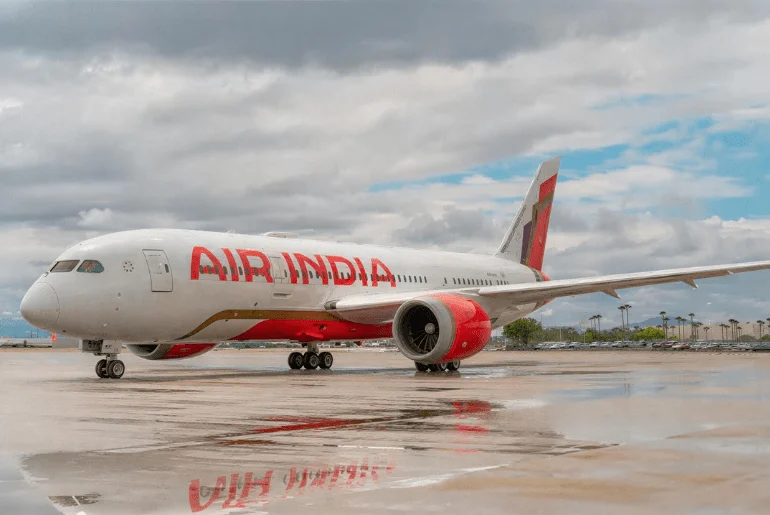
Air India, the flag carrier of India, is set to resume its annual salary revision cycle from October 1, a significant decision that follows a period of deferment necessitated by considerable operational and financial pressures. These pressures were largely attributed to the escalating geopolitical situation in the Middle East, which had a ripple effect across the global aviation industry. Campbell Wilson, the Chief Executive Officer and Managing Director of Air India, conveyed this pivotal decision during a town hall meeting with employees, as reported by NDTV, underscoring the airline’s renewed confidence in its trajectory despite persistent external challenges.
The airline had previously postponed its annual increment cycle as the complexities of airspace disruptions, a surge in global fuel costs, and significant currency pressures collectively weighed heavily on its operational efficiency and financial stability. The Middle East crisis, characterized by regional conflicts and heightened tensions, led to the closure or restriction of several critical airspaces, forcing airlines to reroute flights. Such diversions inevitably resulted in longer flight durations, increased fuel consumption, and additional operational costs. Concurrently, the global oil markets reacted to the instability, pushing jet fuel prices upwards, while currency fluctuations impacted the airline’s ability to manage its international expenditures and revenues effectively. This confluence of factors had compelled Air India to make the difficult but necessary decision to temporarily freeze salary increments, prioritizing financial prudence and operational resilience.
Despite navigating this challenging landscape, Wilson affirmed during the town hall that maintaining profitability remains a paramount focus for the airline. This commitment to financial health runs parallel to Air India’s ambitious investment strategy, which includes an aggressive fleet modernization program and a broader, comprehensive transformation agenda known as ‘Vihaan.AI’. The reinstatement of annual salary revisions therefore marks a crucial juncture, signaling a renewed emphasis on workforce investment, balancing the welfare of its employees with its overarching strategic goals of fleet renewal, operational excellence, and a complete organizational overhaul.
Air India’s Transformation Journey: A Background Context
The story of Air India’s resurgence is deeply intertwined with its privatization in January 2022, when Tata Sons reacquired the airline after 69 years of government ownership. This acquisition marked the end of decades of state control, during which the airline accumulated substantial debt and faced significant operational inefficiencies. Tata Sons, with its formidable business acumen and long-standing legacy in Indian industry, embarked on an ambitious mission to revive the venerable carrier and restore its lost glory. The transformation program, branded ‘Vihaan.AI’ (meaning ‘dawn of a new era’ in Sanskrit), was launched with a five-year roadmap to transform Air India into a world-class airline. Its pillars include exceptional customer experience, robust operational performance, extensive network growth, and a strong, motivated workforce.
The initial phases of ‘Vihaan.AI’ focused on immediate operational improvements, standardizing services, enhancing customer touchpoints, and initiating the monumental task of fleet renewal. However, the airline’s journey, much like the aviation industry at large, has been susceptible to external shocks. The geopolitical tensions that escalated in the Middle East from late 2023 significantly impacted global aviation routes, particularly those connecting Europe and Asia. Air India, with its extensive international network, found itself directly in the path of these disruptions. Flights were compelled to take longer, more circuitous routes, leading to increased flight times, higher fuel burn, and greater strain on crew schedules. The concomitant rise in crude oil prices, exacerbated by the instability, directly inflated operating costs, while currency volatility added another layer of financial pressure. It was in this challenging environment that the decision to defer salary increments was made, likely in late 2023 or early 2024, as a prudent measure to conserve resources and maintain financial stability during an unpredictable period.
A Chronology of Revival and Resilience
The journey of Air India under Tata Sons has been characterized by a series of strategic decisions and reactive adjustments to global events.
- January 2022: Tata Sons officially takes over Air India, marking the beginning of the ‘Vihaan.AI’ transformation journey. The immediate focus is on integrating operations, standardizing services, and addressing legacy issues.
- Early 2023: Air India unveils its ambitious five-year transformation roadmap, ‘Vihaan.AI’, outlining plans for fleet expansion, service upgrades, and technological advancements. This period also saw the consolidation of its airline brands under a unified structure, including the merger of Air India Express with AirAsia India, and Vistara with Air India.
- February 2023: Air India places a historic order for 470 aircraft – 220 from Boeing and 250 from Airbus – signaling its intent for aggressive network expansion and fleet modernization. This order, valued at tens of billions of dollars, is a cornerstone of its long-term strategy.
- Late 2023 – Early 2024: Geopolitical tensions in the Middle East escalate significantly, leading to widespread airspace restrictions, flight reroutings, and a surge in global crude oil prices. This period witnesses the imposition of considerable operational and financial strain on Air India.
- Mid-2024 (Inferred): Amidst the sustained external pressures, Air India makes the decision to defer annual salary increments as a temporary measure to manage costs and navigate the volatile operational environment. This decision, though difficult, was communicated to employees as a necessary step to safeguard the airline’s broader transformation goals.
- September 2024 (Implied): CEO Campbell Wilson announces the resumption of the annual salary revision cycle from October 1, 2024. This decision reflects an improved outlook and confidence in the airline’s operational and financial resilience, despite the continued presence of external challenges.
- Ongoing: The airline continues its aggressive fleet induction and retrofitting programs, alongside sustained efforts to enhance customer service and operational efficiency, aiming for consistent improvements across all key performance indicators.
Operational Improvements and Strategic Expansion: The Bedrock of Confidence
The decision to reinstate salary revisions is underpinned by tangible improvements across several key operational and customer service metrics, demonstrating that the ‘Vihaan.AI’ program is indeed yielding positive results.
Fleet Modernization and Expansion:
The return of annual salary revisions coincides with continued, aggressive expansion and operational improvements at Air India. The airline group’s strategic plan includes the induction of more than 100 new aircraft during 2027 and 2028, a testament to its long-term growth aspirations. This massive fleet upgrade is essential for expanding its global network, enhancing passenger experience, and improving fuel efficiency. Simultaneously, significant progress is being made on the comprehensive retrofitting program for its existing fleet, which aims to bring older aircraft up to modern standards in terms of cabin interiors, in-flight entertainment, and seating comfort.
Recent inductions highlight this commitment:
- Three Boeing 787-9 Dreamliner aircraft have been inducted in 2026 (interpreting this as a target for the current fiscal year or recently achieved). These wide-body aircraft are crucial for long-haul international routes.
- Two state-of-the-art Airbus A350-1000 aircraft are expected to join the fleet later this year, further bolstering its capacity and introducing a new generation of aircraft known for their efficiency and passenger comfort.
- The retrofitting program is also gaining momentum, with three refurbished Boeing 787-8 aircraft already having entered service. These modernized aircraft offer a significantly enhanced passenger experience. An additional four retrofitted Boeing 787-8 aircraft are anticipated to be back in service by the end of 2026, showcasing the airline’s dedication to improving its current fleet alongside new acquisitions.
Customer Sentiment and Operational Performance:
Perhaps the most compelling evidence of Air India’s turnaround lies in the dramatic improvements in customer sentiment and operational performance.
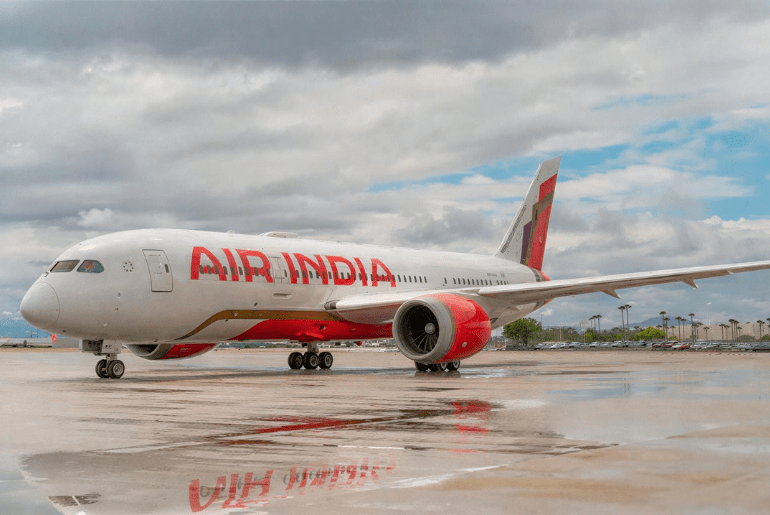
- Net Promoter Score (NPS): A critical measure of customer loyalty and satisfaction, Air India’s fleet-wide Net Promoter Score has shown a remarkable turnaround. It has risen from a deeply negative -35 in FY23 (Fiscal Year 2022-23) to a positive +37 in FY27 (Fiscal Year 2026-27) so far. This staggering 72-point increase is indicative of a significant enhancement in service quality, in-flight experience, and overall customer handling. The NPS for retrofitted Boeing 787-8 aircraft, specifically, improved from -31 to an even more impressive +43, underscoring the positive impact of fleet modernization on passenger satisfaction.
- On-Time Performance (OTP): Air India recorded its highest-ever Directorate General of Civil Aviation (DGCA) on-time performance of 91.6 percent in June. This figure is a critical benchmark for operational efficiency and passenger convenience. The year-to-date OTP has also shown substantial improvement, reaching 85 percent compared with 76 percent in FY26 (Fiscal Year 2025-26). Such improvements are a direct result of enhanced ground handling, better scheduling, and proactive management of operational contingencies.
- Completion Factor and Delays: The airline also reported a robust 99.7 percent completion factor, meaning very few flights were cancelled. Furthermore, it achieved a nearly 60 percent reduction in long delays, which are particularly frustrating for passengers and costly for airlines. These metrics collectively paint a picture of an airline that is becoming increasingly reliable, efficient, and customer-centric.
Financial Considerations and Profitability Focus
While specific financial figures were not disclosed, the decision to resume salary revisions strongly implies a more stable financial outlook and a confident assessment of future profitability. CEO Campbell Wilson’s consistent emphasis on profitability, even amidst substantial investment in fleet and infrastructure, suggests a strategic balance between growth and fiscal responsibility. The ability to absorb additional employee costs, after a period of deferment, indicates either a recovery in revenue streams, effective cost management strategies, or strong investor confidence in the long-term vision.
The investments in fleet modernization and the transformation program are not merely about aesthetics; they are designed to enhance efficiency, reduce operating costs (through newer, more fuel-efficient aircraft), and increase revenue potential through expanded routes and higher passenger load factors. The improved operational metrics, such as OTP and NPS, contribute directly to brand reputation, customer loyalty, and ultimately, the airline’s bottom line. A more efficient operation means lower costs associated with delays, cancellations, and customer compensation. A more satisfied customer base is more likely to return and recommend the airline, fostering sustainable revenue growth.
Broader Impact and Implications
The reinstatement of the salary revision cycle is not merely an internal HR decision; it carries significant broader implications for Air India, its employees, the aviation sector, and the market.
Employee Morale and Talent Retention: For Air India’s workforce, this announcement is a powerful morale booster. It demonstrates that management values its employees and is committed to their well-being, especially after a period of financial austerity. In an industry where skilled talent, from pilots and cabin crew to engineers and ground staff, is highly sought after, competitive compensation is crucial for retention. This move helps Air India attract and retain top talent, which is vital for its ambitious growth plans and for maintaining the high standards required of a premium global airline. It rebuilds trust and fosters a sense of shared purpose in the airline’s transformation journey.
Market Perception and Investor Confidence: The decision sends a strong positive signal to the market, investors, and potential partners. It suggests that Air India’s turnaround strategy is progressing effectively and that the airline is on a path towards sustainable financial health. Such a move can enhance investor confidence, potentially attracting further investment and strengthening its position in the highly competitive global aviation landscape. It projects an image of a resilient and professionally managed organization capable of navigating significant external shocks.
Sustainability of Transformation: The ability to resume salary increments indicates that the ‘Vihaan.AI’ transformation program is not just about abstract goals but is yielding tangible, measurable results that allow for such employee-centric decisions. It signifies that the internal improvements in operational efficiency, customer service, and fleet management are translating into sufficient financial robustness to support employee welfare, thereby reinforcing the sustainability of the entire transformation effort.
Industry Benchmarking: This decision also positions Air India more competitively within the broader aviation industry. As airlines globally vie for talent and market share, offering attractive compensation packages becomes a differentiator. Air India’s move helps it align with, or even surpass, industry best practices in employee compensation, contributing to its image as a desirable employer.
Official Statements and Expert Reactions
While specific new statements beyond Campbell Wilson’s town hall address are not immediately available, the underlying message from the CEO is clear: Air India is committed to balancing aggressive strategic growth with a profound dedication to its workforce. His emphasis on maintaining profitability while investing heavily in the future underscores a pragmatic yet ambitious leadership vision.
From the perspective of aviation analysts, this announcement would likely be viewed as a strong indicator of Air India’s recovery and strategic acumen. Analysts would interpret the ability to reverse a deferral on increments as evidence of solid financial planning and effective execution of its turnaround strategy, especially given the persistent external headwinds. It implies that the improvements in operational metrics and customer satisfaction are translating into a more stable financial footing, providing the necessary confidence to resume normal compensation cycles. Employees, having weathered the period of deferment, would undoubtedly welcome the news with relief and renewed motivation, seeing it as a tangible reward for their contribution to the airline’s improving performance.
In conclusion, the reinstatement of Air India’s annual salary revision cycle from October 1 is a pivotal moment in its ongoing transformation. It symbolizes not just a return to normal compensation practices but also a robust declaration of confidence in the airline’s strategic direction, operational resilience, and improving financial health. By balancing ambitious fleet modernization and operational enhancements with a renewed focus on employee welfare, Air India is steadily charting a course towards re-establishing itself as a leading global airline, successfully navigating both internal challenges and external volatilities.







