
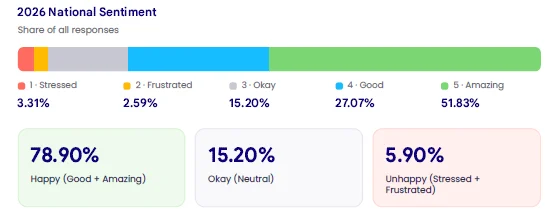
New workforce sentiment data released by HR platform Deputy reveals a striking generational divide in the post-shift feelings of North American shift workers, with findings that challenge common assumptions about employee engagement and generational attitudes. The company’s fourth annual Shift Pulse Report, which aggregated over 730,000 anonymous in-app responses, indicates that while younger generations, particularly Gen Alpha, report overwhelmingly positive post-shift experiences, their older counterparts, millennials and Gen X, are navigating more complex emotional landscapes as they clock out.
This divergence in sentiment suggests that factors beyond typical engagement metrics are at play, highlighting the unique pressures and priorities shaping the experiences of different age groups within the frontline workforce. The data paints a nuanced picture, indicating that feeling good immediately after a shift may not directly correlate with broader job satisfaction or long-term commitment to an employer, according to analysis of related industry research.
The Shift Pulse Report: A Real-Time Snapshot of Worker Morale
Deputy’s Shift Pulse tool, integral to its HR platform, prompts workers at the conclusion of their shifts to select one of five emotional states: "Stressed," "Frustrated," "Okay," "Good," or "Amazing." The company categorizes "Good" and "Amazing" as positive sentiment, while "Stressed" and "Frustrated" are classified as negative sentiment. This real-time feedback mechanism provides an immediate, unfiltered glimpse into how workers feel in the crucial moments after completing their duties, offering valuable insights into the immediate impact of work on their well-being.
The findings of the 2026 Shift Pulse Report, based on data collected throughout the preceding year, offer a clear hierarchy of generational positivity:
- Gen Alpha: Reporting the highest post-shift positivity at 88.88%. This generation, often characterized as digital natives and still in the early stages of their careers or even still in education, appears to be experiencing their work in a remarkably positive light.
- Gen Z: Coming in second with 78.42% positive sentiment. While a strong showing, this figure masks a more complex reality, as explored further below.
- Gen X: Recording 75.92% positive sentiment. This cohort, often described as the "sandwich generation" juggling career, family, and elder care, shows a lower level of post-shift positivity.
- Millennials: Registering the lowest positive sentiment at 74.52%. This group, typically in the prime of their careers and often facing significant financial and familial responsibilities, appears to be experiencing the most strain immediately after their workdays conclude.
Unpacking the "Mid-Career Squeeze"
The report identifies millennials and Gen X as the "mid-career" core of the workforce, a demographic experiencing a distinct set of challenges. Deputy’s analysis points to a significant "squeeze" on these workers, largely attributed to mounting family, caregiving, and financial commitments. These personal responsibilities are depicted as heavily influencing their daily work experiences, often casting a shadow over their post-shift emotions.
Beyond these core familial and financial pressures, Deputy highlights several other key triggers contributing to the lower positivity scores among Gen X and millennials:
- Cost-of-Living Pressure: Rising expenses for housing, goods, and services are placing a considerable strain on these generations, impacting their financial security and overall stress levels.
- Balancing Multiple Jobs: The need to supplement income or secure stable employment often forces these workers to juggle multiple roles, leading to increased fatigue and reduced personal time.
- Demand for Stable Income and Flexible Schedules: While seeking stability, there is also a concurrent desire for flexibility to manage personal commitments, creating a delicate balancing act that can be emotionally taxing.
This combination of external pressures and the inherent demands of mid-career roles appears to be directly impacting how these workers feel when they finally disengage from their jobs.
The Gen Z Paradox: High Engagement, High Volatility
Gen Z presents a particularly intriguing paradox within the Shift Pulse Report’s findings. While ranking second in overall positive sentiment, this generation also exhibited the highest rate of negative sentiment responses, reaching 8.04%. This dual characteristic—high highs and high lows—suggests a workforce that is deeply invested in their work but also more acutely susceptible to its downsides.
The report authors interpret this combination as indicative of a cohort that is:
- Emotionally Invested in Work: Gen Z workers appear to bring a high level of emotional engagement to their roles, which can amplify both positive and negative experiences.
- More Exposed to Frustrations: This investment may also make them more sensitive to workplace frustrations, such as customer service challenges or operational inefficiencies.
- Navigating Poly-Employment and Precarious Work: Similar to millennials, Gen Z workers are often engaged in multiple jobs ("poly-employment") or face precarious employment conditions, leading to pressures around hours, pay, and job security.
- Facing Pressure Around Hours and Pay: The economic realities for many in Gen Z mean that concerns about adequate hours and fair compensation are significant drivers of their on-the-job stress.
This dynamic suggests that while Gen Z may find moments of genuine satisfaction and pride in their work, they are also more likely to experience the sharp edges of workplace demands.
Connecting Post-Shift Feelings to Retention: A Complex Relationship
The implications of these findings extend to broader discussions about employee retention and engagement. While feeling good after a shift is a positive indicator, it doesn’t necessarily translate directly into loyalty or a reduced desire to seek new opportunities.
Recent studies by Gallup, a renowned research organization, provide a comparative perspective. Gallup’s U.S. workforce studies have consistently tracked employee engagement levels. In their 2025 and 2024 reports, Gallup found that only 31% of U.S. employees were engaged at work, a figure that has remained stagnant and significantly below the high observed in 2020. The decline in engagement has been most pronounced among Gen Z and millennials, with Gen X also experiencing a drop, while Baby Boomer engagement has held steady.
Gallup attributes this widespread decline in engagement to fundamental workplace issues, including:
- Lack of Clarity on Expectations: Employees are less certain about what is expected of them in their roles.
- Perceived Lack of Care: A diminished sense that someone at work genuinely cares about their well-being.
- Limited Opportunities for Growth: Reduced perception of opportunities for learning and professional development.
When juxtaposed with Deputy’s findings, this suggests a potential disconnect. A worker might feel "Good" or "Amazing" after a particular shift due to a successful interaction, a completed task, or a supportive team member. However, this immediate positive feeling may not address the underlying systemic issues that lead to broader disengagement, such as unclear career paths, a lack of recognition, or insufficient management support.
Gallup’s research, which often delves into the drivers of engagement, points to the importance of factors like clear expectations, supportive relationships, and opportunities for development as crucial for long-term commitment. Deputy’s report, by focusing on immediate post-shift sentiment, offers a complementary view, highlighting the role of daily operational factors.
Actionable Drivers of Positive Sentiment
The Deputy report underscores that positive sentiment is not merely a byproduct of enjoying one’s job; it is demonstrably linked to specific, actionable drivers within the work environment. The report highlights that:
- Autonomy: The degree of control workers have over their tasks and schedules plays a significant role in their satisfaction.
- Predictability: A sense of stability and knowing what to expect in terms of workload and scheduling can reduce stress.
- Robust Team Cohesion: Strong relationships and a sense of camaraderie among colleagues foster a more positive work environment.
- Genuine Interpersonal Connections: Feeling valued and respected by supervisors and peers contributes significantly to morale.
Conversely, the report identifies several factors that can erode morale and negatively impact post-shift feelings:
- Understaffing: Chronic understaffing leads to increased workloads, pressure, and burnout.
- Physical Exhaustion: Demanding physical labor without adequate rest or support can be debilitating.
- Low-Control Work: Roles with limited autonomy and rigid procedures can lead to feelings of powerlessness.
- High Emotional Demands: Jobs requiring constant emotional labor, such as customer service roles, can be particularly draining.
These actionable drivers provide a roadmap for employers seeking to improve the daily experiences of their shift workers. By focusing on enhancing autonomy, fostering team cohesion, and ensuring adequate staffing, organizations can cultivate environments that promote not just fleeting positive moments, but sustained well-being and engagement.
Broader Implications for the Future of Work
The generational disparities in shift worker sentiment, as revealed by Deputy’s Shift Pulse Report, carry significant implications for businesses operating within the North American labor market. As organizations increasingly rely on a diverse, multi-generational workforce, understanding these nuanced differences is crucial for effective management, talent retention, and overall operational success.
For Gen Alpha, the data suggests a generation that, at this stage, is largely experiencing work positively. This could be attributed to their relative inexperience, a focus on learning and skill development, or perhaps a more optimistic outlook shaped by current economic conditions or their specific industries. However, it is important to note that this is a nascent generation in the workforce, and their sentiment may evolve as they gain more experience and face increasing life responsibilities.
The "mid-career squeeze" experienced by millennials and Gen X highlights a critical need for employers to provide robust support systems. This includes not only competitive compensation and benefits but also flexible work arrangements, access to mental health resources, and clear pathways for career advancement. Failing to address these pressures could lead to increased burnout, reduced productivity, and higher turnover within these vital segments of the workforce.
The Gen Z paradox demands a tailored approach. Employers need to acknowledge their emotional investment in work while simultaneously mitigating the sources of their heightened frustrations. This might involve more transparent communication about expectations, proactive conflict resolution, opportunities for skill development that align with their career aspirations, and ensuring fair compensation and manageable workloads. The high rate of negative sentiment, despite overall positive feelings, suggests that Gen Z is particularly sensitive to perceived injustices or inefficiencies within the workplace.
The distinction between feeling good after a shift and being broadly engaged at work is a key takeaway. While positive post-shift experiences are valuable, they are not a substitute for the fundamental drivers of long-term engagement identified by research firms like Gallup. Organizations must strive to create environments that foster both immediate well-being and sustained professional growth and connection.
In conclusion, Deputy’s Shift Pulse Report provides a timely and insightful look into the evolving landscape of shift work. By shedding light on generational differences and the specific factors influencing worker sentiment, the report offers critical data for employers seeking to build more resilient, engaged, and ultimately, more successful workforces in the years to come. The findings serve as a compelling call to action for a more nuanced and responsive approach to workforce management, one that acknowledges the unique challenges and aspirations of each generation.







