Every investment made by Human Resources departments, including those focused on employee recognition, must ultimately demonstrate its value and contribute to organizational success. The realm of employee recognition is no exception. By diligently measuring the Return on Investment (ROI) of employee recognition software, leaders can transition from relying on anecdotal "feel-good" sentiments to a data-driven approach, clearly illustrating how genuine appreciation directly fuels employee engagement, enhances retention rates, and ultimately boosts overall performance.
Despite the evident benefits, a significant challenge persists within HR technology adoption. A recent survey by Gartner revealed that a substantial 51% of HR leaders admit they are unable to measure the ROI of their HR technology investments. This disconnect is particularly striking when considering the wealth of data already available. For instance, the Achievers Workforce Institute’s (AWI) "State of Recognition Report" highlighted a compelling statistic: employees who receive recognition on a weekly basis are 2.6 times more likely to be productive. This data strongly suggests that recognition is an effective strategy, prompting the question: why does quantifying its impact remain so elusive for many organizations?
This article delves into the core issues surrounding the measurement of recognition software ROI, exploring the critical business outcomes it drives and providing actionable insights into how organizations can effectively implement and assess these initiatives in practice.
Calculating Employee Engagement ROI in the Modern Workplace
The concept of employee engagement ROI centers on quantifying the business value derived from improvements in employee engagement, weighed against the costs incurred for programs, technology, and resources implemented to achieve these enhancements. As we look towards 2026 and beyond, the most effective strategy for calculating this ROI involves a direct correlation between engagement gains and tangible, measurable business outcomes. These include critical metrics such as employee retention, productivity levels, overall performance, and absenteeism rates. The foundational principles of the "employee engagement equation wheel" underscore that demonstrating ROI begins with the simultaneous tracking of engagement levels alongside key business indicators like turnover and performance results.
A straightforward formula for calculating employee engagement ROI is:
*Employee Engagement ROI = (Financial Benefits from Engagement Improvements – Program Costs) / Program Costs 100**
To effectively implement this formula, organizations must adopt a systematic approach:
- Define Clear Objectives: Before launching any recognition initiative, establish specific, measurable, achievable, relevant, and time-bound (SMART) goals. What key performance indicators (KPIs) does the organization aim to influence?
- Establish Baseline Metrics: Accurately record current engagement levels, turnover rates, productivity benchmarks, and other relevant data points before the implementation of recognition programs. This baseline is crucial for measuring future improvements.
- Quantify Program Costs: Accurately tally all associated costs, including software subscriptions, the budget allocated for rewards and incentives, and any administrative overhead or time investment.
- Measure Impact on Key Outcomes: Continuously monitor and record changes in the predefined KPIs after the recognition program is in place. This includes tracking improvements in retention, reductions in absenteeism, increases in productivity, and enhanced overall performance.
- Calculate Financial Benefits: Translate the improvements in key outcomes into monetary terms. For example, reduced turnover can be calculated by estimating the cost savings from avoiding recruitment, onboarding, and training new employees. Productivity gains can be estimated by the increased output or revenue generated.
- Apply the ROI Formula: Once all costs and financial benefits are quantified, apply the ROI formula to determine the program’s financial return.
Employee recognition should be an integral component of this ROI calculation. Extensive research and consistent insights from the Achievers Workforce Institute (AWI) consistently demonstrate that robust recognition strategies significantly strengthen employee engagement, foster a sense of belonging, and improve retention. These outcomes, in turn, have a direct and positive impact on a company’s financial performance. Employees who experience frequent and meaningful recognition are more likely to feel valued and engaged in their work. Conversely, organizations that prioritize and increase recognition efforts typically witness corresponding improvements in engagement, productivity, and retention rates.
Consider this hypothetical scenario: an organization invests $100,000 annually in its employee engagement and recognition initiatives. Through these efforts, it realizes $300,000 in tangible benefits, including savings from reduced employee turnover, increased productivity leading to higher output, and decreased recruitment expenses. In this case, the employee engagement ROI would be a remarkable 200% ($300,000 – $100,000) / $100,000 * 100.
The Multifaceted Impact of Employee Recognition on ROI
The profound impact of employee recognition extends far beyond mere transactional exchanges. When individuals feel seen and acknowledged for their contributions, their approach to work transforms fundamentally. This is the intrinsic power of recognition. It doesn’t just drive ROI; it cultivates the very behaviors that propel a business forward. From retaining top talent to elevating engagement, and from enhancing productivity to improving performance, the returns on well-executed recognition strategies are readily discernible once the right metrics and qualitative indicators are understood and monitored.
Retention: The Cornerstone of Stability
Recognition stands out as one of the most cost-effective strategies for retaining valuable employees. When acts of appreciation are visible, consistent, and authentic, they powerfully reinforce an employee’s sense of belonging – that quiet, yet potent, force that minimizes turnover and cultivates unwavering loyalty. Employees who feel consistently recognized are less likely to be contemplating their next career move; instead, they are actively invested in contributing their best efforts and leaning into their roles with renewed enthusiasm. This emotional connection, fostered by appreciation, directly translates into reduced attrition rates and the preservation of institutional knowledge.
Engagement: Fueling Bottom-Line Performance
For organizations seeking engagement that demonstrably impacts the bottom line, recognition serves as the essential catalyst. It acts as the crucial bridge connecting an employee’s effort to a deeper sense of purpose and meaning in their work. This is the moment when work transitions from being perceived as an obligation to a meaningful contribution. The "State of Recognition Report" further illuminates this by revealing that employees who receive recognition weekly are nine times more likely to feel a strong sense of belonging. This profound sense of connection is the true ROI of employee engagement – it is measurable, it shapes organizational culture, and it possesses a contagious quality that inspires others.
Productivity: Motivating Peak Performance
Employees do not consistently deliver their best work solely under the pressure of observation; rather, they are motivated to do so when their efforts are noticed and acknowledged. Recognition reinforces the definition of what constitutes "great work," transforming everyday successes into repeatable, habitual behaviors. The direct result is heightened focus, sustained energy, and a significant reduction in the pervasive "Sunday scaries" – the apprehension associated with the start of a new work week. This is productivity driven by purpose, not merely by external pressure.
Culture: Cultivating a Thriving Environment
Organizational culture grows demonstrably stronger with each instance of genuine recognition. When appreciation becomes an embedded aspect of daily work, abstract organizational values begin to translate into concrete actions. This synergy allows culture to actively drive business goals, and a profound sense of belonging becomes the established norm. It is the process by which an organization’s stated purpose evolves from being a mere statement on a wall poster to becoming the lived reality of how people collaborate and interact.
Strategies for Measuring Employee Recognition Program ROI
The effective measurement of an employee recognition program’s ROI requires a structured and strategic approach, moving beyond superficial metrics to focus on tangible business impacts.
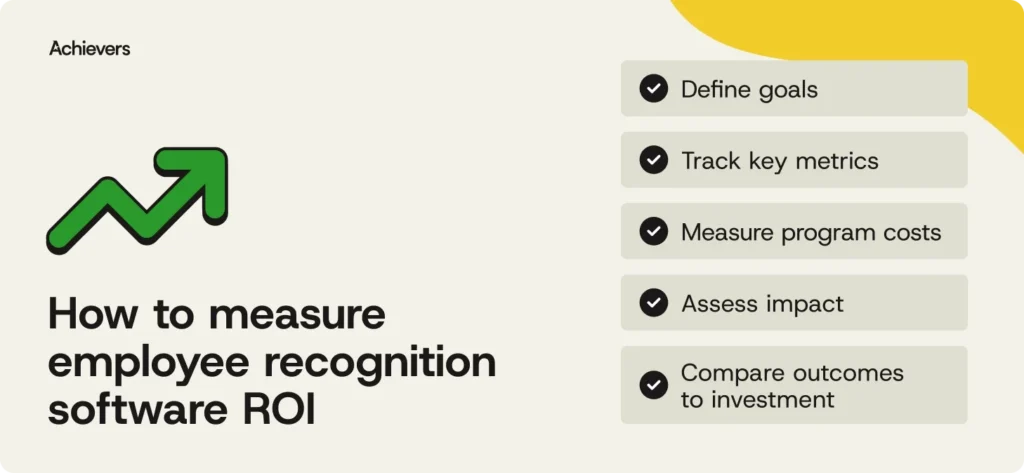
1. Define Your Strategic Goals
The initial and perhaps most critical step is to clearly articulate the specific outcomes that hold the greatest importance for your organization. Are the primary objectives to reduce employee turnover, enhance overall engagement levels, or significantly boost productivity? By defining these priorities upfront, recognition efforts can be intentionally aligned with measurable impact, transcending good intentions and moving towards demonstrable results.
2. Track Key Performance Indicators (KPIs)
Implement a robust system for monitoring changes in crucial metrics such as employee turnover rates, Net Promoter Score (eNPS), productivity benchmarks, absenteeism figures, and customer satisfaction scores. It is essential to capture these data points both before and after the implementation of your recognition platform. Furthermore, the recognition data itself – including who is being recognized, the frequency of recognition, and the sentiment expressed – provides invaluable context that breathes life into the quantitative numbers.
3. Accurately Measure Program Costs
A comprehensive calculation of your total program investment is imperative. This should encompass not only the software subscription fees but also the budget allocated for rewards and incentives, as well as the administrative time saved through automation. Recognition software often proves its worth rapidly by streamlining manual processes, freeing up valuable HR time, and making the impact of the program transparent and easy to assess.
4. Compare Outcomes Against Investment
The ultimate test of ROI lies in comparing the achieved results to the initial investment. This involves translating the improvements in key business outcomes into tangible financial value. For instance, a reduction in employee turnover directly translates into significant cost savings. Similarly, enhanced employee engagement can be linked to higher productivity, and improved morale can contribute to stronger overall business performance. When recognition efforts are consistently measured against established business KPIs, the resulting return on investment often becomes self-evident.
5. Assess Cultural and People-Centric Impacts
Beyond quantifiable financial metrics, it is vital to assess how recognition influences the qualitative aspects of the employee experience. This includes tracking the impact on employees’ sense of belonging, the perceived visibility and effectiveness of leadership, and the alignment of individual actions with organizational values. These qualitative insights provide a crucial balance to the quantitative data, offering a deeper understanding not only of what has changed but also why it has changed.
Calculating ROI for Employee Recognition
At its core, calculating the ROI of employee recognition involves a direct comparison between the investment made in the recognition program and the resulting business outcomes it influences, with a particular emphasis on retention, engagement, and performance.
A simplified approach to conceptualizing this calculation is:

ROI = (Benefits – Costs) / Costs
To effectively estimate ROI, organizations should consider the following steps:
- Identify Tangible Benefits: Quantify the financial value of improvements in retention (e.g., reduced recruitment costs), productivity (e.g., increased output, revenue), and reduced absenteeism (e.g., minimized disruption, lost work hours).
- Sum Total Program Costs: Include all direct and indirect expenses associated with the recognition program, such as software, rewards, administration, and any associated training.
- Apply the Formula: Input the quantified benefits and costs into the ROI formula.
Rather than focusing on a single isolated metric, organizations gain the clearest understanding by examining trends over time and establishing direct connections between recognition activities and measurable business outcomes. When recognition is delivered frequently, consistently, and in alignment with strategic business goals, it emerges as a highly reliable driver of positive ROI.
The Key Business Outcomes Driving Recognition Software ROI
The true power of recognition software lies in its ability to shape employee behavior, and it is this behavioral transformation that ultimately drives enhanced performance. The objective is not merely to foster a more positive work environment, but to create the optimal conditions under which employees are intrinsically motivated to perform at their best and sustain that high level of performance over time.
The tangible returns on recognition software investments manifest in several critical areas:
Increased Productivity
Recognition provides employees with clear guidance on what constitutes "great work" and, more importantly, offers the motivation to replicate those successes. A simple, sincere "thank you" can achieve what complex dashboards often cannot: it reminds individuals that their efforts are noticed and valued. Over time, this consistent sense of visibility builds the quiet momentum that underpins every high-performing team.
Improved Retention
Recognition serves as a powerful tool to prevent valuable employees from questioning whether they would receive similar appreciation elsewhere. The "Engagement and Retention Report" by Achievers indicates that employees who feel appreciated at work are twice as likely to envision a long-term career with their current company. This translates directly into significant savings by mitigating the substantial costs associated with rehiring and retaining top talent.
Higher Engagement
Employee engagement is not an outcome derived from periodic surveys; it is cultivated through consistent acknowledgement and being seen. When recognition is a regular feature of the workplace, employees move beyond simply showing up; they actively buy into the organization’s mission and values. This leads to increased trust in leadership, more fluid collaboration, and a deeper, more invested approach to achieving shared objectives.
Enhanced Workplace Culture
Organizational culture is strengthened with every act of recognition. When recognition becomes an integral part of the daily work experience, stated organizational values are brought to life. The concept of belonging evolves into a shared, lived experience. Recognition ensures that culture remains firmly grounded in its people, rather than existing as mere aspirational statements.
Greater HR Efficiency
Recognition software offers more than just a means to celebrate employees; it is a powerful tool for optimizing HR operations. Automation handles routine administrative tasks, seamless software integrations ensure connected systems, and advanced analytics provide clear insights into program effectiveness. The net result is a reduction in the time spent managing programs and a significant increase in the time available for strategic impact-driven initiatives.
Better Customer Satisfaction
The internal employee experience has a direct and profound impact on the external customer experience. Recognition cultivates a positive ripple effect: motivated employees are more likely to deliver superior service, approach customer interactions with greater empathy, and demonstrate a proactive willingness to innovate. This positive cascade extends far beyond the organization’s internal operations, as highly engaged and appreciated teams are instrumental in creating satisfied and loyal customers.
Translating ROI Insights into Recognition Strategy
The true power of recognition data is unlocked when it is leveraged to inform and refine an organization’s strategic approach. The ultimate return on investment is achieved by connecting these insights directly to the core objectives that matter most to the business: performance, retention, and demonstrable impact.
Link Recognition to Business Goals
A fundamental step involves aligning internal and external recognition metrics with the outcomes that leadership prioritizes. This includes retention rates, performance indicators, engagement scores, and manager effectiveness. Recognition data can illuminate which teams are excelling, identify areas where connection may be diminishing, and demonstrate how recognition initiatives directly influence overall business results. When recognition data is mapped directly to overarching business goals, proving its ROI becomes straightforward and, crucially, sustainable.
Pair Data with Compelling Storytelling
The most impactful way to communicate ROI is by augmenting quantitative data with qualitative narratives. Utilize recognition data to substantiate anecdotes from employees, leaders, or teams whose performance experienced a significant uplift after feeling acknowledged and appreciated. This approach transforms a potentially dry ROI conversation, often confined to spreadsheets, into a compelling story of positive transformation and human impact.
Leverage AI-Powered Analytics for Precision
Artificial intelligence (AI) offers the capability to uncover subtle patterns and correlations that might elude traditional dashboards. For instance, AI can identify departments where recognition is quietly but effectively driving retention, or pinpoint teams at risk of burnout due to a lack of consistent appreciation. This advanced analytical capability enables more intentional and targeted recognition strategies, ensuring that the right message is delivered at the opportune moment to the individuals who most deserve it.
Showcase ROI Through Meaningful Outcomes
The presentation of ROI should transcend mere data points. Instead, focus on articulating the compelling narrative behind the numbers. Illustrate how recognition helped a team rebuild trust following a significant organizational change, or how a leader effectively utilized recognition to boost morale during a challenging fiscal quarter. These specific, real-world examples make the impact of recognition tangible and relatable.
Maintain a Cycle of Measurement and Evolution
When considering employee recognition or engagement initiatives, ROI should be viewed as an ongoing dialogue, not a one-time analysis. Continuously track key evolving metrics, including recognition frequency, program participation rates, shifts in engagement scores, and overall employee sentiment. This consistent monitoring allows for informed adjustments and strategic growth, ensuring that recognition programs remain dynamic and effective over time.
Real-World Recognition ROI Success Stories
While discussions around recognition and ROI are valuable, witnessing its tangible impact on business performance provides the most compelling evidence. The following organizations have partnered with Achievers, transforming appreciation into measurable performance gains:
General Motors (GM)
General Motors has demonstrated that genuine recognition, when consistently applied, yields significant organizational benefits. By collaborating with Achievers to unify 160,000 employees onto a single global recognition platform, GM successfully integrated appreciation into the fabric of its daily operations. The results were swift and impactful: within just 30 days, 87% of employees were actively participating in the platform, and recognition quickly emerged as a primary driver of engagement across the entire company. This initiative strengthened employee connection, mitigated attrition risks, and definitively proved that a strategic investment in recognition delivers substantial returns.
Sobeys
When Sobeys sought to enhance performance and strengthen connections across its extensive retail network, it strategically focused on employee recognition. In partnership with Achievers, Sobeys developed "Bring It!", a gamified recognition program that directly linked appreciation to key business objectives and fostered friendly competition. The program’s success was evident: cube truck utilization across its retail support centers increased from 77% to an impressive 86%. This outcome underscores how a thoughtfully designed recognition strategy can drive significant, measurable business results.
From Employee Recognition Software to Measurable ROI
The return on investment for employee recognition is unequivocally clear: by valuing employees, organizations invariably foster improved performance. Recognition transforms latent connection into committed engagement, effort into tangible impact, and organizational culture into a quantifiable asset.
The most significant organizational wins are realized when companies move beyond simply tracking engagement metrics like clicks or kudos and instead leverage recognition as a strategic lever to fundamentally transform how people collaborate and achieve shared objectives. This is where robust data converges with authentic human connection, generating ripple effects that are profoundly reflected in engagement levels, retention rates, and ultimately, business results.
At Achievers, this synergy between data and human-centric strategies is at the core of our mission. Our platform is engineered to make recognition scalable and, crucially, easily measurable, effectively converting everyday appreciation into enduring business impact. Because when recognition truly works, so does every other aspect of the organization.