The landscape of work has fundamentally shifted, with remote employment evolving from a pandemic-induced necessity to a deeply ingrained aspect of professional life. Current statistics reveal that approximately 27% of U.S. employees now operate on a full-time remote basis, a significant surge from pre-pandemic levels. This widespread adoption of remote work, while offering unparalleled flexibility, has simultaneously introduced a complex array of challenges. Professionals grapple with blurred lines between personal and professional lives, digital fatigue from constant screen interaction, and a palpable absence of the spontaneous connections that once fostered camaraderie and collaboration in traditional office settings.
Recognizing these evolving dynamics, the imperative for HR professionals to cultivate productive and engaged remote teams has never been more critical. When employees feel genuinely supported and connected to their colleagues and the organization’s mission, the positive ripple effects are undeniable, manifesting in enhanced performance, a robust company culture, and improved employee retention rates. This article delves into twenty actionable strategies designed to empower HR leaders in fostering environments where remote employees not only work effectively but truly thrive.
The Strategic Imperative for Remote Engagement
The successful engagement of a dispersed workforce is not an emergent phenomenon; it is the direct result of deliberate strategy and a deeply ingrained people-first philosophy. HR professionals must embrace a proactive approach, moving beyond reactive measures to implement robust frameworks that support remote employees. This involves empowering autonomy, fostering a sense of belonging, and creating intentional spaces for connection, even across geographical divides. The following twenty tips offer a comprehensive toolkit for HR professionals aiming to elevate productivity, boost morale, and cultivate a strong sense of belonging within any remote or hybrid work environment.
Twenty Actionable Strategies for Engaging Remote Workers
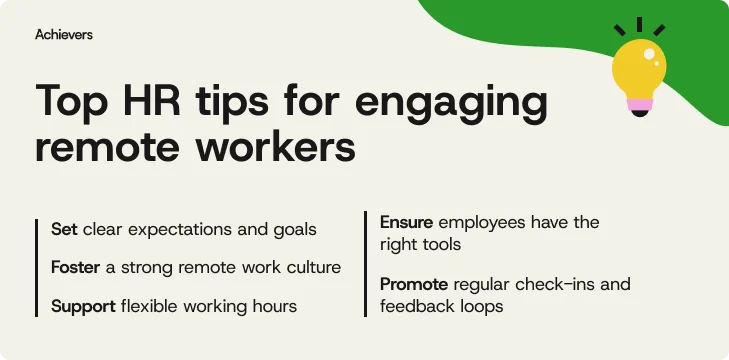
1. Setting Crystal-Clear Expectations and Goals
A cornerstone of any successful work arrangement, especially remote setups, is the unambiguous definition of expectations and objectives. When goals are vague or poorly communicated, remote work quickly unravels, leading to confusion and inefficiency. HR professionals must prioritize the establishment of specific, measurable, achievable, relevant, and time-bound (SMART) objectives. Clearly articulating what success looks like, including defined timelines and individual ownership, ensures that employees can focus their energy on meaningful contributions rather than deciphering ambiguous directives. Documented and readily accessible goals serve as a constant point of reference, minimizing interpretation and maximizing productive output.
2. Cultivating a Resilient Remote Work Culture
Company culture does not cease to exist simply because employees are no longer co-located. Instead, it manifests differently, requiring intentional nurturing. HR leaders should reinforce organizational values through consistent behaviors, the establishment of shared norms, and the implementation of regular, accessible team-building activities that foster continuity. The emphasis should be on small, repeatable moments of connection and shared experience rather than infrequent, large-scale virtual events that can often feel disconnected.
3. Equipping Teams with the Right Tools and Technology
The efficacy of remote work hinges on the availability of appropriate technological resources. Employees rely heavily on their tools to perform their duties effectively. HR departments must ensure that all remote team members have access to reliable collaboration software, secure network systems, and ergonomic home office setups that genuinely support their day-to-day workflows. When technology seamlessly removes friction points, productivity is a natural consequence.
4. Championing Regular Check-ins and Feedback Loops
The absence of regular, structured touchpoints can lead to a sense of disconnection among remote teams. The implementation of consistent one-on-one meetings and team check-ins is paramount. These sessions provide vital opportunities to share progress updates, identify and address challenges collaboratively, and deliver feedback in a timely and actionable manner. Frequent, open communication channels are essential for maintaining team alignment and ensuring that employees feel supported.
5. Embracing and Supporting Flexible Working Hours
Flexibility remains one of the most significant advantages of remote work. Empowering employees with the autonomy to structure their workdays around their personal rhythms and peak productivity times, while maintaining clarity on responsibilities and deadlines, fosters trust and autonomy. When the focus shifts from hours logged to tangible outcomes achieved, flexibility transforms into a powerful employee engagement driver.
6. Encouraging Proactive Time Management Strategies
Remote work inherently demands a higher degree of self-discipline and effective time management. HR can play a crucial role by sharing practical strategies such as task prioritization techniques, dedicated focus time blocking, and the practice of breaking down large projects into smaller, more manageable components. The adoption of these habits empowers employees to maintain focus and avoid feelings of overwhelm.
7. Establishing Clear Communication Guidelines and Protocols
To prevent burnout and maintain clarity, establishing robust internal communication guidelines is essential. This involves setting shared expectations regarding response times across various communication channels, defining meeting etiquette, and designating appropriate platforms for different types of messages. When employees understand when a response is expected and when it is not, their work feels more sustainable and less demanding.
8. Prioritizing Consistent Recognition and Celebration of Achievements
Employee recognition should not be relegated to annual reviews or infrequent company-wide announcements. Regular acknowledgment of contributions, public sharing of team wins, and the integration of appreciation into daily work routines are vital. Making recognition a consistent practice, rather than solely a response to major milestones, significantly boosts motivation and strengthens interpersonal connections.
9. Championing Mental Health and Employee Well-being
The demands of remote work, often characterized by extended screen time and virtual meetings, can take a significant toll on mental health. HR leaders must actively encourage employees to take regular breaks, respect personal boundaries, and foster an environment where open discussions about workload and potential job burnout are normalized. Prioritizing employee well-being is not merely a perk; it is a fundamental component of building a resilient and high-performing team.
10. Facilitating and Promoting Social Connections
Beyond professional roles, employees are individuals with diverse interests and personalities. Creating optional, low-pressure opportunities for genuine human connection is invaluable. This can range from informal virtual coffee chats and engaging online games to interest-based group discussions or casual check-ins. These moments of shared humanity make collaboration feel more natural and foster stronger working relationships.
11. Providing Robust Opportunities for Professional Development
Professional growth should not stagnate simply because employees are working remotely. Access to continuous learning, skill-building workshops, and development programs is crucial for career advancement and employee engagement. When individuals perceive a clear path for growth within the organization, their commitment and motivation to contribute are significantly enhanced.

12. Ensuring Fair and Transparent Career Progression Pathways
Remote employees should not be left to speculate about their career trajectories. HR must provide transparent guidelines on performance evaluation processes and clearly outline the criteria and pathways for advancement within different roles. This transparency builds essential trust and helps employees align their efforts with organizational growth objectives.
13. Designing a Supportive Remote-Friendly Onboarding Experience
The initial stages of employment can feel particularly isolating for new hires working remotely. A well-structured onboarding process, complete with clear documentation, introductions to key team members, and regular check-ins, is vital for helping new employees feel confident and connected more rapidly. A strong start invariably sets a positive tone for long-term success and retention.
14. Proactively Addressing and Mitigating Remote Work Isolation
The adage "out of sight, out of mind" can be detrimental to remote team engagement. HR professionals must proactively address potential feelings of isolation by checking in frequently, encouraging open dialogue about challenges, and creating safe spaces for employees to share both their successes and their struggles. A consistent feeling of being supported is a powerful antidote to isolation and a significant driver of engagement.
15. Encouraging Healthy Movement and Ergonomic Practices
Prolonged sedentary work can negatively impact physical health. HR can disseminate simple guidance on ergonomic best practices for home workspaces, emphasize the importance of posture, and encourage regular movement breaks throughout the workday. Small, consistent efforts to promote physical well-being can significantly enhance the daily work experience.
16. Supporting and Empowering Employee Resource Groups (ERGs)
Employee Resource Groups are far more than symbolic initiatives; they are powerful vehicles for building a sense of belonging and fostering connection among employees, particularly in distributed teams. Providing ERGs with visibility, necessary resources, and leadership involvement empowers them to cultivate meaningful communities across geographical boundaries and promote inclusivity.
17. Optimizing Meetings for Engagement and Effectiveness
The frequency and format of meetings require careful consideration in a remote environment. HR should advocate for the use of asynchronous communication whenever feasible and ensure that live meetings are focused, purposeful, and respectful of participants’ time. Conducting fewer, but more effective, meetings can prevent team fatigue and maintain energy levels.
18. Implementing Meaningful Incentives for Engagement and Performance
Strategic incentives serve to reinforce desired organizational behaviors and outcomes. Whether through recognition, monetary rewards, or valuable perks, acknowledging employee effort and contributions encourages sustained engagement and high performance. When effort is consistently seen and appropriately rewarded, motivation levels soar, directly impacting retention.
19. Soliciting and Acting Upon Regular Employee Feedback
Understanding the lived experience of remote employees is paramount. HR should implement diverse feedback mechanisms, including satisfaction surveys, open forums, and anonymous feedback channels. Crucially, these insights must be followed by tangible actions. Feedback loses its value if it does not lead to demonstrable change and improvement.
20. Leading by Example: The Power of Leadership Embodiment
Remote work culture is profoundly shaped by the observable behaviors of leadership. When leaders consistently communicate with clarity, respect personal boundaries, actively recognize employee contributions, and demonstrate authenticity, these positive behaviors cascade throughout the organization. Employees are more likely to emulate the actions of their leaders than to simply follow their directives.
Achievers: A Unified Platform for Remote Employee Engagement
While thoughtful policies are foundational, the practical implementation of remote engagement strategies often requires the right technological infrastructure. The Achievers platform offers a comprehensive solution for HR leaders, managers, and organizations seeking to effectively support, recognize, and engage their remote teams at scale. Its features are specifically designed to connect people, ignite motivation, and translate valuable insights into actionable improvements.
Key functionalities of the Achievers platform include robust recognition and rewards systems, enabling seamless appreciation for both individual and team achievements. This ensures that working remotely does not equate to working in isolation, fostering a culture of continuous acknowledgment. Points earned through recognition can be redeemed for a variety of real-world rewards, sustaining motivation and providing tangible benefits.
Furthermore, Achievers provides invaluable tools for capturing real-time employee feedback and generating actionable engagement insights. By moving beyond guesswork, HR teams gain a clear understanding of employee sentiment, allowing them to identify emerging trends, address concerns proactively, and implement data-driven strategies to enhance engagement before issues escalate. AI-powered analytics offer deeper understanding, enabling informed decision-making to foster a more engaged and connected workforce.
Cultivating a Flourishing Remote Workforce
The art of engaging remote employees, while requiring intentionality, consistency, and the right tools, is not an insurmountable challenge. By implementing strategies that range from setting clear goals and promoting flexibility to consistently recognizing contributions and actively gathering employee feedback, HR professionals can construct a remote work culture that is not merely functional but truly flourishing.
When employees feel consistently supported, recognized, and valued, regardless of their physical location, their productivity, loyalty, and overall commitment to the organization are significantly amplified. The Achievers platform serves as a powerful catalyst for integrating these strategies, enabling organizations to recognize, reward, and retain their remote workforce effectively. By exploring the Achievers employee experience platform, organizations can discover how to shape the behaviors that drive tangible results and foster a workplace where remote employees not only perform but thrive.