
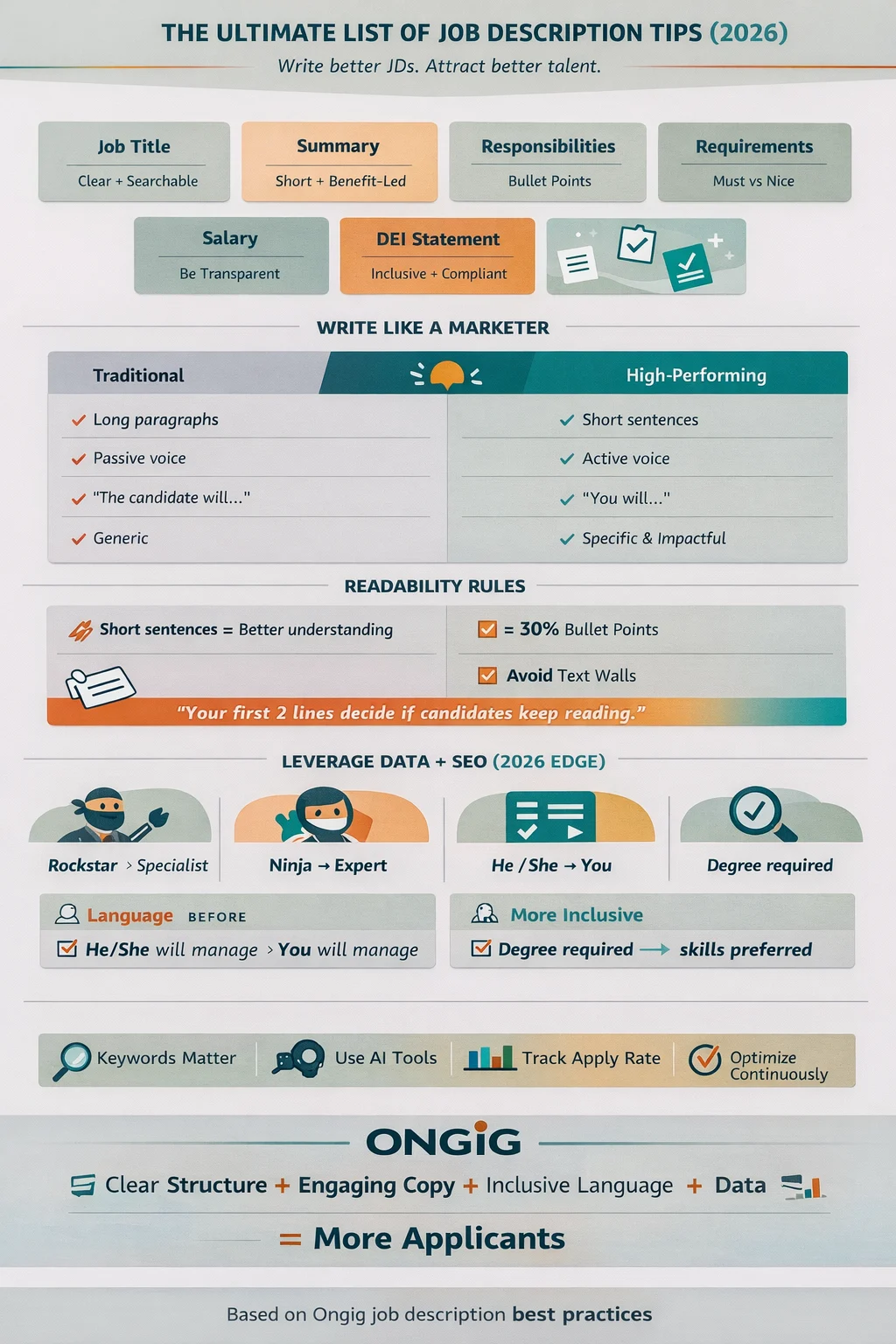
In the fiercely competitive global talent market, the humble job description (JD) has evolved from a mere administrative formality into a critical strategic tool for talent acquisition. The effectiveness of a company’s recruitment efforts hinges significantly on its ability to craft compelling, clear, and inclusive job descriptions that not only inform but also actively engage and inspire top candidates to apply. This comprehensive guide delves into best practices for developing superior JDs, integrating contemporary trends, technological advancements, and regulatory shifts that define the current recruitment landscape.
The Foundational Elements: Structure and Clarity
The journey to attracting exceptional candidates begins with a meticulously structured and impeccably clear job description. Just as a well-designed storefront invites customers, a thoughtfully organized JD draws in prospective employees, signaling professionalism and respect for their time.
-
Consistency in Presentation: One of the most fundamental principles is maintaining unwavering consistency across all job descriptions. This extends to the order of sections, ensuring that an "About Us" section, for instance, appears in the same place across every posting. Candidates often browse multiple roles on a company’s career page, and a consistent layout enhances readability, fosters a sense of familiarity, and projects a polished, professional employer brand. Discrepancies in structure can inadvertently convey disorganization or a lack of attention to detail, potentially deterring discerning applicants.
-
Unified Point of View (POV): Equally crucial is adopting a singular point of view (POV) throughout all JDs. Whether an organization opts for the first person ("we," "us"), second person ("you"), or third person, the chosen perspective must be applied universally. Industry best practices often recommend the first or second person, as they create a more personal, engaging tone that directly addresses the candidate. A third-person POV, while grammatically correct, can sometimes feel cold or impersonal. Inconsistent POVs across job postings can undermine a company’s credibility, making it appear sloppy and unprofessional to a candidate pool that is increasingly scrutinizing employer brands.
-
Standardized Boilerplate Copy: Boilerplate sections—such as "About Us," "Benefits," "Diversity Statement," and "Company Mission"—should feature identical copy across all job descriptions. These sections represent the core identity and values of the organization, and any deviation can dilute the employer brand message. Centralizing the creation and approval of this content, often involving legal and corporate communications teams, ensures accuracy, compliance, and a consistent voice. This meticulous attention to detail reinforces an image of professionalism and stability, key factors for candidates evaluating potential employers.
-
Precision and Conciseness in Language: In an era of information overload, attention spans are notoriously short. Research indicates that the average candidate spends a mere 14 seconds scanning a job description before deciding whether to apply. This brevity underscores the critical need for JDs to be short, simple, and direct. Every sentence must serve a purpose: to describe the role, outline requirements, or articulate why the job is desirable. Eliminating filler, corporate jargon, and overly verbose mission statements is paramount. A valuable "gut-check" rule is to delete any line that does not directly contribute to a candidate’s decision to apply. Cutting through the noise ensures that essential information is readily absorbed, maximizing engagement within those crucial initial seconds.
-
Avoiding Industry Jargon: While internal corporate speak may be second nature to seasoned professionals, it can be a significant barrier for external candidates, particularly those new to an industry or at entry-level positions. Studies reveal that a substantial percentage of job advertisements, sometimes as high as 38%, contain jargon. This exclusionary language not only confuses potential applicants but can also inadvertently narrow the talent pool by discouraging otherwise qualified individuals who may lack familiarity with niche terminology. Opting for clear, universally understood language ensures broader accessibility and an inclusive appeal.
Attracting Top Talent: Transparency and Appeal
Beyond structural integrity, effective job descriptions actively engage candidates by providing critical information transparently and highlighting compelling reasons to join an organization.
-
The Power of Pay Transparency: Compensation remains a primary driver for job seekers. An Indeed survey highlighted that nearly one in four candidates consider compensation the most important aspect of a job description. The trend towards pay transparency is accelerating, with 16 U.S. states having enacted pay transparency laws, requiring employers to disclose salary ranges in job postings. Beyond legal compliance, transparency about salary—even if presented as a competitive range rather than an exact figure—significantly boosts candidate interest and application rates. Companies that openly share salary information are often perceived as more trustworthy and equitable, giving them a distinct advantage in attracting top talent.
-
Showcasing Company Culture and Benefits: While salary is crucial, a comprehensive package of perks and benefits can be the deciding factor for many candidates. Explicitly listing advantages such as paid vacation time, monthly incentives, flexible work schedules, comprehensive health coverage, or professional development opportunities provides additional compelling reasons to apply. These benefits communicate a company’s investment in its employees’ well-being and career growth, differentiating it from competitors who may offer similar base compensation.
-
Defining the Work Environment: Location and Flexibility: The paradigm shift towards remote and hybrid work models has made job location and flexibility non-negotiable for a significant portion of the workforce. Gallup research indicates that 6 in 10 employees with remote-capable jobs desire a hybrid arrangement, with less than 10% preferring to be fully on-site. Ambiguity regarding work location is a major deterrent. Job descriptions must clearly state whether a role is on-site, hybrid (specifying required office days), or fully remote (detailing any time zone requirements or occasional travel). Vague statements like "flexible working options available" are no longer selling points; they are red flags that can lead to candidate drop-offs during the interview process. Clarity demonstrates respect for a candidate’s preferences and helps manage expectations from the outset.
-
Streamlining the Candidate Journey: Transparency in Application Process and Interactivity: The application process itself often remains a "black box" for job seekers, leading to anxiety and uncertainty. Companies that demystify this journey build trust and reduce candidate drop-off rates. Google’s "How We Hire" page, which meticulously outlines every stage from resume submission to offer, serves as an exemplary model. It even includes an "Interview Prep" section, offering advice and tips, demonstrating a commitment to supporting candidates.
Furthermore, integrating interactive elements into JDs can dramatically enhance engagement. Leveraging Google Maps API to embed a map showing the office location prevents candidates from needing to navigate away from the page. Incorporating instant messaging, text, email, or chatbot options directly within the JD provides immediate communication channels. Embedding videos or high-quality images showcasing the company culture, the team, or the work environment can make a JD significantly more dynamic and memorable than static text, capturing and retaining candidate attention more effectively.
Modernizing Recruitment: Skills, Inclusivity, and AI
The evolving demands of the modern workforce necessitate a departure from traditional hiring metrics and a greater embrace of inclusivity and technological tools.
-
Shifting to Skills-Based Hiring: The long-standing reliance on academic credentials and years of experience is giving way to a more pragmatic, skills-based approach. The National Association of Colleges and Employers (NACE) reports that 70% of employers now utilize skills-based hiring, a notable increase from previous years. This shift recognizes that a bachelor’s degree or a specific number of years in a role does not always equate to the actual competencies required for job success. Instead of mandating degrees, JDs should articulate the specific tasks a person will perform and the skills needed to perform them proficiently. For example, replacing "5 years of experience required" with a list of demonstrable abilities like "Proficiency in advanced data analysis techniques" or "Proven ability to lead cross-functional project teams" significantly broadens the talent pool. LinkedIn data confirms the profound impact of this approach, revealing that evaluating candidates based on skills rather than titles or education can expand the talent pool by nearly 19 times, leading to a 9.4x increase in eligible workers across all jobs. This approach democratizes opportunity and taps into a wider, more diverse pool of qualified individuals.
-
Fostering an Inclusive Application Process: Creating bias-free job descriptions is a moral imperative and a strategic advantage for attracting a diverse workforce. Unconscious biases, often embedded in language, can inadvertently filter out qualified candidates. Terms like "guru," "ninja," or gendered language can discourage specific demographics. The Oxford Dictionary defines bias as "a tendency to favour or dislike a person or thing, especially as a result of a preconceived opinion; partiality, prejudice." Companies must proactively identify and eliminate such language. Tools like Ongig Text Analyzer specialize in highlighting biases and suggesting inclusive alternatives, helping organizations cast a wider net and attract a truly diverse range of applicants. Moreover, prominently featuring an empathetic and customized Diversity, Equity, and Inclusion (DEI) statement, rather than a generic "equal opportunity employer" boilerplate, signals genuine commitment to diversity and inclusion, resonating deeply with candidates who prioritize such values.
-
Navigating the AI Revolution in JD Creation: Artificial intelligence (AI) is rapidly becoming an indispensable tool for recruiting teams, streamlining the creation of job descriptions. While AI can significantly accelerate the drafting process, its output requires rigorous human oversight to mitigate potential risks. Common pitfalls of unreviewed AI-generated JDs include:
- Inaccurate or irrelevant requirements: AI may pull data from disparate sources, generating requirements that do not align with the actual role.
- Inadvertent bias: AI models, trained on vast datasets, can inadvertently perpetuate existing biases in historical job postings, leading to gendered language or exclusionary terms.
- Inconsistent tone and style: Without proper guidance, AI can produce JDs that deviate from a company’s established brand voice.
- Lack of human nuance: AI-generated text may lack the empathetic and engaging tone necessary to connect with candidates on a human level.
The solution lies not in abandoning AI but in implementing a robust auditing process. Every AI-generated JD should be meticulously reviewed by a human, ideally run through a bias checker like Ongig’s Text Analyzer, before publication. Reviewers should specifically look for requirements that were not in the original brief, gendered language, and credential bars that do not reflect current hiring practices. As the conversation around AI transparency evolves, some companies are beginning to disclose when postings are AI-assisted, a practice that may become more common, even without legal mandates.
Operational Excellence: Automation and Quality Assurance
Maintaining high standards across numerous job descriptions, especially within large or rapidly scaling organizations, necessitates streamlined processes and vigilant quality control.
-
Leveraging Templates and Builder Tools: For organizations managing a high volume of job postings, the adoption of templates is indispensable. Templates ensure consistency in structure, branding, and core messaging while significantly accelerating the drafting process. Platforms like Microsoft Word and Google Docs offer robust template functionalities, allowing teams to create, store, and easily access standardized JD frameworks. Beyond basic templates, specialized job description builder software offers advanced features to further automate and optimize the creation process. These tools often include libraries of pre-written content, compliance checks, and integration with applicant tracking systems (ATS), helping teams write effective, inclusive JDs quickly and efficiently.
-
The Imperative of Proofreading and Readability: Despite technological aids, the final human touch remains critical. Grammatical errors, spelling mistakes, and awkward phrasing can severely undermine a company’s professionalism and attention to detail. Tools like Grammarly are invaluable for catching such errors, ensuring that every JD is polished and error-free. Beyond basic grammar, readability is a crucial factor. Software like Hemingway App helps assess how easily an audience can understand a text. Aiming for a readability score of 8 or below (equivalent to an 8th-grade reading level) ensures that job descriptions are accessible to the widest possible audience, preventing confusion and maximizing comprehension. A clear, concise, and error-free JD reflects positively on the organization and enhances the candidate experience.
The Broader Impact: Strategic Advantages of Superior JDs
The investment in crafting exceptional job descriptions yields significant strategic advantages that extend beyond individual hires. Optimized JDs lead to a higher volume of qualified applicants, reduced time-to-hire, and a stronger employer brand. They minimize misaligned applications, saving recruiters valuable time and resources. By embracing inclusivity and transparency, companies not only attract diverse talent but also cultivate a reputation as equitable and desirable employers. In an increasingly candidate-driven market, where talent has more choices than ever, a compelling job description is not just a recruitment tool; it is a powerful statement of a company’s values, culture, and commitment to its future workforce. Failure to adapt to these modern imperatives risks diminishing an organization’s ability to compete for the best talent, ultimately impacting innovation, productivity, and long-term success.






