The global business landscape is currently undergoing an unprecedented period of accelerated change, driven primarily by the rapid advancement of Artificial Intelligence (AI). This technological surge is not merely introducing new tools but fundamentally reshaping operational paradigms and recalibrating expectations across industries. However, a significant and often overlooked challenge is emerging: while organizational leaders are aggressively pushing for digital and cultural transformation, the human element—the employees—are struggling to reconcile these sweeping changes with their daily work realities. This disconnect, as highlighted by the Achievers Workforce Institute’s (AWI) 2026 State of Recognition Report, is not just an operational hurdle; it represents a profound human gap in confidence, clarity, and connection that is failing to keep pace with ambitious strategic objectives.
The Widening Gap: Strategy vs. Belief
The AWI report, a comprehensive analysis of global workforce sentiment and organizational practices, underscores a critical reality for 2026: while strategic initiatives are advancing at an unprecedented speed, the underlying belief and buy-in from the workforce are not. This lack of belief cannot be remedied through mere communication; it requires consistent reinforcement—daily signals that validate what matters, what is working, and what actions are expected next. This is precisely where effective employee recognition emerges as a transformative force, capable of bridging the chasm between leadership vision and employee adoption.
The rapid deployment of AI, for instance, necessitates significant shifts in how employees interact with technology, collaborate, and develop new skills. Organizations are investing heavily in AI tools, yet the success of these investments hinges not just on technological capability, but on human willingness and ability to adapt. If employees feel unprepared or unsupported, even the most cutting-edge AI solutions will struggle to deliver their promised value. The report suggests that the absence of robust, integrated recognition systems leaves employees adrift, uncertain of their role in the evolving landscape, and ultimately, disengaged from the very transformations intended to propel the organization forward.
Five Foundational Assumptions About Recognition That Leaders Must Unlearn
To effectively harness the power of recognition in this era of rapid transformation, leaders must critically re-evaluate long-held assumptions that often diminish its true potential. The AWI report identifies five key misconceptions:
-
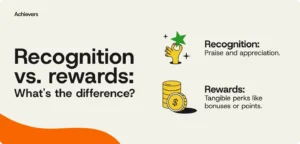
Recognition is Primarily About Reward: A common misconception is that recognition is synonymous with monetary incentives or tangible rewards. The report emphatically debunks this, asserting that the most meaningful recognition is specific, timely, and often entirely devoid of a material reward. While compensation and bonuses certainly play a role in employee satisfaction, their impact on daily motivation and behavior shaping is often transient. True recognition, focused on acknowledging specific efforts, contributions, or behaviors, fosters intrinsic motivation, a sense of belonging, and validates an individual’s impact, far beyond what any gift card can achieve. For example, a simple, heartfelt message acknowledging an employee’s creative problem-solving on a complex AI implementation task is often more impactful than a generic quarterly bonus, as it directly reinforces desired innovative behaviors.
-
Recognition Scales Through Automation: In an age of digital solutions, there’s a temptation to automate everything, including recognition. However, the report highlights a critical caveat: recognition, when fully automated, often fails to build genuine trust. Employees overwhelmingly value and trust human-generated recognition more than AI-generated messages. While technology can facilitate the delivery and tracking of recognition, the authenticity and emotional resonance of a message from a manager or peer are irreplaceable. AI can assist in identifying recognition opportunities or streamlining platforms, but the human touch—the specific details, the empathetic tone—is crucial for making recognition feel genuine and impactful, especially when navigating complex changes like AI adoption where reassurance and human connection are paramount.
-
Recognition is Solely a Manager’s Responsibility: Entrusting recognition solely to managers creates an inherent bottleneck. Managers, often burdened with numerous responsibilities, may not have the time or visibility to consistently recognize every valuable contribution across their teams. This centralized approach limits the frequency, immediacy, and breadth of recognition. The report advocates for a decentralized model, empowering all employees to recognize their peers, subordinates, and even superiors. This peer-to-peer recognition fosters a culture of mutual appreciation, creates a more comprehensive feedback loop, and ensures that recognition is delivered in real-time, directly from those who witness the impact of the work.
-
Recognition is the Outcome of Good Work: Many organizations view recognition as a retrospective award for work already completed. The AWI report argues forcefully that recognition is, in fact, a driver of good work. Frequent, specific recognition proactively increases employee connection, enhances clarity regarding expectations, builds trust within teams, and ultimately boosts performance. By consistently acknowledging progress, effort, and desired behaviors, recognition acts as a feedback mechanism that guides employees towards strategic goals, especially during periods of significant change where new behaviors need to be reinforced repeatedly. It’s a compass, not just a celebratory flag.
-
Recognition is a Culture Initiative: While recognition undoubtedly contributes to a positive organizational culture, reducing it to merely a "culture initiative" undervalues its strategic importance. The report positions recognition as an integral operational system that functions inside the flow of work. It acts as a real-time mechanism for reinforcing priorities, guiding execution, and signaling what is important in the context of daily tasks and projects. It is a dynamic feedback loop that ensures strategic objectives translate into observable, valued behaviors, making it a critical component of operational effectiveness, not just an HR "nice-to-have."
Change Readiness: The Unseen Risk for Leaders
In 2026, the most significant signal leaders should heed is not just employee engagement, but critically, employee readiness. The global data from the AWI report consistently reveals a pattern: employees are being asked to adapt to an accelerated pace of change faster than they feel equipped to. This often manifests not as outright resistance, but as hesitation. Employees are not inherently pushing back against transformation, but rather struggling to interpret its implications in real-time and understand how their roles and contributions fit into the evolving picture.
This gap between strategic ambition and workforce readiness carries tangible consequences. Organizations experiencing this disconnect report decreased productivity as employees navigate uncertainty, higher rates of attrition as skilled workers seek more stable or supportive environments, delays in critical project implementation, and a measurable reduction in innovation as employees become risk-averse. For example, employees unsure of how AI will impact their job security or daily tasks are less likely to proactively engage with new AI tools or suggest innovative applications.
What this tells us is subtle yet profound: employees do not need more generic messaging about change. They require clearer, consistent signals about what is working, what truly matters, and precisely where they fit within the transforming organization. Currently, these signals are weak or inconsistent in many organizations. The companies successfully navigating this readiness gap are not necessarily communicating more, but rather reinforcing better. They are leveraging recognition as a powerful signaling mechanism to guide their workforce through uncertainty.
Why Recognition Isn’t Broken, It’s Misunderstood
Many organizations believe they have a robust recognition strategy in place. They invest in programs, platforms, and campaigns, yet the global data paints a different picture. While recognition may be present, it often lacks the power to genuinely shape behavior when it matters most. A stark statistic from the report illustrates this: a mere 17% of employees receive recognition weekly, with the majority experiencing it sporadically or just a few times a year.
This infrequent and inconsistent delivery creates a fundamental problem: recognition often arrives too late to effectively guide action. When recognition is delayed, generic, or disconnected from the actual work being performed, it ceases to be a powerful reinforcement tool and instead becomes background noise—a token gesture rather than a strategic lever. This disconnect stems from a fundamental misunderstanding: recognition is not failing because employees don’t value it, but because it is frequently treated as an isolated event rather than an integrated system. It’s perceived as a celebration at the end of a project, rather than a continuous feedback loop throughout its lifecycle.

The Global Recognition Gap: A Leadership Signal for Deeper Issues
The most profound insight from the AWI State of Recognition Report transcends any single statistic; it lies in the overarching pattern observed. Across critical metrics such as belonging, trust, clarity, and performance, a consistent signal emerges: where reinforcement is weak, employee confidence collapses. For instance, in organizations with infrequent recognition, there is a marked decrease in employees’ sense of psychological safety, their willingness to voice ideas, and their belief in their leaders’ vision. These are not isolated engagement issues; they are symptomatic of a deeper problem: when signals regarding desired behaviors and valued contributions are inconsistent, people don’t actively push back against strategy; they passively disengage from it. This recognition gap, therefore, represents not a failure of intent, but a failure of effective reinforcement.
Recognition as Infrastructure, Not a Perk
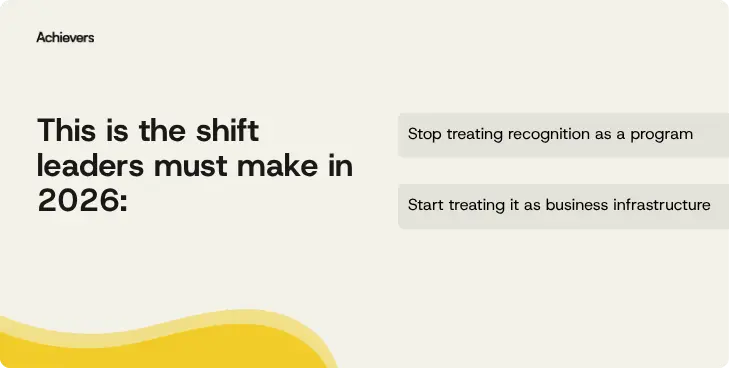
Leaders must fundamentally rethink their approach to recognition. It is often positioned as a cultural "add-on"—something that boosts morale or celebrates success after the fact. However, the data reveals a far more critical role: recognition is foundational infrastructure. It operates as a vital operational system that turns strategic priorities into tangible action and stabilizes performance, particularly during periods of intense change.
Recognition achieves what communication, training, and strategy alone cannot: it reinforces desired behaviors in real-time, provides immediate and actionable feedback, fosters a strong sense of psychological safety, and builds a cohesive community within the organization. The report explicitly demonstrates that recognition is the dynamic system that, moment-to-moment, translates overarching objectives into concrete actions, serving as a critical stabilizing force through the turbulence of transformation. It ensures that the workforce remains aligned and engaged even as the ground shifts beneath them, converting abstract goals into reinforced, practiced behaviors.
Recognition: The Missing Link in AI Transformation
Perhaps the most salient insight for the current business climate is that the AI transformation is not merely a technology problem; at its core, it is a behavior problem. Organizations are increasingly asking employees to:
- Embrace new AI tools and platforms: Requiring a shift from traditional methods to AI-powered workflows.
- Learn new skills and competencies: Adapting to roles augmented or redefined by AI.
- Adapt workflows and processes: Integrating AI into daily operations, demanding flexibility.
- Collaborate differently with both humans and machines: Fostering new forms of interaction and teamwork.
Yet, critically, employees frequently do not feel adequately supported or recognized for practicing these new, often challenging behaviors consistently. This lack of reinforcement is a primary reason why AI adoption often stalls or fails to reach its full potential. It’s not necessarily because the tools are unavailable or inadequate, but because the necessary behavioral scaffolding—the continuous encouragement and validation of new practices—is absent.
Recognition fills this crucial gap by:
- Reinforcing new behaviors: Highlighting successful adoption of AI tools or innovative uses.
- Celebrating successful adoption: Acknowledging individuals or teams who effectively integrate AI into their work.
- Making progress visible: Showcasing how AI is positively impacting outcomes through employee efforts.
- Building confidence in new ways of working: Providing assurance and validation as employees navigate unfamiliar territory.
As the report succinctly puts it, "recognition is what turns intent into action and strategy into practice." Without this active, ongoing reinforcement, even the most ambitious AI transformation remains largely theoretical, failing to translate into tangible, sustainable operational change.
What High-Performing Organizations Are Doing Differently
Organizations that are successfully navigating this complex landscape and effectively closing the readiness gap are not simply adding more recognition moments. Instead, they are fundamentally redesigning recognition as an intrinsic part of how work operates. These high-performing entities:
- Integrate recognition into daily workflows: Making it easy and natural for employees to give and receive recognition within the tools they use every day.
- Empower all employees to recognize: Fostering a culture where appreciation flows freely across all levels and teams.
- Prioritize frequency and specificity: Ensuring recognition is delivered often and details the exact behavior or contribution being acknowledged.
- Link recognition to strategic objectives: Clearly connecting recognized actions to broader organizational goals, including AI adoption and transformation efforts.
Most importantly, these organizations recognize a fundamental truth: employees do not need more communication about change; they need more proof that their efforts matter, that their new behaviors are valued, and that they are integral to the evolving vision. Recognition provides that tangible, human proof.
The Takeaway for Leaders
For leaders seeking a singular, potent insight from the 2026 State of Recognition Report, it is this: Recognition is not merely a reward bestowed at the culmination of a transformation journey. It is, in fact, the fundamental mechanism that dictates whether that transformation takes root and endures.
When recognition is:
- Frequent: Desired behaviors accelerate and become ingrained.
- Meaningful: Trust among colleagues and with leadership strengthens profoundly.
- Visible: Organizational alignment scales effectively across all levels.
Conversely, when recognition is absent, sporadic, or generic, even the most meticulously crafted strategies will falter and stall. The imperative for leaders today is not to merely refine existing recognition programs, but to strategically reposition recognition as a core operating system—an essential infrastructure—for fostering a resilient culture, driving sustained performance, and successfully navigating the accelerating pace of organizational change, particularly in the era of AI.
At Achievers, we are dedicated to equipping organizations and their people leaders with the sophisticated tools and data-driven insights necessary to leverage recognition as a powerful catalyst for positive change. We invite leaders to engage with us to explore how we can collaboratively build a recognition ecosystem that drives true transformation.