
Optimizing the speed of the job description (JD) process extends far beyond merely writing faster; it demands a strategic overhaul of the entire JD management journey, encompassing approval workflows, collaborative practices, version control, and efficient storage solutions. In today’s highly competitive talent landscape, where time-to-hire is a critical metric and candidate experience paramount, an inefficient JD process can severely impede an organization’s ability to attract top talent, escalate recruitment costs, and delay critical business initiatives. This article delves into a holistic framework designed to dramatically enhance the speed and efficacy of job description creation and management, ensuring a seamless and swift transition from identifying a hiring need to publishing an impactful job posting.
The Critical Role of Job Descriptions in Modern Hiring
Job descriptions serve as the foundational document in the talent acquisition process, acting as the primary communication tool between an organization and potential candidates. Beyond simply listing responsibilities and qualifications, a well-crafted JD is a powerful employer branding tool, a legal document ensuring compliance, and a crucial component in fostering diversity, equity, and inclusion (DEI). However, the average time-to-fill for many roles can span 30 to 45 days, with significant portions of this delay often attributed to bottlenecks in the JD creation and approval phases. These delays not only increase operational costs but can also result in losing desirable candidates to competitors with more agile hiring processes. Therefore, a strategic focus on accelerating JD processes is not merely about administrative efficiency but a fundamental pillar of modern talent acquisition success.
Phase 1: Pre-Drafting Essentials – Laying the Groundwork for Speed
Before any drafting begins, establishing a clear understanding of the role and its context is crucial. This preparatory phase can prevent significant revisions and rework later in the process.
- Comprehensive Job Analysis and Stakeholder Alignment: The initial step involves a thorough job analysis to define the actual needs of the role. This requires proactive engagement with key stakeholders, particularly the hiring manager and relevant department heads. By collecting detailed information upfront regarding the position’s objectives, key performance indicators, team dynamics, and necessary skills, organizations can eliminate ambiguity. Lucas Botzen, CEO of Rivermate, underscores this, stating, "We rely heavily on collaboration upfront to avoid many revisions later. Before we even start drafting, we spend a focused amount of time with hiring managers to clarify expectations, success metrics, and must-have versus nice-to-have skills. This helps us avoid vague or overly broad descriptions that would otherwise need multiple revisions. In my experience, a 15-minute alignment conversation can save hours of rewriting." This early alignment ensures that the JD accurately reflects the role’s requirements and the organizational culture, reducing the need for iterative changes.
- Defining Role Clarity and Language Guidelines: Establishing clear guidelines on the language, tone, and specific terminology to be used within JDs is vital. Without a unified approach, different contributors may use inconsistent phrasing, leading to confusion for both internal teams and external candidates. A pre-defined style guide can ensure that JDs are written in an easy-to-understand, inclusive, and brand-consistent manner, preventing extensive editing efforts focused on linguistic alignment. This also includes agreeing upon standardized sections and their expected content.
- Market Research and Competitive Analysis: Understanding the current talent market for similar roles is indispensable. Researching how competitors frame their job descriptions, the salary ranges they offer, and the specific skills they prioritize can provide valuable insights. This external perspective ensures the JD is competitive and attractive, helping to set realistic expectations and craft a compelling proposition from the outset.
Phase 2: Optimizing the Drafting Phase – Crafting Effective JDs Efficiently
Once the foundational work is complete, the focus shifts to the efficient creation of the JD itself.
- Structured for Success: The Power of Skimmability: An organized and clearly structured job description is paramount for both internal efficiency and candidate engagement. JDs that lack proper headings, bullet points, and logical flow are difficult for internal teams to review quickly and for candidates to absorb. A structure that prioritizes skimmability enhances comprehension, reduces reading time, and guides candidates to the information most relevant to them. Recommended sections include:
- Compelling Job Accurate and searchable.
- Concise Summary/Overview: Hook the candidate immediately.
- Key Responsibilities: Action-oriented bullet points.
- Required Skills and Experience: Clearly distinguish between "must-haves" and "nice-to-haves."
- Company Culture/Values: Attracts candidates aligned with the organization.
- Benefits and Perks: Highlight unique offerings.
- Call to Action: Clear application instructions.
This structure not only streamlines the internal creation and revision process but also significantly improves the candidate experience, as studies show candidates often spend only seconds scanning a JD before deciding whether to apply.
- Leveraging Templates for Consistency and Speed: Starting each job description from scratch is a significant time sink. Utilizing pre-approved templates can drastically cut down drafting time, potentially by 70%. Effective templates should include standardized boilerplate sections that are consistent across all JDs, such as:
- Company "About Us" section
- Equal Employment Opportunity (EEO)/Diversity statements
- Standard benefits and perks
- Application instructions
- Legal disclaimers
Beyond these fixed elements, templates should also provide structured placeholders for variable content like job responsibilities, required skills, and reporting lines. This ensures consistency in branding, legal compliance, and candidate experience, while allowing teams to focus on customizing the 30% unique details of each specific role.
- Data-Driven JD Creation: Learning from Past Hires: Moving beyond guesswork, analyzing historical candidate data from Applicant Tracking Systems (ATS) or other hiring platforms can provide invaluable insights for crafting more effective JDs. This data can reveal:
- Common keywords used by successful candidates
- Skills and experiences that correlate with high performance
- Demographic insights into applicant pools
- Candidate drop-off points during the application process
Milos Eric, General Manager at OysterLink, highlights this approach: "We found that starting to write JDs with actual candidate behavior in mind saved us time. So we decided to observe which listings our top candidates clicked on, what prompts them to apply, and what causes them to drop off. So, using this information, we reverse-engineer our JDs to make them more effective at converting top candidates to apply to our openings. This eliminates most of the time we’d waste creating JDs by second-guessing." This data-informed strategy allows organizations to refine their JDs to target the most qualified candidates more precisely, reducing time spent sifting through unsuitable applications.
Phase 3: Enhancing Workflow and Control – Collaboration and Governance
The journey of a JD involves multiple stakeholders, making efficient workflow management critical.
- Centralized Knowledge: The Job Description Library: A centralized, cloud-based library for all job descriptions is an indispensable time-saver. Instead of sifting through fragmented documents across various platforms (Word files, shared drives, Google Docs), a dedicated library allows teams to quickly search and filter for existing JDs by department, title, skill, or keywords. This repository serves as a valuable resource for inspiration, templates, and ensuring consistency across similar roles. It prevents redundant work and guarantees that teams are always working with the most current and approved versions.
- Fostering Collaborative Creation: Poor collaboration is a major impediment to JD speed. Issues such as unclear ownership, fragmented feedback, and lack of transparency can lead to significant delays. A well-defined collaborative process should clearly outline:
- Who is responsible for each section of the JD.
- The sequence of contributions.
- A designated platform for real-time collaboration and commenting.
- Clear communication channels to resolve queries quickly.
Disorganized collaboration results in wasted time spent reconciling conflicting edits, chasing approvals, and clarifying responsibilities, ultimately stalling the entire process.
- Robust Version Control: Eliminating Chaos: The absence of effective version control can lead to a chaotic and time-consuming process. Multiple stakeholders making edits without a clear audit trail often results in lost changes, redoing work, and confusion over the "correct" version. This not only wastes time but also introduces the risk of publishing an outdated or incorrect JD. Investing in tools that offer robust version control features, such as tracking who made which changes, when, and allowing for easy rollback to previous versions, is crucial. This transparency enables teams to monitor progress, understand individual contributions, and accurately estimate publication timelines.
- Streamlined Approval Workflows: A bottleneck in the approval process can drag JD creation from days to weeks. This is especially true when multiple stakeholders—from hiring managers and HR business partners to legal and compensation teams—must sign off. Common signs of a slow approval process include:
- Emails getting lost in inboxes.
- Difficulty tracking who has the document.
- Lack of clear deadlines for review.
- Manual chasing of approvals.
Implementing an automated approval workflow ensures that JDs move systematically through predefined stages. Each approver receives automated notifications with direct links to the document and clear deadlines, significantly reducing idle time and allowing for easy identification of any specific stage causing delays. This automation can transform a multi-week approval cycle into a matter of days.
Phase 4: Technological Augmentation – The Role of Software
Leveraging specialized technology is perhaps the most impactful strategy for accelerating and improving the JD process.
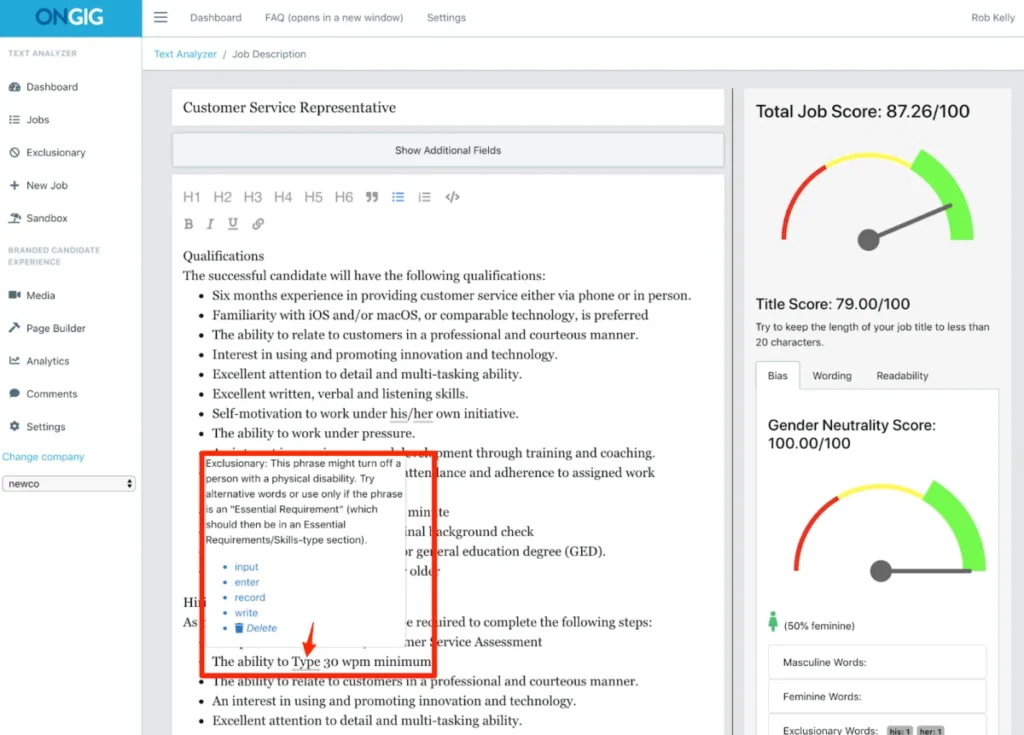
- The Transformative Impact of Job Description Software: Job description software is designed to eliminate manual processes and holistically manage the entire JD lifecycle, from drafting to publishing. Tools like Ongig Text Analyzer offer a suite of features that streamline operations significantly:
- AI-Powered Writing Assistance: Generate initial drafts or suggest improvements for clarity, conciseness, and inclusiveness.
- Bias Detection and Neutralization: Identify and remove biased language to promote diversity and broaden the candidate pool.
- Compliance Checks: Ensure JDs meet legal and regulatory requirements (e.g., EEO, ADA).
- Skill and Keyword Optimization: Recommend relevant skills and keywords to improve searchability and attract qualified candidates.
- Integrated Templates and Library: Provide access to pre-approved templates and a centralized repository of existing JDs.
- Collaborative Editing and Version Control: Facilitate real-time collaboration with robust tracking of changes.
- Automated Approval Workflows: Streamline the review and sign-off process.
- ATS Integration: Seamlessly publish JDs to applicant tracking systems and job boards.
By automating repetitive tasks and providing intelligent assistance, JD software can reduce drafting time by a significant margin, while also improving the quality and effectiveness of the descriptions.
Phase 5: Continuous Improvement and Best Practices
Even with advanced tools and processes, ongoing refinement is key.
- Adapting and Reusing: Modifying Existing Job Descriptions: When hiring for similar roles, there’s no need to reinvent the wheel. Copying and modifying existing, approved job descriptions from a centralized library is an efficient approach. While leveraging approximately 70% of common elements, the remaining 30% can be customized to reflect the unique aspects of the new role, such as specific duties, team dynamics, or evolving skill requirements. This practice ensures consistency and saves considerable time compared to drafting from scratch.
- The Essential Job Description Checklist: Even in a highly optimized workflow, oversights can occur. A comprehensive checklist serves as a final quality assurance step before publishing. This checklist should cover critical elements to confirm the JD’s accuracy and completeness, preventing last-minute discoveries of missing information. A sample checklist might include:
- Accurate job title and department.
- Clear summary of the role’s purpose.
- Specific and measurable responsibilities.
- Mandatory vs. preferred qualifications clearly defined.
- Inclusion of company culture and values.
- Competitive salary range or compensation information.
- DEI statements and inclusive language review.
- Correct application instructions.
- Legal and compliance review completed.
- All necessary approvals obtained.
This checklist can be customized to reflect an organization’s specific requirements, acting as a safeguard against errors and ensuring that every published JD meets high standards.
Broader Implications for Talent Acquisition and Business Success
Accelerating the job description process has far-reaching benefits beyond mere efficiency. Faster, higher-quality JDs contribute to a superior candidate experience, which is crucial for employer branding in a competitive market. Candidates are more likely to engage with clear, well-structured, and inclusive job postings, leading to higher application rates and a stronger talent pipeline. Reduced time-to-hire directly translates into lower recruitment costs and faster integration of new employees into critical roles, positively impacting productivity and business objectives. Furthermore, by embedding DEI principles and compliance checks into the JD creation process, organizations can build a more diverse workforce and mitigate legal risks.
In conclusion, boosting the speed of the job description process is not a superficial tweak but a strategic imperative for modern organizations. By adopting a holistic approach that integrates pre-drafting clarity, optimized drafting techniques, robust workflow management, and powerful technological tools, companies can transform their talent acquisition capabilities, securing top talent swiftly and effectively.
April 9, 2026 by Harrison Mbuvi in Job Descriptions






