The strategic implementation of employee recognition platforms has become a cornerstone for modern organizations aiming to cultivate thriving work environments. For 2026, the leading platforms are distinguished by their ability to facilitate recognition that is not only effortless and frequent but also deeply measurable, directly influencing critical metrics such as engagement, retention, and productivity. These robust solutions seamlessly integrate peer-to-peer and manager recognition, offer a spectrum of meaningful rewards, ensure secure software interoperability, provide universal access via offline and mobile capabilities, and deliver comprehensive reporting that illuminates the impact of recognition across the entire workforce.
The Evolving Landscape of Employee Appreciation

Employee recognition, once largely confined to annual service awards or occasional manager-led accolades, has undergone a profound transformation. This evolution is driven by a confluence of factors, including shifting workforce demographics, the rise of remote and hybrid work models, and a growing understanding of human psychology in the workplace. Younger generations, in particular, crave continuous feedback and appreciation, moving beyond monetary incentives to value intrinsic recognition that affirms their contributions and aligns with company values. The fragmented, often manual systems of the past proved inadequate for a dispersed, dynamic workforce, necessitating the adoption of sophisticated digital platforms.
The business case for robust recognition is compelling. Research consistently demonstrates a direct correlation between effective recognition programs and improved organizational performance. Companies with strong recognition cultures often report significantly higher employee engagement, lower turnover rates, and enhanced productivity. For instance, studies by Gallup indicate that organizations with highly engaged employees outperform their peers by 147% in EPS, and a key driver of engagement is regular recognition. The global employee recognition software market is projected to grow substantially, reflecting the increasing investment by organizations seeking to harness these benefits. By 2026, the market is characterized by solutions that not only streamline the act of giving recognition but also embed it into the very fabric of daily operations and company culture.
Defining Excellence: Core Features of Leading Recognition Platforms
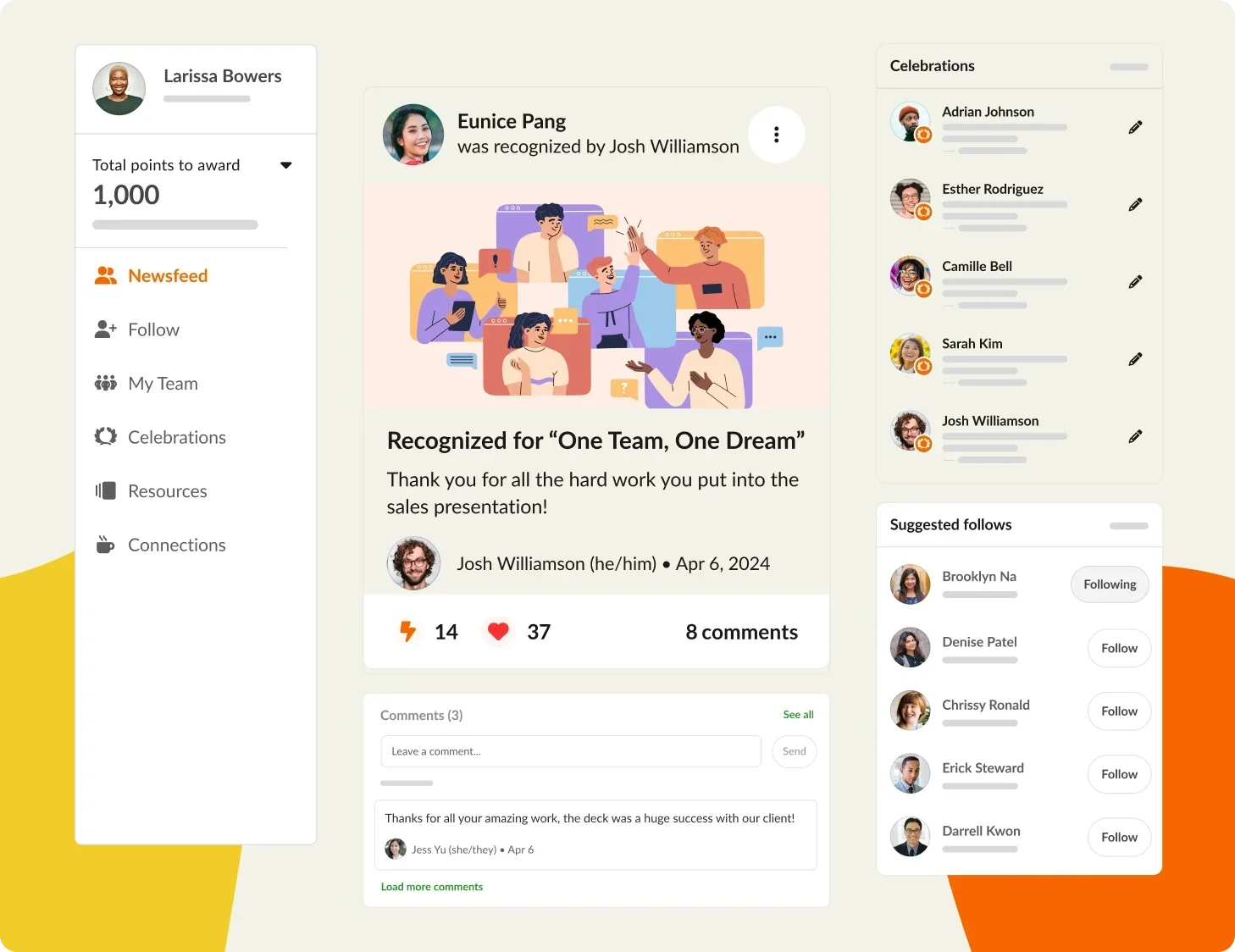
The most impactful employee recognition platforms are characterized by simplicity, seamless integration, and a profound understanding of organizational culture. When evaluating these platforms, several critical features stand out:
- Integrated Recognition Models: The strongest platforms combine both peer-to-peer and manager-led recognition. Peer recognition fosters a culture of mutual support and appreciation, making recognition more frequent and authentic. Manager recognition, conversely, reinforces strategic priorities and individual development.
- Customizable and Meaningful Rewards: Beyond generic gift cards, top platforms offer diverse reward catalogs, including merchandise, unique experiences, charitable donation options, and company-specific perks. Customization extends to point values, budgets, eligibility rules, and redemption options, ensuring rewards resonate personally with a diverse global workforce.
- Seamless and Secure Integrations: For recognition to become part of the "flow of work," platforms must integrate securely with existing HRIS, communication tools (like Slack, Microsoft Teams, Outlook), and other enterprise software. This minimizes friction and enhances user adoption while adhering to stringent data privacy standards like GDPR and CCPA.
- Universal Access (Offline and Mobile): Recognizing the prevalence of remote, hybrid, and frontline workers, leading platforms offer intuitive mobile applications and, where necessary, offline capabilities. This ensures that every employee, regardless of their work location or device, can give and receive recognition easily.
- Advanced Reporting and Analytics: Effective platforms move beyond mere activity tracking. They provide actionable insights into recognition patterns, sentiment analysis, and the direct impact of recognition on key HR metrics such as engagement scores, retention rates, and productivity improvements. This data is crucial for HR leaders to demonstrate ROI and refine their strategies.
- Behavioral Science Integration: The most advanced platforms leverage behavioral science principles to encourage desired behaviors and maximize the impact of recognition. This might include nudges, prompts, and program design informed by psychological research to ensure recognition is frequent, specific, and impactful.
- Scalability and Global Reach: For large, multinational enterprises, a platform must support multiple languages, currencies, and localized reward options across diverse regulatory environments, ensuring consistent program governance worldwide.
These features collectively ensure that recognition programs are not just implemented but are genuinely embraced, consistent, and strategically aligned with overarching business objectives.
Customization: A Strategic Imperative for Global Workforces
A customizable employee rewards platform is no longer a luxury but a necessity. In a world where workforces are increasingly diverse in terms of role, location, career stage, and personal interests, a "one-size-fits-all" approach to rewards is inherently limited. Customizable platforms empower organizations to tailor every aspect of their reward programs – from the specific items in a reward catalog to the point values assigned, budgetary allocations, eligibility criteria, and redemption processes.
For large and global organizations, this level of customization is paramount. Employee preferences vary significantly across different cultures and regions. What constitutes a "meaningful" reward in one country might not resonate in another. The best platforms facilitate the offering of flexible reward options, such as locally relevant gift cards, unique merchandise, bespoke experiences, charitable donation opportunities, and company-specific perks, all while maintaining a consistent and unified program governance framework. When employees have the autonomy to choose rewards that genuinely matter to them, the impact of recognition is amplified, leading to increased participation, stronger reinforcement of company values, and the creation of a recognition culture that feels personal and motivating across various teams and geographical locations.
Leading Employee Recognition Platforms for 2026: An In-Depth Look
The market for employee recognition platforms is robust and competitive, with several providers offering specialized solutions. Here, we delve into 15 of the top platforms for 2026, examining their core strengths, ideal use cases, and notable features.
-
Achievers (G2 Rating: 4.7/5):
- Strengths: Achievers stands out as a highly customizable recognition and rewards platform built for scale, serving both mid-market and large enterprise organizations. Its foundation in behavioral science, spearheaded by the Achievers Workforce Institute, links appreciation directly to engagement, retention, and performance outcomes. The platform boasts the highest recognition frequency in the industry, with customers often seeing up to 5x greater improvements in productivity and culture. Its configurable global rewards marketplace covers 190 countries with over 3 million locally relevant options, free of markups. Seamless integrations with major tools like Microsoft, Outlook, Slack, and Workday, alongside a robust mobile app, ensure recognition fits naturally into diverse work environments. Backed by 24/7 global service in over 200 languages, Achievers combines innovation with proven customer success.
- Best for: Mid-market and enterprise organizations seeking a science-backed, highly scalable platform to integrate culture and performance globally.
- Weakness: Its comprehensive depth and scalability might exceed the requirements of very small teams, potentially leading to an over-engineered solution for businesses under 500 employees.
-
Mo (G2 Rating: 4.6/5):
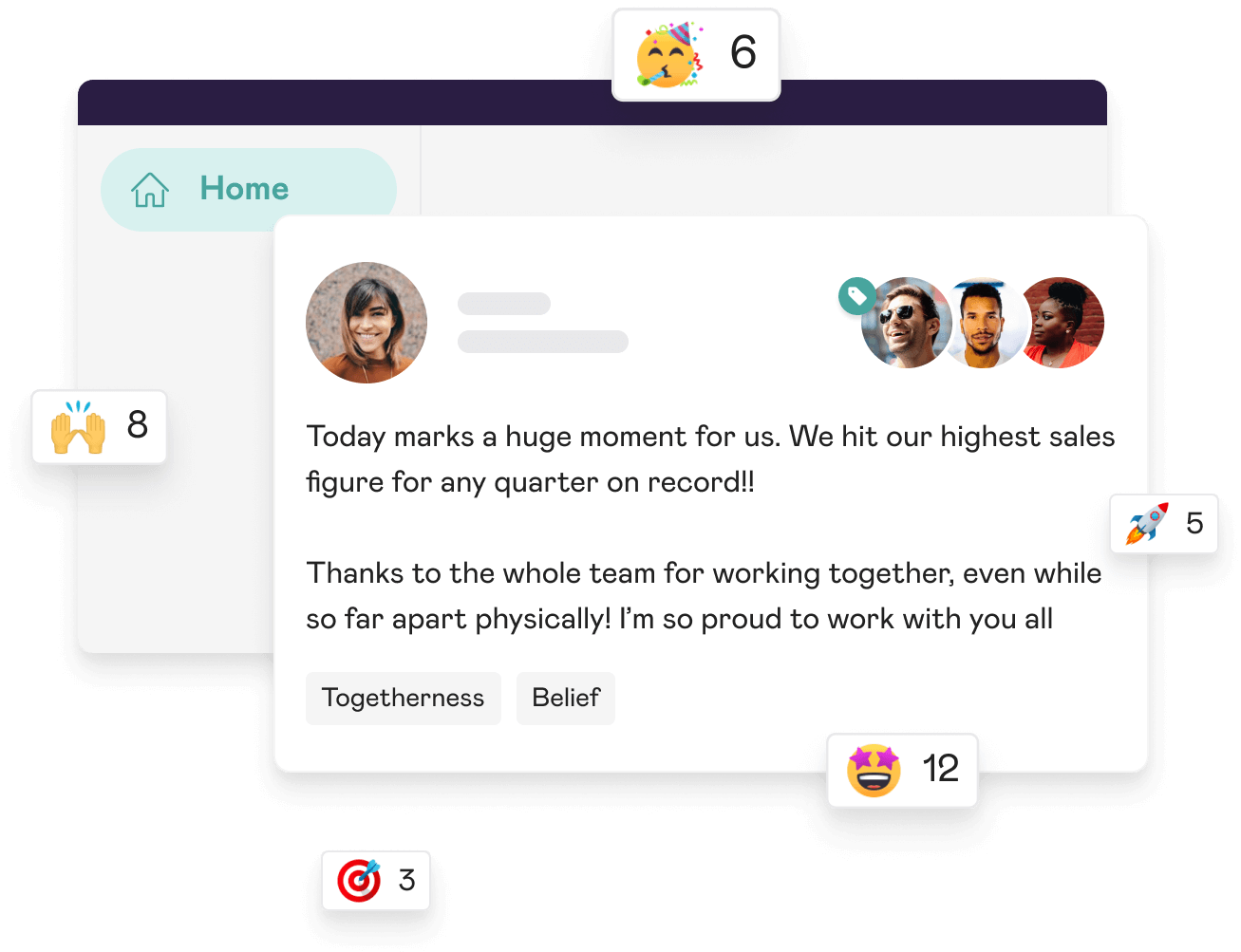
- Strengths: Mo is recognized for its ability to embed appreciation into the everyday workflow. It supports both manager-led and peer-to-peer recognition, integrating smoothly with popular collaboration tools like Microsoft Teams and Slack. Automated features for milestones and values-based recognition, coupled with smart prompts and real-time insights, help maintain consistent and visible appreciation across teams.
- Best for: Organizations prioritizing social, easy-to-use recognition that encourages frequent participation and aligns directly with company values.
- Weakness: While strong in recognition and engagement, its rewards catalog and advanced analytics may not be as extensive as those offered by more specialized, enterprise-focused platforms.
-
WorkTango (G2 Rating: 4.7/5):
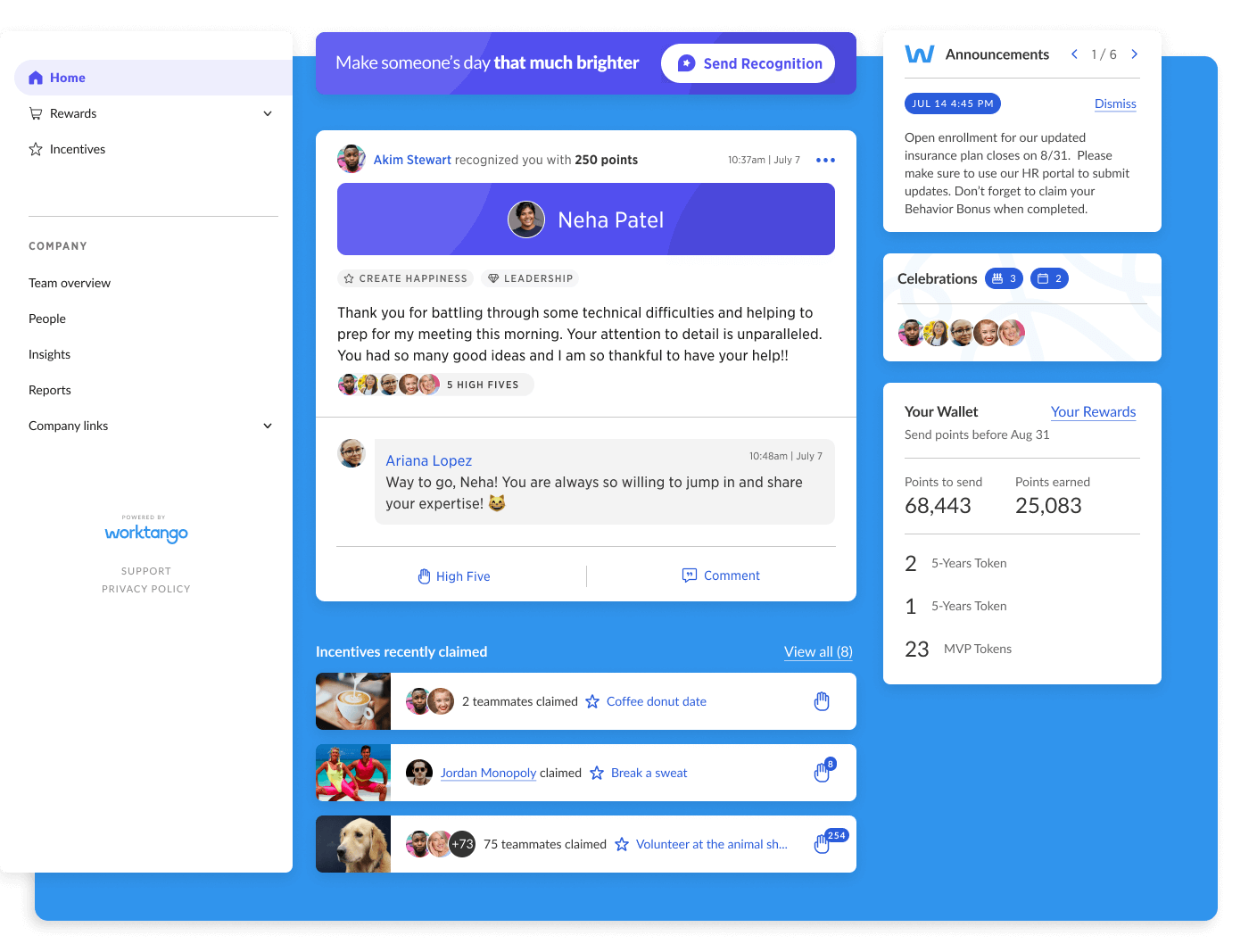
- Strengths: WorkTango provides an integrated recognition and rewards platform designed to streamline appreciation programs and track participation effectively. It supports both peer and manager recognition, featuring automation for milestones and incentives. Comprehensive reporting allows organizations to monitor activity across teams and understand program efficacy.
- Best for: Organizations seeking an integrated solution for recognition and rewards, with a focus on automation and reporting capabilities.
- Weakness: May not offer the same depth of behavioral insights, granular recognition frequency data, or advanced predictive analytics found in platforms designed for larger enterprises.
-
Motivosity (G2 Rating: 4.7/5):
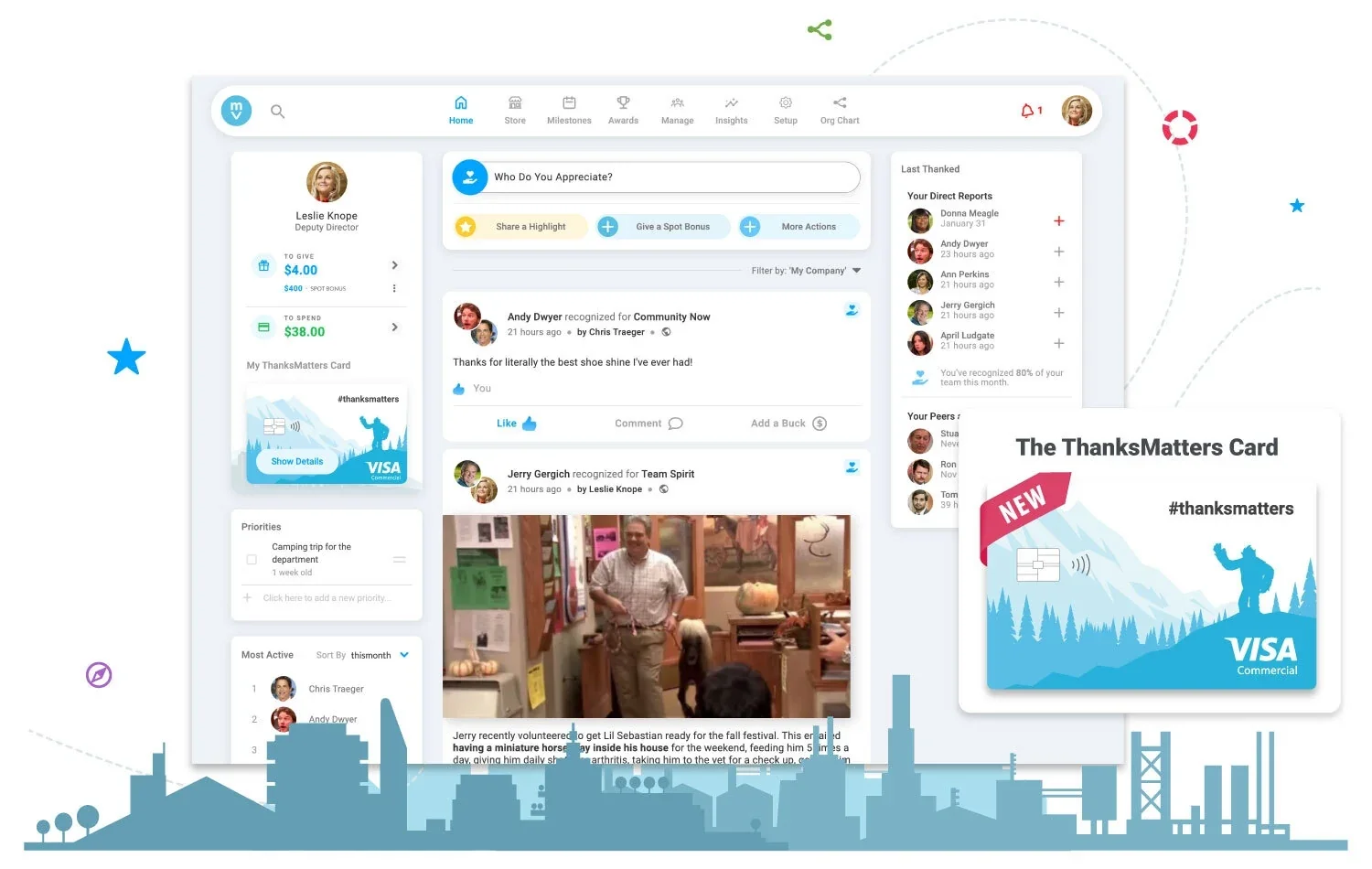
- Strengths: Motivosity focuses on automated and frequent appreciation, supporting peer-to-peer and manager recognition, milestone celebrations, and spot bonuses. Its platform includes tools for challenges, custom awards, and leader participation. Analytics and dashboards provide insights into recognition activity, employee sentiment, and program performance.
- Best for: Organizations looking for an automated recognition solution that blends peer recognition, manager tools, and data-driven insights to foster a culture of frequent appreciation.
- Weakness: Lacks the enterprise-level scalability, extensive global support, or deep behavioral science integration offered by larger, more established recognition and rewards platforms.
-
Kudoboard (G2 Rating: 4.8/5):
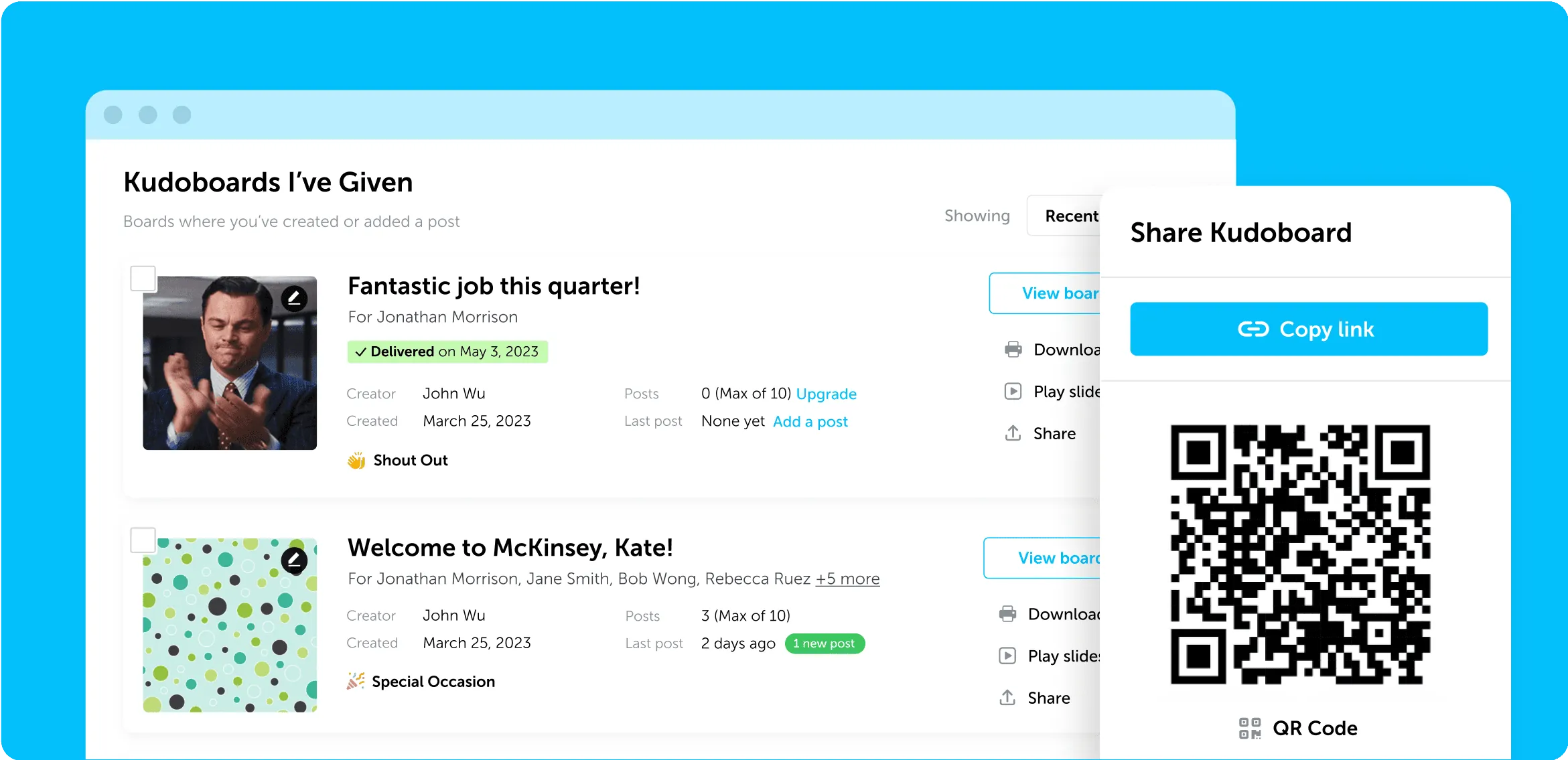
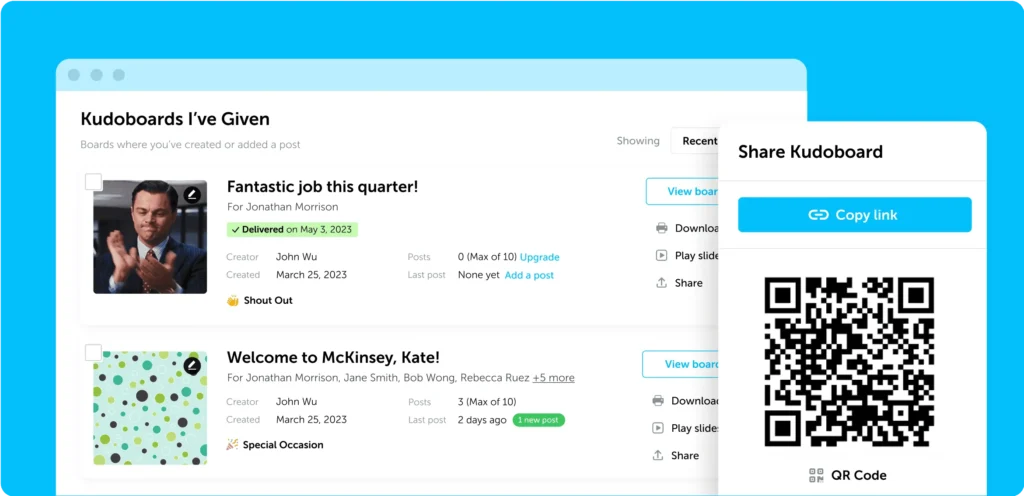
- Strengths: Kudoboard offers a simple yet powerful digital platform for group appreciation. It specializes in collaborative e-cards and message boards, making it easy for teams to celebrate milestones, events, and daily achievements. With automation for birthdays and anniversaries, customizable branding, and integrations with communication tools, it excels at creating visible, personalized moments of appreciation.
- Best for: Organizations prioritizing a simple, visual, and collaborative method for celebrating milestones and fostering peer recognition, especially in hybrid or remote settings.
- Weakness: Primarily focused on social recognition and group celebrations, it may not provide the comprehensive behavioral analytics, engagement data, or deep recognition insights available in more robust platforms.
-
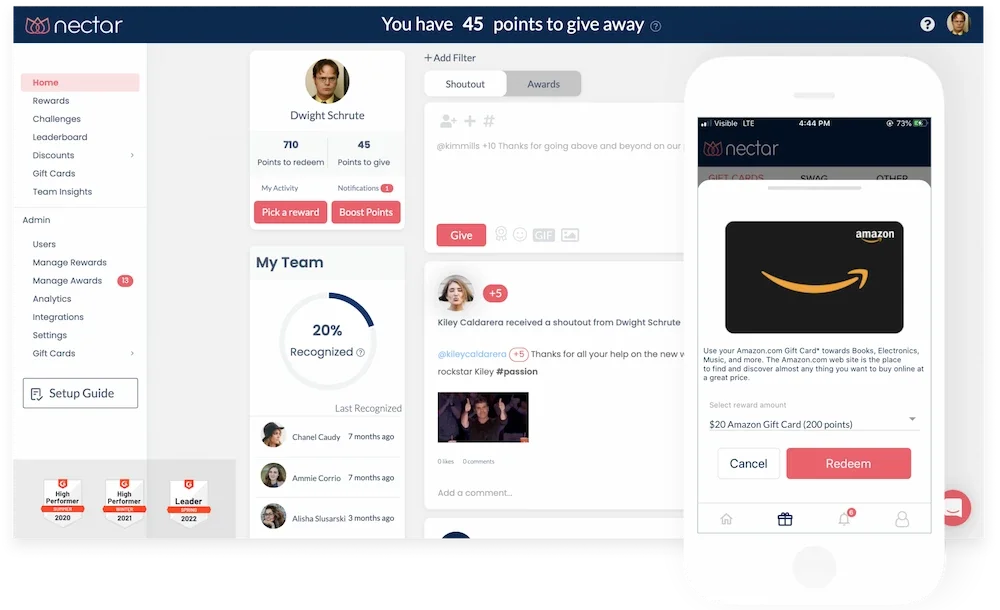
Nectar (G2 Rating: 4.7/5):
- Strengths: Nectar delivers an all-in-one recognition and rewards platform aimed at building culture through consistent appreciation. It supports peer-to-peer recognition, nomination programs, and milestone celebrations, while also offering communication tools for company-wide updates. The platform includes customizable reward options, such as gift cards and branded merchandise.
- Best for: Organizations seeking a unified recognition solution that combines appreciation, nominations, and internal communication capabilities within a single platform.
- Weakness: Its global reach, depth of analytics, and integration of behavioral science insights may not be as developed as those offered by more advanced, enterprise-grade platforms.
-
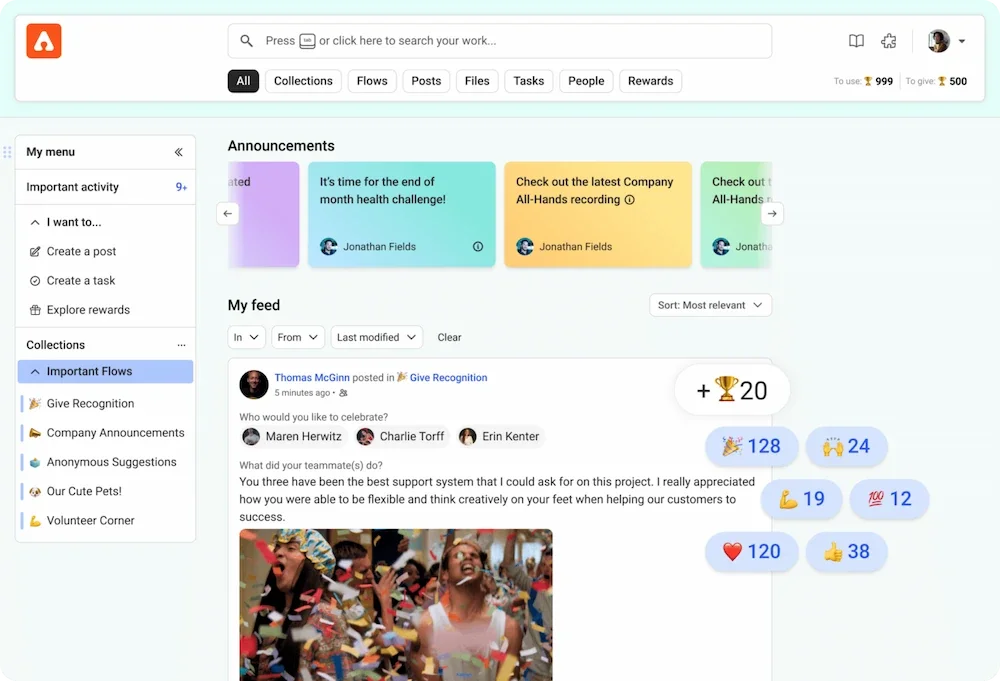
Assembly (G2 Rating: 4.9/5):
- Strengths: Assembly provides a recognition and rewards platform centered on peer-to-peer appreciation and value-based recognition. It allows employees to give recognition directly within popular communication tools like Slack and Microsoft Teams, creating a visible social feed. The platform supports awards, challenges, and automated celebrations, with analytics to track engagement.
- Best for: Organizations looking for a highly integrated peer recognition platform that embeds appreciation directly into everyday communication workflows.
- Weakness: May not offer the same depth of granular analytics, sophisticated behavioral insights, or extensive large-scale customization capabilities found in more data-driven recognition platforms.
-
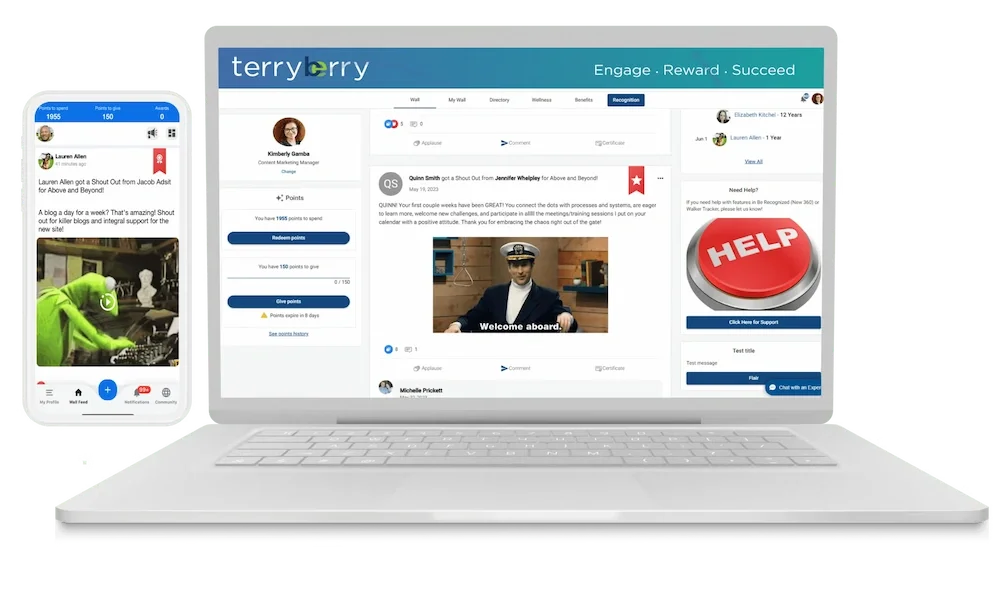
TerryBerry (G2 Rating: 4.6/5):
- Strengths: Terryberry offers a comprehensive recognition and engagement platform that unifies employee recognition, wellness programs, and feedback tools. It supports service awards, peer recognition, and milestone programs, alongside sentiment surveys and analytics for measuring culture, retention, and eNPS. The platform blends digital and symbolic awards with data-driven insights.
- Best for: Organizations seeking a unified approach to recognition, wellness, and engagement measurement under a single, integrated platform.
- Weakness: Its recognition frequency data and global rewards marketplace variety may not be as extensive or specialized as those offered by platforms solely focused on recognition.
-
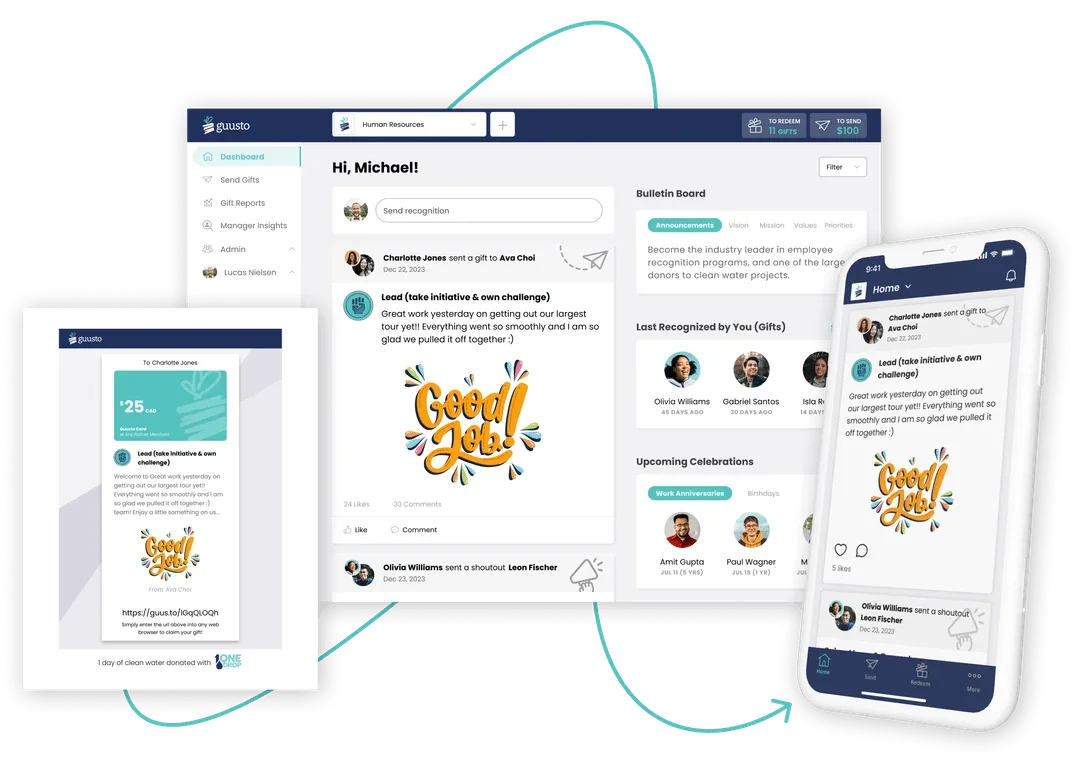
Guusto (G2 Rating: 4.9/5):
- Strengths: Guusto is an employee recognition platform designed to be accessible for both office and frontline workers. It utilizes a direct dollar-value reward system (no points) and allows recognition to be sent without requiring corporate email addresses. The platform supports peer recognition, milestone programs, and manager-led budgets, with flexible digital or printed delivery options.
- Best for: Organizations with dispersed, deskless, or frontline teams requiring an accessible recognition platform with a straightforward, no-points reward system.
- Weakness: Its simplified structure, while user-friendly, may not provide the same level of granular data analytics or extensive program customization found in more scalable, enterprise-focused recognition platforms.
-
Cooleaf (G2 Rating: 4.9/5):
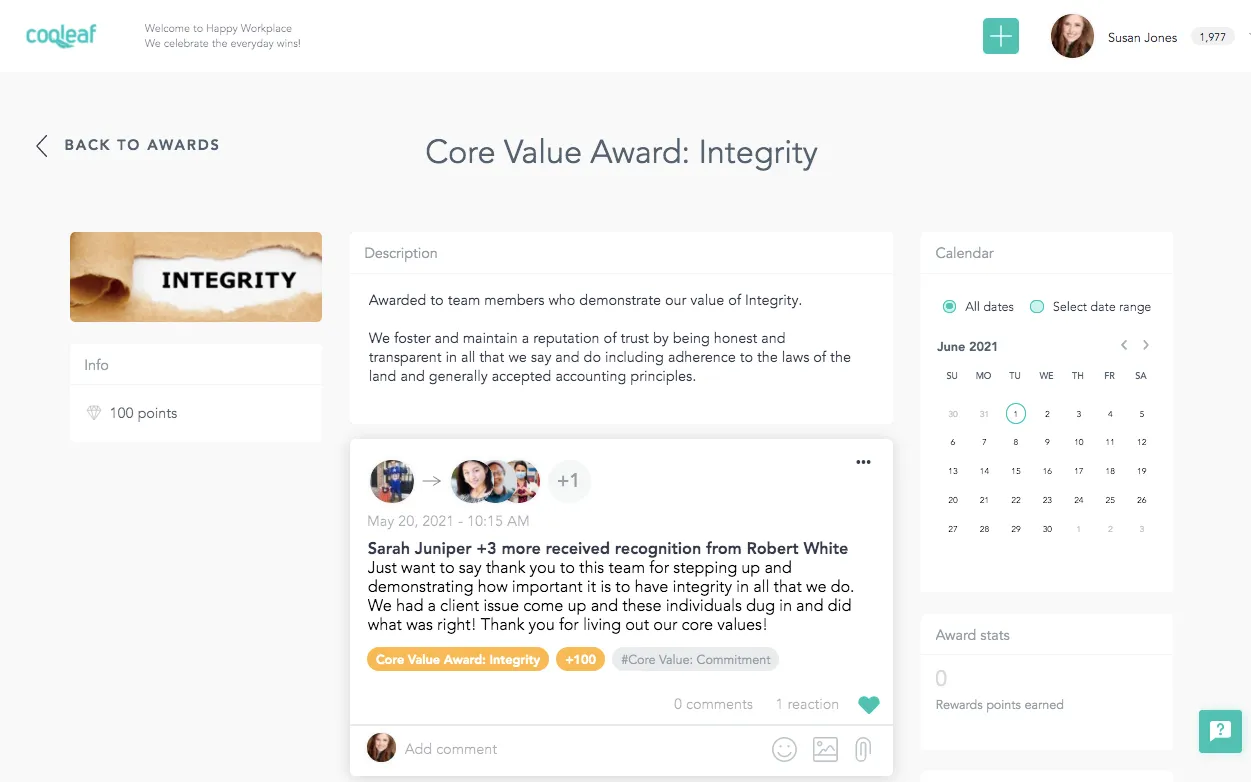
- Strengths: Cooleaf combines recognition, rewards, engagement programs, and employee feedback into one cohesive platform. It enables organizations to celebrate achievements, promote company values, automate milestones, and gather real-time insights through surveys and dashboards. The platform also supports community building through social feeds and DEI-focused initiatives.
- Best for: Companies aiming to manage recognition, engagement, and feedback initiatives comprehensively within a single, integrated platform.
- Weakness: Its broader engagement focus might mean less specialization in the nuanced aspects of global rewards variety or deep behavioral science integration compared to platforms built primarily for large-scale recognition.
-
Espresa (G2 Rating: 4.3/5):
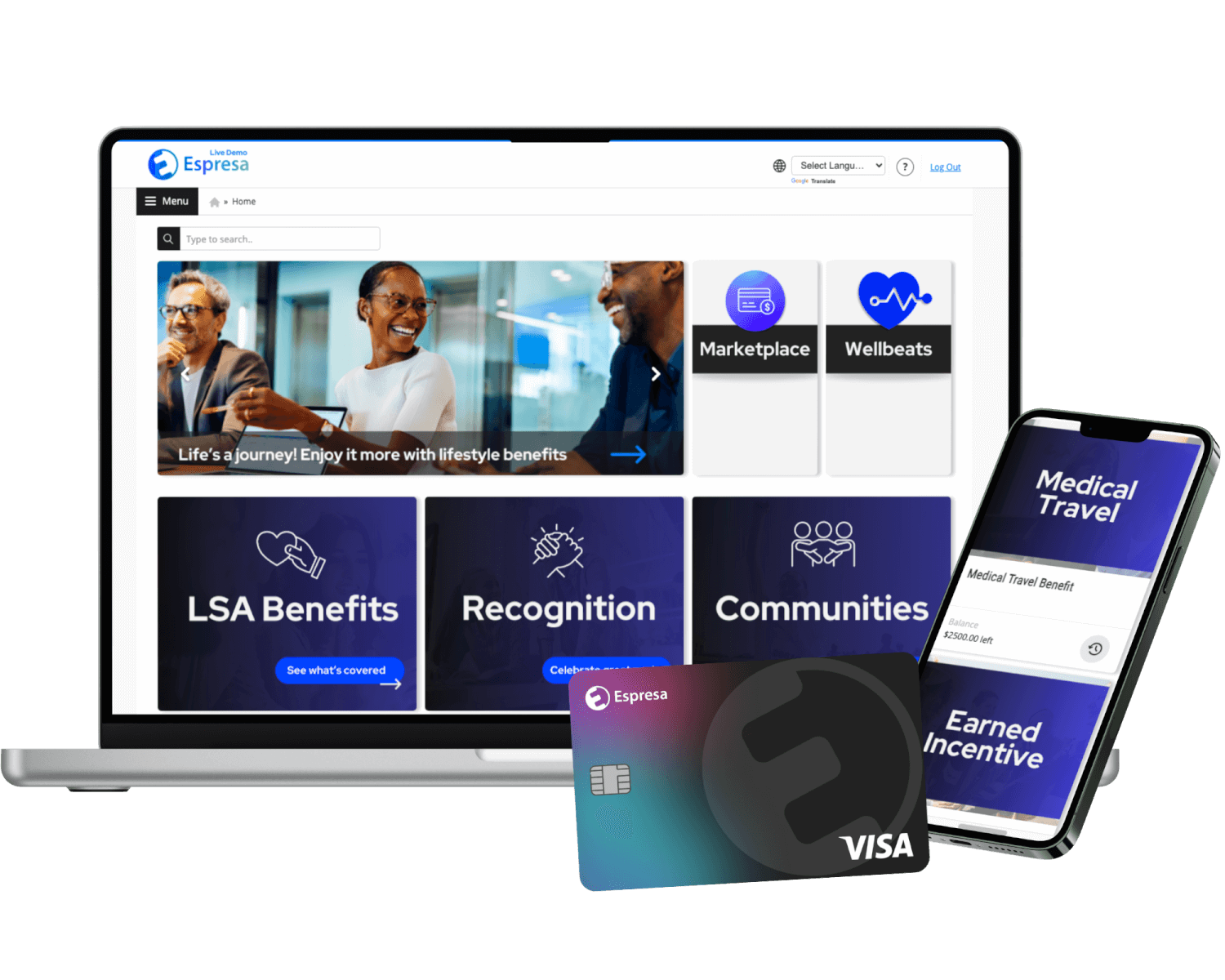
- Strengths: Espresa offers a recognition and rewards platform that uniquely connects appreciation with wellbeing and lifestyle benefits. It supports peer-to-peer and cross-organizational recognition, offering both monetary and non-monetary options through a mobile-first design.
- Best for: Organizations looking to integrate employee recognition with broader wellbeing programs and lifestyle benefits within a single, unified digital platform.
- Weakness: The platform’s broad scope, encompassing multiple HR functions, means its recognition tools might lack the deep data insights and specialized behavioral analytics found in platforms singularly focused on recognition.
-
Matter (G2 Rating: 4.7/5):
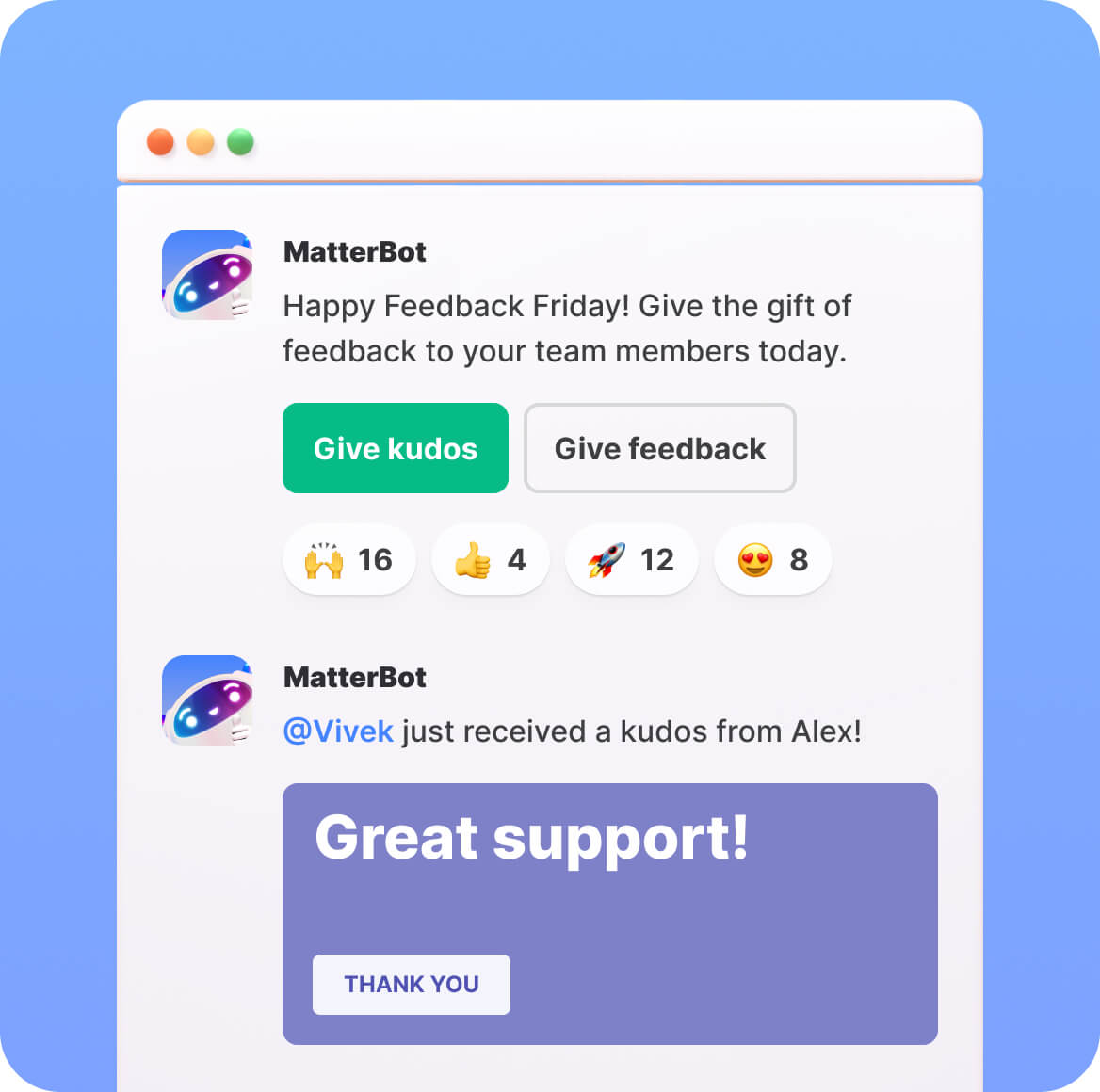
- Strengths: Matter is a recognition and feedback platform seamlessly integrated with Slack and Microsoft Teams. It fosters peer-to-peer appreciation through features like kudos, automated celebrations, and customizable templates linked to company values. The platform also includes coins-based rewards, pulse surveys, and analytics for tracking engagement.
- Best for: Companies that want an easy-to-use platform to embed recognition, feedback, and engagement directly into their primary communication tools (Slack or Teams).
- Weakness: While user-friendly due to its simplicity, it may lack the extensive reporting, advanced customization, and global scalability typically offered by larger, enterprise-grade recognition platforms.
-
Empuls (Xoxoday) (G2 Rating: 4.6/5):
- Strengths: Empuls is a comprehensive employee engagement platform that unifies recognition, rewards, surveys, incentives, and communication tools. It facilitates feedback collection, peer recognition, and reward distribution across global teams, supported by AI-driven analytics and a wide array of integrations for scalability and ease of use.
- Best for: Organizations seeking a single, robust platform to manage recognition, engagement, and employee communication across diverse regions and global workforces.
- Weakness: Its broad engagement focus may limit the depth of recognition-specific customization and granular insights compared to platforms that specialize exclusively in recognition.
-
Connecteam (G2 Rating: 4.6/5):
- Strengths: Connecteam provides an all-in-one platform tailored for managing deskless teams, integrating operations, communication, HR, and engagement tools into one mobile app. Its recognition features allow managers to celebrate achievements, issue digital badges, and distribute gift cards directly within the platform.
- Best for: Organizations with large or distributed frontline and deskless workforces looking for an integrated mobile-first application to manage various aspects of workforce management, including recognition.
- Weakness: As a broad workforce management solution, its recognition capabilities, while present, may feel secondary and less specialized in behavioral insights compared to platforms dedicated solely to employee recognition.
-
Vantage Circle (G2 Rating: 4.7/5):
- Strengths: Vantage Circle is an all-in-one platform combining recognition, wellness, surveys, and perks. It offers quick rollout and broad integration options. Recognition features include social feeds, awards/badges, automated milestones, and an extensive global rewards catalog with gift cards, experiences, merchandise, and Amazon Business options.
- Best for: Organizations seeking a consolidated engagement suite that integrates recognition, wellness, and perks with broad reward coverage.
- Weakness: May not provide the same depth of behavioral analytics or advanced recognition science as more specialized platforms, potentially offering a broader but less deep feature set in certain areas.
Strategic Selection: Choosing a Top Employee Recognition Platform
Selecting the right employee recognition platform is a critical decision that impacts organizational culture and performance. With a multitude of options available, a strategic approach is essential. Here are 13 key considerations:
- Alignment with Company Values: The platform should enable recognition that directly reinforces core company values and strategic objectives.
- User Experience (UX): It must be intuitive and easy to use for all employees, from frontline staff to executives, ensuring high adoption rates.
- Scalability: The platform should be capable of growing with the organization, accommodating increasing employee numbers and evolving needs.
- Global Capabilities: For international organizations, support for multiple languages, currencies, and localized reward options is non-negotiable.
- Integration Ecosystem: Seamless integration with existing HRIS, communication, and productivity tools is crucial for embedding recognition into daily workflows.
- Reward Flexibility: A diverse and customizable rewards catalog, including monetary and non-monetary options, ensures relevance and impact.
- Reporting and Analytics: The ability to generate actionable insights into recognition trends, program effectiveness, and business impact is vital.
- Mobile Accessibility: A robust mobile app is essential for reaching remote, hybrid, and deskless employees.
- Security and Compliance: Data privacy and security features must meet industry standards and regulatory requirements.
- Vendor Support and Implementation: Evaluate the vendor’s track record for customer support, implementation services, and ongoing partnership.
- Behavioral Science Foundation: Platforms that leverage psychological principles in their design can drive more impactful and sustainable recognition behaviors.
- Customization Options: The degree to which an organization can tailor the platform to its unique culture, programs, and branding.
- Cost-Effectiveness: Balance features and capabilities with the overall budget and potential ROI.
Securing Executive Buy-In: The Business Case for Recognition
Gaining executive buy-in for an employee recognition platform hinges on articulating its strategic value in terms of tangible business outcomes. Recognition is not merely an HR perk; it is a powerful driver of organizational health and performance. Research, such as the State of Recognition Report, consistently highlights the profound impact of strong recognition cultures:
- Improved Engagement: Companies with robust recognition programs often report significantly higher employee engagement scores, leading to more motivated and committed workforces.
- Reduced Turnover: Effective recognition can decrease voluntary turnover by up to 31%, preserving institutional knowledge and reducing recruitment costs.
- Enhanced Productivity: Recognized employees are typically more productive, contributing to higher output and efficiency.
- Stronger Culture: Recognition programs foster a positive work environment, reinforce desired behaviors, and build a sense of community and belonging.
By framing recognition as a strategic investment that directly contributes to these critical business drivers—rather than an expense—HR leaders can effectively advocate for the necessary resources and secure leadership support.
Case Study: General Motors’ Global Transformation Through Recognition
General Motors (GM), a multinational automotive giant with over 160,000 employees across six continents, faced a significant challenge in maintaining a cohesive culture and consistently reinforcing its values across a vast and diverse workforce. Their existing recognition programs were fragmented, manual, and localized, making it difficult for leaders to provide consistent appreciation and for employees to feel genuinely seen and valued. GM needed a single, unified global platform that was easy to use, highly visible, and tightly aligned with company behaviors.
By implementing a centralized recognition platform powered by Achievers, GM successfully embedded appreciation into the daily workflow of its global workforce. Employees gained the ability to instantly recognize peers, managers could participate with minimal effort, and milestone celebrations were automated, effectively replacing dozens of disconnected local programs with a single, shared, and scalable experience. This initiative transformed recognition into a frequent, social, and impactful aspect of GM’s culture.
The results underscored the profound impact of this strategic shift:
- 85% Employee Participation: A remarkably high adoption rate, demonstrating widespread engagement with the new system.
- 1.4 Million Recognitions: The sheer volume of appreciation exchanged highlighted the platform’s success in fostering a culture of continuous recognition.
- 15% Improvement in Employee Experience: A significant enhancement in how employees perceived their work environment and felt valued.
GM’s experience serves as a powerful testament to the fact that when recognition is made easy, visible, and integrated into everyday work, it can scale effectively and drive profound cultural and performance improvements across a global enterprise.
The Future of Employee Recognition and Business Momentum
The best employee recognition platforms are designed to deliver tangible results, not just symbolic gestures. Achievers, for instance, has demonstrated its capability to drive 2x the industry average recognition frequency, boasting leading integrations and a proven ability to influence desired behaviors. Such platforms empower companies to move the needle on engagement, productivity, and retention more rapidly and effectively than traditional methods.
As organizations navigate the complexities of the modern workforce, investing in advanced recognition platforms becomes a strategic imperative. These platforms transform everyday moments of appreciation into lasting business momentum, fostering cultures where employees feel valued, motivated, and deeply connected to their organizational mission. The future of work demands recognition that is not only personal and meaningful but also data-driven and seamlessly integrated, turning every instance of appreciation into a building block for sustained success.