Employee perks, once considered simple tokens of appreciation like casual Fridays or the occasional office ping-pong table, have undergone a profound transformation. In today’s competitive labor market, these benefits are no longer mere afterthoughts but critical strategic tools designed to foster engagement, drive retention, and cultivate a thriving workplace culture. The modern employee, increasingly discerning about their work experience, is seeking more than just a paycheck; they are demanding environments where they feel genuinely seen, supported, and valued.
Recent research underscores this shift in employee expectations. According to the Achievers Workforce Institute’s 2026 Engagement and Retention Report, a mere quarter of employees report feeling engaged, and an equally small proportion feel truly appreciated. This deficit in appreciation is directly correlated with declining engagement and retention rates, highlighting the urgent need for organizations to rethink their approach to employee rewards and recognition. Perks are now tasked with a far more significant role: signaling an organization’s commitment to its people and their overall well-being.
The Modern Imperative: Perks as Signals of Value
At their core, employee perks are benefits, rewards, and experiences offered by organizations that extend beyond base salary and standard benefits packages. However, the most impactful perks transcend superficial incentives or infrequent gestures. They are meticulously designed to answer a fundamental question for employees: "Do you recognize my contributions, and do you truly value them?" When this question is answered affirmatively and consistently, perks cease to be transactional exchanges and instead become powerful architects of the employee experience. Modern perks are strategically crafted to reinforce recognition, champion well-being, and foster a profound sense of connection between individuals, their work, and the organization as a whole.
The distinction between poorly designed and effectively implemented perks is stark. Ineffective perks, often generic or difficult to access, fade into the background, quickly forgotten. In contrast, well-conceived perks become integral to the daily work experience, serving as tangible reminders of an organization’s commitment to its workforce. This evolution reflects a broader societal shift, where employees are increasingly prioritizing purpose, well-being, and a sense of belonging in their professional lives.
Why Employee Perks Matter More Than Ever in Today’s Economy
The contemporary workplace is characterized by a dynamic and often challenging talent landscape. Organizations can no longer assume that competitive compensation and a standard benefits package will automatically translate into sustained employee engagement and loyalty. Employees are now more attuned than ever to the nuances of their work environment, paying close attention to how frequently their efforts are acknowledged, whether their personal needs are accommodated, and if their contributions feel genuinely valued on a day-to-day basis.
In this climate, employee perks play a pivotal role in transforming abstract notions of appreciation into tangible, felt experiences. When perks are thoughtfully integrated to underscore employee recognition and support the realities of everyday work, they not only elevate employee sentiment but also demonstrably improve critical business outcomes. Data from the Achievers Workforce Institute reveals a compelling correlation: employees who feel genuinely appreciated are 12 times more likely to find their work meaningful and an astounding 17 times more likely to envision a long-term future with their employer.
Beyond the immediate impact on individual sentiment, employee perks are proving to be an indispensable tool for talent retention in a fiercely competitive market. Relying solely on compensation is an increasingly insufficient strategy for retaining top talent. Perks serve as a vital bridge, connecting employee effort to visible and consistent appreciation, thereby reinforcing commitment and reducing the likelihood of attrition.
A Spectrum of Impact: Categorizing Effective Employee Perks
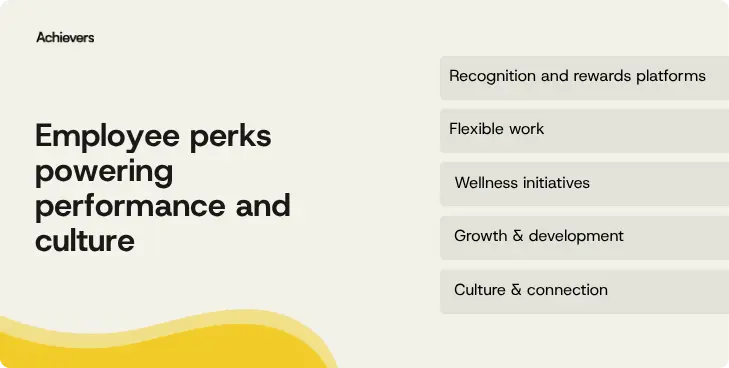
To navigate the diverse array of available perks, it is beneficial to categorize them based on their intended impact. The most effective programs share a common thread: they make appreciation visible, actively support how people work, and reinforce a connection to the organization’s culture and values. A comprehensive look at impactful employee perks reveals several key categories:
Recognition and Rewards: Fostering a Culture of Appreciation
The efficacy of recognition-based perks hinges on their integration into everyday work. This involves empowering various stakeholders to offer recognition, establishing timely recognition practices, and ensuring that rewards are directly tied to tangible contributions. Organizations that excel in this area transform recognition into a consistent habit that not only strengthens engagement but also ensures employees feel genuinely valued.
- Points-Based Recognition Programs: These programs allow employees to accumulate points for significant contributions, which can then be redeemed for rewards that hold personal value. This approach combines timely acknowledgment with employee choice, making appreciation feel personalized and meaningful.
- Peer-to-Peer Recognition: Empowering employees to recognize each other’s efforts fosters a collaborative environment where good work is acknowledged across all levels, not solely from management. This cultivates stronger interpersonal connections and trust.
- Manager Spot Awards: Providing managers with the autonomy to issue spot awards for exceptional work in the moment, rather than waiting for formal review cycles, reinforces positive behaviors effectively and immediately.
- Values-Based Recognition: Linking rewards to behaviors that embody core company values, such as innovation or customer focus, helps translate abstract principles into observable actions and reinforces desired cultural norms.
- Personalized Service Milestone Recognition: Moving beyond generic acknowledgments, personalized recognition for service milestones celebrates an employee’s journey and impact over time, reinforcing loyalty and demonstrating that tenure is deeply valued.
- Team-Based Recognition: Rewarding collective achievements rather than individual accomplishments fosters collaboration, breaks down silos, and reinforces the understanding that success is often a shared endeavor.
- Manager Celebration Budgets: Granting managers flexible budgets for team celebrations empowers them to acknowledge wins in ways that resonate authentically with their teams, allowing for prompt and creative recognition without bureaucratic hurdles.
- Recognition Tied to Performance Check-ins: Integrating recognition into regular performance conversations ensures that appreciation becomes a continuous aspect of feedback, reinforcing ongoing effort and progress.
Flexibility and Work-Life Balance: Supporting Sustainable Performance
Recognizing that sustained productivity is intrinsically linked to balance, flexibility and work-life balance perks are becoming increasingly crucial. By granting employees greater autonomy over their work schedules and locations, organizations can mitigate burnout, build trust, and foster environments conducive to focus, well-being, and long-term productivity.
- Flexible Work Schedules: Allowing employees to adjust their working hours to better accommodate personal lives supports work-life integration, reduces stress, and signals trust in their ability to manage their time effectively.
- Hybrid or Remote Work Options: Offering the choice of hybrid or remote work arrangements provides employees with enhanced control over their work environment, expands the talent pool for organizations, and aligns with modern work practices.
- Summer Hours or Compressed Work Weeks: Implementing initiatives like summer hours or compressed work schedules provides employees with extended periods of rest while maintaining productivity, demonstrating respect for personal time and preventing fatigue during demanding periods.
- Meeting-Free Focus Time: Designating blocks of uninterrupted time for deep work protects employees from constant interruptions, reducing cognitive load and signaling that productivity is not solely measured by calendar density.
- Paid Volunteer Time: Allowing employees to dedicate work hours to charitable causes they care about reinforces a sense of purpose and strengthens their connection to the organization’s broader social impact.
- Caregiver Support Perks: Providing flexibility, resources, or financial assistance for employees with caregiving responsibilities acknowledges the realities of life outside of work and aids in retaining valuable talent during demanding life stages.
- Time-Off Bonuses During Peak Periods: Offering additional paid time off after intense work cycles serves as a tangible reward for sustained effort and helps teams recover, preventing burnout.
Benefits-Adjacent Perks: Enhancing Wellbeing and Security
These perks extend the value of traditional benefits by making well-being, financial security, and personal growth more accessible in daily life. They aim to reduce friction, support long-term health and stability, and demonstrate a commitment to employee welfare that goes beyond formal policy documents.
- Mental Health Support Stipends: Providing stipends for therapy, counseling, or wellness tools signals that mental well-being is a genuine organizational priority.
- Benefits Navigation or Concierge Services: Assisting employees in understanding and utilizing their benefits effectively maximizes the value of existing offerings by removing confusion and streamlining access.
- Preventive Health Incentives: Encouraging proactive health measures like screenings and check-ups supports long-term health outcomes and can contribute to reduced healthcare costs.
- Financial Wellness Coaching: Offering guidance on budgeting, debt management, and long-term financial planning can significantly reduce financial stress, a major contributor to distraction and disengagement at work.
- Student Loan or Tuition Assistance: Supporting employees’ educational pursuits beyond their immediate roles demonstrates a commitment to their long-term development and future prospects.
- Retirement Planning Support: Providing resources and guidance for retirement planning offers employees peace of mind and reinforces the organization’s commitment to their long-term future.
Growth and Development: Investing in Future Potential
Perks focused on growth and development signal to employees that their future within the organization is valued, not just their current output. By investing in learning opportunities, career mobility, and clear advancement pathways, these perks help employees acquire new skills, visualize future opportunities, and maintain long-term engagement.

- Learning and Development Stipends: Offering stipends for courses, training, or conferences allows employees to pursue personalized growth aligned with their career aspirations, recognizing that development extends beyond formal company programs.
- Certification Reimbursement: Supporting employees in obtaining certifications relevant to business needs not only builds organizational capability but also enhances employee confidence and marketability.
- Mentorship Programs: Connecting employees with experienced leaders or peers accelerates learning, fosters professional relationships, and supports career progression.
- Internal Mobility or Gig Opportunities: Providing opportunities for employees to explore new projects and roles internally without leaving the organization helps retain talent by making internal growth visible and accessible.
- Career Pathing Tools: Offering tools that clarify potential career trajectories within the organization replaces ambiguity with transparency regarding future opportunities.
- Recognition for Skill Development: Acknowledging and celebrating employees’ efforts in acquiring new skills reinforces the value of continuous learning and fosters a growth mindset.
Culture and Connection: Building Belonging and Shared Purpose
These perks concentrate on the collective experience of work, aiming to strengthen belonging, reinforce shared values, and foster a sense of connection among team members, the organization, and the work itself.
- Onboarding Buddy Programs: Pairing new hires with experienced colleagues helps them feel welcomed and supported from the outset, accelerating their integration and improving early engagement.
- Purpose-Driven Team Events: Organizing events focused on connection, collaboration, or community service, rather than mandatory "fun," builds authentic relationships and strengthens team cohesion.
- Employee Resource Groups (with time to participate): Providing dedicated time and support for employees to participate in ERGs fosters connection, advocacy, and a sense of belonging for diverse employee groups.
- Recognition Rituals in Team Meetings: Integrating recognition practices into regular team meetings makes gratitude a visible and normalized part of the daily work experience.
- Experiential Rewards and Lifestyle Perks: Offering rewards such as travel, unique learning experiences, or shared activities creates lasting memories and fosters emotional connections beyond purely transactional exchanges.
The Hallmarks of Successful Employee Perk Programs
The most impactful employee perk programs are characterized by intentionality, responsiveness, and a deep understanding of what employees genuinely value, rather than relying on leadership assumptions. Several fundamental elements underpin these successful initiatives:
- Employee-Centric Design: Perks are developed based on active employee feedback, not guesswork. Regular pulse surveys, informal check-ins, and focus groups are crucial for understanding current needs and desires.
- Accessibility and Ease of Use: Perks that are difficult to access or understand are unlikely to be utilized, negating their intended benefit. Streamlined processes and clear communication are paramount.
- Alignment with Values and Culture: Effective perks reinforce the organization’s core values and contribute positively to the overall workplace culture.
- Measurable Impact: Tracking key performance indicators (KPIs) such as employee engagement scores, retention rates, participation in perk programs, and feedback sentiment is essential for evaluating effectiveness and making data-driven adjustments.
The principle of continuous improvement is vital. If employee perks feel generic, they fail to motivate. If they are cumbersome to access, they will be underutilized. Critically, if they are not measured and refined through employee feedback, they risk becoming irrelevant.
Distinguishing Between Employee Perks and Benefits
Understanding the nuanced difference between employee benefits and perks is crucial for strategic program design.
Employee Benefits: The Essential Foundation
Employee benefits represent the fundamental support structures for employees, encompassing elements like health insurance, retirement plans, and paid time off. These are designed to provide stability, security, and peace of mind, addressing employees’ core needs. Benefits are often expected, regulated, and standardized across roles, playing a critical part in making employees feel fundamentally supported.
Employee Perks: Enhancing the Daily Experience
Employee perks, conversely, are the "extras" that elevate the day-to-day work experience. These can include flexible work arrangements, employee discounts, wellness stipends, learning allowances, or lifestyle rewards. Perks tend to be more personal, adaptable, and often more visible, serving as a powerful means to help employees feel appreciated beyond simply being employed.
The distinction is significant: benefits help employees feel taken care of, while perks help them feel valued. When organizations strike the right balance between these two components, they move beyond merely meeting expectations to cultivating an employee experience that fosters genuine commitment and a desire to stay.
Avoiding Common Pitfalls in Employee Perk Implementation
Even well-intentioned perk programs can fall short if not approached strategically. Several common mistakes can undermine their relevance and impact:
- Treating Perks as Infrequent Events: When perks are offered only annually or during specific events, they become disconnected from daily efforts. The most effective perks reinforce appreciation in the moment, not long after the work is completed. Sporadic recognition can lead employees to believe it is optional or reserved for a select few.
- Designing Perks Exclusively for Desk-Based Employees: Many perks inadvertently favor traditional office-based roles, potentially excluding frontline, hourly, or hybrid workers. Perks that rely heavily on email, intranet access, or in-office presence can alienate significant portions of the workforce, eroding trust and fairness.
- Offering One-Size-Fits-All Solutions: Generic perks, while easy to implement, rarely resonate with a diverse workforce. Employees have varied needs, lifestyles, and motivations. Programs that offer choice and flexibility consistently achieve greater impact by respecting individual preferences.
- Prioritizing Cost Savings Over Perceived Value: The cheapest perk is not always the most effective, nor is the most expensive always the most meaningful. Perks chosen solely for cost reduction can feel impersonal or transactional. Employees are more concerned with whether a perk feels thoughtful, relevant, and intentional than its monetary cost.
Ultimately, employee perks often fail not due to a lack of care, but because they are perceived as infrequent, inaccessible, or disconnected from the realities of employees’ work lives. Avoiding these common mistakes is less about increasing the quantity of perks and more about ensuring their quality and relevance where they matter most.
Shaping the Workforce Through Meaningful Employee Perks
The most impactful employee perks do not need to be extravagant; they must be meaningful, accessible, and aligned with how individuals actually experience their work. By implementing the right employee perks, organizations can cultivate cultures where individuals feel consistently seen, heard, and appreciated. Achievers, for instance, empowers organizations to refine their employee perk strategies by focusing on recognizing effort, supporting well-being, and reinforcing organizational values. This strategic approach transforms perks from mere "extras" into intentional drivers of organizational culture. By thoughtfully investing in employee perks, organizations can actively shape a more engaged, motivated, and high-performing workforce.