For nearly three decades, organizational scholars and human resources professionals have navigated a landscape of recurring themes: digital transformation, employee wellbeing, hybrid work models, diversity and inclusion initiatives, and the burgeoning influence of Artificial Intelligence. While each of these trends has commanded attention, a deeper analysis reveals a more profound and enduring shift in the fundamental nature of employment. The prevailing narrative often suggests a move towards a "more human" workplace, yet the stark reality for many workers paints a different picture, characterized by increasing precarity and a significant erosion of trust.
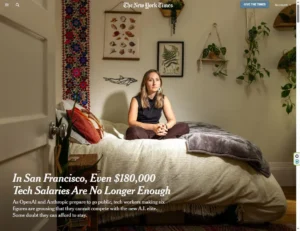
The current economic climate, amplified by rapid technological advancements, has led to practices such as mass layoffs communicated via email with minimal notice. Topics once central to workplace discourse, like Diversity, Equity, and Inclusion (DEI) and pay equity, are often overshadowed by stark economic realities. For instance, newly hired AI engineers can command salaries exceeding $500,000, creating a chasm in compensation that complicates discussions of equitable pay across the broader workforce. As corporate leaders increasingly highlight AI’s potential for boosting "productivity," a palpable sense of anxiety pervades among employees, who fear their roles may be rendered obsolete.
The Erosion of Trust: A Decades-Long Trend
Underpinning these anxieties is a consistent, multi-decade decline in trust between employees and their employers. Data from reputable sources like the Pew Research Center and Edelman consistently illustrate this downward trajectory. A 2024 PwC survey revealed that only 67% of employees generally trust their employers. This figure plummets for frontline workers, who constitute over 72% of the workforce, with less than half expressing overall trust.
The decline in trust in leadership is even more pronounced. In 2019, approximately 25% of workers reported trusting their company’s leaders. This figure has since fallen to around 19% and continues to decline. While trust saw a temporary uptick during the initial phases of the COVID-19 pandemic, it has since plummeted as CEOs increasingly discuss potential layoffs driven by AI adoption. This pattern suggests that periods of uncertainty and perceived corporate self-interest lead to a diminishment of employee faith in organizational leadership.

The Great Decoupling: Workers and Employers Drift Apart
Beyond the erosion of trust, the most significant trend shaping the contemporary employment landscape is the "decoupling" of workers from their employers. This phenomenon is evidenced by the growing prevalence of side-hustles, with over 65% of workers now engaged in them, and a soaring rate of job turnover. Research indicates that the average U.S. worker can expect to be laid off approximately 2.5 times during their career, a figure that has more than doubled over the past three decades.
This trend is not a recent development but rather a gradual evolution rooted in shifts in economic policy and corporate strategy. For decades, a confluence of factors has contributed to this decoupling:
- Shifting Economic Ideologies: The move away from strong labor unions and collective bargaining, often characterized by policies promoting an "ownership economy," has placed more responsibility for financial security on individual workers. This includes managing personal retirement plans (401k), health savings accounts, and navigating an increasingly complex landscape of benefits.
- Globalization and Outsourcing: Trade agreements like NAFTA, alongside broader globalization efforts, facilitated the outsourcing of many traditionally stable manufacturing and service jobs, reducing the pool of long-term, secure employment opportunities within domestic economies.
- Corporate Lifecycles: The average tenure of companies on the S&P 500 has significantly decreased from 12-13 years in the 1970s and 1980s to approximately 4-5 years today. This shortened corporate lifespan, driven by rapid technological advancement and global competition, incentivizes short-term decision-making, often at the expense of long-term employee investment.
The Impact of AI on the Decoupling Narrative
The current discourse surrounding Artificial Intelligence often fuels fears of widespread job displacement. While some analysts view AI as a potential catalyst for positive transformation, the immediate perception for many is one of increased job insecurity. This anxiety is particularly acute for individuals lacking substantial financial reserves. In the U.S., a significant portion of the working population has less than three weeks of savings, making them acutely vulnerable to economic downturns or job loss. This precarious financial situation forces many into a constant state of striving, akin to running on a treadmill, as indicated by declining economic sentiment in regions like Michigan, which has hit a 60-year low. Escalating costs of living, including high gas prices and persistent inflation, further exacerbate this financial strain.
Gig economy platforms, which once offered a sense of liberation and flexibility, are increasingly perceived as survival tactics. As these platforms consolidate market power, labor costs are often driven down, intensifying the pressure on workers. This sentiment is echoed by many, including HR executives, who express a feeling of being "labor" on the verge of automation, even if this is not an accurate reflection of AI’s immediate impact on all professions.
Historical Context: The Decoupling Timeline
The roots of this "decoupling" can be traced back to the late 20th century, with significant acceleration in the 1980s and 1990s.
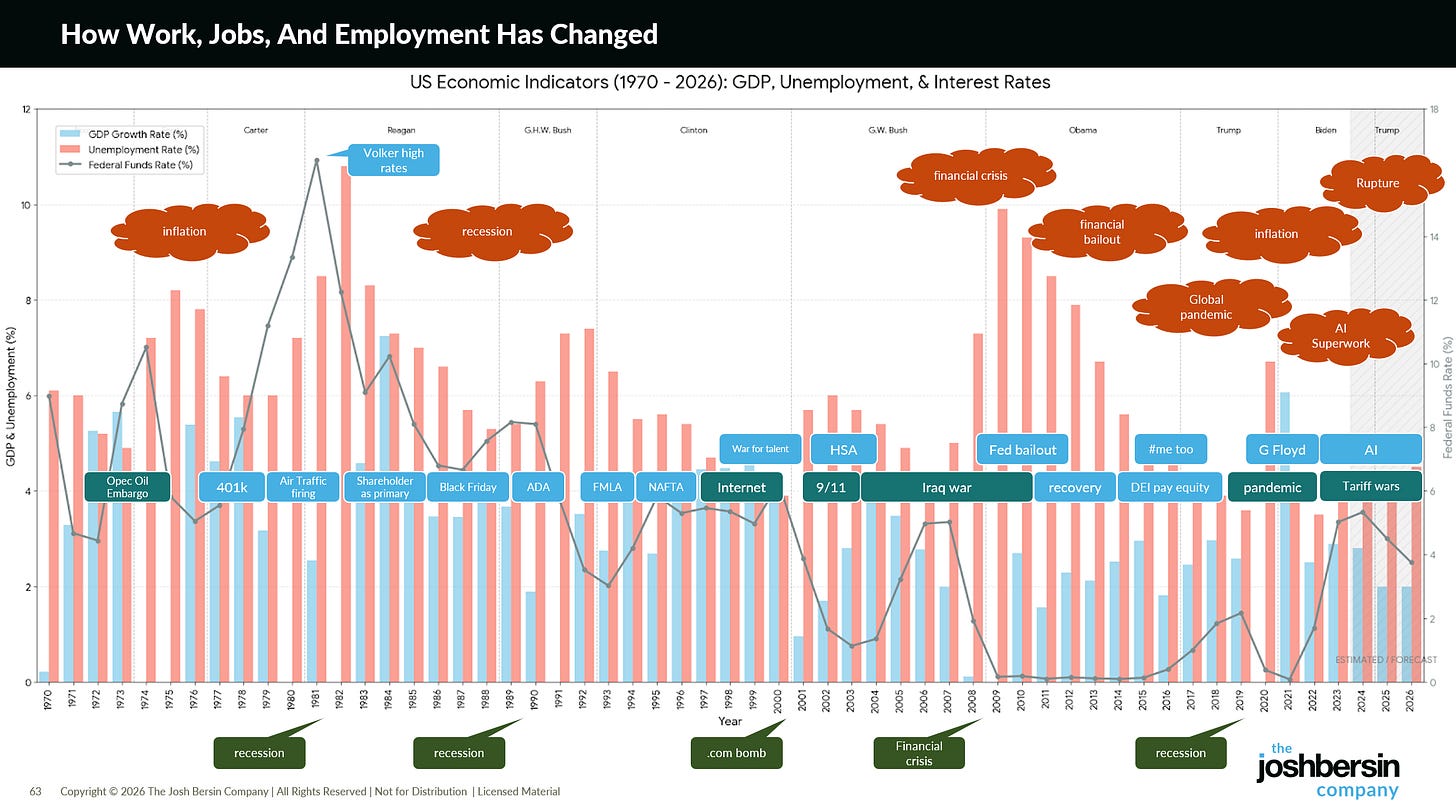
- 1970s-1980s: A period marked by significant economic shifts, including stagflation and a decline in unionized labor. The rise of the "ownership economy" began to take hold, emphasizing individual responsibility for financial planning and benefits.
- 1990s: Globalization intensified with agreements like NAFTA, leading to the outsourcing of jobs and a further shift away from traditional, long-term employment models. The internet began to facilitate easier global contractor hiring.
- 2000s-Present: The digital revolution and the proliferation of the internet further institutionalized the decoupling. Companies gained unprecedented ease in hiring contractors globally and implementing sophisticated performance tracking systems. The increasing instability of corporate lifecycles, with companies exiting the S&P 500 at a faster rate, reinforced the trend of short-term employment strategies. The rise of the gig economy provided a framework for flexible, but often precarious, work arrangements.
The Wage Gap: A Persistent Problem
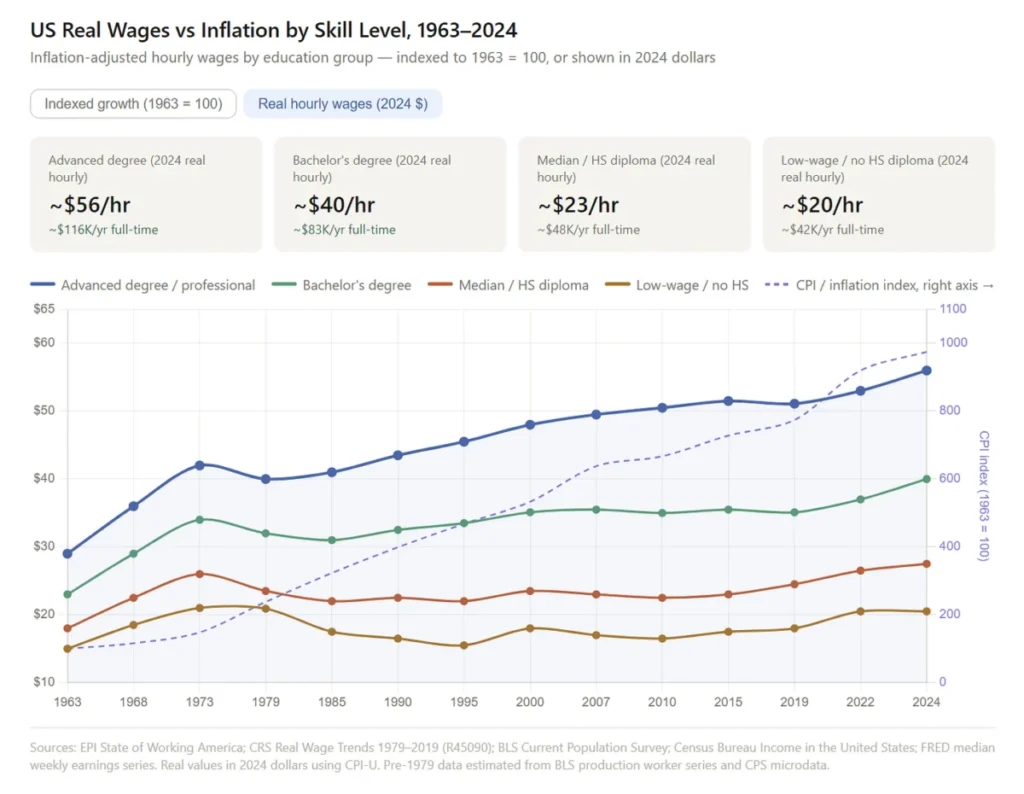
While the discourse often centers on job security, the economic reality for many workers is a widening gap between wages and inflation. Data illustrates that across various worker segments in the U.S., wage growth has largely failed to keep pace with inflation over the long term.
- Pre-1980s: In the decades preceding the significant "decoupling," wages generally outpaced inflation, contributing to a rising standard of living for many working-class families.
- 1980s Onward: Following the inflationary shocks of the 1970s, wages began to lag. Low-wage workers and high school graduates experienced the most significant decline in their standard of living starting in the early 1980s.
- Late 1990s-2000s: College graduates, who had previously seen robust wage growth, began to experience a plateauing of their earnings. This trend suggests that a college degree, once a clear indicator of future economic security, has diminished in its direct correlation with wage increases.
- Pandemic Era: Even those with advanced degrees, who had previously fared well economically, began to see a slip in their financial standing around 2020.
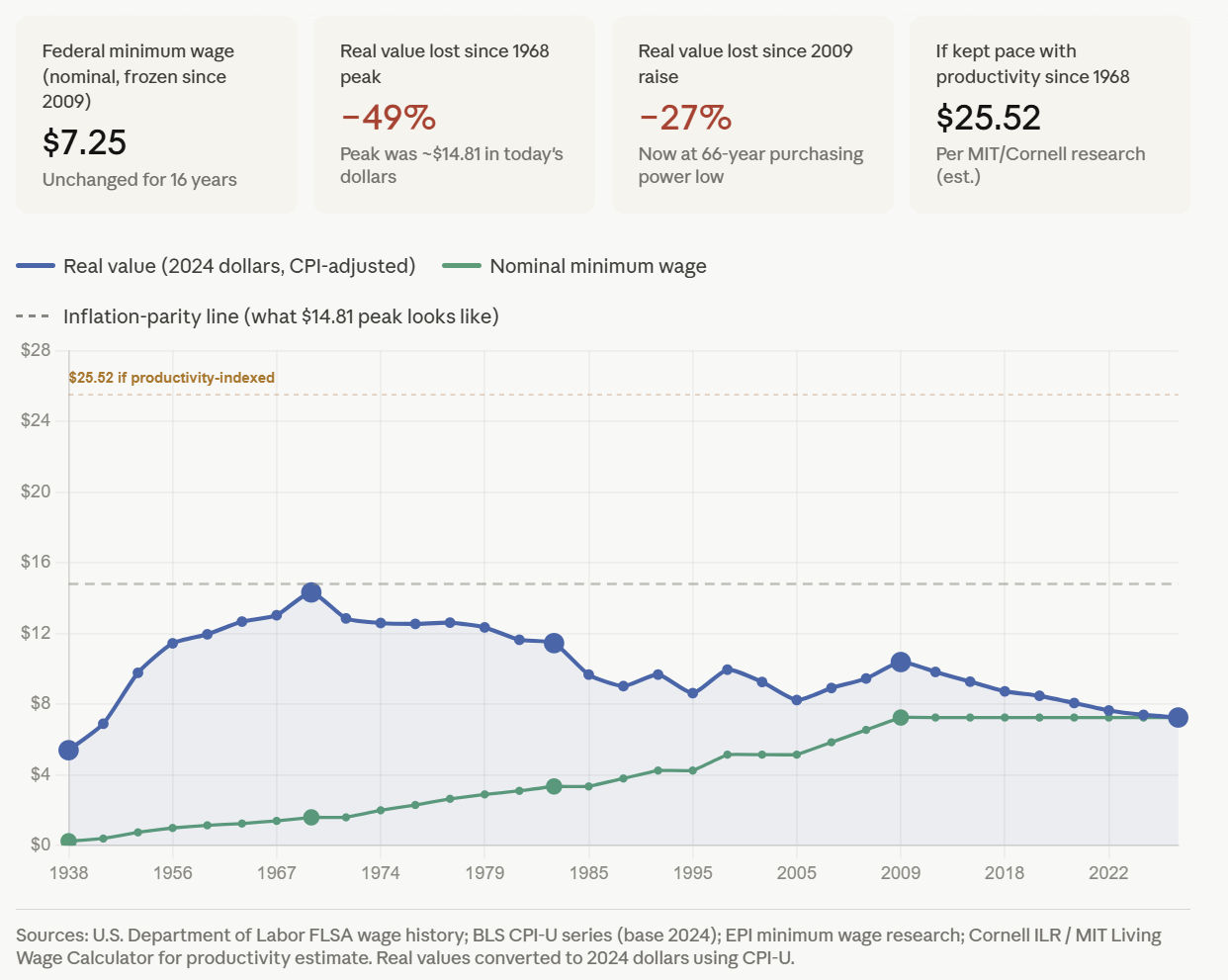
This stagnation in real wages, particularly for a significant portion of the workforce, highlights a critical disconnect between economic productivity and worker compensation. The federal minimum wage, frozen at $7.25 per hour since July 2009, represents the longest period without an increase in U.S. history. This has resulted in a 49% loss of purchasing power, underscoring a perceived governmental indifference to the economic well-being of low-wage workers.
Worker Adaptation and the Search for Solutions
The question then becomes: how have workers adapted to this evolving economic landscape, and what are the potential solutions to mitigate the negative consequences of the Great Decoupling?
1. The Imperative of Reskilling and Upskilling:
A fundamental necessity is the continuous development of skills to remain relevant in a rapidly changing job market. The U.S. education system, while undergoing some reforms, has historically struggled to adequately prepare individuals for the demands of the modern economy. Compounding this challenge is a concerning literacy rate, with approximately 45-55% of U.S. adults not reading at a 12th-grade proficiency level. This deficiency is particularly problematic as AI systems become more integrated into the workplace, as AI often requires the ability to synthesize, infer, and evaluate complex information.
Addressing this requires a multi-pronged approach:
- Enhanced Foundational Education: Ensuring that primary and secondary education systems effectively teach foundational skills, including critical thinking, history, and analytical reasoning, is paramount. These "power skills" are becoming more valuable than simply knowing how to operate AI tools.
- Employer-Sponsored Education: Companies can play a crucial role by investing in broad educational programs for their employees. Initiatives that support lifelong learning and skill development can foster loyalty and adaptability.
- Governmental Support: While federal funding is being directed towards state-level innovation, a more visible and consistent governmental focus on promoting broad educational initiatives and advocating for their importance is needed. Simply focusing on technological infrastructure without addressing human capital development will not lead to sustained national prosperity.
2. Rethinking Workforce Planning and Talent Management:
The practice of workforce planning and talent management within many organizations is often reactive rather than proactive. A common strategy involves continuous layoffs, team shrinking, and organizational transformations, often paralleled by aggressive hiring in other areas. This approach, driven by a perception of labor as a cost rather than an investment, has significant negative repercussions:
- Destruction of Culture and Knowledge: Frequent layoffs erode organizational culture, lead to the loss of critical skills and institutional knowledge, and foster long-term distrust among the remaining workforce.
- Short-sighted Financial Gains: While layoffs can offer immediate boosts to quarterly earnings, they often represent poor long-term planning. Companies that consistently lay off employees may be demonstrating a lack of strategic foresight.
- Talent Density Perspective: A more effective approach involves viewing every employee as a potential leader and investing in their development. This means slowing down hiring processes, being more discerning in recruitment, and designing businesses for sustainable growth and scale, rather than for rapid headcount churn.
3. The Role of Corporate Choice and Long-Term Vision:
The Great Decoupling, while a pervasive trend, is not an immutable destiny. Companies have a choice in how they navigate this evolving landscape. Organizations that adopt a short-term, venture-backed startup mentality, focused on rapid growth and immediate returns, are more likely to perpetuate the decoupling trend. This is particularly evident in the tech sector, where rapid hiring and subsequent departures are common.
Conversely, enduring companies across various sectors demonstrate a commitment to long-term human capital development. Companies like Nvidia, Microsoft, Apple, and Chevron, for instance, prioritize talent retention and responsible growth. They understand that investing in their people is an investment in the company’s future. These organizations strive to avoid layoffs, manage hiring strategically, and foster a sense of stability and commitment among their workforce.
In an era of rapid technological change and economic uncertainty, leaders have a critical opportunity to redefine their approach to human capital. Leaning into existing talent, empowering employees to drive reinvention, and prioritizing long-term development and retention are not just ethical considerations; they are strategic imperatives. The most valuable asset in any business is its people, and investing in their growth and well-being is the surest path to sustained success and value creation. The challenge for leaders today is to move beyond short-term financial metrics and embrace a long-term perspective, recognizing that taking care of their people is the foundation of enduring growth and innovation.