
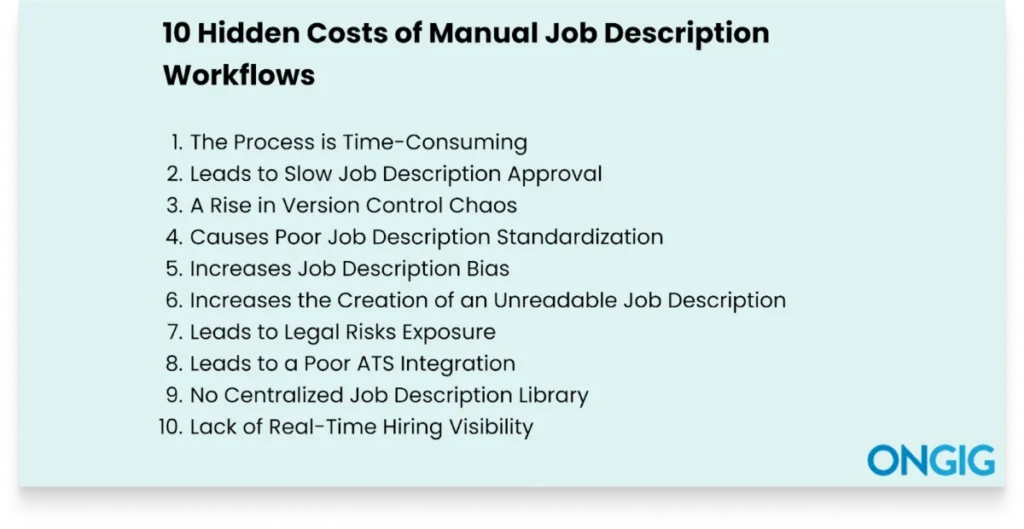
The inability to consistently meet job description publishing deadlines often stems from a deeply ingrained manual workflow, a system devoid of the necessary visibility and agility required in modern talent acquisition. Far from merely being an administrative inconvenience, traditional job description (JD) processes, characterized by fragmented tools and ad-hoc collaboration, actively impede effective talent management and introduce a cascade of hidden costs that negatively impact an organization’s hiring efforts, employer brand, and legal standing. This article delves into the profound inefficiencies and risks associated with outdated JD methodologies and outlines the strategic advantages of transitioning to a more streamlined, technologically-driven approach.
The Pervasive Problem of Manual Job Description Workflows
In an era defined by rapid technological advancement and fierce competition for talent, many organizations still grapple with job description creation processes that are largely manual, relying on a patchwork of Word documents, email threads, spreadsheets, and shared drives. This decentralized and often chaotic approach creates a fundamental lack of control and transparency, making it nearly impossible for HR and recruitment teams to manage the JD lifecycle effectively. Instead of serving as a foundational document for attracting and vetting candidates, the JD itself becomes a source of delays, inconsistencies, and potential liabilities, undermining the entire recruitment pipeline.
Industry surveys frequently highlight the administrative burden on HR professionals. A recent study, for instance, indicated that HR teams can spend upwards of 20-30% of their time on repetitive administrative tasks, a significant portion of which is often dedicated to managing documents like job descriptions. This lost productivity translates directly into higher operational costs and diverted resources that could otherwise be focused on strategic talent initiatives. The core issue is a lack of integrated systems that can support the entire JD journey, from initial draft to final publication and subsequent archiving.
Financial and Operational Drain: Time-Consuming Processes
One of the most immediate and tangible consequences of manual JD workflows is the sheer amount of time wasted. Each new hiring need often necessitates starting the JD creation process from scratch. Without a centralized library of approved, customizable templates or past JDs to draw inspiration from, teams are forced to reinvent the wheel repeatedly. This reactive, ad-hoc creation cycle means:
- Repetitive Research: Recruiters and hiring managers spend valuable hours researching common duties, qualifications, and industry standards for roles that may already exist within the organization or have been previously advertised.
- Lack of Standardization: The absence of standardized templates leads to varying formats, content quality, and completeness across different JDs, even for similar roles.
- Inefficient Content Generation: Without live content guidance or AI-powered drafting tools, authors often produce JDs that are either too vague, too detailed, or simply ineffective in attracting the right candidates. This iterative process of drafting and revising can extend the initial creation phase significantly.
- Missed Opportunities: Delays in JD creation directly impact the "time to fill" metric. In a competitive talent market, every day a position remains open can mean missing out on top-tier candidates who are quickly snapped up by more agile competitors. The cost of an open position, particularly for critical roles, can run into thousands of dollars per day in lost productivity and revenue.
Job description software, conversely, offers a streamlined approach. Tools like Ongig Text Analyzer leverage centralized libraries of pre-approved JDs, customizable templates, and AI-driven content suggestions. This enables teams to generate first drafts rapidly, ensure consistency, and focus human effort on refinement rather than initial creation. The result is a significant reduction in the time spent on JD creation, often cutting the process from days to mere hours.
Bottlenecks and Delays: The Approval Maze
The approval process for job descriptions is inherently multi-faceted, often involving hiring managers, HR business partners, legal teams, diversity, equity, and inclusion (DEI) specialists, and compensation analysts. In a manual workflow, this critical stage transforms into a chaotic relay race of emails, shared documents, and follow-up calls. Key issues include:
- Lack of Centralized Communication: Feedback and revisions are scattered across multiple email threads or document versions, making it difficult to track the latest changes or the rationale behind specific edits.
- Sequential Bottlenecks: Approvals often proceed sequentially, meaning one stakeholder must sign off before the next can begin their review. If any individual is delayed, the entire process grinds to a halt.
- Ambiguous Accountability: Without a clear digital audit trail, it becomes challenging to ascertain who has reviewed what, who is responsible for outstanding approvals, or where the JD currently resides in the approval queue.
- Version Mismatch: Stakeholders might be reviewing outdated versions of the JD, leading to conflicting feedback and further delays as discrepancies are reconciled.
This "approval purgatory" can stall JD publication for weeks, directly impacting the organization’s ability to respond quickly to talent needs. Automated JD platforms integrate robust approval workflows, allowing for parallel reviews, clear assignment of responsibilities, and real-time tracking of approval status. This dramatically shortens approval cycles, transforming a multi-week ordeal into a process that can often be completed within a day.
The Quagmire of Version Control and Collaboration
Poor version control is a silent productivity killer, forcing teams into repetitive work as they attempt to reconcile disparate edits and track changes. In a manual environment, where JDs reside in various local files or cloud storage without integrated versioning, the challenges are numerous:
- Data Integrity Risks: The risk of publishing an outdated or incorrect version of a JD is high, leading to miscommunications with candidates and internal stakeholders.
- Redundant Work: Team members might unknowingly duplicate efforts, making the same edits or corrections because they are not working from a single, authoritative source.
- Collaboration Breakdowns: Without a centralized platform for real-time collaboration, team members struggle to provide simultaneous feedback or see each other’s contributions, leading to fragmented input and missed opportunities for synergy.
- Audit Trail Deficiencies: The inability to easily track who made what changes and when makes it difficult to maintain accountability, troubleshoot issues, or meet compliance requirements.
Job description software addresses these issues by providing a single source of truth for all JDs. It offers robust versioning capabilities, automatically tracking every change and allowing users to revert to previous versions if needed. Integrated collaboration tools enable real-time commenting, simultaneous editing, and clear visibility into each team member’s contributions, fostering a more efficient and error-free collaborative environment.
Compromising Quality: Standardization and Readability Issues
Maintaining consistency and high quality across job descriptions is a significant challenge in manual workflows, particularly for organizations with high hiring volumes or rapid growth. A lack of standardization can lead to:
- Inconsistent Branding: Variations in tone, language, and company messaging can dilute the employer brand and create a disjointed candidate experience.
- Varied Information Structure: Different JDs may present information in different orders or formats, making it harder for candidates to quickly find relevant details.
- Legal and Compliance Gaps: Inconsistent application of legal requirements or DEI guidelines can expose the organization to risk.
- Unclear Expectations: Ambiguous or poorly defined roles can attract misaligned candidates, increasing screening time and ultimately leading to higher turnover rates.
Beyond standardization, readability is paramount. Candidates, much like consumers, quickly scan JDs to assess fit. Manual processes struggle to ensure JDs are:
- Concise and Clear: Avoiding jargon and unnecessary complexity.
- Structured Logically: Using headings, bullet points, and short paragraphs.
- Accessible: Employing simple, direct language with fewer complex words.
Job description software automates standardization by enforcing templates, style guides, and content libraries. It also offers readability scores and suggestions, helping authors craft JDs that are easy to digest, engaging, and effective in attracting a broad pool of qualified candidates.
Mitigating Risk: Bias and Legal Compliance
Manually crafted job descriptions are inherently susceptible to unconscious biases and legal non-compliance, often without the authors’ knowledge. This represents a significant and often unseen risk to organizations.
- Unconscious Bias: Words and phrases can unintentionally alienate qualified candidates from diverse backgrounds. Common biases include:
- Gender-coded language: Using terms like "rockstar," "ninja," "aggressive" (masculine-coded) or "support," "nurture," "collaboration" (feminine-coded) can subtly deter applicants of a particular gender.
- Age bias: Phrases implying youth or extensive experience that excludes older workers.
- Racial/Ethnic bias: Language that might inadvertently favor specific cultural backgrounds.
- Disability bias: Inflexible language regarding physical or mental requirements.
- Neurodiversity bias: Descriptions that assume a singular communication style or work approach.
- Legal Exposure: Employment laws (such as Title VII of the Civil Rights Act, the Americans with Disabilities Act, and various state and local anti-discrimination laws in the U.S., or similar legislation internationally) prohibit discrimination in hiring. A JD containing biased language or requirements that disproportionately exclude protected groups can lead to costly lawsuits, fines, and reputational damage.
- Lack of Audit Trail: Manual processes typically lack a comprehensive, immutable audit trail. In the event of a legal challenge or compliance audit (e.g., OFCCP audits in the U.S. for federal contractors), it becomes nearly impossible to demonstrate who reviewed, approved, and published a specific JD, or how decisions were made regarding its content.
Job description software equipped with AI and natural language processing (NLP) capabilities is crucial for addressing these risks. It automatically flags biased language, suggests inclusive alternatives, and ensures adherence to legal guidelines. Furthermore, these platforms provide an unalterable audit trail, documenting every change, reviewer, and approval, offering a vital layer of protection against compliance breaches and legal challenges. Legal experts frequently caution that proactive measures in JD creation are far less costly than reactive litigation.
Technological Integration Challenges: ATS and Beyond
The isolation of manually created JDs in disparate documents and drives creates significant integration challenges with Applicant Tracking Systems (ATS) and other HR technologies. This leads to:
- Redundant Data Entry: Information from the manually created JD often needs to be manually re-entered or reformatted into the ATS, consuming additional time and introducing opportunities for errors.
- Inconsistent Data: Discrepancies can arise between the published JD and the version stored in the ATS, leading to confusion during candidate screening and internal reporting.
- Inefficient Posting: The lack of seamless integration means JDs cannot be automatically pushed from the creation platform to the ATS and then to job boards, prolonging the posting process.
- Data Silos: Valuable data embedded within JDs (e.g., specific skills, keywords) remains trapped in unstructured documents, preventing its use for analytics, workforce planning, or talent mapping.
Modern JD platforms are designed with robust ATS integrations, allowing for automatic data synchronization, streamlined posting, and the creation of a unified data ecosystem. This ensures consistency, reduces manual effort, and enhances the overall efficiency of the recruitment tech stack.
Strategic Disadvantage: Lack of Centralization and Visibility
Without a centralized job description library, JDs are scattered across various personal and shared drives, making them difficult to access, manage, and leverage strategically. This fragmentation results in:
- Difficulty in Access: Teams struggle to find the most current or approved versions of JDs, leading to frustration and delays.
- Inconsistent Application: Different recruiters or hiring managers might use slightly different JDs for the same role, creating an inconsistent candidate experience and potential legal vulnerabilities.
- Lost Institutional Knowledge: When JDs are not systematically archived, valuable insights into past hiring successes or challenges are lost, hindering continuous improvement.
- No Real-Time Hiring Visibility: Leaders cannot track critical recruitment data in real-time. Questions such as "How many JDs are currently in draft?", "Which roles are stuck in approval?", or "What is the average time from JD creation to publication?" become unanswerable. This lack of visibility forces the hiring process to operate on assumptions rather than data-driven insights, making strategic adjustments impossible and increasing the risk of missing out on top talent.
A centralized JD library, powered by dedicated software, acts as a single source of truth. It provides immediate access to all JDs, ensures consistent application, preserves institutional knowledge, and offers real-time dashboards and analytics. This empowers leaders with the data needed to understand the hiring pipeline’s health, identify bottlenecks, and make informed decisions that align with broader business goals.
The Paradigm Shift: Embracing Automation for JD Excellence
The cumulative effect of these hidden costs makes a compelling case for organizations to transition from manual to automated job description workflows. The adoption of specialized job description software represents a strategic investment in talent acquisition infrastructure, offering benefits that extend far beyond mere efficiency gains.
These platforms centralize the entire JD lifecycle, from creation and collaboration to approval, publication, and analytics. Key features often include:
- AI-Powered Drafting and Optimization: Generating initial drafts, suggesting improvements for clarity, conciseness, and impact, and optimizing for search engine visibility.
- Bias Detection and Remediation: Automatically identifying and suggesting alternatives for gender-coded, age-biased, or other exclusionary language to foster inclusive hiring.
- Automated Workflow and Approval Management: Routing JDs through predefined approval chains, tracking progress, and sending automated reminders.
- Centralized Library and Template Management: Storing all JDs in a searchable database, providing version control, and offering customizable templates for rapid creation.
- Compliance Monitoring: Ensuring adherence to legal requirements and internal DEI guidelines.
- Readability Analysis: Providing scores and suggestions to make JDs more engaging and easier for candidates to understand.
- Seamless ATS Integration: Automatically pushing JDs to Applicant Tracking Systems and job boards, eliminating manual data entry.
- Real-Time Analytics and Reporting: Offering dashboards that provide insights into JD creation cycles, approval times, and overall recruitment pipeline health.
Hybrid Approaches: Blending AI with Human Oversight
While AI offers significant advantages in automating and optimizing JD creation, the most effective approach often involves a hybrid model that combines the speed and analytical power of AI with the nuanced judgment and strategic insight of human professionals. AI can efficiently handle the initial drafting, bias detection, and structural optimization, freeing up human recruiters and hiring managers to focus on:
- Strategic Alignment: Ensuring the JD accurately reflects the unique culture, values, and strategic needs of the organization and the specific team.
- Refining Nuance: Adding the human touch, unique selling points, and specific details that resonate with target candidates.
- Complex Problem-Solving: Addressing highly specialized or unusual role requirements that AI might not fully grasp.
- Stakeholder Engagement: Facilitating discussions with hiring managers to truly understand the role’s essence and future trajectory.
To implement such a hybrid model successfully, organizations must establish clear documentation and guidelines for their teams. This includes defining when to use AI, how to review AI-generated content, specific branding and tone-of-voice requirements, and the roles and responsibilities of each stakeholder in the review process. This guidance ensures consistency, maximizes the benefits of both AI and human input, and minimizes potential back-and-forth, streamlining the entire workflow.
The Path Forward: Strategic Imperatives for Modern Talent Acquisition
Operating with manual job description workflows in today’s dynamic talent landscape is no longer a sustainable option. It creates a web of hidden costs—from lost productivity and delayed hiring to legal risks and a compromised employer brand—that actively undermine an organization’s ability to attract, engage, and secure top talent. Industry analysts increasingly emphasize that a robust talent acquisition strategy hinges on efficient, compliant, and candidate-centric processes, with the job description at its very core.
By embracing specialized job description software, organizations can transform a chaotic, costly, and time-consuming administrative task into a strategic asset. This transition not only streamlines operations and reduces costs but also enhances the candidate experience, reinforces employer branding, mitigates legal risks, and provides critical real-time visibility into the talent pipeline. The shift from manual drudgery to intelligent automation is not merely an operational upgrade; it is a fundamental strategic imperative for any organization committed to building a competitive workforce in the 21st century.






