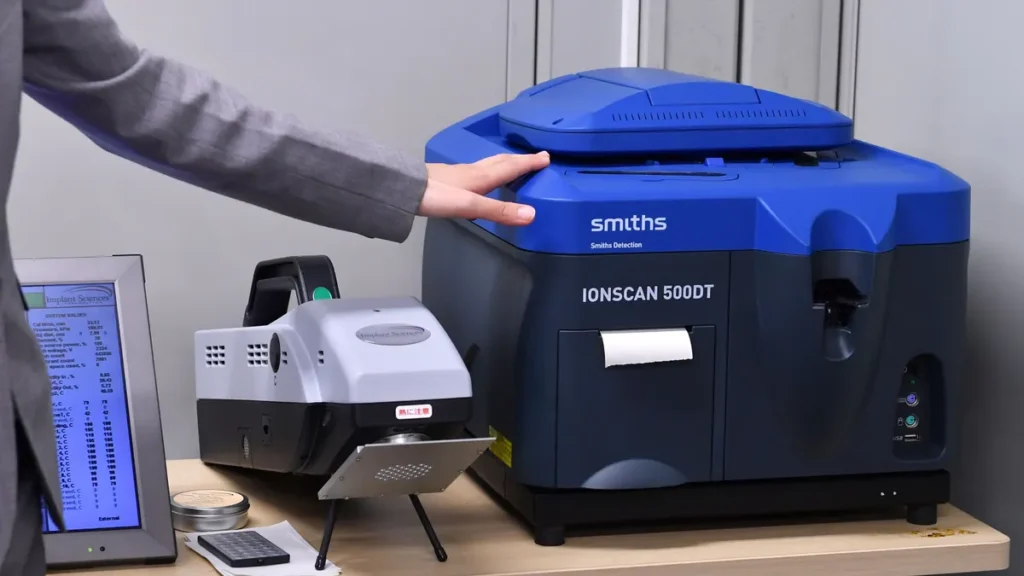
Smiths Detection, Inc., a prominent global leader specializing in threat detection and security screening technologies, has agreed to a $100,000 settlement to resolve a disability discrimination lawsuit filed by the U.S. Equal Employment Opportunity Commission (EEOC). The lawsuit alleged that the company failed to provide a reasonable accommodation for an employee suffering from hearing loss, specifically a custom hearing protection device, and instead chose to demote her to a lower-paying position. This significant settlement, finalized around April 20, 2026, serves as a critical reinforcement of employer obligations under the Americans with Disabilities Act (ADA) and highlights the substantial consequences of neglecting to provide reasonable accommodations for qualified individuals with disabilities.
Allegations of Discrimination and Demotion
At the heart of the EEOC’s complaint were Smiths Detection’s alleged actions concerning an employee who experienced hearing loss. The lawsuit contended that the employee, who held a team lead position within the company, required specialized hearing protection to effectively and safely perform her duties in what was likely a noisy work environment typical of industrial or manufacturing operations. Such equipment is often indispensable for maintaining safety standards and ensuring clear communication in such settings. Instead of fulfilling the request for the custom hearing protection, Smiths Detection is accused of demoting the employee to a role that came with significantly reduced pay and a lower professional status.
The EEOC maintained that this demotion constituted a direct violation of the Americans with Disabilities Act. The ADA mandates that employers provide reasonable accommodations to qualified employees with disabilities unless doing so would impose an undue hardship on the business. The commission underscored that the cost of the proposed custom hearing protection device would have been a negligible expense for Smiths Detection, especially when considered against the backdrop of its reported annual revenue, which stands at approximately $2 billion. This stark contrast between the minimal cost of accommodation and the company’s vast financial resources is a central element in ADA enforcement, emphasizing the expectation for employers to make reasonable efforts to accommodate their workforce.
Understanding the Americans with Disabilities Act (ADA)
The Americans with Disabilities Act, originally enacted in 1990 and subsequently amended, is a pivotal civil rights law designed to prohibit discrimination against individuals with disabilities across various aspects of public life, with a strong focus on employment. Title I of the ADA specifically targets employment discrimination, requiring employers with 15 or more employees to provide reasonable accommodations to qualified individuals with disabilities. A "qualified individual with a disability" is defined as someone who, with or without reasonable accommodation, can perform the essential functions of their job.
A "reasonable accommodation" is broadly understood as any modification or adjustment to a job, the work environment, or the way things are customarily done that enables a qualified applicant or employee with a disability to enjoy equal employment opportunities. This can encompass a wide range of adjustments, including providing assistive technology, modifying work schedules, making physical facilities accessible, or, as in the Smiths Detection case, supplying specialized equipment like custom hearing protection. A crucial component of the ADA is the "interactive process," which requires employers and employees to engage in a collaborative dialogue to identify effective accommodations. This process is fundamental to understanding the employee’s specific limitations and needs, and to exploring viable solutions.
The only permissible exception to providing a reasonable accommodation is if it would create an "undue hardship" for the employer. Undue hardship is characterized as an action requiring significant difficulty or expense, taking into account factors such as the nature and cost of the accommodation, the overall financial resources of the specific facility providing the accommodation, and the overall financial resources, size, and type of operations of the employer. Both the courts and the EEOC consistently apply a stringent standard for proving undue hardship, making it particularly challenging for large corporations to successfully invoke this defense, especially given that many accommodations are low-cost or even free.
Reassignment as the "Accommodation of Last Resort"
In its comprehensive guidance, the EEOC has clarified the role of reassignment as a potential reasonable accommodation. It may be considered necessary in situations where an employee can no longer perform the essential functions of their current job, even after exploring other potential accommodations. However, the EEOC consistently refers to reassignment as the "accommodation of last resort," meaning it should generally only be considered when no other effective accommodations can be found for the employee’s current role. Furthermore, the EEOC explicitly states that any reassignment must be to a vacant position that is equivalent in pay and status to the one currently held by the employee, or as close as possible to it. The goal is to avoid penalizing the employee for their disability.
In the Smiths Detection case, the EEOC alleged that the company’s decision to reassign the employee not only resulted in a reduction in pay but also constituted a demotion from her previous position as a team lead. This action directly contradicted the EEOC’s established guidelines regarding appropriate reassignment practices, transforming what could potentially have been a legitimate accommodation into an act of unlawful discrimination. Debra Lawrence, an EEOC regional attorney, issued a strong statement regarding the company’s alleged conduct: "Demoting an employee so as to avoid providing a reasonable accommodation does not discharge an employer’s obligation to provide a reasonable accommodation; it merely compounds the employer’s unlawful behavior." This statement powerfully conveys the agency’s unwavering commitment to preventing employers from using reassignment as a punitive measure or as an expedient way to circumvent their responsibility to provide less disruptive and more suitable accommodations.
Chronology of the Case and Settlement Details
While the precise dates for the employee’s initial request and Smiths Detection’s response were not explicitly detailed in the original news brief, the standard progression of such a legal action typically follows a clear timeline:

- Accommodation Request: The employee, experiencing hearing loss, formally or informally communicates a need for a custom hearing protection device to Smiths Detection, likely through her direct supervisor or the human resources department.
- Company Response and Alleged Demotion: Smiths Detection allegedly denies the request for the custom device and, instead, chooses to demote the employee to a lower-paying role, sparking the discrimination claim.
- EEOC Charge Filing: The aggrieved employee files a charge of discrimination with the EEOC, initiating the agency’s investigative process.
- Investigation and Conciliation Attempts: The EEOC conducts a thorough investigation into the allegations, gathering evidence and statements from both the employee and Smiths Detection. During this phase, the agency may attempt to resolve the dispute through conciliation, a voluntary process aimed at reaching a mutually agreeable settlement without litigation.
- Lawsuit Filing: When conciliation efforts prove unsuccessful, and the EEOC finds reasonable cause to believe that discrimination occurred, it may elect to file a lawsuit in federal court. In this instance, the EEOC proceeded with a lawsuit against Smiths Detection.
- Settlement via Consent Decree: To avoid prolonged litigation and its associated costs and uncertainties, Smiths Detection and the EEOC ultimately reached a settlement agreement, formally documented through a consent decree. The publication date of April 20, 2026, indicates that this settlement was finalized around that time, likely concluding legal proceedings that may have begun in late 2025 or early 2026.
Under the terms of the consent decree, Smiths Detection agreed to pay $100,000 in monetary relief to the affected employee. Beyond this financial compensation, the settlement includes crucial non-monetary provisions designed to prevent similar instances of discrimination in the future:
- Policy Review and Revision: Smiths Detection committed to a thorough review and revision of its existing ADA policies to ensure full compliance with federal law and to clearly articulate the company’s obligations regarding reasonable accommodation.
- Comprehensive Training: The company agreed to conduct mandatory ADA training for all supervisors, managers, and human resources employees. This training is vital for ensuring that individuals responsible for making employment decisions are fully aware of their legal responsibilities, understand the interactive process, and are equipped to provide effective and lawful accommodations.
The Economic Reality: Accommodation Costs Versus Litigation Penalties
The Smiths Detection case vividly illustrates a prevalent misconception among some employers: that providing reasonable accommodations is inherently expensive or creates an undue burden. The EEOC specifically highlighted that the custom hearing protection requested by the employee would have represented only a "fraction" of Smiths Detection’s substantial annual revenue. This point is crucial because it directly challenges any potential "undue hardship" defense an employer might attempt to raise, especially when the employer is a large, financially robust entity.
Statistical data consistently debunks the myth that accommodations are prohibitively costly. The U.S. Department of Labor’s Office of Disability Employment Policy (ODEP) actively works to dispel such "myths" about the ADA, including the notion that accommodations are necessarily expensive. A comprehensive survey conducted by the Job Accommodation Network (JAN) between 2019 and 2024 provides compelling, empirical evidence:
- No Cost: A remarkable 61% of accommodations implemented during this five-year period cost absolutely nothing to implement. These often involve simple, no-cost adjustments such as flexible scheduling, minor modifications to job duties, or allowing telework options.
- Low Ongoing Cost: For accommodations that did incur costs, only a small minority—6%—resulted in ongoing expenses.
- Median Annual Cost: The median annual cost for ongoing accommodations was found to be a modest $2,400. This figure stands in stark contrast to the significantly higher legal fees, settlement costs, and potential jury verdicts associated with discrimination lawsuits.
These statistics unequivocally demonstrate that for the vast majority of cases, providing reasonable accommodations is financially manageable, and often, entirely free. Employers who resist providing such accommodations frequently face far greater financial penalties, legal expenses, and reputational damage than the initial, often minimal, cost of the accommodation itself.
Broader Implications and Legal Precedent
The Smiths Detection settlement serves as a powerful and timely reminder for all employers regarding their comprehensive obligations under the ADA. This case, along with numerous others successfully enforced by the EEOC, reinforces several key implications across the employment landscape:

For Employers:
- Proactive Compliance is Imperative: Companies must proactively develop, clearly communicate, and rigorously enforce robust ADA policies and procedures. This includes establishing clear guidelines for handling accommodation requests and actively engaging in the interactive process.
- Invest in Continuous Training: Regular and thorough training for supervisors, managers, and human resources personnel on ADA compliance is not merely a legal requirement but a fundamental strategic necessity. Uninformed or undertrained staff can inadvertently make decisions that lead to costly legal disputes and damage organizational morale.
- Critical Assessment of "Undue Hardship": Employers should critically and realistically assess any claim of "undue hardship." Given the high legal threshold established by the ADA and the documented low cost of most accommodations, this defense is rarely successful, particularly for large, well-resourced organizations.
- The High Cost of Non-Compliance: The financial penalties resulting from EEOC settlements or substantial jury verdicts (such as the $700,000 awarded in the Dollar General case mentioned in the original brief) consistently far outweigh the cost of most accommodations. Furthermore, companies incur significant legal fees throughout litigation, regardless of the final outcome.
- Reputational Damage: Discrimination lawsuits can severely tarnish a company’s public image, negatively impacting recruitment efforts, customer loyalty, and investor confidence. Conversely, a reputation for fair, inclusive, and compliant employment practices can be a significant competitive advantage.
For Employees:
- Empowerment Through Rights Awareness: This settlement empowers employees with disabilities by reinforcing their fundamental rights to reasonable accommodation under the ADA.
- Importance of Documentation: Employees who request accommodations are strongly advised to maintain clear and comprehensive records of their requests, all communications with HR or management, and any responses or actions taken by the employer. Such documentation can be crucial evidence in the event of a dispute.
- The EEOC as a Vital Resource: The EEOC remains an essential resource for individuals who believe they have been subjected to employment discrimination. The agency’s commitment to robust enforcement ensures that complaints are thoroughly investigated and, where appropriate, legal action is pursued to protect employee rights.
Lessons from Historical Cases
The Smiths Detection case draws parallels with similar situations where employers have faced severe penalties for refusing what might appear to be relatively minor accommodations. The example of the Dollar General cashier, who was prohibited from keeping orange juice at her workstation to manage her diabetes, serves as a stark historical precedent. In that 2018 case, the 6th U.S. Circuit Court of Appeals upheld a substantial $700,000 jury verdict against Dollar General, vividly illustrating the severe financial repercussions of failing to explore and implement reasonable accommodations. The seemingly simple act of allowing an employee to have a beverage on hand, a minimal request, escalated into a protracted and costly legal battle precisely because the employer failed to engage in the interactive process and find a suitable, low-cost solution.
These cases collectively underscore a foundational principle of the ADA: employers bear the responsibility to adapt the workplace to enable qualified individuals with disabilities to perform their jobs effectively. When a company chooses to demote an employee or otherwise penalize them instead of providing a reasonable and affordable accommodation, it not only violates federal law but also exposes itself to significant legal, financial, and reputational risks. The Smiths Detection settlement reaffirms the EEOC’s steadfast commitment to enforcing disability rights and ensuring that all employees are afforded an equal opportunity to thrive and contribute in the workplace.
The resolution of this lawsuit serves as a crucial reminder for organizations across all sectors: investing in accessibility and accommodation is not merely a legal obligation but a sound business practice that fosters an inclusive environment, aids in the retention of valuable talent, and ultimately provides a strong safeguard against costly legal disputes and reputational damage. The overarching message is clear: prioritize accommodation, engage in good faith with employees, and consistently uphold both the letter and the spirit of the Americans with Disabilities Act.