Remote work has fundamentally reshaped the dynamics of professional interaction, altering how individuals engage with their roles, how teams forge connections, and critically, how employee contributions are acknowledged. The profound impact of this shift is undeniable, particularly when examining employee retention and engagement. According to a notable report by Gallup, a striking 57% of fully remote workers are either actively seeking or passively observing new job opportunities. However, this alarming figure sees a significant reduction, dropping by 10 percentage points, when these same employees report being fully engaged in their current roles. This disparity underscores a critical challenge for contemporary organizations: maintaining a sense of value and connection in an increasingly distributed work environment.
The Post-Pandemic Paradigm: A New Era for Employee Engagement
The rapid acceleration of remote work, primarily spurred by the global COVID-19 pandemic in early 2020, thrust organizations into an unprecedented experiment in distributed operations. Prior to this, remote work was often considered a perk or a niche arrangement; post-pandemic, it has become a cornerstone of many business models, with hybrid and fully remote setups now commonplace. This transformation, while offering flexibility and broader talent pools, simultaneously eroded many of the informal mechanisms that historically underpinned workplace culture and employee appreciation.
In traditional office settings, recognition often manifested organically: a spontaneous "great job" in the hallway, an impromptu high-five, a manager observing extra effort during a late-night project push, or even simply being "seen" at one’s desk. These seemingly minor, frequent interactions served as consistent signals of appreciation and belonging. With the shift to remote work, these crucial, spontaneous cues largely disappeared. Work now unfolds across disparate locations and time zones, progress is primarily communicated through digital channels, and the inherent silence of individual workspaces can easily replace the affirming feedback loop of a shared physical environment.
This loss of incidental recognition has left a void that virtual team-building exercises, while beneficial for morale, cannot fully address. Without intentional, consistent, and meaningful signals of appreciation, even the most high-performing remote employees can begin to feel disconnected, undervalued, and ultimately, invisible. This sentiment is a direct precursor to disengagement and, eventually, attrition, posing significant operational and financial risks to companies. HR leaders and organizational psychologists increasingly emphasize that effective remote employee recognition is no longer a peripheral HR function but a strategic imperative for fostering a thriving, productive, and loyal remote workforce.
The Silent Crisis: Remote Worker Disengagement and its Costs
The Gallup statistic regarding the high percentage of remote workers exploring new opportunities is a stark indicator of a broader disengagement crisis. "Actively looking or passively watching" signifies a workforce that, while potentially performing their duties, lacks the deeper connection and intrinsic motivation that drives long-term commitment. This phenomenon is often linked to the feeling of being unappreciated or overlooked, a sentiment exacerbated by the inherent distance of remote work.
For businesses, the implications of widespread disengagement are severe. High employee turnover incurs substantial costs, including recruitment expenses, onboarding time, lost productivity during transitions, and the erosion of institutional knowledge. Furthermore, disengaged employees, even if they remain, are less productive, less innovative, and less likely to contribute positively to team morale. The rise of "quiet quitting," where employees do the bare minimum required without emotional investment, is another symptom of this crisis, often stemming from a perceived lack of recognition and value. Addressing this requires a proactive and deliberate strategy for appreciation, one that is specifically designed for the nuances of a distributed workforce.
The Unique Challenges of Remote Recognition

The fundamental difference between in-office and remote recognition lies in visibility and proximity. In a co-located environment, managers can easily observe effort, provide real-time feedback, and offer natural moments of appreciation throughout the day. This direct observation fosters a sense of being seen and understood.
However, remote work introduces several distinct challenges:
- Loss of Proximity Cues: The spontaneous interactions—a casual compliment at the coffee machine, overhearing a positive client call, or seeing a colleague stay late to finish a critical task—are entirely absent. These organic moments are difficult to replicate digitally.
- Communication Gaps: Digital communication, while efficient, can often lack the warmth, nuance, and immediacy of in-person interactions. A text message or email of thanks, while appreciated, may not carry the same weight as a heartfelt, in-person commendation.
- Time Zone Differences: For globally distributed teams, synchronous recognition events can be challenging. A team meeting shout-out might exclude colleagues in different time zones, creating an uneven experience of appreciation.
- Proximity Bias: Managers, often unconsciously, may favor employees they see more frequently or interact with directly. This "out of sight, out of mind" phenomenon can lead to remote workers receiving less recognition, despite equal or superior performance.
- The "Out of Sight, Out of Mind" Phenomenon: Remote employees can feel less integrated into the company culture and less connected to their colleagues and leaders. This feeling of detachment can be compounded by a lack of visible appreciation.
Without a tailored approach, recognition in remote settings can become reactive, inconsistent, or even disappear entirely, inadvertently fostering a culture where effort goes unnoticed and contributions feel undervalued. Therefore, effective remote employee recognition cannot simply mirror traditional in-office practices; it must be intentionally designed to counteract lost visibility, mitigate proximity bias, and ensure appreciation is clear, consistent, and authentically human, regardless of geographical distance.
Redefining Effective Remote Employee Recognition
At its core, effective remote employee recognition actively fills the experiential gaps created by distance. When team members are not sharing the same physical space, recognition must work harder to convey the same message of value and appreciation. It needs to be a deliberate act, woven into the fabric of daily operations rather than an occasional afterthought.
Remote employees need recognition that is:
- Equitable: Ensuring all employees, regardless of their location, work schedule, or visibility to management, receive fair and consistent recognition opportunities. This combats proximity bias and fosters a sense of fairness.
- Frequent: Small, regular gestures of appreciation often resonate more deeply and build greater trust than infrequent, grand gestures. Consistency signals that effort is continuously valued.
- Specific: Generic praise ("good job") lacks impact. Employees need to understand what they did well and how it contributed to the team or organizational goals. This reinforces desired behaviors and provides clarity on what "good" looks like.
- Visible: While private appreciation is important, public recognition amplifies its impact, demonstrating to the entire team what behaviors and contributions are valued, and reinforcing a culture of appreciation.
- Authentic: Recognition must feel genuine and come from a place of true appreciation, not just a box-ticking exercise.
- Timely: Delivering recognition close to the event or action being praised maximizes its impact and relevance.
Managers play a pivotal role in influencing the equity, frequency, and impact of recognition within remote teams. They are the primary architects of their team’s recognition culture, responsible for setting the tone, modeling desired behaviors, and ensuring that no valuable contribution goes unnoticed due to distance.
Chronology of a Recognition Strategy: Five Essential Steps for Managers
Implementing an effective remote recognition strategy requires a structured, multi-faceted approach. Managers must consciously embed recognition into their operational rhythm, moving from an ad-hoc model to a systematic one.
Phase 1: Foundation Building (Intentional Design)
-
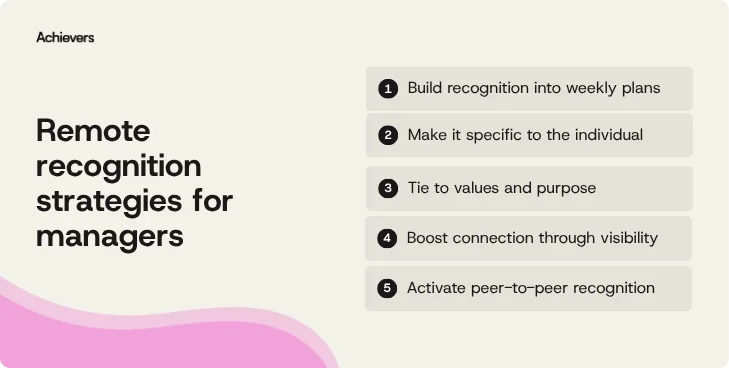
Strategy #1: Build Recognition into Weekly Remote Management Plans:
Consistency is paramount in remote settings. When recognition appears regularly, it creates a sense of reliability and predictability. Remote employees learn that their efforts will not be overlooked simply because they are not physically present. This consistent cadence builds trust and strengthens connection over time. Small, frequent moments of recognition often prove more meaningful and impactful than sporadic, high-effort gestures.- Why Cadence Matters More Than Scale: Regular, smaller acknowledgments reinforce desired behaviors more effectively than infrequent, large ones. It establishes an ongoing feedback loop that keeps employees motivated and aligned.
- How Managers Can Recognize Weekly Without Adding Meetings: Incorporate a dedicated "recognition moment" into existing 1:1 meetings, team stand-ups, or weekly project reviews. Use internal communication channels (Slack, Teams) for quick, public shout-outs. Managers can also set aside 10-15 minutes at the end of each week to send personalized emails or messages highlighting specific contributions. A simple, consistent habit is more effective than an elaborate but rare event.
-
Strategy #2: Make Recognition Specific to the Individual Employee:
Generic praise, such as "great work," often falls flat. Specific recognition helps remote employees understand the impact of their work, not just that it was noticed. This clarity is vital for reinforcing priorities, building confidence, and demonstrating what "good" performance entails in a remote context.- What Specific Recognition Looks Like for Remote Employees: Instead of "Thanks for the report," try "Your detailed analysis on the Q3 market trends provided critical insights that directly influenced our new marketing strategy, saving us weeks of research." This clearly links effort to outcome.
- How Managers Can Make Recognition More Specific: Before recognizing, take a moment to identify the specific action, the positive behavior demonstrated, and the tangible impact it had. Use the STAR method (Situation, Task, Action, Result) to structure feedback. Connect the recognition to project goals, team objectives, or company values.
Phase 2: Culture Weaving (Beyond Individual Performance)
-
Strategy #3: Tie Recognition to Values and Purpose, Not Just Outcomes:
In a physical office, company culture is often reinforced through observable behaviors: how colleagues collaborate, offer assistance, and embody organizational values daily. In remote environments, these cues are less visible. Recognition therefore becomes one of the most powerful tools to signal and reinforce what truly matters to the organization.- What to Recognize Beyond Performance Metrics: Beyond meeting targets, recognize behaviors like proactive problem-solving, exceptional collaboration across teams, demonstrating resilience during challenges, innovative thinking, mentorship of junior colleagues, or embodying company values such as integrity and customer focus. This helps define and solidify the desired remote culture.
-
Strategy #4: Use Visibility to Strengthen Connection and Belonging:
When recognition occurs only in private messages or behind closed doors, employees miss out on understanding how their work contributes to the broader organizational picture. Visible, virtual appreciation helps teams acknowledge contributions beyond their immediate roles, fostering a sense of collective achievement and learning what excellence looks like across different departments.- How Managers Can Balance Public and Private Recognition: Private recognition (1:1 feedback, personal notes) is crucial for individual growth and building trust. Public recognition (team-wide shout-outs, company newsletters, dedicated recognition channels) amplifies impact, celebrates success openly, and creates role models. Managers should use both, reserving sensitive or highly personal feedback for private channels while publicly celebrating achievements that benefit the broader team.
Phase 3: Empowering the Ecosystem (Distributed Appreciation)
- Strategy #5: Activate Peer-to-Peer Recognition Without Losing Manager Ownership:
Managers, especially in remote teams, cannot observe every contribution their employees make daily. Peer recognition empowers colleagues to acknowledge each other’s efforts, reinforcing teamwork, building trust, and ensuring that valuable work doesn’t go unnoticed simply because it occurred outside a formal check-in or meeting.- The Manager’s Role in Making Peer Recognition Stick: Managers should champion peer recognition by actively participating, modeling the behavior, and providing easy-to-use tools or platforms. They should regularly highlight peer-to-peer recognitions, demonstrating that they value team members appreciating each other. This shifts the manager’s role from sole recognizer to facilitator and amplifier of a broader culture of appreciation.
Common Remote Recognition Mistakes Managers Should Avoid
Even well-intentioned recognition efforts can miss the mark and inadvertently undermine engagement. Managers should be aware of these common pitfalls:
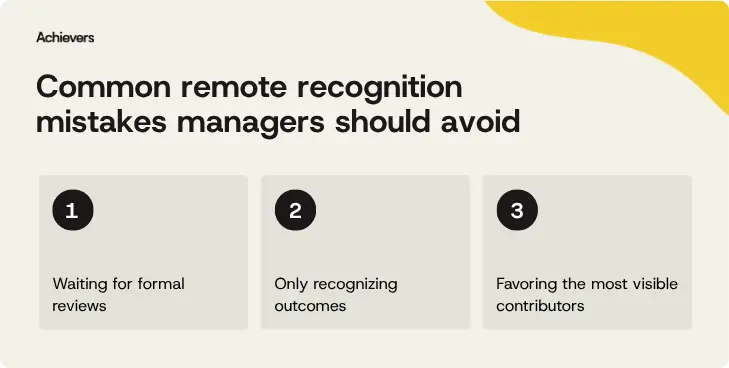
- Infrequent or Delayed Recognition: Recognition loses its power and relevance if it’s not timely. Waiting weeks or months to acknowledge an achievement can make employees feel their efforts were forgotten or unappreciated in the moment.
- Generic or Impersonal Praise: Blanket statements like "Good job, team!" or automated, non-specific messages can feel insincere and fail to convey genuine appreciation for individual contributions.
- Inconsistent Application: If recognition is given unevenly—some team members are always celebrated while others are overlooked—it can breed resentment and a perception of unfairness, exacerbating proximity bias.
- Over-reliance on Monetary Rewards: While incentives have their place, relying solely on financial bonuses for recognition can make appreciation feel transactional rather than genuine. True recognition acknowledges effort, behavior, and impact.
- Lack of Visibility: When recognition happens only in private, the broader team misses out on learning about valuable contributions and celebrating collective success, diminishing its cultural impact.
- Ignoring Failures or Learning Opportunities: While recognition focuses on success, a complete feedback loop includes acknowledging effort even when outcomes are not perfect, and recognizing the courage to take risks and learn from mistakes.
Measuring the Effectiveness of Remote Recognition
To ensure that remote recognition efforts are truly supporting employee engagement and retention, managers must actively measure their impact. A data-driven approach allows for continuous improvement and ensures recognition becomes a strategic asset rather than a mere gesture.
Key Recognition Metrics to Track:
- Recognition Frequency per Employee: How often is each employee receiving recognition? This helps identify "recognition deserts" where employees might be overlooked.
- Participation Rates: Track how many managers and peers are actively giving recognition. High participation indicates a healthy culture of appreciation.
- Recognition Value Distribution: If using a points-based system, monitor how points are distributed across teams and individuals to ensure equity.
- Sentiment Scores: Include questions in engagement surveys related to feeling valued, appreciated, and recognized. Track changes over time.
- Retention Rates: Analyze if employees who receive consistent, meaningful recognition have higher retention rates compared to those who do not.
- Alignment with Values: Track how often recognition is tied to specific company values or behaviors, indicating its effectiveness in shaping culture.
How Recognition Data Supports Better Management:
By analyzing these metrics, managers can identify patterns, pinpoint areas for improvement, and tailor their recognition strategies. For example, low recognition frequency in a particular team might indicate a need for manager training or a more accessible recognition platform. A decline in sentiment scores around appreciation could signal a need to reassess the authenticity or specificity of recognition efforts. This data transforms recognition from a subjective act into an objective, measurable management tool.
Technological Enablers: Leveraging a Recognition Platform to Support Remote Employees
As remote teams grow in size and complexity, managing recognition through informal memory, scattered spreadsheets, or mere good intentions becomes increasingly unsustainable. Recognition platforms provide the necessary structure, visibility, and automation to make appreciation consistent, equitable, and meaningful without losing the crucial human element.
These platforms are designed to address the unique challenges of distributed workforces by:
- Centralizing Visibility: Creating a public feed where all recognition is visible, allowing everyone to see and celebrate contributions.
- Facilitating Peer-to-Peer Recognition: Providing easy-to-use tools for colleagues to recognize each other instantly.
- Integrating with Communication Tools: Embedding recognition into existing workflows (e.g., Slack, Microsoft Teams) to make it seamless.
- Standardizing Best Practices: Offering templates and guidelines for specific, values-aligned recognition.
- Enabling Global Reach: Supporting multiple languages and currencies for diverse international teams.
- Providing Analytics: Offering dashboards to track recognition metrics, identify trends, and inform strategic adjustments.
Platforms like Achievers are specifically built to help organizations transition from sporadic appreciation to frequent, impactful recognition that actively shapes behavior and strengthens culture, especially for remote teams. They empower managers to:
- Schedule Reminders: Prompt managers to give recognition regularly.
- Provide Specificity Prompts: Guide managers to write meaningful and detailed recognition messages.
- Offer Value-Based Tagging: Link recognition directly to company values, reinforcing cultural alignment.
- Administer Rewards: Integrate points or monetary rewards seamlessly with recognition.
- Track Engagement: Monitor how often managers are recognizing their direct reports and how often employees are recognizing peers.
Recognition: The Bridge Across Distance
Remote work does not inherently make employee recognition harder; rather, it makes it more critical to execute with precision and intention. When managers consistently and thoughtfully recognize their remote employees, individuals feel genuinely connected, deeply valued, and intrinsically motivated to remain engaged and productive. The strategies outlined in this guide are designed to embed recognition into the everyday fabric of remote work, ensuring it appears in routine moments, not just major milestones.
Organizations globally are already harnessing these sophisticated strategies to cultivate stronger connections and foster deeper engagement across their geographically dispersed teams. In an era where talent mobility is high and employee experience is paramount, a robust and empathetic recognition program is not merely a perk; it is a fundamental pillar of a resilient and thriving remote work culture, acting as the essential bridge that connects individuals across any distance.