The modern era presents a complex and often volatile environment for leadership. As artificial intelligence rapidly transforms industries and global political alignments undergo significant shifts, the fundamental nature of leadership is being redefined. This necessitates a critical examination of what it means to lead effectively in the 21st century, moving beyond historical models and embracing new paradigms. For decades, leadership discourse has been dominated by influential figures and their distinct approaches, from the foundational strategic thinking of Peter Drucker to the assertive command-and-control style of Jack Welch, the people-centric philosophy of Howard Schultz’s servant leadership, and the disruptive first-principles approach of Elon Musk. While these historical examples offer valuable insights, the contemporary leader must contend with a radically altered operational landscape. The core responsibilities of setting direction, defining mission, and aligning people remain constant, but the behavioral rules governing how these tasks are accomplished are undergoing a profound metamorphosis.
The Rise of the "Voluntary Army": A New Social Contract
Perhaps the most significant transformation in the professional world over the past half-century is the "decoupling" of the employee from the traditional organizational structure. Historically, leadership operated within a hierarchical, industrial-age framework where directives were issued and generally followed. This boss-subordinate dynamic, deeply ingrained in corporate culture and human resources practices, is increasingly becoming an artifact of the past. Today, organizations are more accurately described as leading "voluntary armies." This designation reflects a fundamental shift in the employee-employer relationship, where individuals, whether full-time employees, contingent workers, or even AI-powered collaborators, bring their own distinct needs, aspirations, and concerns to the workplace. They are no longer simply fulfilling a role; they are actively "opting in" to their work each day.
This paradigm shift means that traditional levers of power—authority and hierarchical position—have diminished in efficacy. They have been supplanted by a more intangible and delicate currency: trust. Building and maintaining this trust is paramount. It requires leaders to excel in clarifying organizational mission, fostering empowerment and development, and actively soliciting and valuing novel ideas. In an era of highly specialized skills, it is common for individuals within an organization to possess expertise that surpasses that of their leaders. Consequently, effective leadership now demands a willingness to empower these individuals, create an environment where their insights are welcomed, and act upon their recommendations. This decoupling, a trend that has been gradually unfolding for fifty years, is now being amplified by the pervasive influence of artificial intelligence. The potential for a single, highly skilled engineer or a strategically astute professional to fundamentally reshape a business underscores the imperative for leaders to cultivate an environment of active listening, deep engagement, and broad empowerment.
Embracing Iteration: The Imperative of "Doing it Now"
A second critical evolution in leadership is the transition from a focus on achieving "perfection" to an embrace of "iteration." The rapid emergence of artificial intelligence technologies, characterized by their novelty, power, and inherent unpredictability, presents a significant challenge. Leaders are often urged to adopt AI to remain competitive, leading to a natural inclination to meticulously "figure it out and do it right" before implementation. However, as observed in recent engagements with major corporations such as IBM, Standard Chartered, and Mastercard, the pursuit of a flawless initial solution can be a significant impediment to progress. Delaying action in the face of rapid technological advancement introduces a heightened level of risk.
The industrial age operated under a model where products and systems were thoroughly tested and perfected before market introduction. In contrast, the current AI-driven landscape demands a different approach. Leaders must cultivate a tolerance for imperfection. Companies like IBM, for instance, demonstrated this by replacing their Workday system with SuccessFactors within an aggressive 18-month timeframe, acknowledging that the new system would not be perfect from the outset. Microsoft is actively deploying its Copilot AI agents across various departments, including Human Resources, even as new use cases and functionalities are continuously being discovered. The notion of waiting for a fully realized and flawless product or process before adoption is no longer a viable strategy.

The journey from initial concept to successful implementation in the AI age is rarely a straight line. It is a dynamic process characterized by a series of iterations, learning from mistakes, and continuous improvement. The leader’s role in this environment is to maintain a steadfast focus on the overarching problem or customer need, while simultaneously granting teams the autonomy to experiment, potentially fail, and crucially, to learn from those experiences. This iterative approach fosters agility and accelerates the pace of innovation, which are essential for survival and growth in today’s rapidly evolving business ecosystem.
The Resurgence of Trust, Ethics, and Inclusion
A third pivotal shift is the re-emphasis on core values, ethical conduct, and moral principles in leadership. Recent societal events, including widespread political polarization and the proliferation of misinformation, often amplified by AI-generated content, have eroded public trust and made discerning truth increasingly challenging. In this climate, leaders bear a significant responsibility to actively counteract these trends.
The foundational ethical compass that guides most individuals seeks to connect with organizations that operate with integrity. Employees desire to trust the companies they join and the leaders who guide them. When leaders compromise their principles, bend rules, or engage in unfair treatment, the repercussions extend far beyond potential legal liabilities. Such actions can profoundly damage morale, stifle innovation, and extinguish the vital human spirit that drives organizational success. As explored in the seminal work "Irresistible," the unquenchable power of the human spirit is, in fact, the most significant, yet often overlooked, asset in any business.
The Erosion of Institutional Trust and the Leader’s Role
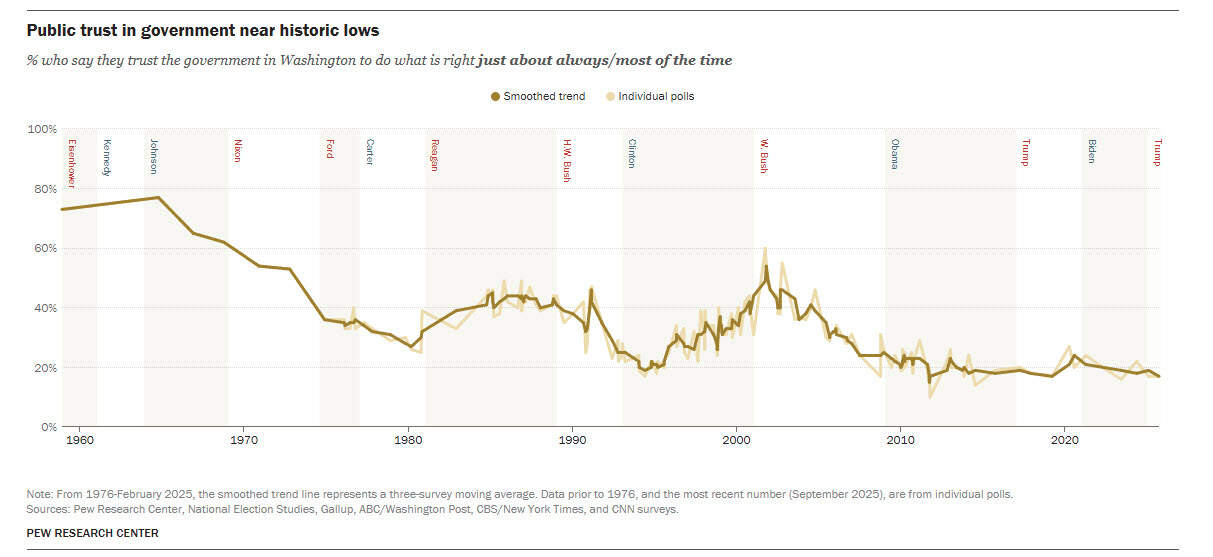
The decline in public trust in institutions is a well-documented phenomenon with profound implications for leadership. In the United States, for example, surveys indicate a dramatic drop in confidence in government over the past several decades. While approximately 80% of Americans expressed trust in their government in the 1960s, that figure has plummeted to around 17% in recent years. This deficit in trust creates a void that leaders must actively work to fill within their own organizations and, by extension, within society.
Graph illustrating the decline in public trust in government over time. (Note: A placeholder for a visual representation of data is included here, as a real-time graph cannot be generated. In a published article, this would be a static chart with clear labels and source citations.)
To address this challenge, leaders must prioritize listening to their people and maintaining an unwavering commitment to their organizational values and common sense. This includes the courage to speak truth to power, to take principled stances on important issues, and to demonstrate genuine empathy and understanding towards others. While the discourse surrounding diversity, equity, and inclusion (DEI) has faced recent headwinds, the underlying values of fairness, respect, and belonging are more critical than ever for leaders to champion. These principles are not merely buzzwords; they are foundational elements for building resilient and high-performing organizations.
The Imperative of Leadership Development in the Modern Era
The overarching conclusion is clear: organizations must revisit and adapt their leadership models to align with the realities of the contemporary landscape. The capacity of an organization to navigate change, foster innovation, and achieve sustainable success is inextricably linked to the quality of its leadership. Leaders who can effectively drive transformation, energize their teams, and uphold core values are not just valuable assets; they are indispensable to an organization’s survival and prosperity.
The development of these modern leaders is therefore more crucial than at any point in recent history. This involves equipping them with the skills to manage in an environment characterized by rapid technological change, evolving workforce expectations, and a renewed emphasis on ethical conduct. Resources such as comprehensive research on "The Rise of the Supermanager" provide frameworks for understanding and cultivating these essential leadership capabilities. Furthermore, the application of advanced AI tools, like Galileo, trained on decades of leadership research and case studies, offers personalized development pathways for current and aspiring leaders. These AI-powered platforms can assess an organization’s leadership strengths and weaknesses, provide tailored training modules, and ultimately, help build a leadership pipeline capable of thriving in the age of AI.
The annual Irresistible 2026 research conference, scheduled for June 8-10 at USC, promises to unveil significant new offerings in leadership development, reflecting the ongoing commitment to addressing these evolving challenges. The insights and tools generated from such forums are vital for organizations seeking to cultivate leaders who can not only adapt to change but actively shape the future of their industries.
The fundamental principles of setting direction, defining mission, and aligning people remain the bedrock of leadership. However, the methods and the underlying social contract have transformed. Leaders today must be adept at building trust in a skeptical world, embracing iterative progress over perfection, and championing ethical conduct and inclusion. By understanding and adapting to these profound shifts, organizations can position themselves for resilience and success in the complex and dynamic landscape of the 21st century. The future of leadership is not about emulating past icons but about forging new paths defined by adaptability, integrity, and a deep understanding of the evolving human and technological elements within the modern workplace.