The conventional wisdom in corporate recognition often centers on the manager-to-employee dynamic. While valuable, this singular focus overlooks a potent, yet frequently underutilized, engine for organizational success: peer recognition. When employees are empowered to acknowledge and appreciate each other’s contributions, it cultivates a cascade of positive outcomes, extending far beyond mere collegial goodwill. This form of recognition is directly linked to heightened employee engagement, more cohesive teamwork, increased productivity, and even a reduction in absenteeism, often referred to as "sick days."
Recent data from the Achievers Engagement and Retention Report underscores the profound impact of peer connection. Employees who report a high degree of connection with their peers are significantly more likely to feel appreciated and engaged (4.7 times), to experience a sense of well-being support (5.4 times), and to feel a strong sense of belonging (5.4 times) compared to their counterparts with low peer connection. This suggests that the daily, informal interactions and acknowledgments between colleagues create a foundational layer of support and validation that top-down appreciation, while important, may not fully capture. Peers are uniquely positioned to observe and celebrate the "quiet wins" and everyday acts of dedication that might otherwise go unnoticed by management, fostering an environment where individuals feel genuinely seen and valued.
Peer-to-peer recognition is defined as the practice where employees acknowledge and appreciate one another for significant contributions, collaborative efforts, and adherence to organizational values. Unlike top-down recognition, which can sometimes feel formal or disconnected from the day-to-day realities of work, peer recognition offers a real-time reflection of how tasks are accomplished and how team members support each other. It captures immediate impact, reinforces shared standards, and highlights behaviors that are crucial for operational success on a daily basis, rather than solely during formal performance reviews. When supported by appropriate structures and technological tools, peer recognition transcends a simple "feel-good" gesture; it becomes a strategic mechanism for enhancing visibility, reinforcing core values, and providing leaders with actionable insights into which behaviors are driving engagement and performance across their teams. At its most effective, peer recognition transforms casual moments of appreciation into a consistent, ingrained habit, ensuring employees feel heard and valued, while simultaneously equipping leaders with the data needed to intentionally shape a positive and productive company culture.
The Strategic Imperative of Peer Recognition
The shift towards prioritizing peer-to-peer recognition is not merely a trend; it’s a response to evolving workforce expectations and a growing understanding of what truly drives employee motivation and retention. In an era where employees increasingly seek purpose and connection in their work, the ability to be recognized by one’s colleagues taps into fundamental human needs for social validation and belonging.
Historically, performance management and recognition systems were largely hierarchical. Managers were the primary arbiters of praise and reward. However, the modern workplace is characterized by increased collaboration, cross-functional teams, and a flatter organizational structure. In this context, managers, while still vital, cannot possibly have full visibility into every positive interaction or contribution that occurs between team members. This is where peer recognition steps in, offering a more granular and authentic perspective on daily contributions.
The data from Achievers Workforce Institute (AWI) provides a compelling quantitative argument for investing in peer recognition. A comprehensive review of their research indicates that organizations with robust peer recognition programs experience tangible benefits:
- Enhanced Engagement: Employees who feel recognized by their peers report higher levels of job satisfaction and commitment to their organizations. This translates into a workforce that is more invested in their roles and more likely to go the extra mile.
- Improved Teamwork and Collaboration: When colleagues regularly acknowledge each other’s efforts, it fosters a spirit of mutual respect and encourages greater collaboration. This creates a positive feedback loop where helping others is seen as valuable and is reciprocated.
- Increased Productivity: A motivated and engaged workforce is inherently more productive. Peer recognition, by boosting morale and reinforcing positive behaviors, directly contributes to higher output and better performance outcomes.
- Reduced Turnover: Employees who feel appreciated and connected to their colleagues are less likely to seek opportunities elsewhere. Peer recognition plays a crucial role in building strong interpersonal bonds that can significantly increase employee loyalty and retention rates.
- Stronger Company Culture: A culture where appreciation is a daily practice, driven by peer-to-peer interactions, becomes more resilient, positive, and attractive to both current and prospective employees. It signals a workplace that values its people and fosters a sense of community.
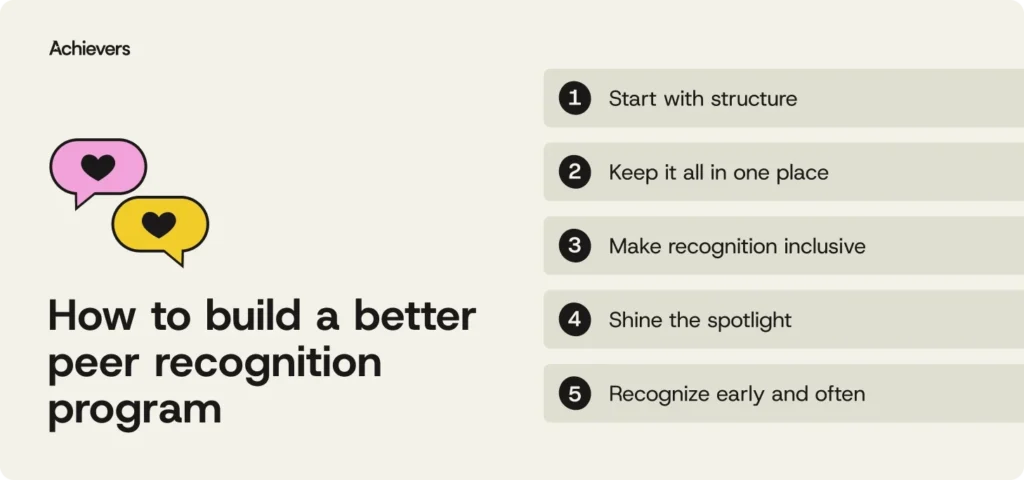
Building a Thriving Peer Recognition Program: 15 Best Practices
Implementing a successful peer-to-peer recognition program requires more than just good intentions; it demands a thoughtful and strategic approach. Here are 15 tried-and-true best practices to guide organizations in creating a recognition culture that is sustainable and impactful:
1. Establish a Clear Structure
Effective peer recognition does not occur spontaneously. It requires a defined framework that articulates what meaningful recognition looks like within the organization. This involves setting clear guidelines for how peers can acknowledge each other, whether through informal "shout-outs" in team meetings, digital platforms, or more formal peer-nominated awards. A well-defined structure ensures consistency, makes participation accessible to all, and integrates recognition seamlessly into the daily workflow.
2. Centralize Recognition Efforts
To maximize participation and ensure fairness, recognition activities should be consolidated within a single, user-friendly platform. When employees need to navigate multiple systems or processes to give recognition, the momentum is lost. A centralized recognition platform simplifies the process, ensures that all acknowledgments are visible and tracked, and eliminates friction, allowing for more "kudos" to be exchanged with fewer clicks.
3. Foster Inclusive Recognition
A truly effective program ensures that everyone has the opportunity to both give and receive recognition. Peers often observe contributions that managers may miss, such as acts of kindness, exceptional problem-solving in smaller tasks, or significant support provided to colleagues. It’s crucial to build an organizational culture that celebrates all types of contributions, not just those that are highly visible or associated with leadership roles. Regularly analyzing recognition data can help identify any imbalances and ensure that all voices are heard and appreciated.
4. Amplify Contributions Through Public Spotlight
Recognition is inherently contagious. Publicly acknowledging peer contributions serves as a powerful reinforcement of desired behaviors and demonstrates that appreciation is an integral part of the team’s ethos. This can range from brief mentions during team stand-ups to company-wide announcements. Such public acknowledgments generate enthusiasm, increase visibility, and foster a collective sense of pride within the organization’s employee engagement strategy.
5. Encourage Frequent and Timely Recognition
The impact of recognition is amplified when it occurs regularly and in close proximity to the appreciated action. Peers are often the first to notice daily successes, whether it’s meeting a tight deadline, offering crucial support to a colleague, or simply maintaining a positive attitude during challenging times. Encouraging frequent peer shout-outs for these everyday wins strengthens relationships and cultivates a positive, people-centric workplace culture.
6. Prioritize Specificity Over Vagueness
Generic praise like "great job" lacks impact. Effective peer recognition is specific. When acknowledging a colleague, detailing precisely what they did, why it was significant, and how it benefited the team or project makes the recognition more meaningful. This specificity not only validates the recipient’s efforts but also provides valuable learning for others, highlighting the behaviors that drive positive outcomes and enhance employee performance.

7. Lead by Example
For peer recognition to flourish, leadership must actively participate and model the desired behavior. When managers and executives not only recognize their direct reports but also acknowledge their peers, it sends a clear message that appreciation is a universal value, not dictated by hierarchy. This visible commitment from leadership encourages broader adoption of peer recognition practices across the organization.
8. Balance Social and Monetary Rewards
While a heartfelt "thank you" from a peer can be incredibly powerful, combining social acknowledgment with tangible rewards can further enhance the impact. A well-rounded recognition program offers a blend of social praise and thoughtful incentives. Whether it’s a small monetary bonus, a gift card, or a symbolic award, the right mix ensures that peer recognition remains both meaningful and motivating.
9. Celebrate the Entire Journey
Recognition should extend beyond major milestones to encompass the entire employee journey. Peers witness and appreciate the smaller victories, personal achievements, and professional development milestones that individuals experience. Acknowledging these moments fosters a sense of support and reinforces the idea that success is a shared endeavor, thereby enriching the overall employee experience.
10. Infuse Fun and Gamification
Recognition doesn’t always need to be a formal affair. Incorporating elements of fun and friendly competition can significantly boost engagement with recognition programs. This could include themed awards, team challenges, or a public leaderboard for kudos. Strategic gamification can make recognition a more dynamic and enjoyable aspect of workplace culture, encouraging consistent participation.
11. Recognize Both Teams and Individuals
Contributions to organizational success come in various forms, from individual achievements to collective team efforts. A comprehensive peer recognition program should acknowledge both. Highlighting the collaborative spirit on projects while also celebrating outstanding individual contributions reinforces the value of every role within the organization and significantly boosts employee morale.
12. Measure What Matters
To ensure that peer recognition programs remain effective and impactful, organizations must track key metrics. This includes monitoring participation rates, the frequency of recognition, and the equity of recognition across different demographics and departments. Data from recognition platforms can provide valuable insights into program effectiveness, allowing for continuous improvement of the employee recognition strategy.
13. Empower Employee Nominations
Allowing employees to nominate their peers for recognition injects authenticity into the program and brings often-unseen contributions to light. Employees possess an intimate understanding of who is making a difference behind the scenes. Providing a structured nomination process empowers them to acknowledge and celebrate their colleagues, fostering a culture of mutual appreciation.
14. Acknowledge Cross-Functional Wins
In today’s interconnected business environment, collaboration often extends beyond immediate teams. Recognizing instances where peers from different departments support each other is crucial for breaking down silos and fostering a more collaborative organizational culture. These cross-functional acknowledgments highlight the interconnectedness of the organization and the value of interdepartmental support.
15. Link Recognition to Growth and Development
Peers are often the first to notice an individual’s professional growth, whether it’s taking on new responsibilities, acquiring new skills, or demonstrating leadership potential. Highlighting these developmental milestones through peer recognition reinforces a growth mindset within the organization and underscores learning and development as a core component of the employee value proposition.
The Role of Technology in Peer Recognition
While the principles of effective peer recognition are clear, their consistent implementation can be challenging without the right technological infrastructure. Peer-to-peer recognition software acts as the crucial connective tissue, transforming intent into tangible impact. Such platforms provide the necessary structure, visibility, and consistency to ensure that appreciation is not left to chance, memory, or individual personality.
By centralizing recognition, linking it directly to company values, enabling real-time appreciation, and offering data-driven insights, recognition software transforms best practices into daily behaviors. It ensures that appreciation is integrated into the fabric of work, directly shaping culture, strengthening interpersonal connections, and driving measurable improvements in employee engagement and retention.
The Compelling Statistics Behind Peer Recognition
The research conducted by the Achievers Workforce Institute (AWI) consistently demonstrates that peer recognition is not merely a feel-good initiative; it is a strategic imperative with profound implications for organizational performance. The data unequivocally shows that a robust culture of recognition yields significant, measurable returns. Organizations that foster such an environment are positioned to experience:
- Elevated Employee Morale: A consistent flow of positive reinforcement from peers contributes directly to a more optimistic and supportive work environment.
- Enhanced Collaboration and Team Cohesion: When employees feel their contributions are seen and valued by their colleagues, they are more likely to extend that same courtesy, fostering a stronger sense of camaraderie and teamwork.
- Increased Productivity and Performance: The motivational power of peer recognition can drive individuals and teams to perform at higher levels, leading to improved output and better overall results.
- Improved Employee Retention: Feeling appreciated and connected to colleagues is a significant factor in employee loyalty. Organizations that prioritize peer recognition often see lower turnover rates.
- Stronger Organizational Culture: A culture where recognition is embedded in daily interactions becomes a more positive, engaging, and attractive place to work.
The overarching message is clear: cultivating a culture of recognition requires intentionality, consistent effort, and the right tools. While it may not be built overnight, the investment in a well-structured peer recognition program yields undeniable benefits that are crucial for long-term organizational success.
Beyond Collaboration: The Power of Mutual Appreciation
Peer-to-peer recognition, though often perceived as a "soft skill," delivers hard-hitting results. It is a powerful catalyst for boosting employee engagement, driving productivity, and fortifying company culture. Most importantly, it ensures that employees feel genuinely seen for their daily efforts, not just their headline achievements. This simple yet profound practice is one of the most effective ways to cultivate a workforce that is not only collaborative but also deeply motivated, connected, and built to thrive. By integrating recognition into the rhythm of work through dedicated platforms, organizations can translate values into actionable behaviors, ultimately leading to tangible and lasting results.