
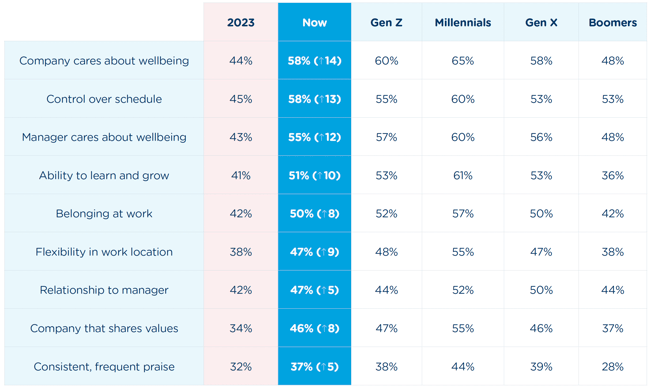
A significant evolution in workforce priorities is underway across the United States, with new data indicating that factors beyond a traditional pay increase are now considered more valuable by a majority of employees. Research conducted since 2023 has tracked a discernible shift, moving from a period where no single non-monetary benefit achieved majority consensus as being more important than a 10% pay raise, to a current landscape where multiple workplace elements now surpass this financial incentive for over half of the surveyed workforce.
This transformation highlights a growing demand for greater autonomy, a supportive work environment, and opportunities for personal and professional development. Specifically, the ability to control one’s work schedule has emerged as a paramount concern, alongside a strong desire to work for organizations and under managers who demonstrably prioritize employee wellbeing. Following closely behind are the intrinsic motivators of learning, growth, and a sense of belonging within the workplace. The implications for employers are substantial, as many of these newly prioritized factors represent investments that are often more cost-effective than a straightforward salary hike.
The research, which has consistently surveyed a broad cross-section of U.S. employees, points to a growing realization that the quality of the work experience is intrinsically linked to job satisfaction and overall employee engagement. While a 10% pay raise remains a significant consideration, its relative importance appears to be diminishing as employees seek a more holistic and supportive professional life. This recalibration of employee expectations suggests a move towards a more human-centric approach to work, where individual needs and overall quality of life are given equal, if not greater, weight than purely financial compensation.
The Evolving Landscape of Employee Expectations
The shift in employee priorities has been a gradual but accelerating trend. In 2023, the idea that any factor could be more important than a 10% pay raise was met with skepticism, with no single option achieving a majority agreement above 50%. This indicated a workforce largely driven by traditional economic incentives. However, by 2025, the data reveals a pronounced departure from this mindset. The current findings suggest that a confluence of factors, including increased awareness of mental health, a desire for better work-life balance, and the lasting impact of evolving work models, have collectively reshaped what employees deem essential in their professional lives.
Key among the emerging priorities is schedule control, with a significant majority of employees now valuing the flexibility to manage their own time and working hours. This reflects a broader societal trend towards greater autonomy and a rejection of rigid, one-size-fits-all work structures. The ability to align work with personal responsibilities, pursue hobbies, or simply manage daily life more effectively is proving to be a powerful draw for talent.

Equally critical is the emphasis on wellbeing. Employees are increasingly seeking employers and managers who actively demonstrate care for their physical, mental, and emotional health. This goes beyond superficial wellness programs and points to a deeper need for a supportive and empathetic work culture. The recognition that prolonged stress and burnout can have detrimental effects on both individual health and professional performance has propelled wellbeing to the forefront of employee demands.
Learning and growth opportunities also continue to be a significant motivator. Employees are keen to develop new skills, advance their careers, and feel a sense of progress within their roles. This desire for continuous development is not only beneficial for individual career trajectories but also for organizational innovation and adaptability.
Finally, the concept of belonging has gained considerable traction. A sense of inclusion, psychological safety, and connection with colleagues and the organization as a whole is proving to be a vital component of a positive work experience. Employees who feel they belong are more likely to be engaged, productive, and loyal.
The Crucial Role of Managers in Shaping Employee Experience
The research underscores the pivotal role that managers play in influencing employee sentiment and experience. A consistent finding across the studies is that manager engagement and competence directly correlate with team engagement. When managers are effective, they foster an environment where problems are resolved efficiently, innovation flourishes, and employee turnover is minimized. Conversely, disengaged or ineffective managers can lead to decreased productivity, customer dissatisfaction, and ultimately, a negative impact on business outcomes.
Gallup’s extensive research has long highlighted the manager’s impact, even tracing the through-line from team engagement to national economic growth. The current pressures on managers are considerable, as they are often tasked with navigating the competing demands of executive leadership and employee expectations. This "squaring the circle" is taking a toll, as noted in recent reports, with managers themselves feeling the strain.
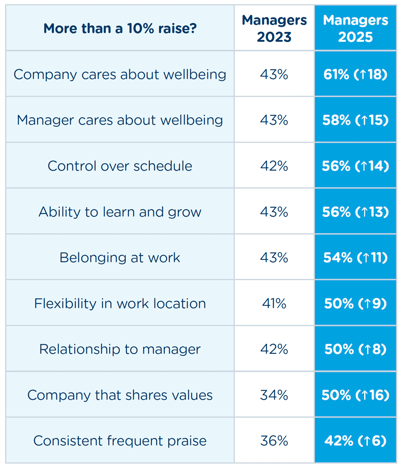
Interestingly, managers themselves are also re-evaluating their priorities. Similar to their direct reports, managers are increasingly valuing the employee experience over a 10% pay raise. Factors such as wellbeing, opportunities for learning, a sense of belonging, and control over their schedules are becoming more important to them as well. This indicates a shared evolution in workplace values, with both employees and those who manage them seeking a more balanced and supportive professional environment.
The Manager-Employee Perception Gap: A Growing Disconnect
A notable finding in the latest data is the significant perception gap between managers and employees regarding the ease of the work environment. While a substantial 66% of managers believe they make their employees’ lives easier, only 44% of employees concur. This disconnect suggests that managers may not be fully aware of the challenges or stressors their teams are facing, or that their efforts to alleviate them are not being perceived as effective.
This disparity extends to other critical areas:
- Communication: Managers often overestimate the clarity and effectiveness of their communication, while employees may feel left in the dark or receive mixed messages.
- Support: While managers may believe they are providing adequate support, employees might be experiencing a lack of resources, guidance, or emotional backing.
- Recognition: Managers might believe they are acknowledging employee contributions sufficiently, but employees may feel their efforts are going unnoticed or unappreciated.
- Development: A gap can exist in how managers perceive the developmental opportunities they offer versus how employees experience them, potentially leading to unmet career aspirations.
Adding to this complexity, the data reveals that a significant portion of managers, approximately 30%, report feeling overwhelmed by their responsibilities. This state of being overwhelmed can directly impair their ability to effectively lead, communicate, support, and engage their teams. If organizations expect managers to be the linchpins of employee engagement, coaching, performance management, and wellbeing initiatives, they must first provide them with the necessary support and resources. Without this foundational support, the entire employee experience is at risk.
The Underlying Driver: A Decline in Wellbeing
The pervasive increase in the importance of a better employee experience is not occurring in a vacuum. It is strongly linked to a discernible and concerning rise in stress, burnout, and feelings of loneliness within the workforce. The demanding nature of modern work, coupled with broader societal pressures, has created an environment where employee wellbeing is increasingly compromised.
This trend has profound implications for business outcomes. Research consistently demonstrates the tangible link between employee sentiment and productivity. For instance, 85% of employees report that feeling appreciated directly impacts their productivity. Furthermore, 79% of employees indicate that their relationship with their manager significantly influences their productivity.
These statistics highlight a critical business imperative: workplace culture is not merely a "soft" aspect of business operations; it is a direct driver of output and profitability. Managers who understand and leverage this insight are better positioned to allocate their time and resources effectively, leading to significant positive downstream impacts on their organizations. By prioritizing employee wellbeing through consistent coaching, effective one-on-one interactions, and genuine recognition, managers can foster transformative improvements in both the employee experience and the company’s bottom line.
A Call to Action for Employers
The evolving priorities of the American workforce present a clear call to action for employers. A singular focus on financial compensation is no longer sufficient to attract, retain, and engage top talent. Organizations must proactively cultivate environments that foster flexibility, prioritize wellbeing, champion learning and development, and build a strong sense of belonging.
Investing in managerial training and support is paramount. Equipping managers with the skills and resources to effectively lead, communicate, and support their teams is crucial for bridging the perception gap and creating a more positive and productive work environment. This includes training on empathetic leadership, effective feedback, conflict resolution, and recognizing the signs of stress and burnout.
Furthermore, organizations need to move beyond superficial initiatives and embed wellbeing into the core of their culture. This means creating policies and practices that support work-life balance, encouraging open dialogue about mental health, and providing access to resources that promote holistic wellbeing.
The data from 2023 to 2025 paints a compelling picture of a workforce that is seeking more than just a paycheck. They are seeking a fulfilling, supportive, and flexible work experience. By embracing these evolving expectations and making strategic investments in their people and culture, employers can not only improve employee satisfaction but also drive sustainable business success in the years to come. The future of work hinges on a deeper understanding and commitment to the human element within organizations.